Every cooling coil makes water on purpose — the trouble starts when that water ends up somewhere it shouldn't: a ceiling stain, a slimed drain pan, a sweating duct growing mold in the plenum. Almost all of it traces to a handful of causes, and almost all of it is preventable on a routine. This article covers HVAC condensation and moisture — causes, prevention and maintenance — and how OXMAINT AI, the AI-powered HVAC maintenance CMMS, keeps the condensate program on schedule.
Controls & Airside · HVAC · Condensation & Moisture · 2026
HVAC Condensation & Moisture: Causes, Prevention & Maintenance
A slimed condensate drain, a sweating supply duct, a rusted pan that finally overflows onto the ceiling below — moisture problems quietly turn into water damage and mold. OXMAINT AI, the AI-powered CMMS and maintenance management software, schedules the drain flushes, pan inspections and float-switch tests, and raises a work order the moment a unit shows the early signs.
1Find the source
→
2Prevent on a cadence
→
3Catch early signs
→
4Work order
HOW CONDENSATION FORMS
1Warm, moist air meets a surface below its dew point
2Water vapor condenses on the coil, line or duct
3Designed water drains to the pan and out
!A fault sends it somewhere it shouldn't go
Dew point
the surface temperature where vapor turns to water
6 causes
account for nearly every moisture problem
Float switch
code-required cutoff that stops an overflow
Quarterly
common commercial condensate service cadence
The Six Causes Behind Nearly Every Problem
Condensation itself is normal — the coil is supposed to pull water out of the air. A moisture problem means that water escaped the designed path, and the reason is almost always one of six. You can book a demo to see moisture-issue tracking in OXMAINT AI.
◔Clogged condensate drain
Algae, biofilm (Zooglea slime) or debris blocks the drain line or pan, so water backs up and overflows. The single most common cause — and odor often arrives before the spill.
❄Frozen evaporator coil
A dirty filter, blocked airflow or low refrigerant ices the coil; when it thaws, the surge of water exceeds the pan's capacity and spills over.
▣Rusted or cracked pan
Metal pans rust through and plastic pans crack with age. A leaking pan looks like a clog — and replacing it can mean pulling the coil.
▗Sweating lines & ducts
Torn insulation on the cold suction line, or a torn vapor barrier on ducts, lets surfaces fall below dew point and drip — common on oversized systems.
∡Improper slope
A pan or drain line that doesn't pitch toward the outlet lets water pool, which speeds biological growth and raises the overflow risk.
☼High indoor humidity
Excess moisture load — or a short-cycling oversized unit that cools without dehumidifying — keeps surfaces damp and feeds condensation and growth.
Why A Small Leak Becomes A Big Bill
Moisture rarely stays a moisture problem. Left alone, escaped water runs a predictable chain from a damp surface to structural damage and an indoor-air-quality complaint — which is why the early signs matter, and you can start free and log early moisture signs in OXMAINT AI.
1
Water escapes
Overflow or drip lands on structure, insulation or the ceiling below.
→
2
Material soaks
Wet insulation loses R-value; duct wrap sags, separates at seams and can fall.
→
3
Biology grows
Mold and mildew colonize the damp surfaces, with odor as the first complaint.
→
4
IAQ & damage
Air quality falls and remediation begins — far costlier than the PM that would have prevented it.
The Overflow Was On The Calendar. Nobody Kept It.
A drain flush, a pan inspection, a float-switch test — small tasks that stop a ceiling collapse and a mold claim. Scheduled per unit and tracked to completion, the condensate program runs itself instead of waiting for the call about a dripping ceiling.
The Prevention Routine, By Frequency
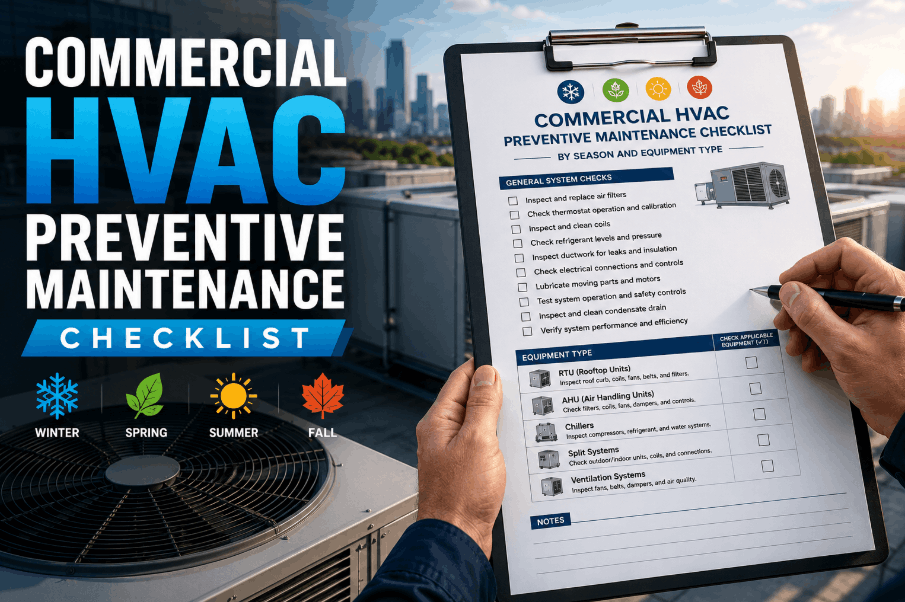
Moisture control is a cadence, not a one-time fix — tablets and single pours fade, and biofilm comes back. The tasks below keep the condensate path clear and the surfaces dry; tighten the frequency in humid climates or on extended-hours systems, and you can book a demo to schedule the routine in OXMAINT AI.
| Task | What it prevents | Cadence |
| Replace / check air filter |
Airflow restriction that freezes the coil |
Monthly |
| Inspect pan for slime, standing water, corrosion |
Early biofilm and rust before overflow |
Quarterly |
| Flush the condensate drain line; confirm clear flow |
Algae and biofilm clogs |
Quarterly |
| Test the float / overflow shutoff switch |
An overflow when the drain does block |
Quarterly |
| Check pan slope and drain pitch to outlet |
Pooling that speeds growth |
Quarterly |
| Clean evaporator coil; verify refrigerant charge |
Icing and the thaw-surge overflow |
Semi-annual |
| Inspect & reseal line and duct insulation / vapor barrier |
Sweating lines and ducts |
Semi-annual |
Baseline cadence — increase in high-humidity climates or for extended-hours systems. Scroll sideways on mobile to see every column.
How OXMAINT AI Runs The Condensate Program
The routine only protects the building if every task is scheduled, done and logged against the unit. OXMAINT AI turns the condensate cadence into recurring work orders and keeps a moisture history on each air system, and you can start free and build the condensate program in OXMAINT AI.
◉
Recurring Condensate PMs
Drain flush, pan inspection and float-switch test auto-scheduled per unit at the right cadence.
◉
Early-Sign Work Orders
An odor report, standing water or slime logged on inspection raises a work order before the overflow.
◉
Float-Switch Test Log
The code-required cutoff is tested and recorded on a schedule, so it actually works when the drain blocks.
◉
Photo & Moisture History
Pan photos, humidity notes and repairs kept on the asset, so a repeat-offender unit stands out.
◉
Filter & Coil Linkage
Filter and coil PMs tie to the freeze-and-overflow risk, so the airside root cause gets fixed too.
◉
Climate-Aware Scheduling
Tighten the cadence for humid regions and extended-hours units from one schedule across the portfolio.
“
Our worst callbacks were always water — a tenant ceiling stained by an overflowing drain pan nobody had flushed in a year. Putting the drain flush, pan inspection and float-switch test on a quarterly schedule per unit, and letting an odor complaint raise a work order, turned condensate from our top emergency into a routine. We haven't had a ceiling claim since we started trending the early signs instead of waiting for the drip.
Facilities Manager · Commercial Property Group
Frequently Asked Questions
Why is my HVAC leaking water?
Almost always one of six causes: a clogged condensate drain (algae or biofilm), a frozen evaporator coil that overflows on thaw, a rusted or cracked drain pan, sweating suction lines or ducts from torn insulation, improper drain slope, or high indoor humidity. The coil is meant to make water — a leak means that water left its designed path.
Book a demo to see moisture tracking in OXMAINT AI.
What is the most common cause of condensate overflow?
A blocked drain line. Algae and biofilm (Zooglea slime) feed on dust and organic matter and can back up a line surprisingly fast, especially in warm, humid conditions. Odor complaints often arrive before the overflow, which is why a flagged odor is worth a drain flush.
How does condensation lead to mold?
Escaped water soaks insulation, ceilings and duct wrap and keeps them damp; mold and mildew then colonize those surfaces, usually announcing themselves as odor first and an air-quality complaint later. Keeping surfaces dry — clear drains, intact insulation, controlled humidity — is what breaks the chain.
What does a float switch do?
It's a safety cutoff that shuts the unit off when water rises in the pan or secondary pan, stopping an overflow before it reaches the ceiling. Drain and float switches are required by code on new installations — and they only help if they're tested on a schedule, since a stuck switch fails silently.
How often should condensate maintenance be done?
Quarterly service is a common commercial baseline — inspect the pan, flush the drain line, test the float switch and check slope each visit — with monthly filter checks and semi-annual coil and insulation work. Increase the cadence in high-humidity climates or on systems running extended hours.
Start free and schedule condensate PMs in OXMAINT AI.
Keep The Water In The Drain, Off The Ceiling.
Run HVAC moisture control on the OXMAINT AI maintenance management software — recurring drain flushes, pan inspections and float-switch tests per unit, early-sign work orders from odor or standing water, and a moisture history that flags repeat offenders. Find the source, prevent on a cadence, and catch the early signs before the overflow.