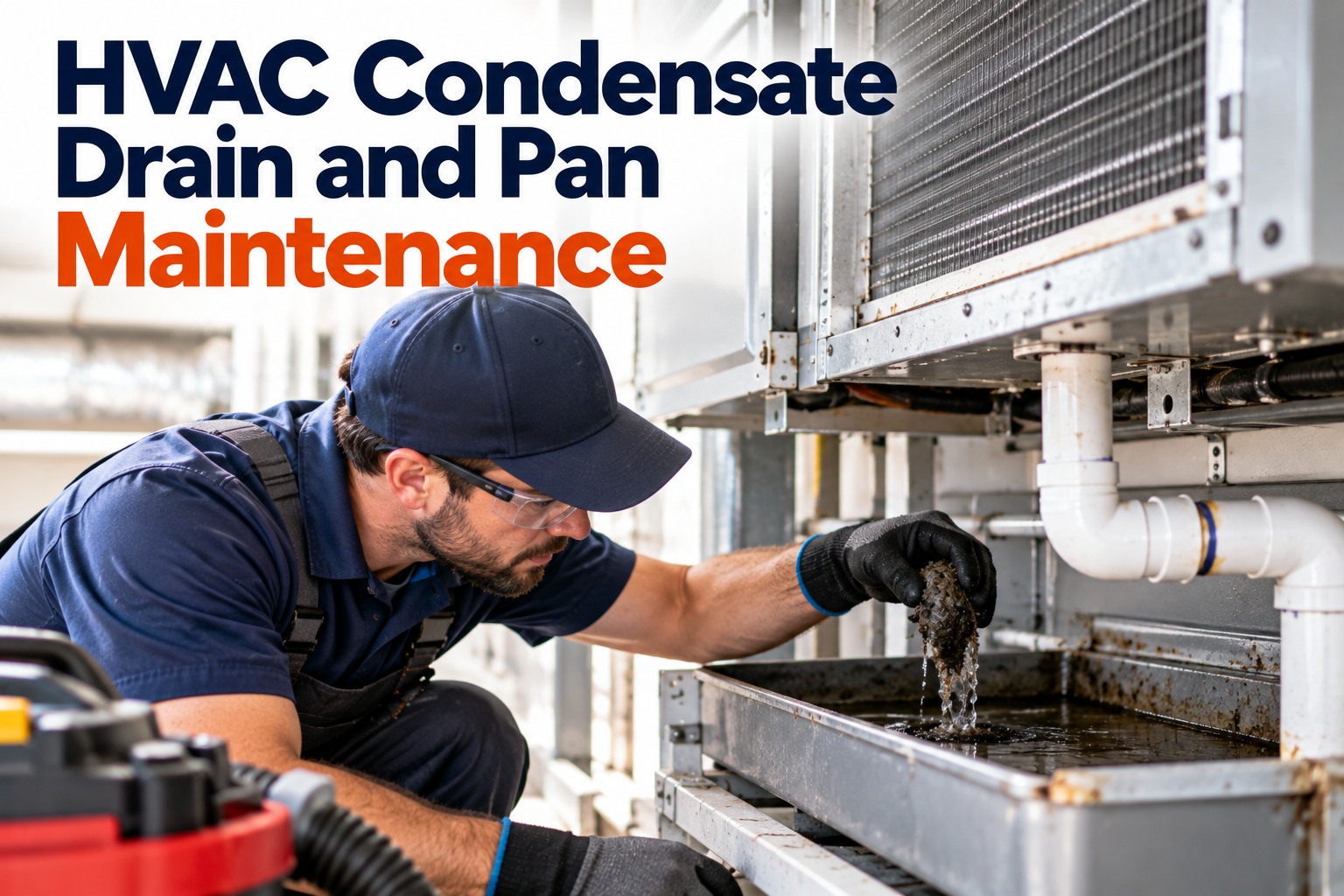
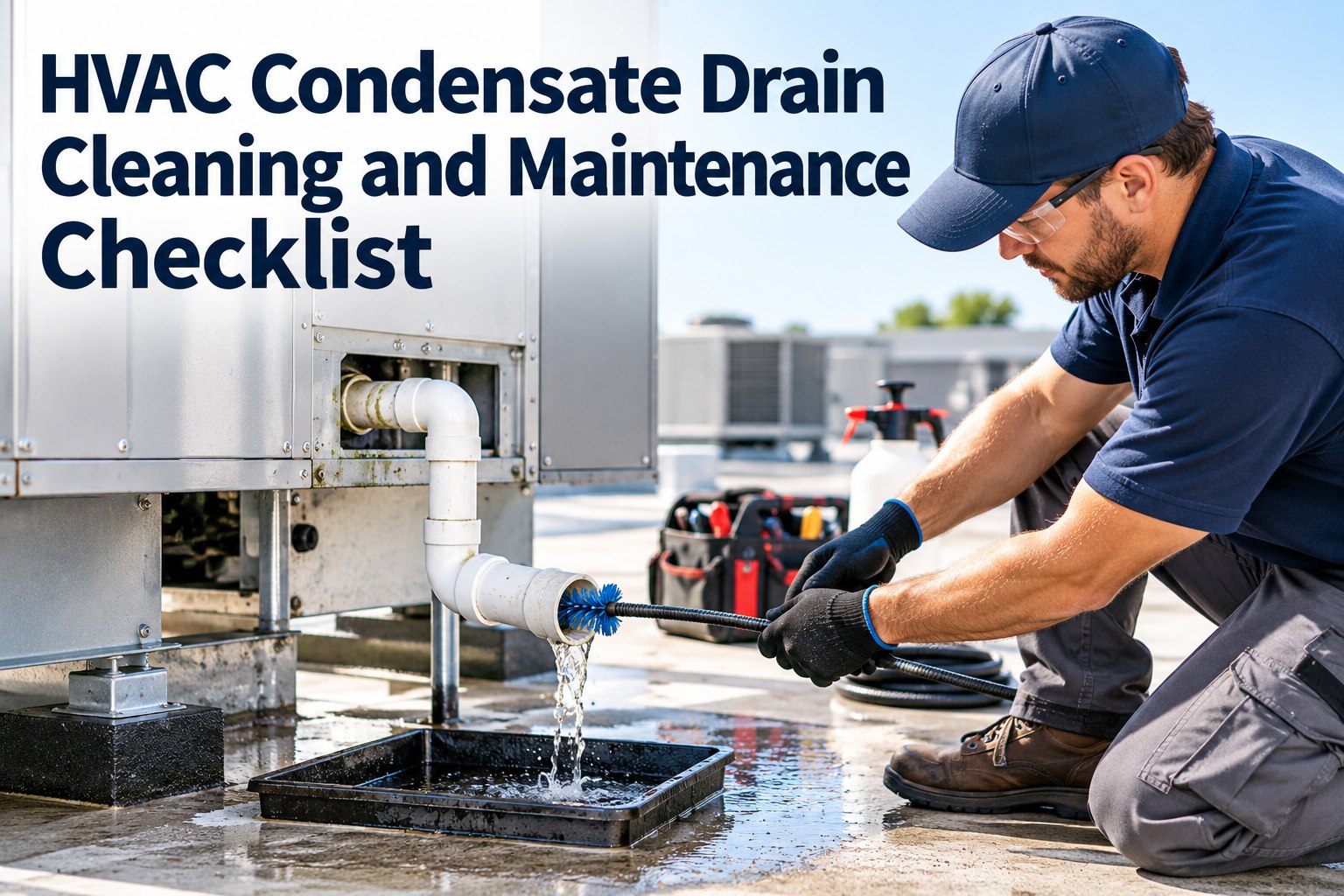
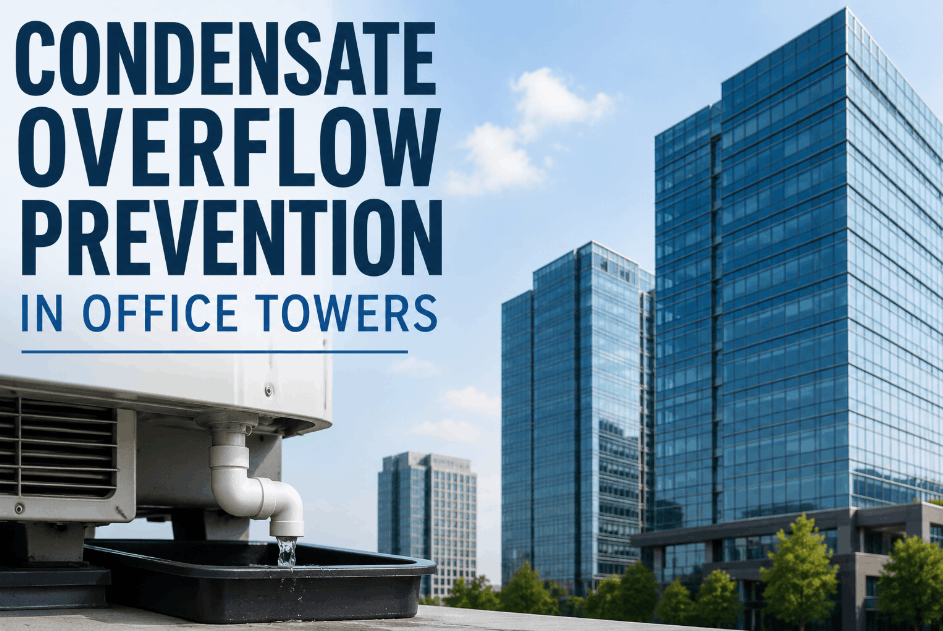
A condensate drain is a length of PVC and a pan of water — until it clogs. Then the pa overflows, water runs down through the ceiling of the office below, and a $40 maintenance task nobody did becomes a water-damage claim that dwarfs a year of PM. Condensate issues are one of the most common HVAC service calls and among the most preventable, yet they're the first thing skipped. The fix is disciplined, scheduled drain maintenance. OXMAINT AI, the AI-powered HVAC CMMS, schedules the drain clears, tests the safety switches, and turns every finding into a tracked work order before water finds the ceiling.
A clogged drain line. A rusted pan. An overflow switch nobody ever tested. Any one of them ends as water damage. OXMAINT AI, the AI-powered CMMS and maintenance management software, runs the prevention on one platform: condensate drains scheduled for clearing on a cycle, pans and float switches inspected and tested, and every clog or fault turned into a work order — so the water goes down the drain, not through the ceiling.
1Inspect→2Find Clog / Fault→3Work Order→4Verify & Record
1 slow drain caught early → cleared before it overflowed
8–10%
of commercial HVAC service calls are condensate drain clogs
90%
of drain failures preventable with quarterly clearing
Quarterly
minimum condensate drain inspection frequency
2 layers
of overflow defense: secondary pan + float switch
The Cheapest Failure Nobody Prevents
Condensate maintenance loses every budget argument — until the overflow. A clear-and-test costs almost nothing and takes minutes; the water damage it prevents can run into a claim with drying, ceiling replacement, tenant disruption and a mold remediation on top. The math is lopsided, which is exactly why skipping it is so costly. OXMAINT AI keeps the cheap task on the calendar so the expensive one never happens. Start free and schedule your condensate maintenance in OXMAINT AI.
The Two Layers That Stand Between a Clog and a Claim
A condensate system is built to fail safe — but only if every layer is maintained and tested. Follow the water from the coil to the drain, and to the two backups that catch it when the primary path clogs. OXMAINT AI tracks the condition of each layer per unit. Book a demo to map your condensate layers in OXMAINT AI.
1
Evaporator Coil
Cooling condenses moisture from the air — the water has to go somewhere, every running hour.
↓
2
Primary Drain Pan
Collects the condensate under the coil. Rust, cracks or a bad slope turn it into a leak source itself.
↓
Primary Drain Line & P-Trap
Carries water away by gravity or pump. This is where algae, biofilm and debris clog — the failure point in most cases.
if it clogs → water backs up →
DEFENSE 1
Secondary / Emergency Pan
Sits below the primary to catch the overflow when the line backs up — a physical last catch before the ceiling.
DEFENSE 2
Overflow Float Switch
Senses rising water in the pan and shuts the unit off before it overflows — only works if it's been tested.
Both defenses are silent until the day they're needed — and a float switch nobody tested is no defense at all. That's why testing the switch belongs on the same cycle as clearing the line.
Why Condensate Drains Clog
Nearly every overflow starts with a clog, and clogs come from a short list of causes — all of them catchable on a quarterly inspection. OXMAINT AI logs the cause on each finding so recurring problem units get flagged. Sign up free and track clog causes by unit in OXMAINT AI.
Algae & Biofilm
Warm, wet, dark lines are perfect for biological growth — the slime that most often blocks the drain.
Debris & Dust
Dust pulled through the coil settles in the pan and line, building sludge that narrows and then blocks flow.
Improper Slope
A line that doesn't fall consistently lets water sit, and standing water breeds the growth that clogs it.
Pan Rust & Cracks
An aging metal pan corrodes through, so even a clear line leaks — the pan itself becomes the failure.
The Condensate Maintenance Checklist
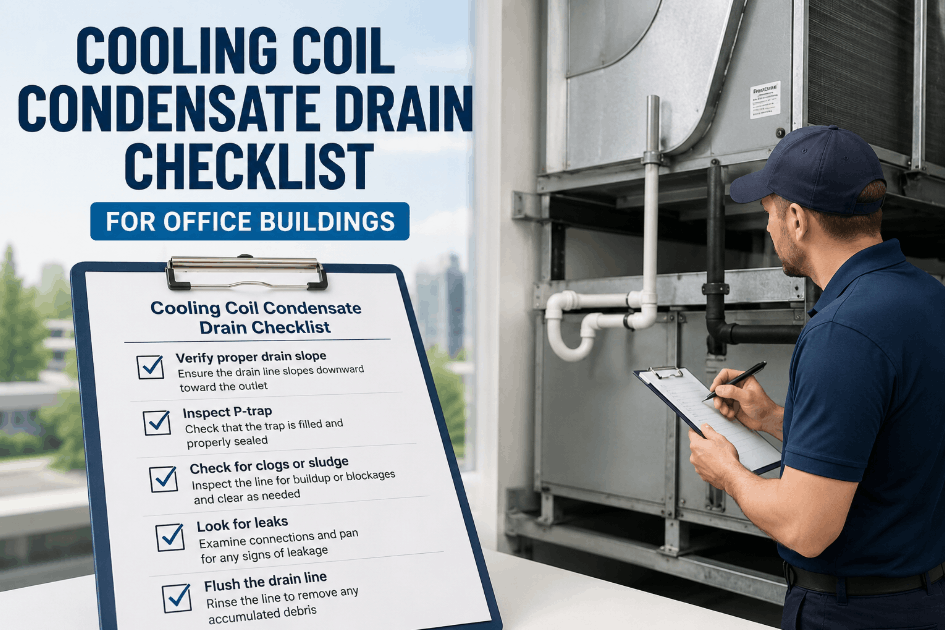
A complete condensate PM is four moves, every quarter: clear the line, inspect the pans, verify both drain paths, and test the overflow switch. Skip the last one and you're trusting an untested safety. OXMAINT AI runs all four as a scheduled checklist. Book a demo to load this checklist in OXMAINT AI.
Clear the drain line. Vacuum the outlet, flush the line, and treat with a biocide/tablet to kill algae — confirm free flow through the P-trap.
Inspect the primary pan. Check for rust, cracks, standing water and correct slope; clean out debris and sludge.
Verify the secondary pan & line. Confirm the emergency pan is clear and its drain is open — the backup has to actually work.
Test the overflow float switch. Raise the float to confirm it cuts the unit off — an untested switch is the failure hiding behind the overflow.
Record and flag. Log the readings and cause; any rust, slow flow or failed switch becomes a work order on the spot.
A $40 Clear Is Cheaper Than a Flooded Floor.
Condensate overflow is the rare failure that's almost entirely preventable and wildly expensive when it isn't. OXMAINT AI keeps the quarterly clear-and-test on the schedule and turns every slow drain or rusted pan into a work order — catching it while it's still a maintenance task, not a claim.
A slow drain noted and forgotten is a slow drain that eventually overflows. The value is in carrying each finding from the inspection to a verified repair — and that's the loop OXMAINT AI runs on every unit. Start free and run this condensate loop in OXMAINT AI.
01
Schedule the Quarterly PM
Each unit's condensate system comes due on a cycle — the clear-and-test happens on schedule, not after a leak.
↓
02
Work the Checklist
Clear the line, inspect the pans, verify both drains, test the float switch — a phone checklist per unit, nothing skipped.
↓
03
Log Finding & Cause
Slow flow, rust, a failed switch — recorded against the unit with the cause, so patterns and repeat offenders surface.
↓
04
Raise the Work Order
Anything beyond a routine clear becomes a ranked work order — a rusted pan or dead switch fixed before it fails.
↓
05
Verify & Record
Repair confirmed and logged against the unit — a documented history that proves the drains were maintained.
What the CMMS Runs for Condensate
Condensate maintenance fails from neglect, not difficulty — so the win is a system that never lets it slip. OXMAINT AI keeps it scheduled, checked and recorded across every unit. Book a demo to see the condensate program in OXMAINT AI.
SCHEDULE
Quarterly Auto-Scheduling
Drain clears and switch tests come due on a cycle per unit, so the cheap task never gets deferred into a claim.
CHECK
Mobile Inspection Checklist
Clear, inspect, verify, test — a structured checklist per unit that a tech can't half-finish and forget.
ACT
Finding-to-Work-Order
A slow drain, rusted pan or failed switch generates a ranked work order automatically, tracked to closure.
TREND
Per-Unit Clog History
Repeat-clog units surface in the history, so a chronic drain gets a slope fix instead of another quarterly clear.
TEST
Safety-Switch Verification
The float-switch test is a logged step, so the overflow defense is proven working, not just assumed installed.
RECORD
Documented Maintenance Trail
A timestamped history per unit — proof the drains were maintained if a water-damage claim is ever questioned.
“
We learned this the expensive way — a clogged drain on a third-floor air handler overflowed over a weekend and came through into two offices below. The remediation cost more than we'd spent on that unit in five years. Now every condensate drain is on a quarterly clear-and-test in the system, the float switches actually get tested, and any slow drain becomes a work order the same day. We haven't had a condensate overflow since, and when our insurer asked, we could show the maintenance history unit by unit.
Facilities Manager · Commercial Office Portfolio
Frequently Asked Questions
How often should condensate drains be cleaned?
Quarterly is the common minimum for commercial units, and about 90% of drain failures are preventable with that cadence — more often in dusty or high-runtime environments. OXMAINT AI brings each unit's clear-and-test due automatically so it doesn't slip. Start free and schedule the cycle.
Why do condensate drains clog in the first place?
Mostly algae and biofilm growing in the warm, wet line, plus dust and debris settling into sludge and improper slope that lets water stand. All of it is catchable on a quarterly inspection. OXMAINT AI logs the cause so repeat offenders get flagged. Book a demo to track clog causes.
What's the difference between the primary and secondary drain?
The primary pan and line carry condensate away in normal operation. The secondary (emergency) pan sits below to catch overflow if the primary clogs, and a float switch in it shuts the unit off before water spills. Both are backups that only help if maintained. Start free and track both drain paths.
Do we really need to test the overflow float switch?
Yes — it's the last line of defense against water damage, and an untested switch is the failure hiding behind most overflows. Raising the float to confirm the unit cuts off should be on the same cycle as clearing the line. OXMAINT AI makes it a logged step. Book a demo to see switch testing.
How does maintenance history help with a water-damage claim?
A timestamped record per unit shows the drains were cleared, the pans inspected and the switches tested on schedule — the documented diligence an insurer or owner looks for. OXMAINT AI keeps that trail automatically. Start free and build the record.
Keep the Water in the Drain, Not the Ceiling.
Run condensate drain and pan maintenance on the OXMAINT AI maintenance management software — quarterly auto-scheduled clears, pan and dual-drain inspection, float-switch testing, findings turned into tracked work orders, and a documented history per unit. Prevent the water-damage claim that dwarfs the maintenance.