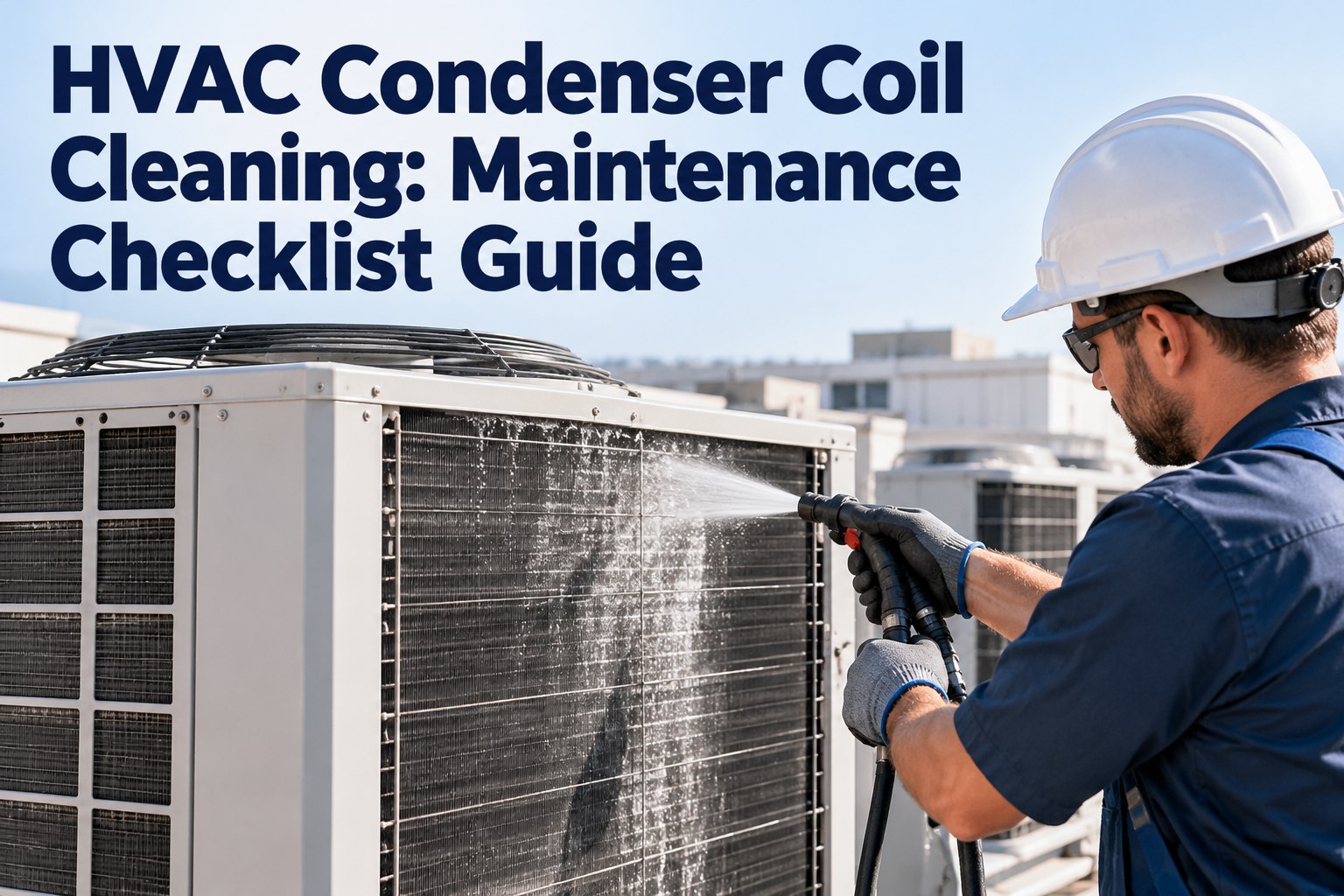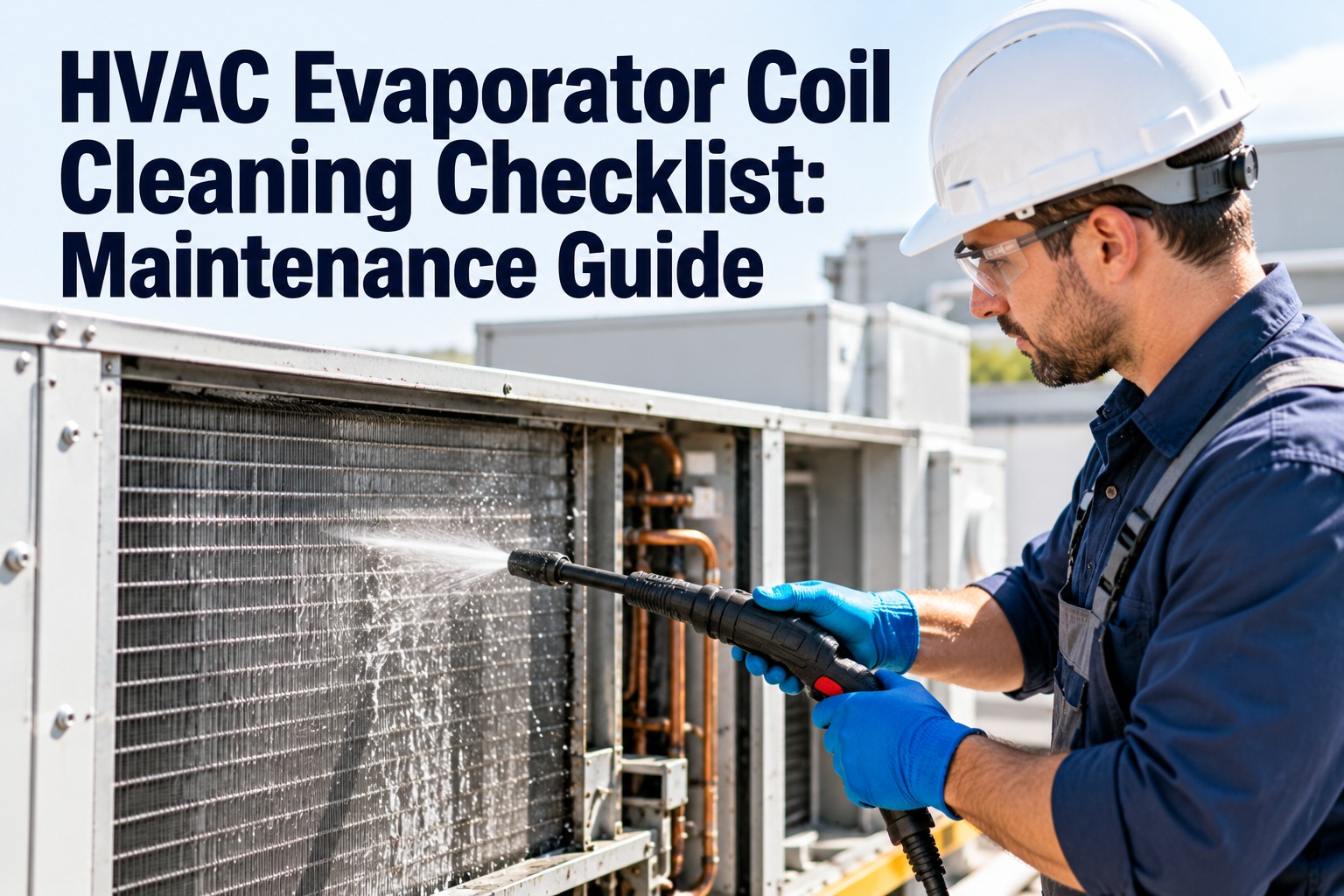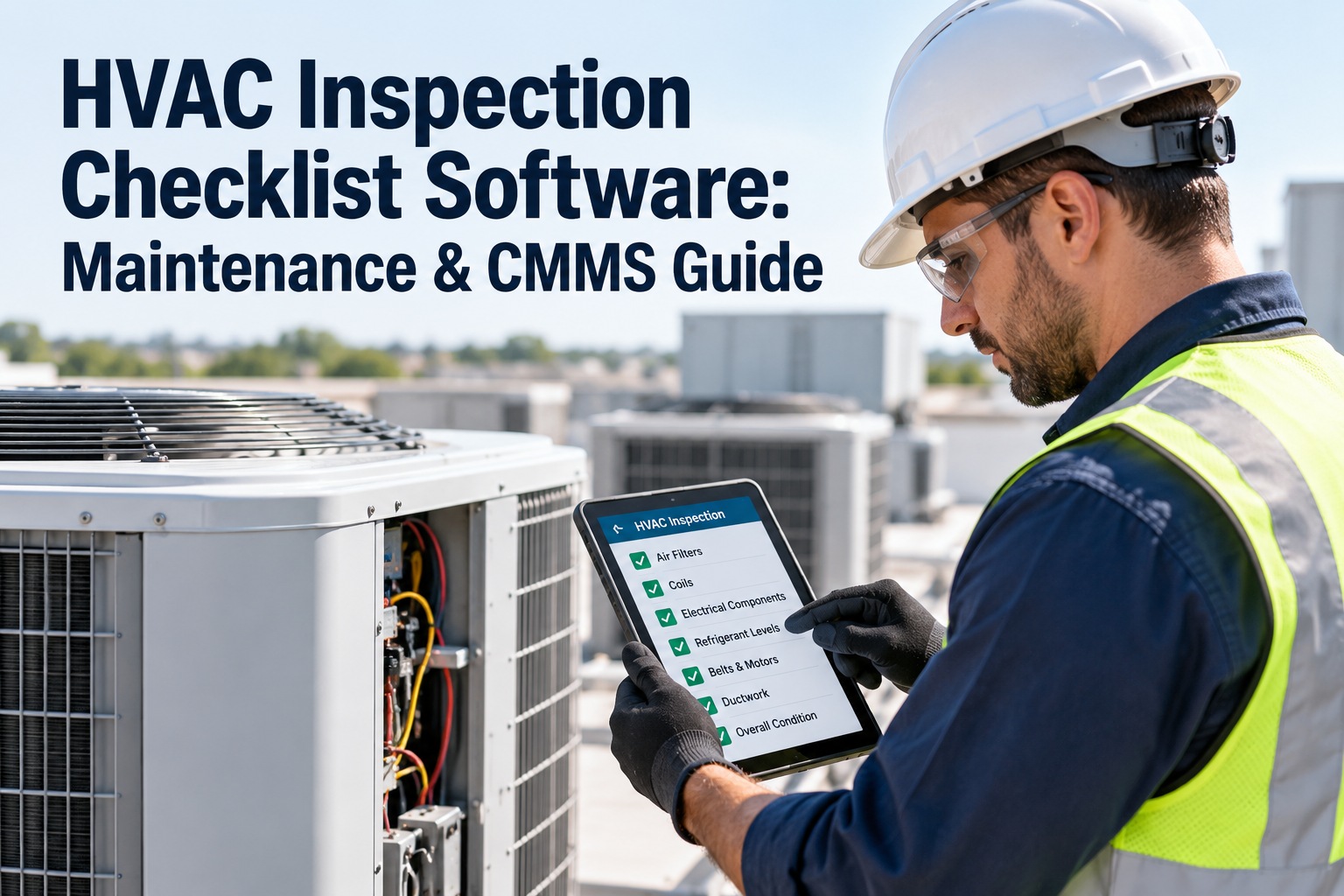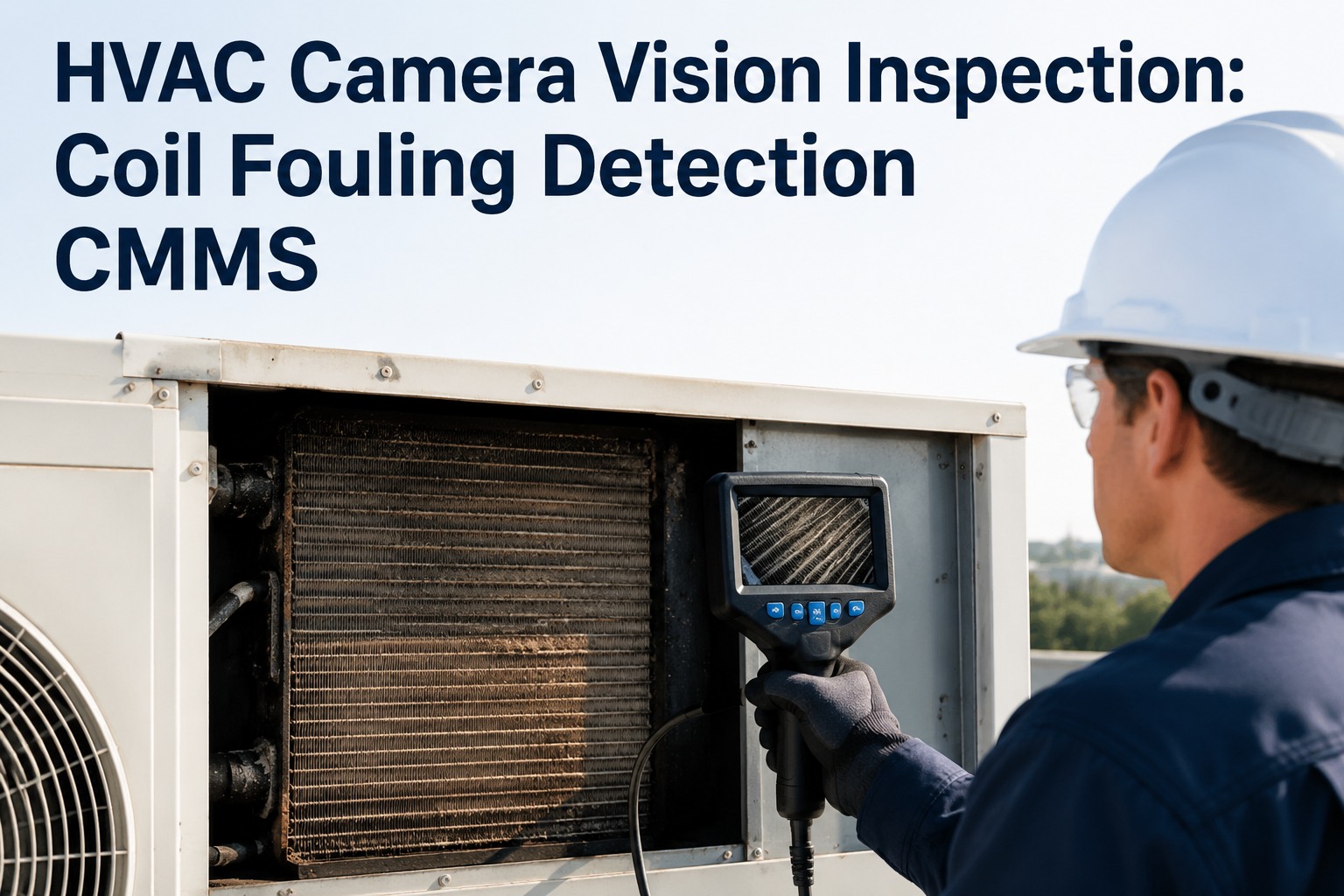
HVAC cooling coil cleaning and maintenance is the single highest-impact task for keeping heat-transfer efficiency above 90% and avoiding costly compressor failures. A structured cooling coil program — covering coil cleaning chemical vs mechanical methods, condensate pan inspection, and coil fin maintenance — can cut HVAC energy consumption by 10–30% and extend equipment life by 5–8 years. This guide walks through every inspection point, cleaning method, and scheduling best practice, then shows how a CMMS coil cleaning workflow automates the entire process. Ready to digitize your preventive maintenance? Start Free Trial and deploy your first work-order template in under an hour.
Is a dirty cooling coil silently inflating your energy bill by 30%?
A 0.015-inch biofilm on a cooling coil drops heat-transfer efficiency by 21% and pushes compressor amperage up by 14%. Most facilities only clean coils reactively — after occupancy complaints or a tripped breaker. A CMMS-backed cooling coil program eliminates that lag, scheduling chemical and mechanical cleans before efficiency erodes. OxMaint automates the triggers, checklists, and documentation so nothing slips.
Chemical vs Mechanical Coil Cleaning: Which Method Wins?
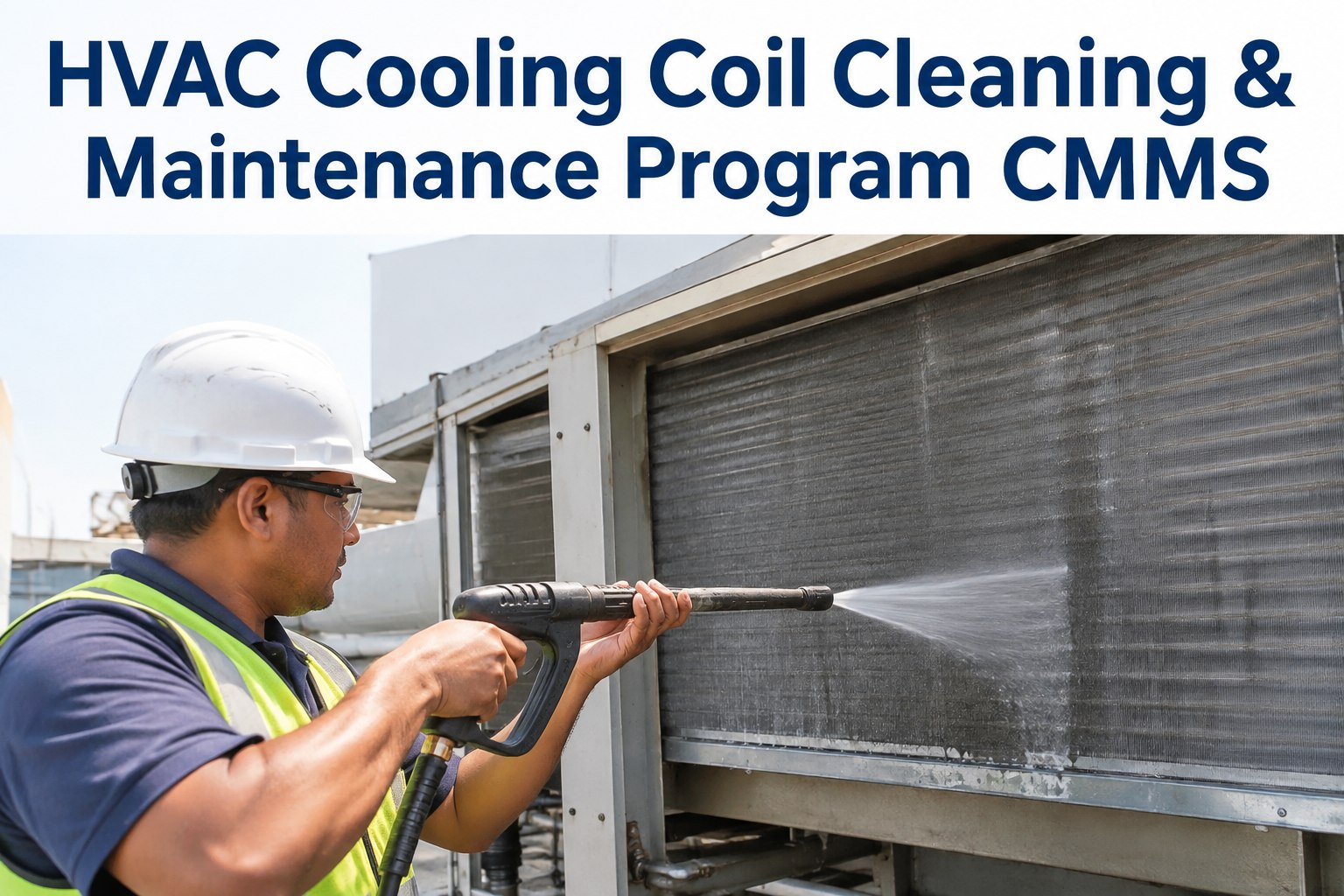
Choosing the right coil cleaning method depends on fouling type, coil age, and accessibility. The wrong choice can damage aluminum fins or push debris deeper into the tube bundle. Below is a head-to-head comparison facilities teams use to build their cooling coil program.
| Criteria | Chemical Cleaning | Mechanical Cleaning | Recommended For |
|---|---|---|---|
| Fouling Type | Biological slime, mineral scale, grease | Dry dust, lint, pollen, debris | Light-to-moderate fouling |
| Dwell Time | 10–20 min + rinse cycle | 5–10 min per coil face | Quarterly PM windows |
| Risk of Fin Damage | Low — if pH-neutral coil cleaner used | Moderate — if pressure exceeds 100 PSI | Older coils (10+ yrs) |
| Efficiency Recovery | 18–30% gain | 8–15% gain | Post-summer deep clean |
| Labor Cost per AHU | $85–$140 | $45–$90 | Budget-constrained sites |
| Documentation Burden | High — SDS, dilution ratios, wastewater logs | Low — photo + checklist sign-off | OxMaint mobile app auto-logs both |
High-pressure washing is the fastest way to deep-clean any cooling coil.
Pressure above 100 PSI bends aluminum fins, reduces airflow, and voids some OEM warranties. Foaming chemical cleaners followed by a low-pressure rinse remove biological film without fin damage — and OxMaint's PM template enforces the correct PSI check before every job.
HVAC Cooling Coil Inspection Checklist: 12 Points That Prevent Breakdowns
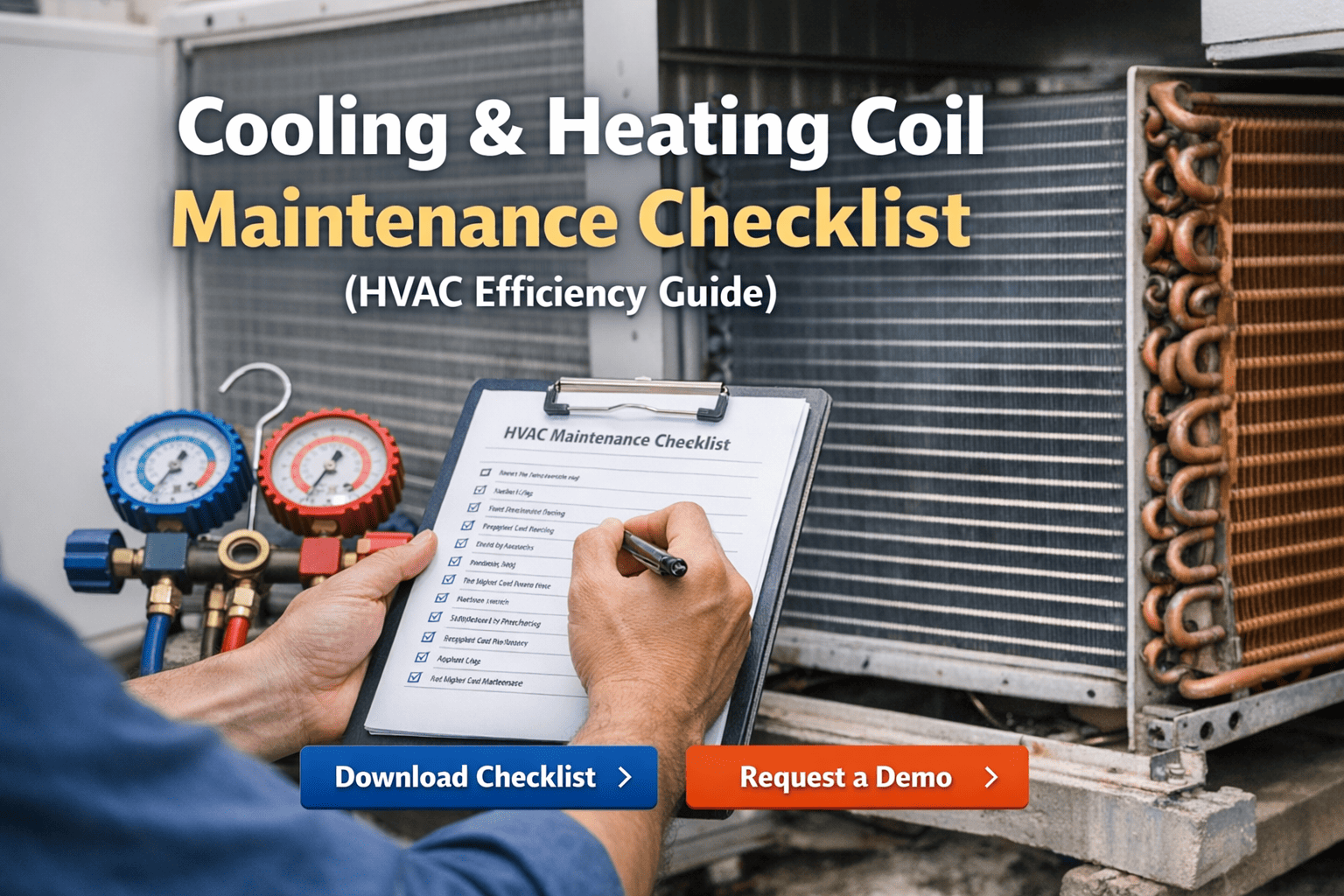
A complete cooling coil inspection covers four subsystems: coil surface, condensate management, fin condition, and airflow. Use this 12-point checklist as the backbone of your CMMS cooling coil PM template — each item maps directly to an OxMaint work-order task line.
Coil Surface & Tube Bundle
- Inspect face area for uniform airflow — no bypass gaps
- Check for biological slime, mold, or algae growth on fin edges
- Identify white mineral deposits indicating hard-water scaling
Condensate Pan & Drain
- Pour 1 quart of water into pan — confirm drain clears in under 60 sec
- Inspect for standing water, rust, or biological contamination
- Verify pan tabs or biocide tablets are present and not dissolved
Fin Condition & Airflow
- Run a fin comb across damaged sections — straighten to OEM fin spacing
- Measure static pressure drop across coil; flag if above 0.30 in. WC
- Confirm filter upstream is clean — dirty filters push fouling onto coils
Frame, Valves & Connections
- Check coil frame for corrosion, galvanic reaction, or insulation gaps
- Inspect chilled-water supply/return valves for leaks or packing wear
- Verify condensate trap is primed and correctly sized per ASHRAE 62.1
"A 180-asset pharmaceutical plant in New Jersey was spending $42K/year on reactive coil cleaning and compressor replacements. After deploying OxMaint's quarterly cooling coil PM with photo documentation, their energy recovery improved by 22% and unplanned HVAC downtime dropped to near zero within 6 months."
— Worked example based on aggregated OxMaint deployment dataHow to Build a Cooling Coil Maintenance Program: A 12-Month Timeline
A defensible coil maintenance program isn't a single annual clean — it's a layered schedule of inspections, light mechanical cleans, and deep chemical treatments timed to seasonal load. Below is a proven 12-month cadence that OxMaint can auto-generate from a single asset tag.
Vacuum coil face, blow out debris with <100 PSI nitrogen, straighten fins. Inspect condensate pan. Low season — 1 tech, 45 min per AHU.
Full 12-point checklist. Measure static pressure baseline. Replace pan tabs. Confirm drain clears in under 60 sec before summer load hits.
Visual inspection + photo log during peak load. Flag biological growth early. OxMaint sends mobile alerts if runtime hours exceed threshold.
Apply pH-neutral foaming coil cleaner, 15-min dwell, low-pressure rinse. Log SDS, dilution ratio, and wastewater disposal. Efficiency recovery: 18–30%.
Re-measure static pressure, compare to April baseline. Replace corroded pan sections. Update PM template in OxMaint for next year's cycle.
How OxMaint Automates Your Cooling Coil CMMS Workflow
Most facilities run coil cleaning on spreadsheets or memory — which is why 60% of PMs slip past their due date. OxMaint replaces that with an AI-powered CMMS that triggers, documents, and analyzes every coil maintenance event. Here's what changes the day you switch.
Auto-Generated PM Work Orders
OxMaint generates quarterly coil-cleaning work orders based on asset runtime, calendar triggers, or seasonal load profiles — no manual scheduling. Techs get mobile push notifications with the full 12-point checklist, SDS links, and required PPE pre-loaded.
Outcome: 95%+ PM compliance ratePredictive Coil Degradation Alerts
OxMaint's AI engine analyzes static-pressure trends, compressor amperage, and runtime hours to predict coil fouling before efficiency drops 10%. Alerts fire 2–4 weeks ahead, letting you schedule cleans during low-occupancy windows instead of reacting to complaints.
Outcome: 30–50% fewer unplanned HVAC eventsAudit-Ready Documentation
Every coil clean is auto-documented: before/after photos, chemical lot numbers, dilution ratios, technician sign-off, and time stamps. Export a full compliance report in one click for ISO 55000, LEED, or internal audit — no more scrambling through email threads.
Outcome: Zero documentation gaps at auditSpare-Parts & Chemical Inventory
OxMaint tracks coil cleaner stock levels, pan tabs, fin combs, and replacement coils in real time. When a PM work order fires, required materials are auto-reserved. Reorder points trigger purchase requests so you never delay a clean because you're out of foaming agent.
Outcome: 40% reduction in parts stockoutsWhat Does a Cooling Coil Program Cost vs Save?
A 200-AHU facility running reactive coil cleaning typically loses $85K–$120K/year in excess energy, emergency labor, and premature compressor replacement. A CMMS-managed preventive program costs a fraction of that — and pays for itself in the first quarter.
Example: 200 AHUs × 3,500 kWh saved/AHU = 700,000 kWh → $84,000/yr in energy alone, before repair and labor savings.
See OxMaint manage your cooling coil PM — book a 30-min demo
Watch a live build of your 12-point coil inspection template, predictive fouling alerts, and one-click audit reports on your own asset hierarchy.
HVAC Cooling Coil Cleaning & Maintenance: Top Questions
How often should HVAC cooling coils be cleaned?
Most commercial HVAC cooling coils need a light mechanical clean quarterly and a deep chemical clean twice a year — typically pre-season (April–May) and post-season (September–October). Facilities in high-dust, humid, or industrial environments may require monthly inspections during peak load. OxMaint's CMMS auto-triggers the correct frequency based on runtime hours, static-pressure trends, and asset criticality, so no coil is missed. Book a Demo to see automated scheduling on your asset list.
What is the best chemical for cleaning cooling coils?
A pH-neutral, self-rinsing foaming coil cleaner (pH 7–8.5) is the safest and most effective choice for most HVAC cooling coils. Avoid acidic or alkaline coil cleaners (pH below 6 or above 9) on aluminum fins — they accelerate corrosion and can void OEM warranties. Always verify the cleaner is EPA-registered for HVAC use, follow the manufacturer's dwell time (usually 10–15 minutes), and rinse with water below 100 PSI.
Can a CMMS automate cooling coil maintenance scheduling?
Yes — a CMMS like OxMaint auto-generates preventive maintenance work orders based on calendar intervals, runtime hours, or seasonal triggers. Each work order arrives on the technician's mobile app with the full inspection checklist, chemical SDS, required PPE, and spare-parts reservation. The system also flags overdue PMs and escalates to supervisors, driving compliance rates above 95%.
How do I inspect a condensate drain pan?
Pour one quart of clean water into the pan and confirm the drain clears it in under 60 seconds. Check for standing water, rust holes, biological slime, and dissolved pan tabs. If drain time exceeds 60 seconds, clear the trap with a wet vac or flexible rod — a clogged pan is the #1 cause of ceiling damage and mold growth in commercial buildings. Document the result with a photo in your CMMS for audit trails.
What happens if you don't clean cooling coils?
Uncleaned cooling coils accumulate a biofilm that can reduce heat-transfer efficiency by 20–30%, increase compressor amperage by 14%, and shorten compressor life by 3–5 years. A 0.015-inch fouling layer forces the system to run longer cycles, raising energy bills and freezing the coil — which can crack refrigerant lines and trigger $5K–$15K emergency repairs. The ROI on a scheduled cleaning program is typically under 4 months.
Stop losing 30% of your HVAC efficiency to dirty coils
Deploy OxMaint's cooling coil PM template in under an hour. Auto-schedule cleans, predict fouling before it costs you, and export audit-ready reports in one click.
Free 14-day trial · No credit card