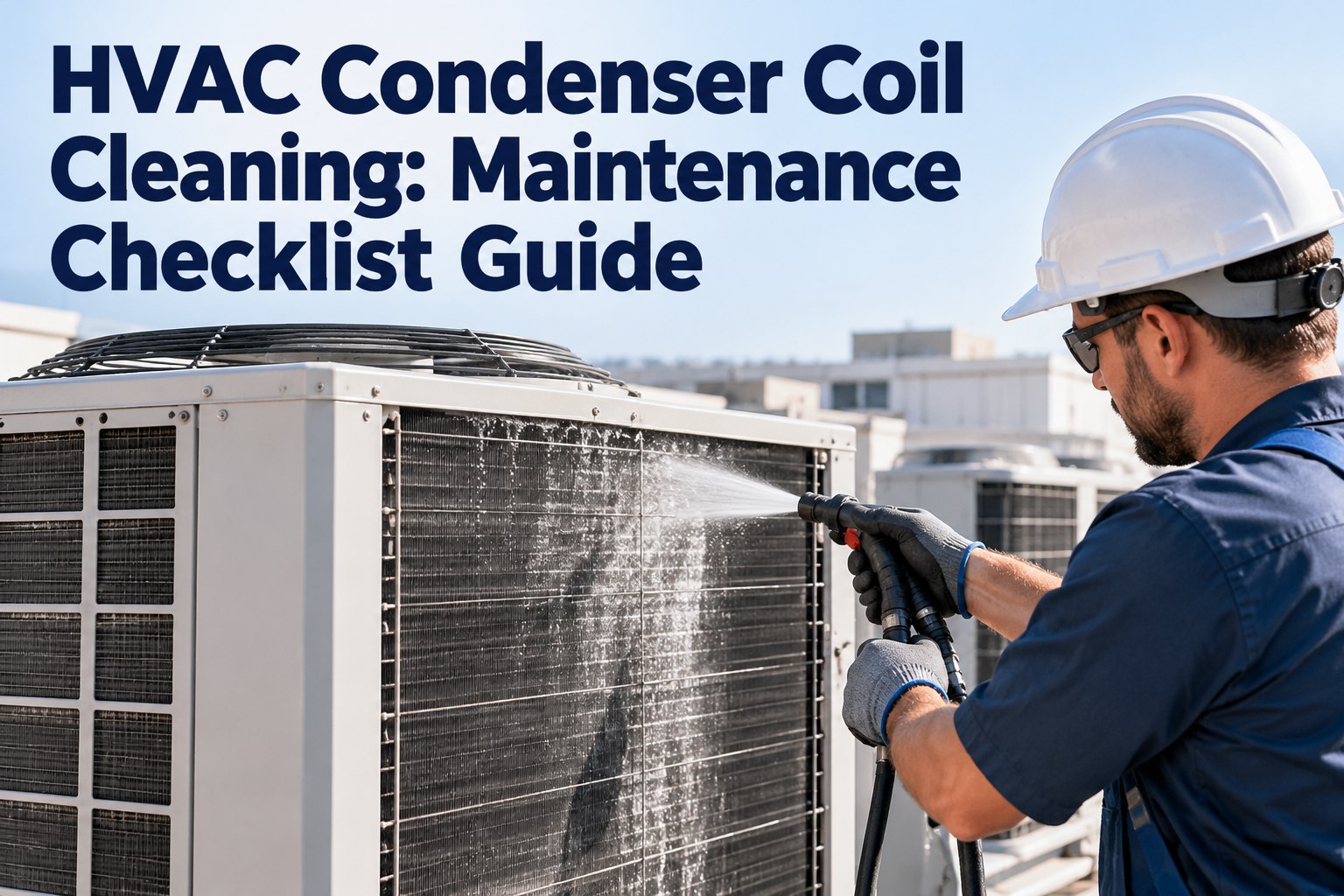
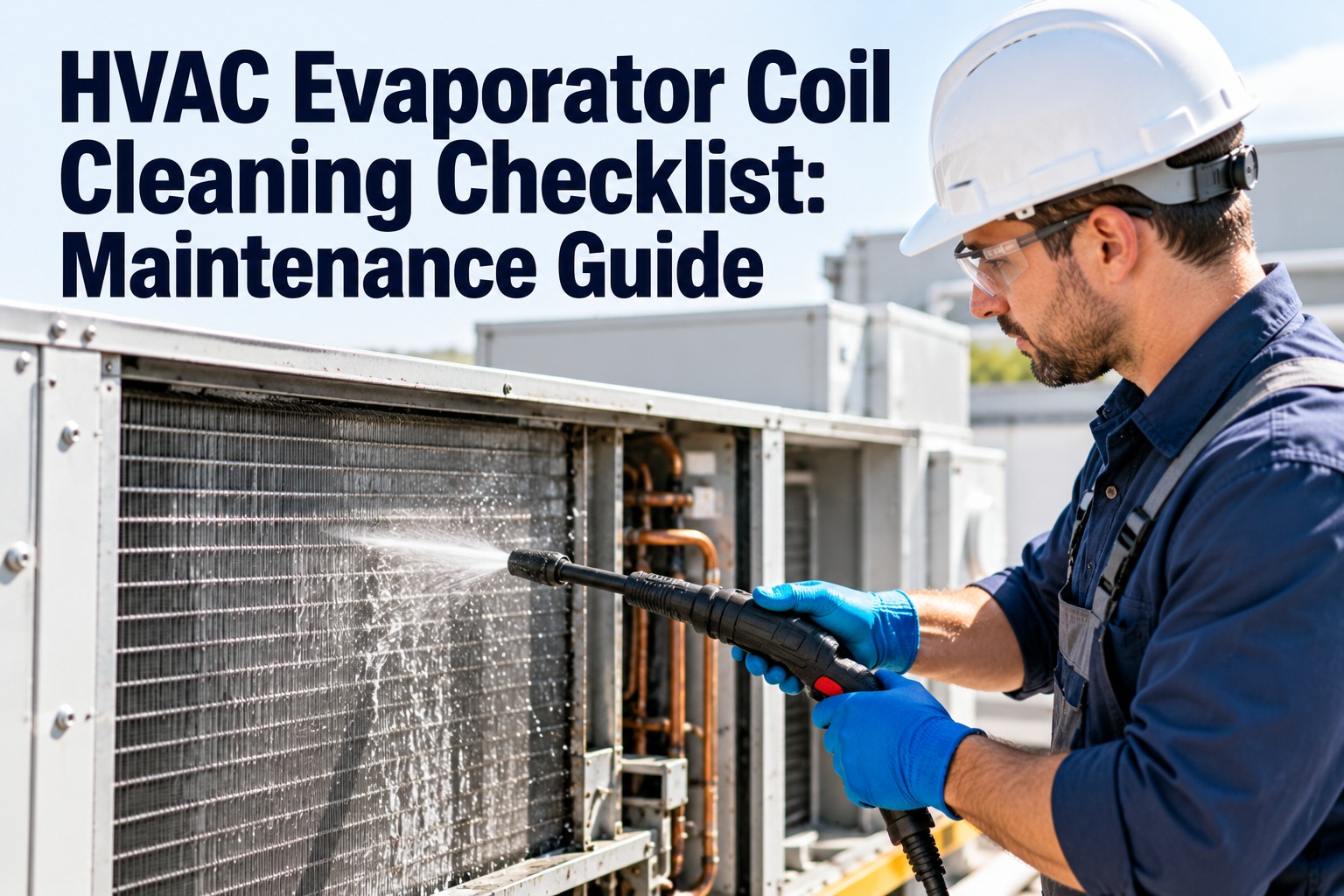
A condenser coil coated in dust, grease, cottonwood or leaves can't release heat properly, so the compressor works harder, cooling slips and energy use creeps up — often long before anyone notices. Cleaning the coil is one of the simplest HVAC maintenance jobs, yet it's easy to skip or do wrong. This guide gives you a practical condenser coil cleaning checklist, a safe step-by-step procedure, and shows how OXMAINT AI, the AI-powered CMMS, schedules it and records every result.
HVAC Condenser Coils · Inspections · Work Orders · Preventive Maintenance
HVAC Condenser Coil Cleaning Checklist: Keep Heat Moving Out Before Dirt Slows Your Cooling Down
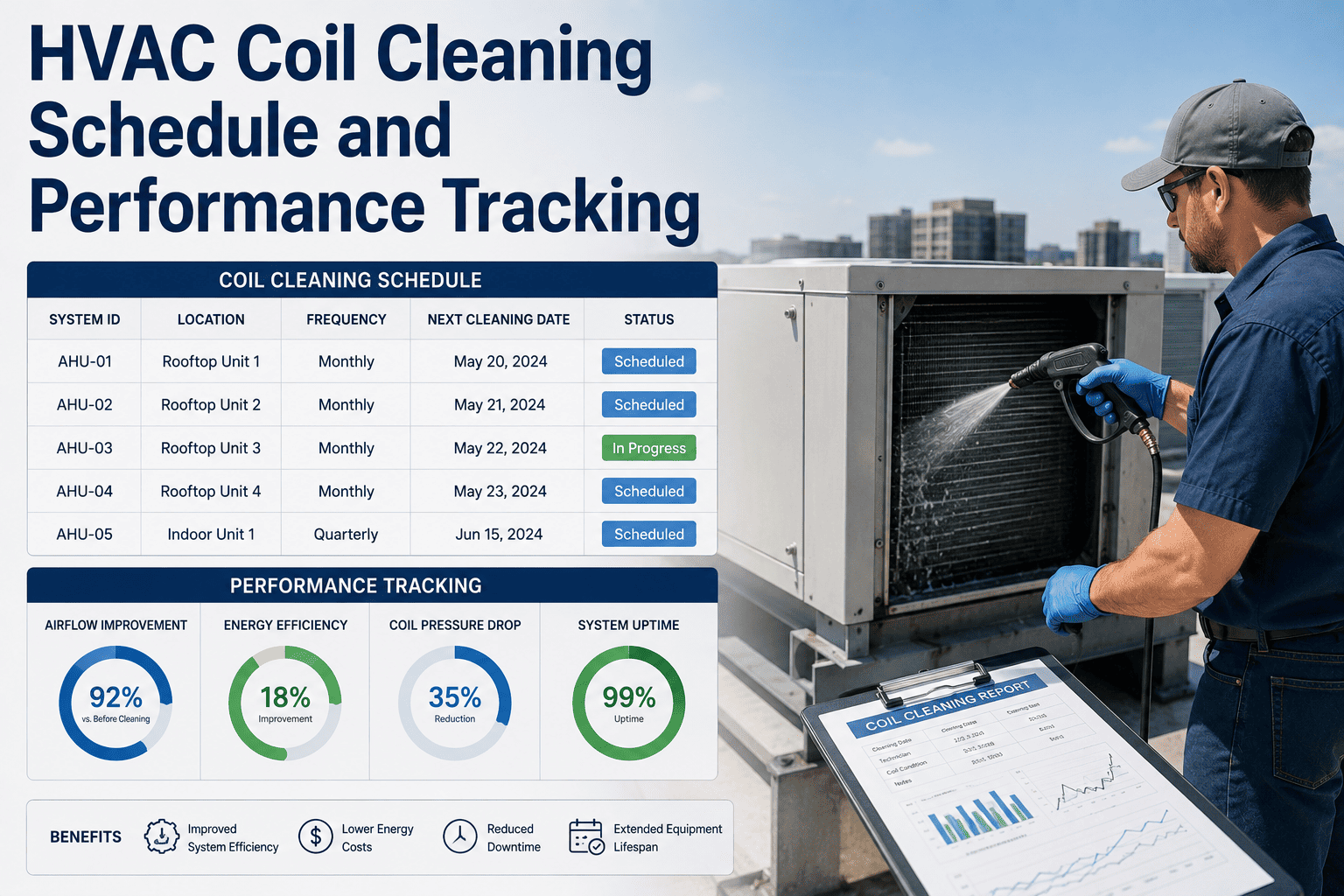
Coil cleaning gets missed because nothing breaks on the day it's due. Units quietly run hotter, work harder and drift from their baseline until a tenant complains or a compressor trips. OXMAINT AI-powered CMMS ties the routine together in one platform: the coil inspection finds the fouling, the finding becomes a work order, and a preventive schedule brings the cleaning back every cycle — with history kept on each unit.
FROM INSPECTION TO CLEAN COIL
1
Inspect the coil
Fouling, bent fins, corrosion noted
↓
2
Log the issue
Recorded against the unit
↓
3
Work order
Assigned with the cleaning checklist
↓
4
Recurring PM
Next cleaning scheduled automatically
Why a Dirty Coil Costs You More Than You Think
The condenser's job is to reject heat. A layer of dirt acts like a blanket on the fins and restricts airflow. Heat transfer drops, refrigerant pressures climb and the system uses more energy to deliver the same cooling. Book a demo to see how OXMAINT AI tracks coil condition by unit.
DIRTY COIL
Restricted airflow
Higher head pressure
Compressor works harder
More energy per unit of cooling
Higher risk of high-pressure trips
VS
CLEAN COIL
Free airflow across fins
Pressures near design values
Less strain on the compressor
Cooling delivered efficiently
Fewer nuisance trips
6 Signs It's Time to Clean the Coil
▲
Rising head pressure
Readings creep above the unit's normal baseline.
▲
Longer run times
The unit runs more to hold the same setpoint.
▲
Visible dirt or debris
Dust mats, leaves, cottonwood or grease on the fins.
▲
Weaker cooling
Warmer spaces or complaints on hot days.
▲
High-pressure trips
Safety cut-outs during peak load.
▲
Climbing energy use
Utility readings drift upward for the same weather.
The Step-by-Step Cleaning Procedure
Follow the manufacturer's instructions for your equipment and your site's safety rules. This is a general outline for routine cleaning. Start free and turn it into a reusable checklist in OXMAINT AI.
1
Isolate and lock out power
Switch off and lock out the unit at the disconnect. Verify it is de-energized before touching anything.
2
Record baseline readings
Note unit ID, discharge pressure, temperatures and visible coil condition for before-and-after comparison.
3
Clear loose debris
Remove leaves, paper and vegetation around the unit. Keep the recommended clearance on all sides.
4
Protect electrical parts
Cover motors, controls and wiring before using any water or cleaner.
5
Apply a coil-safe cleaner
Use a cleaner approved for your coil material and follow the label for dwell time.
6
Rinse gently, from the inside out
Spray against the normal airflow direction, along the fins, with moderate pressure to avoid bending them.
7
Straighten fins and inspect
Use a fin comb on bent fins. Look for corrosion, oil stains and refrigerant leak signs.
8
Restart, verify and document
Remove covers, restore power, check fan rotation and pressures, and record after-readings and photos.
If the Cleaning Isn't Recorded, It Can't Be Scheduled or Proven.
OXMAINT AI keeps each condenser's checklist, readings, photos and cleaning dates on the asset, and generates the next PM automatically — so nothing relies on someone remembering.
How Often Should You Clean? It Depends on the Site
Many facilities clean condenser coils at least once a year, but the right interval depends on what's in the air. Use inspections to adjust.
Clean environment
Indoor-adjacent, little dust or vegetation
Annual check
Dusty or urban
Construction, traffic or industrial dust
Check more often
Vegetation & seasonal debris
Trees, cottonwood, grass clippings
Seasonal cleaning
Coastal or greasy air
Salt air, kitchen exhaust nearby
Frequent inspection
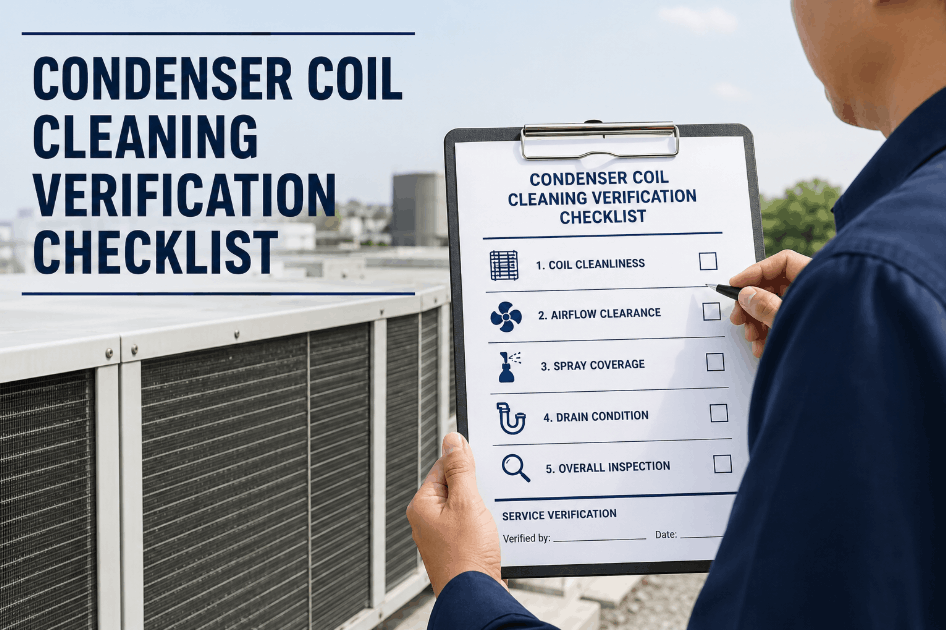
Quick Tick-Box Checklist
Before
Power isolated and locked out
Baseline readings recorded
Clearance around unit checked
Electrical parts protected
During
Loose debris removed
Approved cleaner applied
Rinsed from the inside out
Fins straightened where bent
After
Fan and motor operation verified
Pressures and temperatures compared
Photos and notes saved
Next PM date scheduled
Mistakes That Damage Coils
High-pressure spraying. It flattens delicate fins and pushes dirt deeper into the coil.
Wrong cleaner. Harsh or incompatible chemicals can corrode coil material. Check the manufacturer's guidance.
Cleaning with the power on. It's a shock and equipment-damage risk. Always isolate first.
Skipping the records. Without before-and-after data you can't tell whether cleaning worked.
Safety note: Work on rooftop units and elevated equipment requires fall protection and site permits. Only qualified personnel should handle electrical or refrigerant work, and the manufacturer's instructions always take priority over this guide.
“
Coil cleaning used to live on a spreadsheet nobody trusted. Once each unit had its own checklist, photos and a recurring PM, we could see what was done, what was overdue and which units kept getting dirty again.
Facilities Supervisor · Commercial Building Operator
Frequently Asked Questions
How often should condenser coils be cleaned?
What happens if condenser coils are not cleaned?
Dirt restricts airflow and heat transfer, which can raise pressures, increase energy use, reduce cooling and add strain to the compressor.
Can I use a pressure washer on a condenser coil?
Avoid high pressure, which can bend fins. Use gentle water flow and a coil-safe cleaner, and follow the unit manufacturer's guidance.
Which direction should I rinse the coil?
Generally against the normal airflow direction, so dirt is pushed out the way it came in. Confirm with your equipment manual.
How does a CMMS help with coil cleaning?
It schedules recurring cleaning PMs, stores checklists, readings and photos by unit, and turns inspection findings into work orders.
Start free with OXMAINT AI.
Make Coil Cleaning a Habit, Not a Surprise.
Put every condenser on a preventive schedule with checklists, photos and history in one place. Set up your HVAC coil cleaning routine in OXMAINT AI and know exactly what's due.