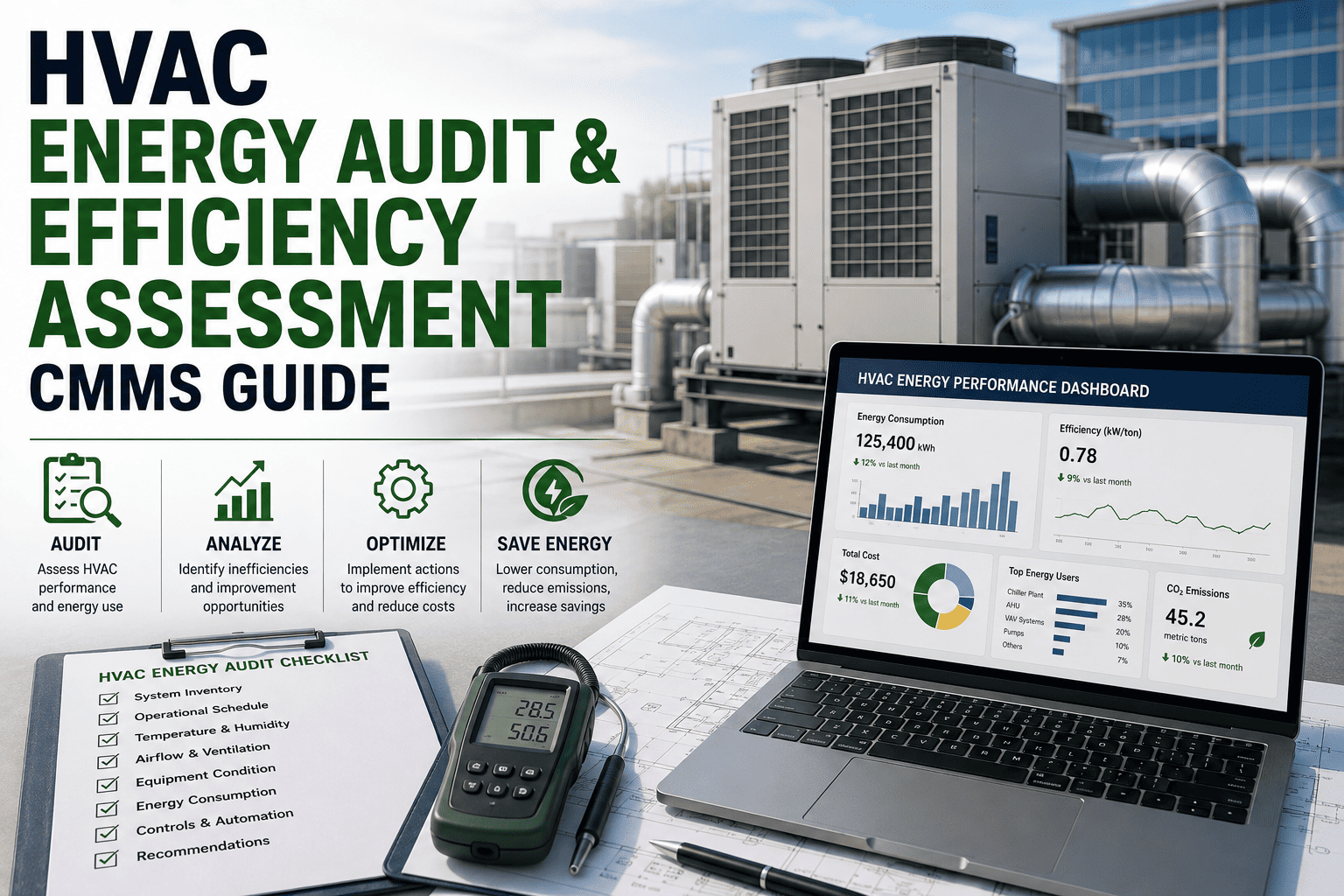
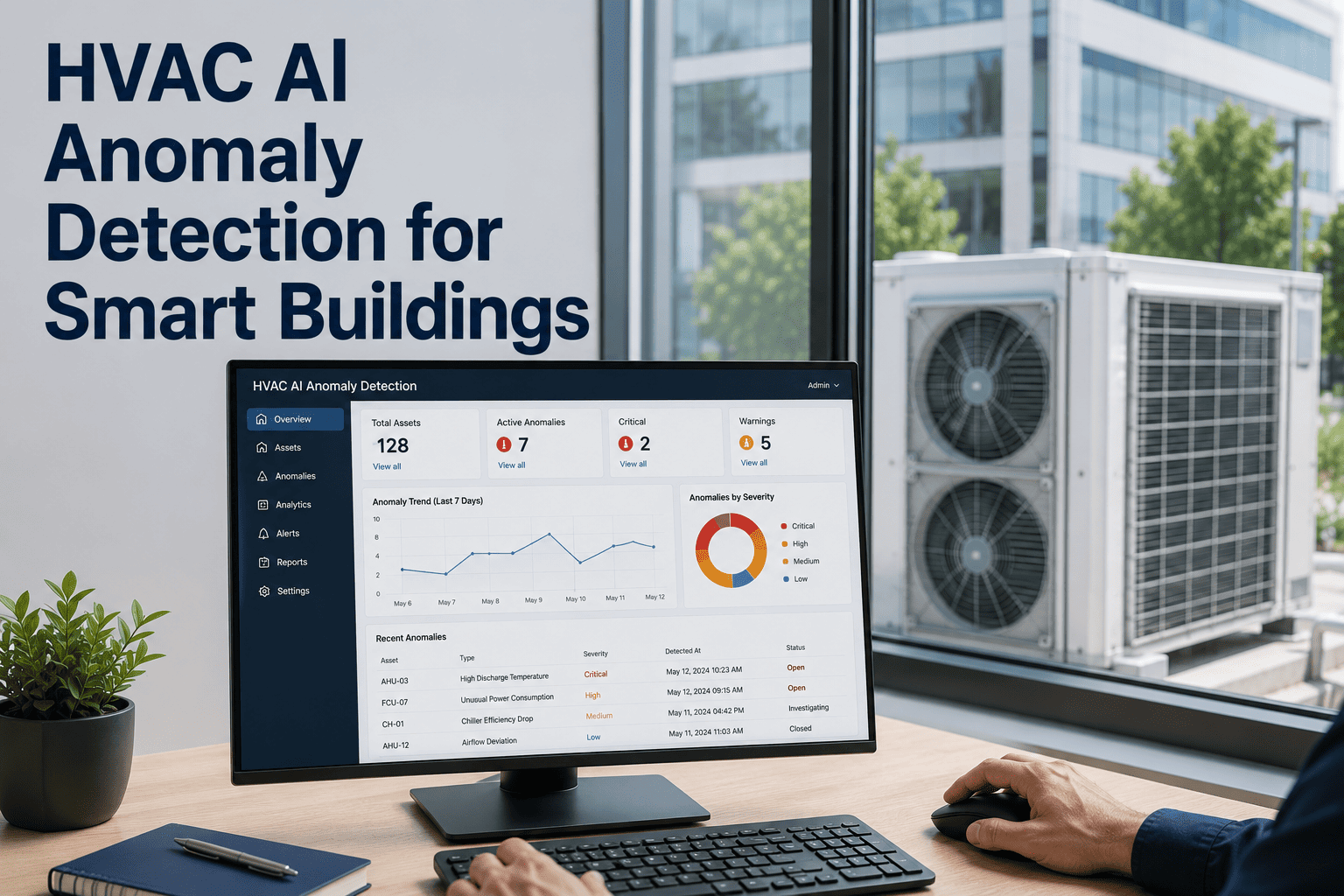
Building Management Systems generate continuous HVAC operational data — yet most facilities extract only fault codes and ignore the deeper energy waste signals buried in runtime patterns, sensor deviations, and simultaneous heating and cooling anomalies. A chiller running 18% above its baseline kW draw at identical outdoor conditions is not producing a fault code. A zone with simultaneous heating and cooling active is not triggering a BMS alarm. These invisible inefficiencies inflate utility bills by 10–25% before they surface as comfort complaints or equipment failures. Oxmaint's energy and ESG reporting module connects BMS telemetry to maintenance workflows — converting energy anomaly detection into actionable work orders that technicians execute before waste compounds. Facility teams ready to turn BMS data into energy savings can Sign Up Free and begin configuring energy deviation alerts against HVAC asset baselines within the first week. For operations teams managing BMS-integrated multi-site portfolios, Book a Demo to see how Oxmaint handles multi-variable energy waste detection at scale.
Oxmaint connects BMS telemetry to maintenance work orders — converting simultaneous heating/cooling, short cycling, and runtime anomalies into energy-saving maintenance actions.
6 HVAC Energy Waste Patterns BMS Data Reveals
Effective HVAC energy waste detection requires moving beyond fault codes to pattern recognition across runtime data, consumption baselines, sensor accuracy, and control sequence behaviour. Oxmaint maps BMS telemetry streams to each HVAC asset and applies configurable anomaly thresholds that trigger maintenance work orders when waste patterns emerge. Teams can Sign Up Free and configure energy deviation rules against specific asset classes without any coding or BMS vendor involvement.
When heating and cooling systems operate concurrently in the same zone, energy is consumed to cancel thermal work already performed — one of the costliest and most overlooked HVAC waste sources in multi-zone buildings.
Compressors or AHUs cycling on and off at abnormal frequency indicate control sequence failures, oversized equipment running inefficiently, or refrigerant charge issues — each driving disproportionate energy draw and accelerated wear.
Faulty temperature or humidity sensors cause HVAC systems to condition against incorrect setpoints — burning energy to correct a reading rather than an actual comfort condition. Oxmaint flags sensor drift through cross-reference deviation analysis.
HVAC units running beyond expected operating hours relative to occupancy schedules signal control logic failures, stuck dampers, or BMS scheduling errors that inflate runtime energy consumption without delivering additional comfort output.
Unexpected energy draw above seasonal or occupancy-normalised baselines — without corresponding load increases — signals coil fouling, refrigerant loss, or airflow restriction that degrades system efficiency invisibly over time.
Economisers locked closed during favourable outdoor conditions, or locked open during high-enthalpy periods, waste significant free cooling or force mechanical cooling under conditions where it should not be required.
HVAC Energy Waste Signals: BMS Data Points and Maintenance Responses
Translating BMS data into energy waste detection requires matching specific telemetry signals to anomaly logic and maintenance actions. This framework maps the BMS signals Oxmaint ingests, the detection threshold that triggers an alert, and the work order response that eliminates the waste. Facilities evaluating BMS-integrated CMMS platforms should Book a Demo to review Oxmaint's BMS connector library and anomaly configuration options before shortlisting.
| Waste Pattern | BMS Signal Source | Detection Threshold | Maintenance Action | Priority |
|---|---|---|---|---|
| Simultaneous Heat/Cool | Zone valve positions + AHU mode | Heating and cooling outputs active >10 min in same zone | Control sequence audit, valve inspection work order | Critical |
| Compressor Short Cycling | Compressor start/stop log + runtime | Cycle frequency >6 starts/hour for 30 min | Refrigerant charge check, controls inspection | Critical |
| Sensor Drift | Zone temp vs supply air vs return air | Delta between co-located sensors >3°C for 20 min | Sensor calibration or replacement work order | Critical |
| Runtime Overage | AHU runtime log vs occupancy schedule | Runtime exceeds occupancy schedule by >2 hours | BMS schedule review, scheduling correction | Important |
| Baseline kW Deviation | Energy meter + outdoor temp normalisation | kW draw >12% above temperature-normalised baseline | Coil cleaning, refrigerant check, filter inspection | Important |
| Economiser Lockout | Outdoor enthalpy sensor + damper position | Damper position misaligned with enthalpy enable logic | Damper actuator inspection, control sequence verification | Important |
| Setpoint Override Waste | Zone setpoint log vs BMS schedule | Manual override active >4 hours outside occupied period | Override audit, BMS access control review | Routine |
| Night Setback Failure | BMS mode + runtime during unoccupied hours | Full conditioning active during scheduled unoccupied period | BMS scheduling correction, setback verification | Routine |
How Facilities Connect BMS Energy Data to Maintenance Workflows Without an IT Project
The gap between BMS data and energy waste correction is rarely technical — it is the absence of a maintenance execution layer that converts anomaly detection into assigned, tracked work orders. Oxmaint bridges this gap with no-code BMS API connections, configurable energy deviation thresholds per asset, and automatic work order generation when waste patterns are detected. Facilities can Sign Up Free and connect their first BMS data stream to HVAC asset records without any custom integration or vendor dependency.
- REST API and IoT gateway BMS connections — no middleware required
- No-code anomaly threshold configuration per HVAC asset class
- Automatic work order generation when energy waste patterns are detected
- Technician mobile app with BMS alert context embedded in work order
- Energy waste cost attribution to maintenance records for ROI tracking
- Audit trail linking each energy anomaly to detection, dispatch, and resolution
- BMS alerts go unacted on? Automatic work order generation closes the loop
- Legacy BMS protocol? Pre-built connectors cover major platform brands
- No energy baseline data? Oxmaint builds baselines from historical runtime records
- Multi-vendor sensor environment? Normalised data mapping across sensor types
- ROI hard to prove? Energy cost deviation attributed to deferred maintenance records
- Compliance gap? Every energy anomaly and resolution is timestamped and exportable
BMS Energy Waste Detection: Investment vs Savings Framework
SaaS pricing with pre-built BMS connectors — no custom integration project, no infrastructure overhead. Most facilities see first energy anomaly detections within 30 days of BMS connection.
Simultaneous heating and cooling in a single zone can waste 15–30% of that zone's total HVAC energy budget annually — a pattern invisible to standard BMS fault code monitoring.
A drifted temperature sensor conditioning against a 3°C error can inflate HVAC energy consumption by 8–12% continuously until the fault is identified and recalibrated through a maintenance work order.
Facilities correcting coil fouling, refrigerant loss, and control sequence faults through BMS-triggered maintenance programmes typically recover 10–20% of annual HVAC energy spend within 12 months.
Eliminating short cycling and baseline kW deviation extends compressor service life by 20–35% — deferring capital replacement costs that exceed platform subscription fees by multiples.
BMS-connected energy waste records support Scope 1 and Scope 2 carbon reporting, LEED operations compliance, and ESG disclosure requirements — reducing compliance preparation overhead significantly.
Why Facility Teams Choose Oxmaint for BMS-Driven HVAC Energy Analytics
Oxmaint is not a standalone energy monitoring tool — it is a maintenance execution platform that converts BMS energy anomalies into completed maintenance work orders. When a waste pattern fires, Oxmaint creates and assigns the work order, gives the technician BMS context on mobile, and tracks the resolution to closure. Facilities managing complex multi-zone environments should Book a Demo to see how BMS-triggered energy waste detection integrates with the full maintenance workflow.
Energy deviation patterns detected in BMS data automatically generate assigned work orders — closing the gap between anomaly identification and maintenance execution without manual monitoring.
Configure energy waste detection thresholds per HVAC asset class — simultaneous operation, runtime overage, baseline deviation — without BMS vendor involvement or custom development.
Field technicians receive BMS alert data and energy deviation context directly inside the work order on mobile — enabling faster, more accurate fault diagnosis without control room access.
Each energy waste event is costed against the HVAC asset maintenance record — enabling ROI reporting that quantifies the financial value of each detection and correction action.
BMS energy anomaly records, correction work orders, and efficiency recovery data support LEED operations, ISO 50001, and Scope 1/2 carbon reporting without separate data collection workflows.
Compare energy waste patterns, detection rates, and efficiency recovery across buildings and campuses — enabling portfolio-level ESG performance management from a single dashboard.
Oxmaint detects simultaneous heating/cooling, short cycling, sensor drift, and runtime anomalies from BMS data — and converts each pattern into a tracked maintenance work order automatically.
HVAC Energy Waste Detection from BMS — Questions Facility Teams Ask
Oxmaint cross-references zone heating valve positions, cooling outputs, and AHU mode signals. When both heating and cooling are active in the same zone beyond a configurable time threshold, a maintenance work order is automatically generated.
Oxmaint builds energy baselines per HVAC asset and applies pattern detection against runtime data, consumption trends, and sensor cross-references — identifying waste conditions that operate below standard BMS fault thresholds.
Yes. Sensor drift detection compares co-located temperature readings and conditioning outputs. When a drifted sensor causes the system to condition against an incorrect setpoint, Oxmaint flags the anomaly and generates a calibration work order.
Each energy anomaly is attributed to the HVAC asset's cost record with the kW deviation and estimated waste cost calculated against current utility rates — enabling ROI reporting on each corrective maintenance action.
Yes. BMS anomaly records, energy deviation data, and correction work orders feed directly into Oxmaint's ESG reporting module — supporting LEED operations, ISO 50001, and Scope 1/2 carbon disclosure requirements.
Most facilities complete BMS API connection, HVAC asset mapping, and first energy anomaly threshold configuration within 30–45 days. Initial energy waste detections and work orders typically begin firing within the first month of operation.
Oxmaint gives facility teams BMS-connected energy anomaly detection, automatic work order generation, and ESG-ready energy reporting — without custom development or IT project overhead.