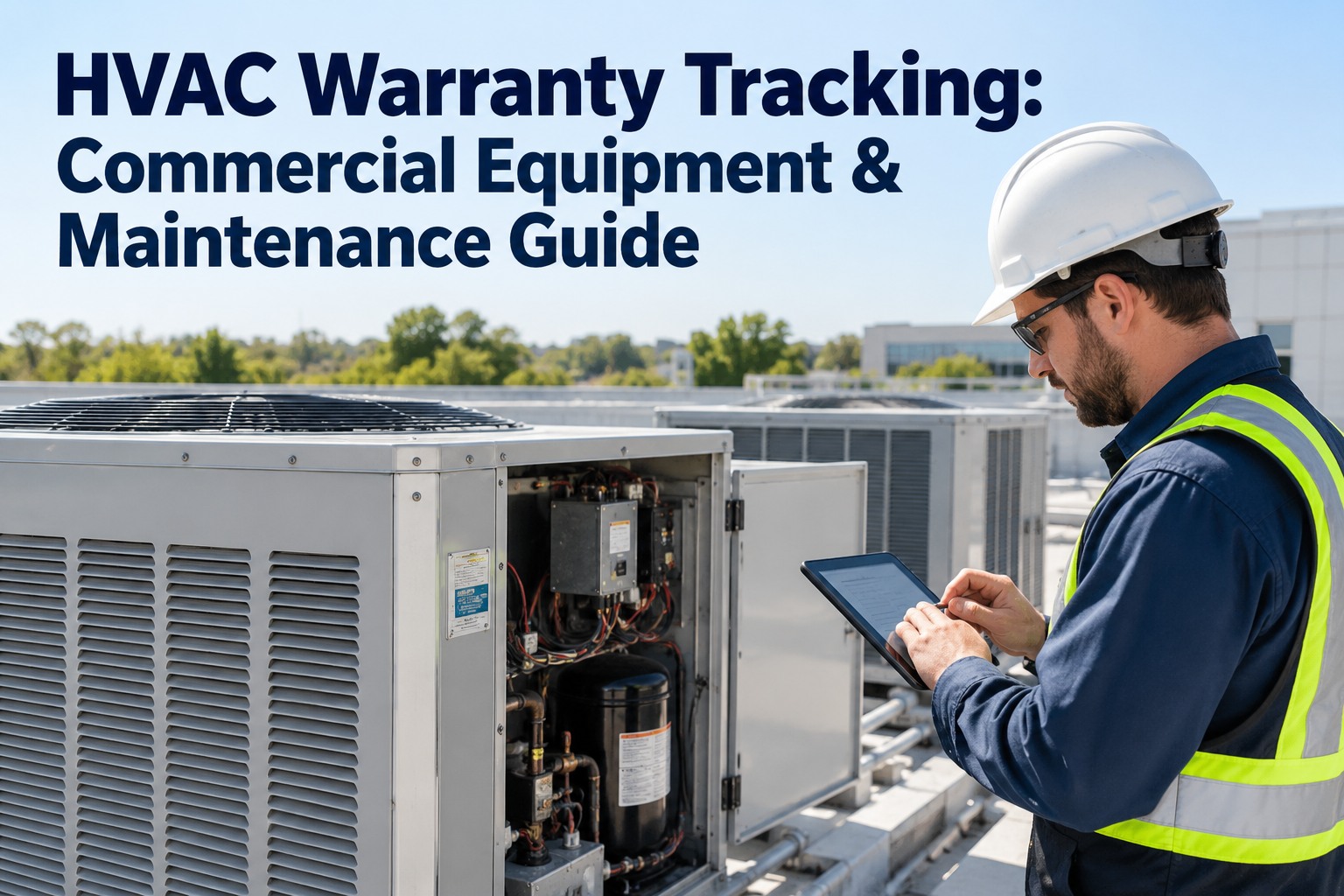
Every HVAC system ships with a manufacturer's warranty — typically 5 years on parts, 1 year on labor, and sometimes 10-20 years on compressors and heat exchangers. But base warranties only cover a fraction of the equipment's expected 15-25 year service life. That's where extended warranties come in — and where most facility managers, property owners, and HVAC contractors lose money they didn't need to spend. The HVAC extended warranty market reached $4.3 billion in 2024, growing at 8.7% CAGR, driven by rising equipment costs (a commercial rooftop unit now averages $8,000-$25,000) and increasingly complex systems with more failure-prone electronic components (IBISWorld, 2024). Yet an estimated 35-40% of valid extended warranty claims are never filed because the warranty expired without anyone noticing, the required maintenance documentation was incomplete, or the claim process was simply too cumbersome to navigate (Consumer Reports / Warranty Week, 2024). On the flip side, 28% of facilities pay for extended warranties they never use — either because the equipment was replaced before the warranty period ended, or because the warranty coverage overlapped with existing service contracts (Facility Management Journal, 2024). The problem isn't the warranties themselves — it's the management of them.
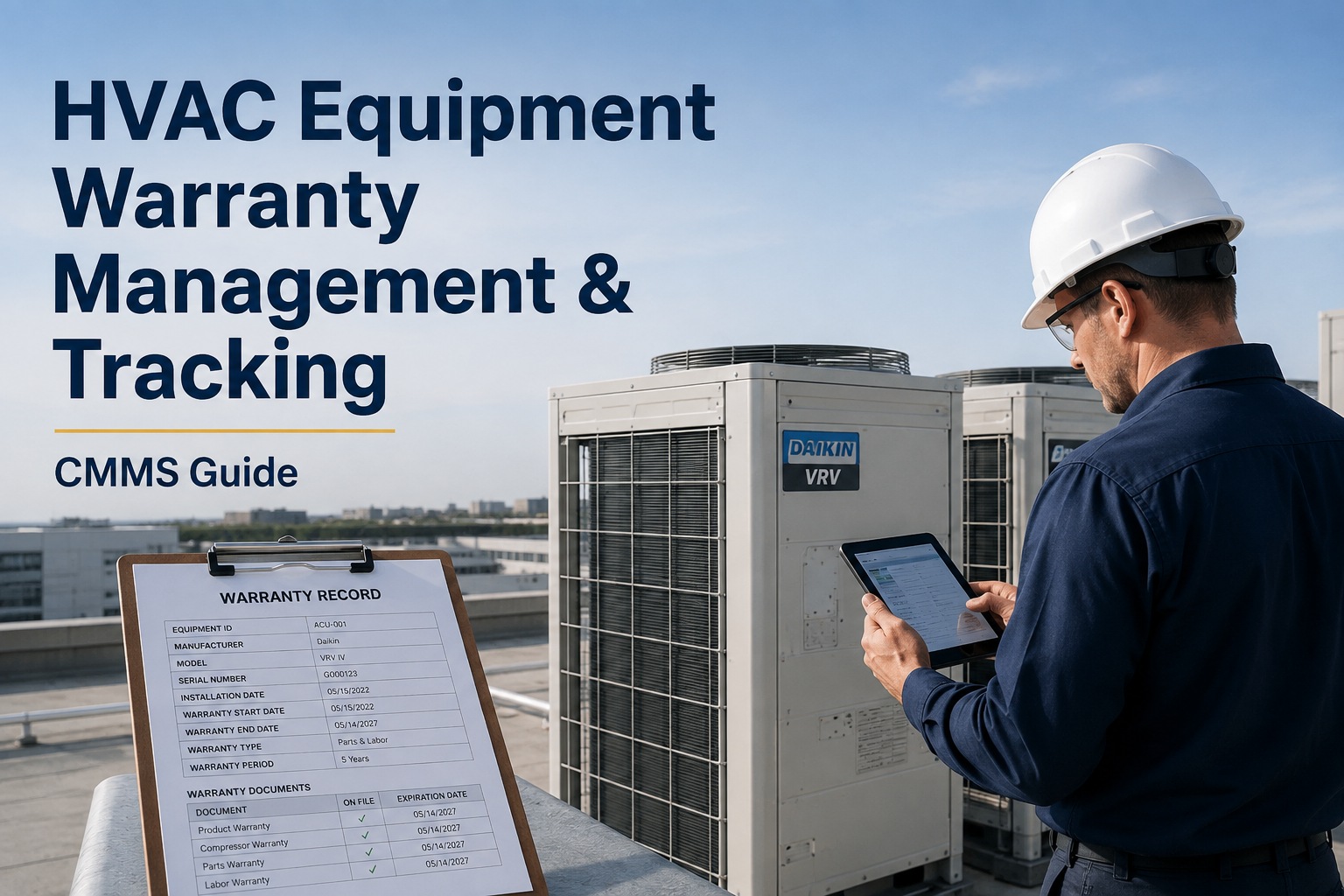
Managing HVAC extended warranties across a portfolio of buildings means tracking coverage dates, understanding what's covered (and what's excluded), maintaining the documentation required to keep warranties valid, filing claims before deadlines, and making informed purchase decisions about which warranties are actually worth the investment. Oxmaint CMMS centralizes warranty tracking for every HVAC asset — with expiration alerts, required maintenance compliance verification, claim documentation packaging, and cost-benefit analysis that tells you which extended warranties saved money and which ones were wasted spend. Schedule a demo.
The HVAC Warranty Landscape: What's Covered and What's Not
HVAC warranties are layered — base manufacturer warranty, optional extended warranty, and sometimes third-party service agreements. Understanding the coverage map is essential before making purchase or claim decisions:
Never Miss a Warranty Claim. Never Void a Warranty From Missed Maintenance.
Oxmaint tracks every warranty — base, extended, and component-specific — with expiration alerts at 90/60/30 days, required maintenance compliance verification, and claim documentation packaging.
The Six Ways Facilities Lose Money on HVAC Warranties
HVAC warranty losses aren't dramatic events — they're quiet, systematic failures of tracking and documentation that accumulate into significant financial waste:
Expired Claims — Money Left on the Table
A rooftop unit compressor fails 8 months before the extended warranty expires. The facility manager doesn't know the warranty is still active — the purchase records are in a filing cabinet from 6 years ago, and nobody checked. They pay $4,500 for the compressor replacement out of the maintenance budget. The warranty would have covered the full cost. Across a portfolio of 50+ HVAC units, expired-but-valid warranty claims average $15,000-$50,000 annually in lost recovery.
Voided Warranties — Documentation Gaps Kill Coverage
A chiller manufacturer denies a $12,000 compressor warranty claim because the facility cannot provide documentation of required semi-annual maintenance for the past 3 years. The maintenance was actually performed — a contractor did the work — but no records were retained in a format the manufacturer accepts. Required documentation typically includes: dated service reports with technician name and certification number, refrigerant charge verification, filter replacement records, and electrical measurement logs. Missing any of these voids the warranty.
Wasted Premium — Paying for Unnecessary Coverage
A property manager buys 10-year extended warranties on all 30 rooftop units in a building portfolio at $800-$1,200 each. Five units are replaced at year 7 during an energy efficiency upgrade — their remaining 3 years of warranty coverage ($4,000-$6,000 total) is forfeited. Eight units never have a warranty claim in 10 years — their $6,400-$9,600 in premiums generated zero return. Without tracking warranty utilization, there's no data to inform future purchase decisions: which equipment types justify extended warranties and which don't.
Wrong Technician — Unauthorized Service Voids Coverage
Many extended warranties require service by manufacturer-certified or authorized technicians. A building engineer calls a local HVAC company for an emergency repair on a weekend. The repair is competent, the unit is fixed — but the extended warranty is now void because the technician wasn't on the manufacturer's authorized service list. The next failure, 14 months later, would have been a $7,800 warranty claim — now it's an out-of-pocket expense. Nobody checked the warranty terms before calling for service.
Overlapping Coverage — Double-Paying for Protection
A facility has a full-service HVAC maintenance contract that includes parts and labor coverage, AND extended warranties on the same equipment. The maintenance contract covers exactly the same failures the warranty would. When a component fails, the contractor replaces it under the service contract — nobody files the warranty claim because it's already "covered." The extended warranty premium ($800-$1,200 per unit per year) is pure waste. Across a portfolio, overlapping coverage easily wastes $10,000-$30,000 annually.
Transfer Failures — Warranty Lost on Ownership Change
A commercial building is sold. The HVAC equipment has 4 years remaining on extended warranties worth $35,000 in potential claim value. But most extended warranties require formal transfer notification to the warranty provider within 30-90 days of ownership change — and most require a transfer fee. The new owner doesn't know the warranties exist. They expire without being transferred. All coverage is lost.
Warranty Management Workflow: Purchase → Track → Maintain → Claim
Effective HVAC warranty management follows a four-phase lifecycle. Each phase has specific actions, documentation requirements, and decision points:
Purchase & Registration
Active Tracking & Monitoring
Maintenance Compliance
Claim Filing & Recovery
From Purchase to Claim — Every Warranty Managed, Every Dollar Recovered
Oxmaint manages the complete warranty lifecycle — registration tracking, expiration alerts, maintenance compliance verification, claim documentation packaging, and ROI analysis — so you never miss a claim or void a warranty again.
What the CMMS Must Track for HVAC Warranty Management
Complete warranty management requires specific data architecture in the CMMS — linking warranty information to equipment records, maintenance schedules, and financial tracking:
Frequently Asked Questions
What types of extended warranties are available for HVAC equipment?
HVAC extended warranties come in several forms, each with different coverage scopes, costs, and value propositions: Manufacturer Extended Warranty — purchased directly from the equipment manufacturer (Carrier, Trane, Lennox, Daikin, etc.) at time of equipment purchase or within a registration window (typically 90 days). Covers the same components as the base warranty but extends the duration — usually 5-10 additional years on parts. These tend to be the most reliable in terms of claims processing because the manufacturer is both the warrantor and the parts supplier. Typical cost: $400-$1,500 per unit depending on equipment size and coverage duration. Third-Party Extended Warranty — purchased from independent warranty companies (ServiceGuard, Cinch, etc.) rather than the equipment manufacturer. Often less expensive than manufacturer warranties but may have more exclusions, higher deductibles, and less reliable claims processing. Some third-party warranties require pre-authorization before repairs, adding delay during equipment failures. Due diligence on the warranty provider's financial stability and claims history is essential — some third-party warranty companies have gone bankrupt, leaving customers with worthless coverage. Dealer/Contractor Extended Warranty — offered by the installing HVAC contractor, often bundled with the installation package. May include both parts and labor coverage (unlike manufacturer warranties which typically cover only parts after year 1). These warranties are backed by the dealer's business, not the manufacturer — so the dealer's financial health and longevity matter. Component-Specific Extended Warranty — some manufacturers offer extended coverage on specific high-value components (compressors, heat exchangers) separately from the general equipment warranty. A 10-year compressor warranty may be available when the general parts warranty is only 5 years. These are usually the best value because compressors are the most expensive component to replace ($2,000-$8,000). Which to buy: Manufacturer extended warranties on commercial equipment with compressor and heat exchanger coverage provide the best ROI. Third-party warranties on residential or light commercial equipment can be cost-effective but require careful provider evaluation. The CMMS should track warranty type and provider for each asset to enable ROI comparison across warranty types.
What maintenance documentation is required to keep HVAC warranties valid?
Most HVAC manufacturers require documented proof of regular preventive maintenance to keep both base and extended warranties valid. Requirements vary by manufacturer but typically include: Minimum PM frequency: Semi-annual maintenance (spring and fall) is the standard minimum for most manufacturers. Some require quarterly service on commercial equipment. The warranty terms specify the required interval — missing even one scheduled PM can void coverage. Required PM tasks (must be documented): Filter replacement or cleaning with filter type and size recorded. Refrigerant charge verification — suction pressure, discharge pressure, superheat, and subcooling measurements with ambient conditions noted. Evaporator and condenser coil inspection and cleaning. Electrical measurements — voltage, amperage on all circuits, contactor condition. Thermostat calibration verification. Drain pan and condensate line cleaning. Belt inspection and tension adjustment (where applicable). Safety control testing — high-pressure cutout, low-pressure cutout, flame rollout switches. Required documentation format: Date of service, technician name, company name, and technician certification number (EPA 608 certification for refrigerant work). Specific measurements taken (not just "checked" — actual values). Parts replaced with part numbers. Photos of equipment condition (increasingly requested). Signed service report. Common documentation failures that void warranties: Service report says "performed maintenance" without specific tasks listed. No refrigerant charge measurements recorded. Technician lacks required certifications (EPA 608, manufacturer-specific). Gaps in service history — if you can't prove the spring PM was done, the manufacturer assumes it wasn't. Using non-OEM filters or parts without documentation of compatibility. CMMS implementation: Create warranty-specific PM templates that include every required documentation field as mandatory. Auto-flag overdue warranty PMs with escalation. Store all PM records digitally with timestamps and technician credentials attached — ready for claim documentation at any time.
How do you determine if an HVAC extended warranty is worth purchasing?
The extended warranty purchase decision should be data-driven, not emotional. The calculation is straightforward: Expected warranty value = (probability of failure during warranty period) × (average repair cost if failure occurs) × (coverage percentage). If expected value exceeds the warranty premium, buy it. If not, self-insure. Factors that make extended warranties worth buying: Equipment with historically high failure rates in years 5-10 (check your CMMS data for same equipment type). Complex systems with expensive components — VRF systems, large chillers, commercial rooftop units with economizers and variable speed drives. Equipment in harsh environments — coastal locations (salt corrosion), extreme temperatures, high-dust environments. Equipment without redundancy — if one unit serves the entire building, the consequential cost of failure (lost productivity, tenant complaints, emergency service premiums) may justify the warranty even if the pure repair-cost math is marginal. Factors that make extended warranties poor value: Simple, reliable equipment types with low historical failure rates. Equipment with planned replacement before warranty period ends (energy efficiency upgrades, building renovation). Equipment where the warranty premium exceeds 8-10% of the repair cost it covers (diminishing returns). Warranties with high deductibles that reduce effective coverage. Equipment already covered by a comprehensive service contract that includes parts. Use CMMS data to decide: Track total repair costs per equipment type per year. If your fleet of Brand X 15-ton RTUs averages $2,800 in repairs per unit during years 5-10, and the extended warranty costs $1,000 to cover that period, the warranty returns 2.8× its cost — buy it. If Brand Y 5-ton splits average $400 in repairs during the same period, the $800 warranty premium is a money-losing bet — skip it. Rule of thumb: Extended warranties on compressors and major components of commercial equipment (10+ tons) almost always pay for themselves. Extended warranties on residential and light commercial split systems rarely do.
How does CMMS software automate HVAC warranty tracking and claims?
A properly configured CMMS transforms warranty management from a manual, error-prone process into an automated system that maximizes claim recovery and prevents warranty voidance. Automated warranty registry: Every HVAC asset record includes warranty fields — type, provider, certificate number, coverage dates, covered components, exclusions, authorized service requirements, and claim procedures. Warranty data is entered once at equipment installation and maintained throughout the asset lifecycle. Proactive expiration management: Automated alerts at configurable intervals (90/60/30 days) before each warranty expires, sent to facility managers and procurement. Alerts include remaining warranty value (based on typical claim amounts for that equipment type) and prompt decision: renew, let expire, or file any pending claims before expiration. Work order warranty integration: Every time a corrective work order is created, the CMMS automatically checks whether the equipment has active warranty coverage. If yes, a warranty flag appears on the work order with coverage details, authorized service provider requirements, and claim filing instructions. This prevents the most common warranty loss: paying for a repair that was covered. Maintenance compliance verification: PM schedules for warranted equipment include all manufacturer-required tasks as mandatory fields. If a warranty-required PM is overdue, the system generates escalating alerts: "Warning — PM overdue on warranted equipment. Warranty may be voided." Compliance reports showing completed PMs with all required documentation are available on-demand for claim submissions. Claim documentation automation: When a warranty claim is appropriate, the CMMS generates a complete claim package: warranty certificate, equipment details (model, serial, installation date), failure description with photos from the work order, complete maintenance compliance history, parts and labor costs, and technician credentials. This package would take hours to compile manually from paper records — the CMMS generates it in minutes. Financial analytics: Track warranty premiums paid and claims recovered per asset, per equipment type, per manufacturer, and per warranty provider. Generate ROI reports that directly inform future warranty purchase decisions. Identify patterns: "Brand X chillers have generated $4.20 in warranty claims per $1.00 of premium paid. Brand Y chillers have generated $0.35 per $1.00 — stop buying extended warranties on Brand Y."
What ROI can facilities expect from implementing warranty tracking in their CMMS?
HVAC warranty tracking ROI comes from three primary sources, with typical payback within the first year of implementation: 1. Recovered warranty claims (largest source): Facilities that don't actively track warranties miss 35-40% of valid claims. For a commercial portfolio with 50-200 HVAC units, this represents $15,000-$75,000 in annual unclaimed warranty repairs. With CMMS tracking, claim recovery rates increase to 90-95% — recovering $12,000-$65,000 that would otherwise be paid from the maintenance budget. The average warranty claim on a commercial HVAC compressor is $3,500-$8,000; on a heat exchanger, $2,000-$5,000; on control boards and VFDs, $800-$3,000. Even recovering 3-5 additional claims per year generates significant savings. 2. Avoided warranty voidance: Warranty-compliant maintenance documentation prevents claim denials that result from incomplete or missing PM records. Each prevented voidance saves the full repair cost. For a portfolio experiencing 2-4 warranty denials per year due to documentation gaps (average denied claim value: $4,000-$8,000), the documentation improvement from CMMS saves $8,000-$32,000 annually. 3. Optimized warranty purchasing: Data-driven warranty purchase decisions — buying extended warranties only on equipment types where historical data shows positive ROI — eliminate wasteful spending. Facilities typically spend $8,000-$25,000 annually on extended warranties that provide zero return. Analytics-driven purchasing can reduce warranty spending by 20-40% while maintaining (or improving) total coverage value by directing investment toward high-return warranty types. 4. Eliminated coverage overlap: Identifying and eliminating overlap between extended warranties and service contracts saves $5,000-$15,000 annually for mid-size portfolios. Total typical ROI: $40,000-$150,000 annual value for a commercial portfolio of 50-200 HVAC units, against incremental CMMS configuration effort of $2,000-$5,000 (warranty data entry and template setup). Payback: immediate — often within the first recovered warranty claim. The investment is essentially the time to enter warranty data into the CMMS and configure alert rules.
Stop Losing Money on Warranties You Already Paid For
Join facilities already using Oxmaint to track every HVAC warranty, automate expiration alerts, ensure maintenance compliance, file claims faster, and make data-driven warranty purchase decisions.