Your technician pulled a Honeywell smart valve from a rooftop unit last Tuesday. The valve failed at 14 months — two months inside its manufacturer warranty window. He tossed the old valve in the back of his van, installed the replacement, closed the work order, and drove to the next call. By Thursday the failed valve had rolled under the passenger seat. By the following Monday, when someone at the office remembered to ask about it, the technician couldn't find the receipt, couldn't remember the exact model number, and had already thrown away the box with the lot code sticker. The warranty claim was never filed. Your company absorbed $287 for a part the manufacturer should have replaced for free. Now multiply that by every failed part across a 15-van fleet over 12 months — compressors, control boards, fan motors, ignitors, contactors — and you begin to see the real cost of not having a return and warranty claim process. The average HVAC service company recovers only 12–18% of eligible warranty claims. The other 82–88% are lost to missing documentation, expired filing windows, parts discarded before claims are initiated, and a general assumption that "warranty claims aren't worth the hassle." At a company installing 4,000–6,000 warrantable parts per year, with an average failure rate of 3–5% within warranty, that's $24,000 to $65,000 annually in warranty value that walks out the door because nobody built a process to catch it. HVAC parts return and warranty claim processing is the system that ensures every defective part is identified, documented, retained, and processed through the correct return or warranty channel — recovering the money your company already spent on parts that failed before they should have.
Warranty Recovery Dashboard — Annual Performance
Before: Manual Process
$8,200 recovered of $48,000 eligible
After: Systematic Process
$32,600 recovered of $48,000 eligible
Why Warranty Claims Fail: The Five Documentation Gaps
Warranty claims don't fail because manufacturers refuse to honor them. They fail because the service company can't provide the documentation the manufacturer requires. Every rejected claim traces back to one or more of five specific documentation gaps — and every gap is preventable with the right process.
1
Missing Install Date
Causes 34% of rejections
Manufacturer requires proof of when the part was installed to verify it failed within the warranty window. Without a documented install date linked to a work order, the claim is unprovable.
Fix: Barcode scan at install captures timestamp automatically — linked to work order, customer, and equipment asset.
2
Wrong or Missing Part Number
Causes 22% of rejections
Technician wrote "replaced cap" on the work order. Manufacturer needs the specific model number, lot code, and date code to process the claim. Approximate descriptions are rejected.
Fix: Scan captures exact manufacturer part number, model, lot, and date code — zero transcription errors.
3
Failed Part Not Retained
Causes 28% of rejections
Many manufacturers require the defective part returned for inspection before issuing credit. Technicians discard failed parts in the field — once gone, the claim cannot proceed.
Fix: System flags warrantable parts at removal. Technician prompted: "This part may be under warranty — retain for return."
4
Claim Filed After Deadline
Causes 11% of rejections
Most manufacturers require warranty claims filed within 30–90 days of failure. Parts sit in van bins or office drawers for months before anyone initiates the paperwork.
Fix: Automated claim initiation at point of failure — system starts the RMA process the moment a warrantable part is replaced.
5
No Failure Description
Causes 5% of rejections
Manufacturer requires description of the failure mode — what symptoms were observed, what conditions the part operated in, how the failure was diagnosed. Generic "part failed" is insufficient.
Fix: Structured failure mode selection on mobile app — technician picks from common modes (burned, cracked, seized, shorted) with optional photo.
HVAC operations that sign up for warranty-integrated parts management eliminate all five documentation gaps automatically — every warrantable part gets the install record, the part details, the retention prompt, the timely filing, and the failure description that manufacturers require to approve claims.
The Warranty Claim Lifecycle: From Failure to Credit
A warranty claim isn't a single action — it's a multi-step process that involves the technician in the field, the office staff managing paperwork, the vendor or manufacturer processing the return, and the accounting team reconciling the credit. Every step has a failure point where claims die if the process isn't managed.
Warranty Claim Lifecycle — 7 Steps From Failure to Credit
1
Part Failure Identified
Technician — In Field
Tech diagnoses failed part during service call. System checks install date and warranty status before replacement begins.
Day 0
2
Warranty Status Verified
System — Automatic
Install date, part number, and warranty terms cross-referenced. If within warranty window, tech receives on-screen alert: "WARRANTY ELIGIBLE — Retain failed part."
Day 0 — Instant
3
Failure Documented
Technician — In Field
Tech selects failure mode from structured list, optionally photographs the failed part, and confirms the part has been retained. Scan captures replacement part details.
Day 0 — 60 seconds
4
RMA Request Generated
System — Automatic
Return Merchandise Authorization request created with all required documentation — part details, install date, failure description, work order reference. Sent to the appropriate vendor or manufacturer portal.
Day 0–1
5
Part Returned to Vendor
Warehouse Staff
Failed part collected from van during replenishment cycle, tagged with RMA number, and shipped or delivered to the vendor per their return instructions. Tracking number logged.
Day 1–5
6
Claim Reviewed & Approved
Vendor / Manufacturer
Manufacturer inspects the returned part, verifies the warranty claim documentation, and issues approval. Credit memo or replacement part authorization generated.
Day 5–15
7
Credit Applied & Reconciled
Accounting
Vendor credit matched to original RMA. Credit applied to account or replacement part received and scanned into inventory. Claim closed in system — full audit trail preserved.
Day 10–30
Every Warranty Caught. Every Claim Filed. Every Dollar Recovered.
OXmaint automates the entire warranty claim lifecycle — from the instant a warrantable part is identified as failed through RMA generation, return tracking, and credit reconciliation. Stop losing money on parts manufacturers should be replacing.
Return Classification: Not Every Return Is a Warranty Claim
Parts come back from the field for different reasons, and each reason follows a different return path with different documentation requirements and different financial outcomes. Misclassifying a return — sending a warranty claim through the standard return channel or vice versa — costs time and money.
Return Type Classification — Routing & Requirements
Warranty Defect
38% of returns
Part failed within manufacturer warranty period due to manufacturing defect, material defect, or premature wear.
Requires: Install date proof, part number, failure description, original purchase record, retained defective part
Outcome: Full credit or replacement at no charge
Route → Manufacturer warranty department via RMA
Wrong Part Ordered
24% of returns
Correct part for different equipment model. Ordered 40/5 MFD capacitor, needed 45/5 MFD. Purchasing or technician error.
Requires: Part in original packaging, unused condition, within vendor return window (typically 30 days)
Outcome: Credit minus restocking fee (10–25%) or exchange
Route → Distributor returns counter with original invoice
Overstock / Excess
20% of returns
Parts purchased for a job that was cancelled, downsized, or where the diagnosis changed. New, unused, still in original packaging.
Requires: Original packaging, unused condition, original purchase invoice, within return window
Outcome: Full credit or credit minus restocking fee depending on vendor policy
Route → Distributor returns department or restock into warehouse
DOA / Damaged in Shipping
8% of returns
Part arrived dead on arrival or was damaged during shipping. Never functioned or was visibly damaged upon opening.
Outcome: Full replacement or credit — shipping cost covered by vendor
Route → Vendor shipping claims department with photo evidence
Installer Error / Misapplication
10% of returns
Part failed due to incorrect installation — wrong voltage applied, improper refrigerant charge, incorrect wiring. Not a manufacturing defect.
Requires: Honest assessment of failure cause. Filing this as warranty will be rejected and damages vendor relationship.
Outcome: No credit — absorbed as internal cost. Training opportunity identified.
Route → Internal quality review. Document for technician training.
Vendor Return Policies: Know the Rules Before You Need Them
Every distributor and manufacturer has different return windows, restocking fees, documentation requirements, and RMA procedures. Knowing these rules — and having them coded into your system — is the difference between a smooth return and a rejected claim. Operations standardizing their return process should book a free demo to see how vendor return policies are managed in the platform.
Vendor Return Policy Comparison
Vendor / Manufacturer
Return Window
Restocking Fee
Warranty Period
Claim Deadline
Part Return Req'd
Carrier / BDP
30 days
15%
1–5 years by part
60 days
Yes
Trane / American Standard
30 days
20%
1–10 years by part
90 days
Yes
Lennox
45 days
15%
5 years standard
60 days
Select parts
Honeywell / Resideo
60 days
None
1–3 years by part
45 days
Photo only
Emerson / Copeland
30 days
25%
5 years compressors
30 days
Yes — mandatory
Regional Distributor (typical)
14–30 days
10–25%
Pass-through mfr
Varies
Varies
The RMA Tracking Board: Where Every Return Stands
An RMA without tracking is a claim waiting to be forgotten. The return tracking board provides real-time visibility into every open return and warranty claim — from initiation through vendor receipt, review, and credit application. No claim falls through the cracks because every one has a status, an owner, and a deadline. Operations building return tracking into their workflow can sign up to see the RMA dashboard in action.
RMA Tracking Board — Open Returns & Claims
Initiated 4
Warranty
Copeland ZR48K Scroll Compressor
$1,390
Initiated 2 days ago
Wrong Part
US Motors 1/3 HP Condenser Fan
$168
Initiated today
Shipped to Vendor 3
Warranty
Honeywell SV9641 Smart Valve
$287
Shipped 5 days ago
DOA
White-Rodgers 50A55-843 Control
$142
Shipped 3 days ago
Under Review 2
Warranty
Trane CNT05165 Contactor
$94
Under review 8 days ⚠ Approaching deadline
Credit Received 6
Warranty
Carrier HK61EA002 Control Board
+$218 credit
Closed 2 days ago
Overstock
Lennox 10F73 Ignitor (×4)
+$76 credit
Closed 5 days ago
Warranty Expiration Alerts: Catching Claims Before the Window Closes
Every warrantable part installed by your technicians has a clock ticking. When that clock runs out, the warranty value — the manufacturer's obligation to replace a defective part at no charge — disappears permanently. Proactive expiration tracking ensures you catch failing parts while the warranty is still active.
Action: Generate PM inspection list targeting these assets to identify failures before warranty expires
Expiring in 60 Days
28 parts · $7,620 warranty value at risk
Action: Review customer complaint history for these units — any reported issues should trigger warranty service call
Expiring in 90 Days
41 parts · $12,400 warranty value at risk
Action: Include in next scheduled PM cycle — document condition of warrantable components during routine maintenance
Expert Perspective: The Return Process Is a Profit Center, Not a Hassle
I've audited parts operations at over 60 HVAC companies, and the warranty recovery number is always the one that shocks owners the most. They know they're losing money on callbacks. They know inventory is messy. But when I show them that they installed 5,200 warrantable parts last year, 4% failed within warranty (208 parts), and they recovered credit on only 31 of them — while the other 177 were absorbed as cost — the math hits differently. That's $38,000 in manufacturer credits they were entitled to but never collected. The fix isn't complicated. Scan parts at install so the warranty record exists. Flag parts as warrantable when the technician removes them so the failed part gets retained. Generate the RMA automatically so the claim is filed the same day. Track the claim through credit. It's a process, not a technology challenge. The companies that implement it properly see warranty recovery go from 12–15% to 65–75% within six months. That's pure bottom-line recovery — money that was always owed to you, sitting in a manufacturer's obligation pool, waiting for you to file the paperwork correctly and on time.
Never Discard a Part Without Checking Warranty
The most expensive habit in HVAC service is throwing away failed parts that are under warranty. Build a "check before you toss" reflex — if the system shows the part was installed within the warranty window, it goes in the return bin, not the trash.
File Claims Within 48 Hours
The faster you file, the higher your approval rate. Claims filed within 48 hours of failure have a 93% first-submission approval rate. Claims filed after 30 days drop to 54%. Speed is the best documentation you have.
Track the Credit — Don't Trust the Vendor
Approved claims that are never credited is more common than you think. Track every RMA from initiation through credit application. If the credit doesn't appear on your statement within 30 days of approval, escalate immediately.
Catch Every Warranty. Process Every Return. Recover Every Dollar.
OXmaint automates warranty detection at point of failure, generates RMA requests with complete documentation, tracks every claim through credit, and alerts you before warranty windows expire. Stop absorbing costs that manufacturers owe you.
What is HVAC parts return and warranty claim processing?
HVAC parts return and warranty claim processing is the systematic management of defective, incorrect, or excess parts from the moment they're identified through final credit reconciliation. It encompasses two related but distinct workflows. The return process handles parts that need to go back to vendors for credit — wrong parts ordered, excess inventory, and items damaged in shipping. The warranty claim process handles parts that failed prematurely during the manufacturer's warranty period, requiring specific documentation (install date, part details, failure description, and often the physical return of the defective part) to recover credit or a replacement from the manufacturer. A managed process ensures every eligible return is identified, properly classified by return type, documented with the information each vendor or manufacturer requires, filed within the applicable deadline, physically returned through the correct channel, and tracked through credit application. Without this systematic approach, the average HVAC service company recovers only 12–18% of eligible warranty value — losing tens of thousands annually in credits they're entitled to but never collect.
How much money can warranty claim processing recover?
Recovery amounts depend on your fleet size, the volume and value of parts you install, and your current warranty recovery rate. A typical 15-van HVAC operation installs 4,000–6,000 warrantable parts per year. With an average premature failure rate of 3–5% within warranty periods, that's 120–300 parts per year failing under warranty. At an average part value of $80–$220 (weighted across capacitors, contactors, motors, ignitors, control boards, and compressors), total eligible warranty value ranges from $24,000 to $65,000 annually. Companies without a systematic warranty process typically recover 12–18% of this value. Companies with scan-based documentation, automated RMA generation, and claim tracking typically recover 65–75% — an improvement of $18,000 to $42,000 per year depending on fleet size and parts mix. For companies that also install high-value components like compressors and control boards, where individual warranty values range from $200 to $1,800, the recovery improvement can exceed $50,000 annually. The key driver is documentation completeness — manufacturers approve claims when the install date, part identity, and failure description are properly documented.
What documentation do manufacturers require for warranty claims?
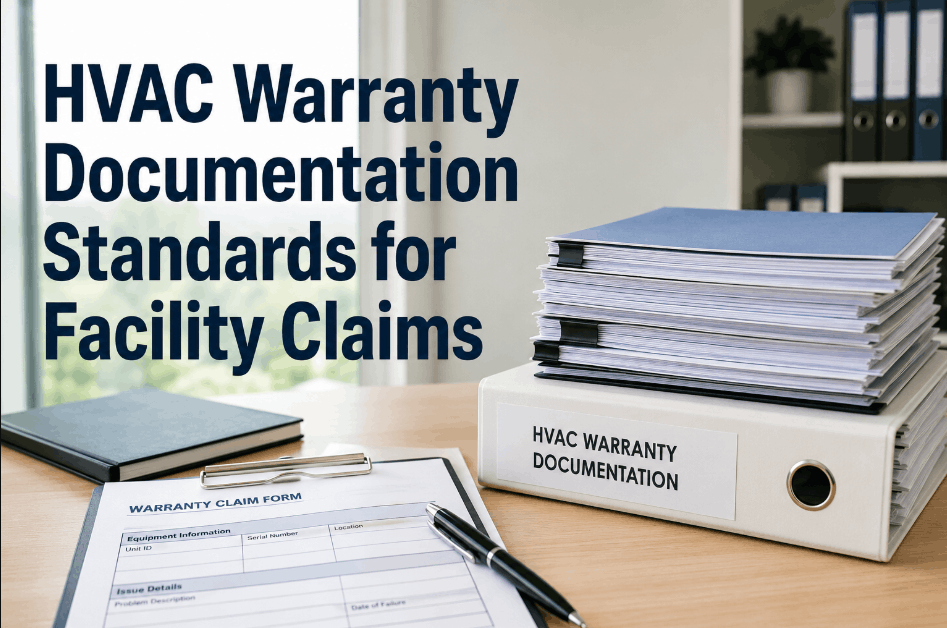
Manufacturer warranty claim requirements vary but typically include five elements. First, proof of purchase showing you bought the part from an authorized distributor, with the original invoice or purchase order number. Second, documented installation date proving the part was installed within the warranty coverage period — this is the most commonly missing element and the primary reason claims are rejected. Third, the specific part identification including manufacturer part number, model number, serial number (if applicable), lot code, and date code. Fourth, a description of the failure mode explaining what happened — the symptoms observed, how the failure was diagnosed, and what conditions the part was operating under. Fifth, many manufacturers require the physical return of the defective part for inspection. Some manufacturers (like Honeywell/Resideo for certain product lines) accept photographic evidence instead of physical return. Requirements and deadlines differ by manufacturer — Emerson/Copeland requires returns within 30 days while Trane allows 90 days. A systematic process codes each manufacturer's specific requirements and deadlines into the system so claims are filed correctly the first time.
How does the system know which parts are under warranty?
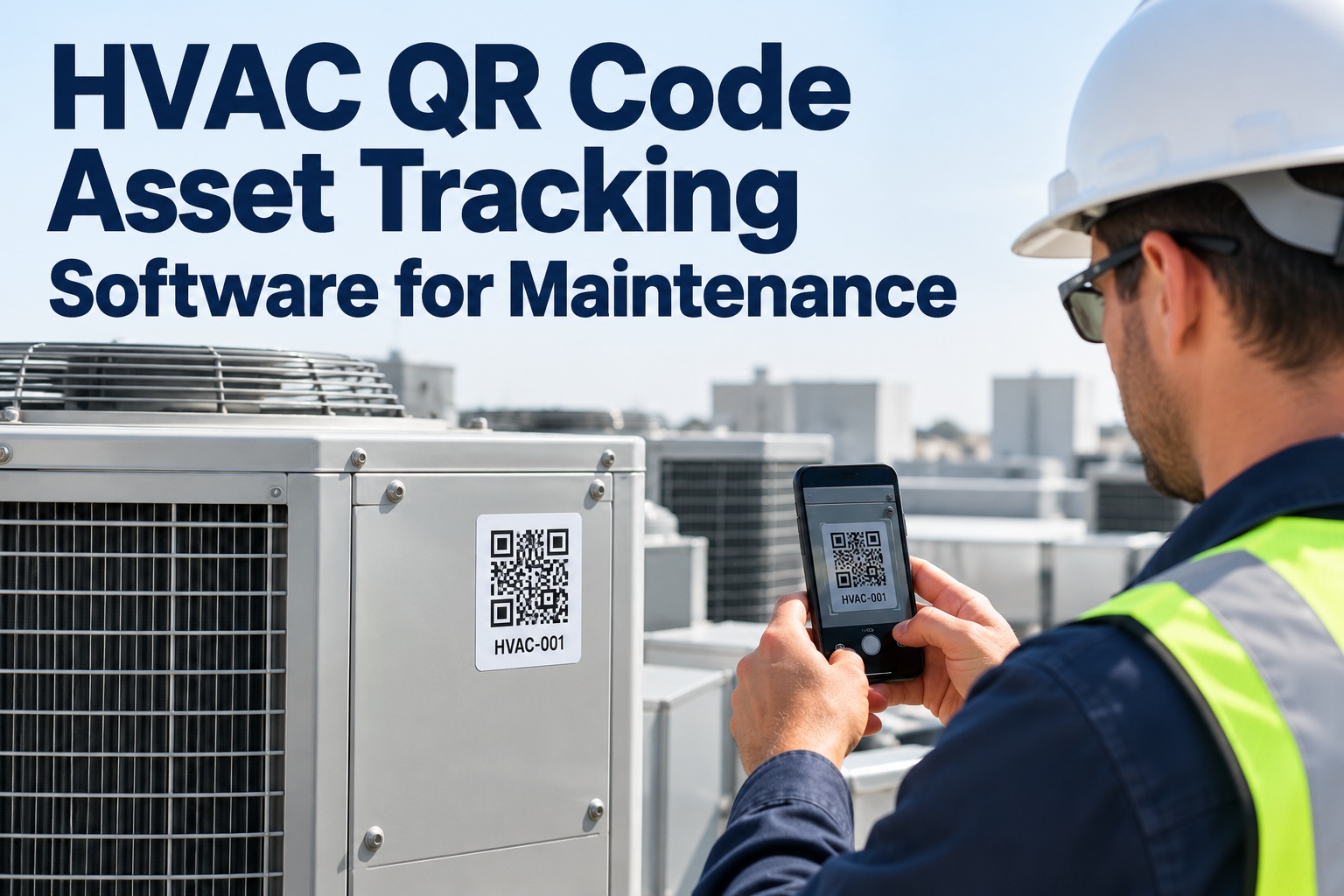
The system tracks warranty status through the scan-at-install process. When a technician scans a part barcode or QR code during installation, the system records the installation date, the specific part number and manufacturer, the customer and equipment asset the part was installed on, and the applicable warranty terms for that part type and manufacturer. The warranty terms — duration, claim deadline, return requirements — are stored in the system per manufacturer and part category. When a technician later encounters a failed part during a service call and identifies the equipment asset (by scanning the equipment QR tag or selecting it from the customer's asset list), the system automatically checks whether any installed parts on that asset are within their warranty window. If a warrantable part is identified, the technician receives an on-screen alert before replacement begins, prompting them to retain the failed part and document the failure mode. This eliminates the two most common warranty recovery failures: technicians not knowing a part was under warranty, and failed parts being discarded before anyone checks warranty status.
How does return and warranty processing integrate with CMMS and inventory?
The integration operates at every stage of the return and warranty lifecycle. When a technician replaces a failed part, the CMMS work order captures the removal event, triggers warranty status checking, and prompts failure documentation. The inventory system records the new part installation and decrements van stock. If the failed part is flagged as warrantable or returnable, the system generates an RMA request populated with data already captured — part details from the original scan, install date from the work order history, failure description from the technician's input, and purchase information from the procurement record. The RMA appears on the warehouse team's task list for physical part collection during the next van replenishment cycle. Once the part is shipped, the system tracks the return through to vendor receipt and credit issuance. When the credit arrives, accounting matches it to the original RMA and closes the loop. Throughout this process, inventory counts reflect the return — the failed part is tracked as "in return process" rather than disappearing from the system, and any replacement part received from the manufacturer is scanned into inventory upon receipt.