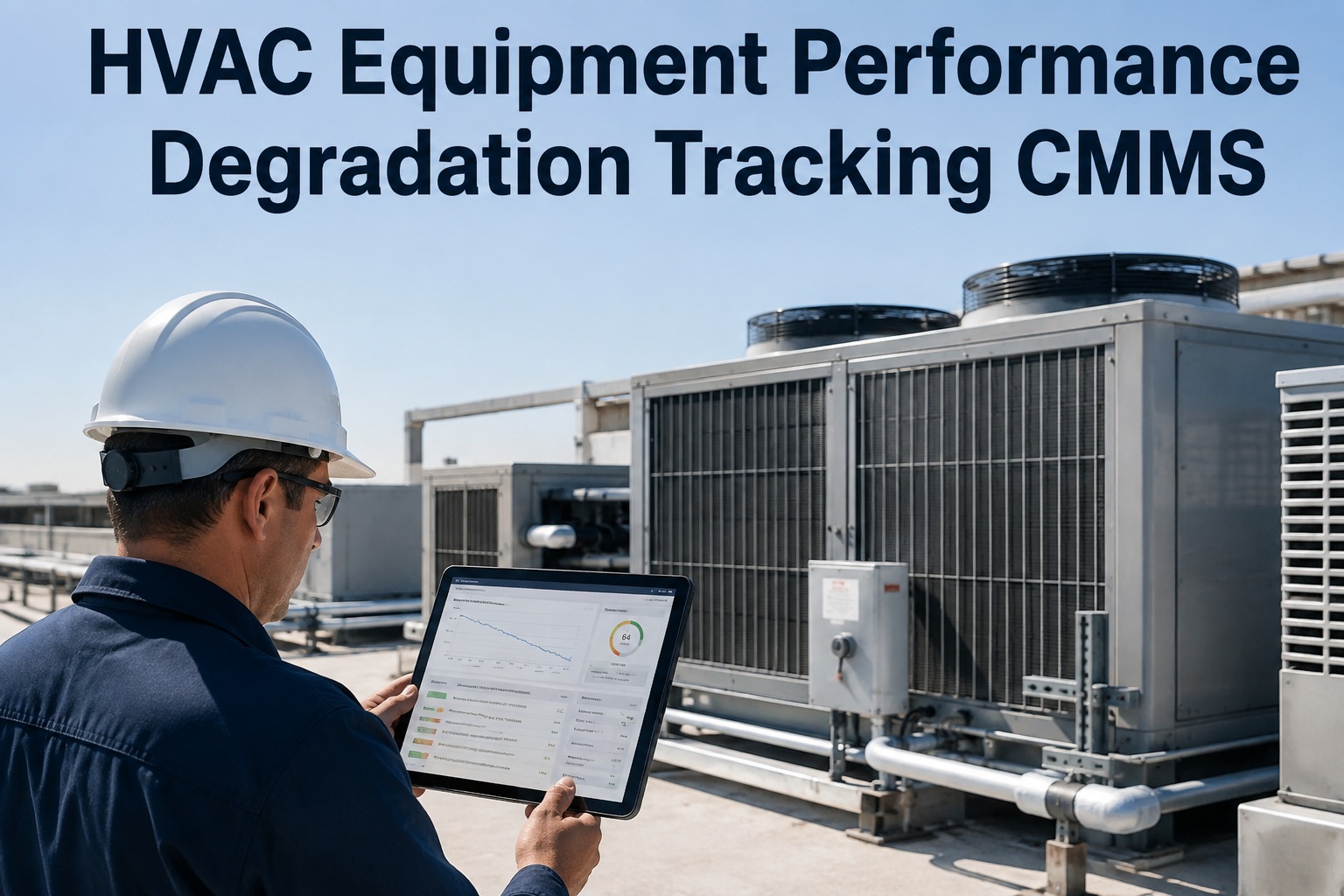
HVAC systems silently consume 34-40% of your building's energy budget while operating largely out of sight. A compressor losing just 2% efficiency monthly won't trigger alarms, but over a year, that's a 24% spike in energy costs for identical cooling output. The U.S. Department of Energy confirms that proper maintenance practices alone deliver 5-20% annual energy savings. Yet most facility managers discover these inefficiencies only during catastrophic failures, not through systematic tracking.
The difference between reactive and proactive facilities isn't intuition—it's metrics. Research from Pacific Partners Consulting Group reveals a sobering reality: every $1 of deferred maintenance eventually becomes $4 in capital renewal costs. Facilities that track HVAC performance through digital maintenance platforms catch degradation trends in weeks instead of months. Sign up for Oxmaint to start tracking these critical metrics automatically and transform your maintenance strategy from reactive firefighting to predictive precision.
The Cost of Invisible HVAC Problems
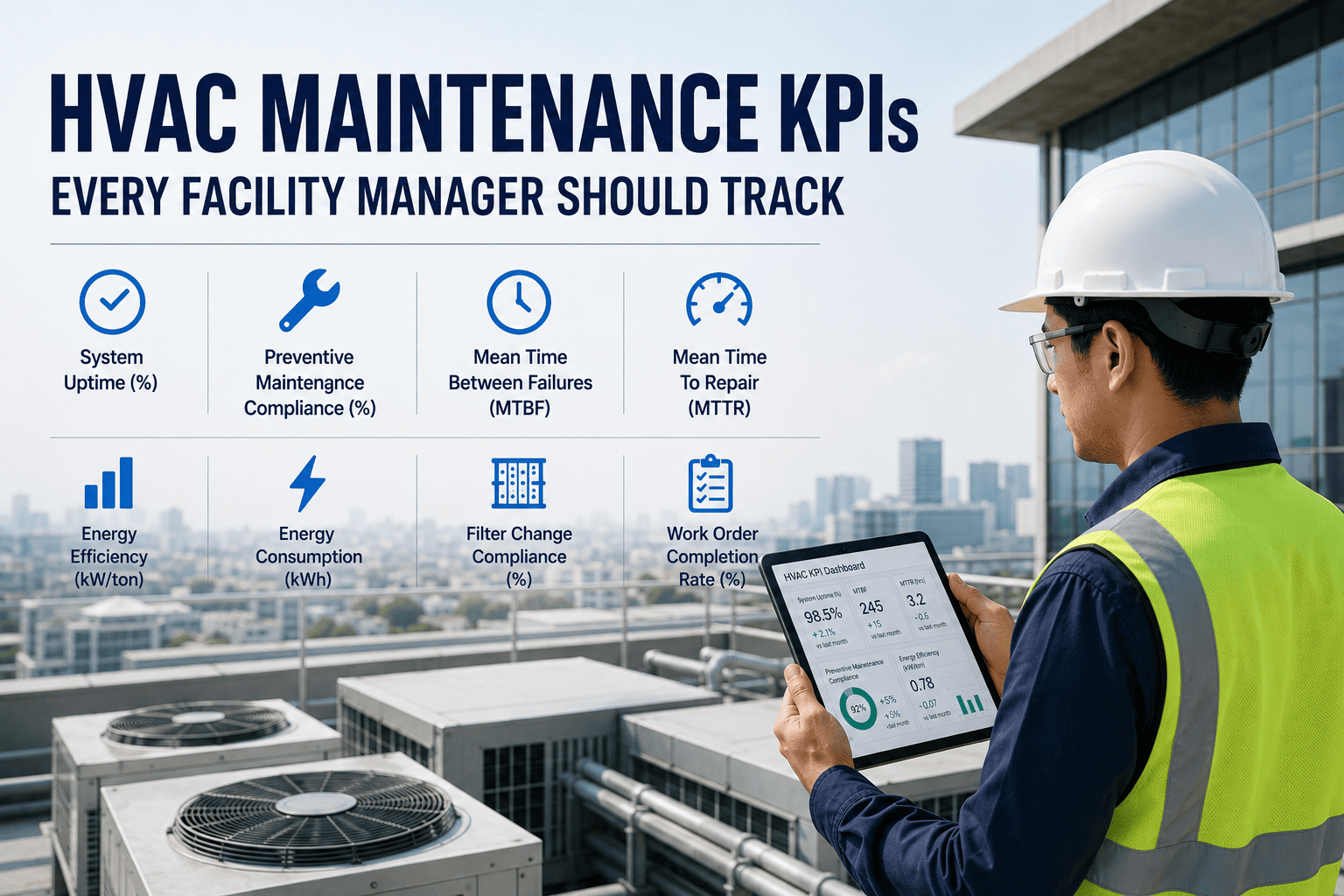
The 15 Essential HVAC Maintenance KPIs
1. Mean Time Between Failures (MTBF)
What it measures: Average operating hours between unexpected HVAC equipment failures.
MTBF = Total Operating Hours ÷ Number of Failures
Industry Benchmarks:
- Commercial Chillers: 15,000-25,000 hours
- Air Handlers: 12,000-20,000 hours
- Cooling Towers: 15,000-25,000 hours
- Boilers: 20,000-35,000 hours
Improvement Strategy: Condition-based maintenance increases HVAC MTBF by 90-175 hours. Track failure patterns to identify root causes and implement predictive maintenance before breakdowns occur.
2. Mean Time To Repair (MTTR)
What it measures: Average time from failure detection to full operational restoration.
MTTR = Total Repair Time ÷ Number of Repairs
Industry Benchmarks:
- World-Class: Less than 2 hours
- Standard HVAC Repairs: 1-5 hours
- Needs Improvement: More than 8 hours
Improvement Strategy: One facility reduced MTTR from 580 to 60 hours monthly after CMMS implementation—a 90% reduction. Stock critical spare parts on-site and create standard work procedures for common repairs.
3. Preventive Maintenance Compliance Rate
What it measures: Percentage of scheduled PM tasks completed within the accepted time window (typically ±10% of schedule).
PM Compliance = (Completed PMs On-Time ÷ Total Scheduled PMs) × 100
Industry Benchmarks:
- Excellent: 90-95%
- Acceptable: 80-90%
- Poor Planning: Below 80%
Critical Insight: Facilities achieving 80%+ planned maintenance ratios experience 40-50% lower total maintenance costs per square foot. Book a demo to see how automated PM scheduling ensures 90%+ compliance rates.
4. Equipment Uptime Percentage
What it measures: Percentage of time HVAC equipment is operational versus scheduled operating time.
Uptime % = (Total Uptime Hours ÷ Total Scheduled Hours) × 100
Industry Benchmarks:
- Critical HVAC Systems: 95-98%
- Standard Commercial: 92-95%
- Below 90%: Requires immediate attention
Cost Impact: Emergency repairs cost 50-100% more than standard service calls. Tracking downtime by asset reveals which units drain resources and need replacement planning.
5. First-Time Fix Rate (FTFR)
What it measures: Percentage of service calls resolved on the initial visit without requiring return trips.
FTFR = (First-Visit Resolutions ÷ Total Service Calls) × 100
Industry Benchmarks:
- World-Class: Above 90%
- Industry Standard: 75-85%
- Needs Improvement: Below 75%
Financial Impact: Each callback costs $100-250 in unbillable truck rolls, labor, and lost scheduling capacity. Companies providing mobile knowledge access see FTFR improvements of 8-15%.
6. Maintenance Cost Per Square Foot
What it measures: Total HVAC maintenance expenditure normalized by building size for benchmarking.
Cost Per Sq Ft = Total Annual HVAC Maintenance Cost ÷ Building Square Footage
Industry Benchmarks:
- Reactive Maintenance: $2.80-$4.20 per sq ft
- Preventive Maintenance: $1.20-$1.90 per sq ft
- Full-Service Contracts: $0.45-$0.65 per sq ft
- Basic Labor-Only: $0.12-$0.25 per sq ft
Strategic Note: Preventive programs deliver 545% ROI compared to reactive approaches. Sign up today to track your cost per square foot against industry benchmarks.
7. Energy Cost Per Square Foot
What it measures: HVAC energy consumption costs normalized by facility size.
Energy Cost Per Sq Ft = Annual HVAC Energy Cost ÷ Building Square Footage
Industry Benchmarks:
- Standard Commercial: $1.50-$3.00 per sq ft annually
- High-Efficiency Buildings: $1.00-$1.80 per sq ft
- Poorly Maintained: Above $3.50 per sq ft
Optimization Opportunity: A 1°F reduction in chilled water setpoint increases energy consumption by 2-3%. Clogged filters alone raise fan energy by 15-20%.
8. Planned Maintenance Percentage (PMP)
What it measures: Ratio of planned maintenance hours to total maintenance hours.
PMP = (Planned Maintenance Hours ÷ Total Maintenance Hours) × 100
Industry Benchmarks:
- World-Class: 90-95%
- Good Performance: 75-90%
- Reactive Mode: Below 75%
Target Mix: Industry best practices target 70-80% preventive with only 20-30% reactive maintenance.
9. Thermal Comfort Compliance Rate
What it measures: Percentage of building zones maintaining temperature within acceptable comfort ranges.
Comfort Compliance = (Zones Within Setpoint ÷ Total Zones) × 100
Industry Benchmarks:
- Excellent: 85-100%
- Acceptable: 70-84%
- Action Required: Below 70%
Business Impact: Poor thermal comfort directly correlates with productivity loss and increased tenant complaints.
10. Technician Utilization Rate
What it measures: Percentage of paid technician time spent on billable work versus travel, breaks, and administrative tasks.
Utilization Rate = (Billable Hours ÷ Total Paid Hours) × 100
Industry Benchmarks:
- High-Performing: 70-80%
- Average: 60-70%
- Below 60%: Significant revenue loss
Optimization: Implementing better dispatch systems and route optimization can improve utilization by 10-15%.
11. Schedule Compliance Rate
What it measures: Percentage of planned work orders completed on schedule.
Schedule Compliance = (Completed On-Time WOs ÷ Total Scheduled WOs) × 100
Industry Benchmarks:
- Excellent: 90-95%
- Acceptable: 80-90%
- Poor Planning: Below 80%
12. Callback Rate
What it measures: Percentage of service calls requiring return visits due to incomplete initial resolution.
Callback Rate = (Return Visits Required ÷ Total Service Calls) × 100
Industry Benchmarks:
- Excellent: Below 10%
- Industry Average: 15-25%
- Problematic: Above 25%
Root Causes: Incomplete diagnostics, missing parts, poor communication, and inadequate documentation drive callbacks.
13. Filter Replacement Compliance
What it measures: Percentage of filter changes completed on schedule.
Industry Benchmarks:
- MERV 8 Pre-filters: Every 60-90 days
- MERV 13 Final Filters: Every 120-180 days
- Healthcare/High-Occupancy: Every 30-60 days
Impact: A MERV 13 filter two weeks overdue increases static pressure by 0.3 inches, driving fan motors to draw 18% more current.
14. Energy Efficiency Ratio (EER) Tracking
What it measures: Cooling output divided by electrical input, indicating system efficiency trends.
EER = Cooling Capacity (BTU/hr) ÷ Power Input (Watts)
Industry Benchmarks:
- Modern High-Efficiency: 12+ EER
- Standard Commercial: 9-11 EER
- Below 8 EER: Replacement recommended
Degradation Alert: NIST Technical Note 1848 found that improper maintenance increases HVAC energy use by 30% or more.
15. Work Order Completion Rate
What it measures: Percentage of maintenance work orders completed within target timeframes.
Completion Rate = (Completed WOs ÷ Total WOs) × 100
Industry Benchmarks:
- Excellent: Above 90%
- Good: 80-90%
- Needs Attention: Below 80%
Transform Data Into Action
Stop managing HVAC maintenance through spreadsheets and memory. Oxmaint CMMS automatically calculates all 15 KPIs with real-time dashboards, mobile access, and predictive analytics.
The ROI Timeline: When to Expect Results
Most facilities see measurable improvements within 60-90 days of consistent KPI tracking. The initial value comes from establishing baselines that reveal hidden problems—an HVAC unit with abnormally high failure frequency, a PM schedule being routinely missed, or energy patterns indicating degradation. Schedule a demo to see how facilities achieve financial ROI within 6-12 months through reduced emergency repairs, lower energy costs, and extended equipment lifecycles.
Days 1-30
Baseline establishment and data collection. Identify critical assets and current performance gaps.
Days 60-90
Trend identification and quick wins. Address low-hanging fruit like overdue PMs and filter changes.
Months 6-12
Full ROI realization. 25-40% energy reduction, 50% lower emergency repairs, extended asset life.
Frequently Asked Questions
What is the single most important HVAC maintenance KPI to start tracking?
Start with Mean Time Between Failures (MTBF) for your most critical HVAC assets. MTBF directly measures reliability—the foundation every other maintenance decision builds on. If you know how frequently your equipment fails, you can build PM schedules around actual performance rather than generic manufacturer recommendations. Research shows condition-based maintenance increases HVAC MTBF by 90-175 hours. Once you have MTBF baselines, add MTTR and PM compliance rate to complete the core performance picture.
What PM compliance rate should my facility target for HVAC systems?
Industry best practice is 90% or higher—meaning at least 9 out of 10 scheduled preventive maintenance tasks are completed within their planned window (typically ±10% of the scheduled date). Facilities consistently below 80% typically see significantly higher emergency repair rates and shorter equipment lifecycles. The financial impact is stark: every $1 of deferred maintenance eventually costs $4 in capital renewal. Facilities achieving 80%+ planned maintenance ratios experience 40-50% lower total maintenance costs per square foot.
How does tracking energy efficiency KPIs reduce HVAC operating costs?
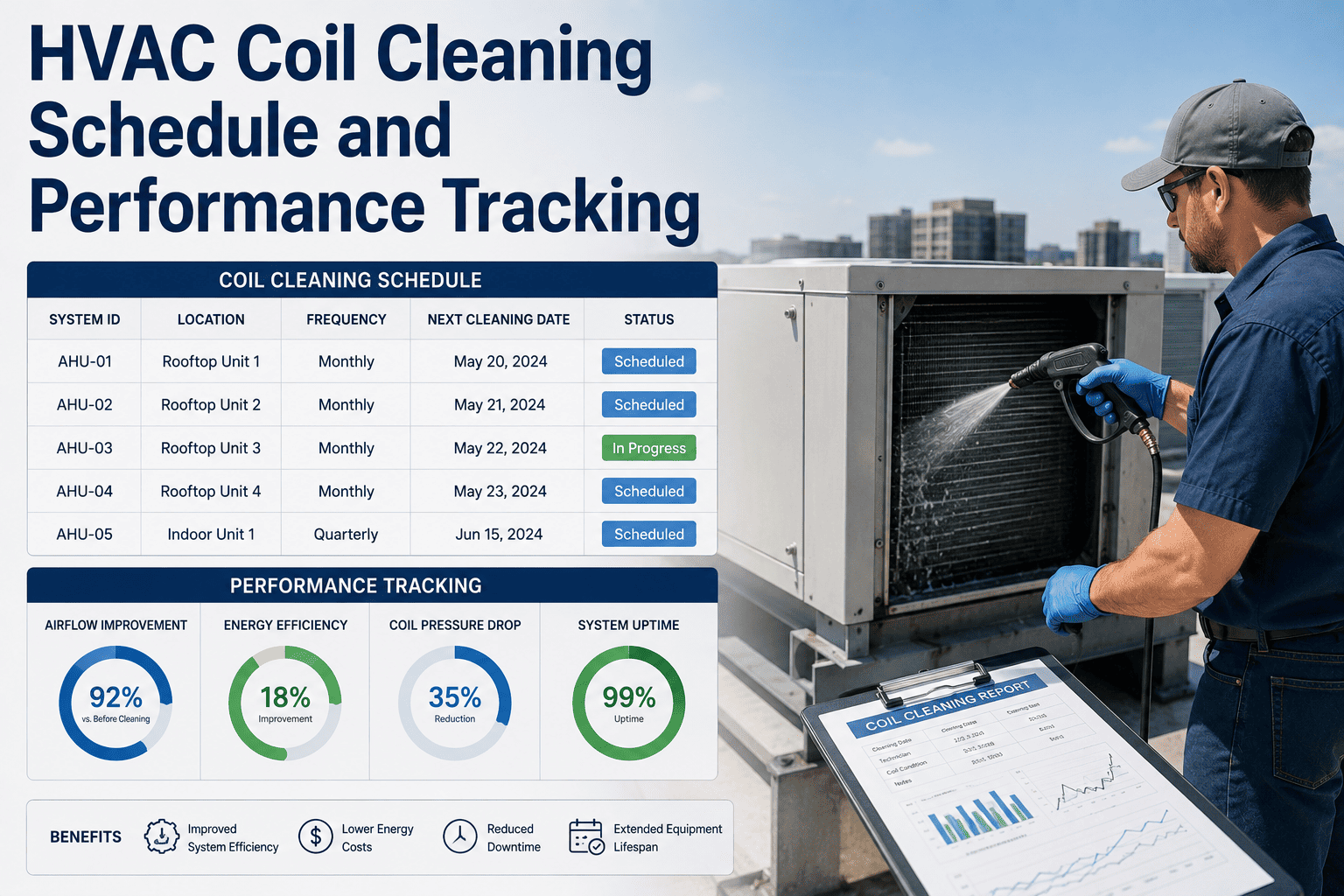
HVAC systems consume approximately 34-40% of total energy in commercial buildings—the single largest operating expense. Energy metrics like EER and cost per square foot help you spot performance degradation before it becomes a major cost driver. Well-maintained systems achieve 5-15% utility bill reductions through regular filter changes alone, and post-cleaning HVAC systems deliver 10-46% more airflow with 41-60% reduced energy consumption for fans and blowers. NIST found that improper maintenance increases HVAC energy use by 30% or more.
What is a realistic first-time fix rate target for HVAC service teams?
The industry-standard first-time fix rate (FTFR) target is 80%, meaning even at target performance, 1 in 5 service calls requires a return visit. World-class operations achieve 90%+. Each callback costs $100-250 in unbillable truck rolls, labor, and lost scheduling capacity. Companies providing mobile knowledge bases, troubleshooting guides, and equipment history to technicians see FTFR improvements of 8-15% and average service time reductions of 20-25 minutes per appointment.
How quickly can I expect ROI from HVAC KPI tracking?
Most facilities see measurable improvements within 60-90 days of consistent KPI tracking through a CMMS. The initial value comes from establishing baselines that reveal hidden problems—an HVAC unit with abnormally high failure frequency, a PM schedule being routinely missed, or energy patterns indicating degradation. Financial ROI typically materializes within 6-12 months through reduced emergency repairs, lower energy costs, and extended equipment lifecycles. Industry research shows mature PM programs deliver 300-500% annual returns. Start tracking today to begin capturing these returns.
Can a CMMS automatically calculate all these HVAC maintenance KPIs?
Yes, a comprehensive CMMS like Oxmaint automatically calculates MTBF, MTTR, PM compliance, schedule compliance, first-time fix rate, and cost per square foot with real-time dashboards. The system captures work order completion times, asset downtime, technician hours, and parts costs automatically—eliminating manual spreadsheet tracking and calculation errors. Book a demo to see how automated KPI tracking works and how it integrates with your existing HVAC assets and building automation systems.
Ready to Master Your HVAC Metrics?
Join thousands of facility managers who have replaced guesswork with data-driven HVAC maintenance. Start tracking your 15 essential KPIs today.