HVAC Maintenance Logs and Documentation Best Practices
By Riley Quinn on February 8, 2026
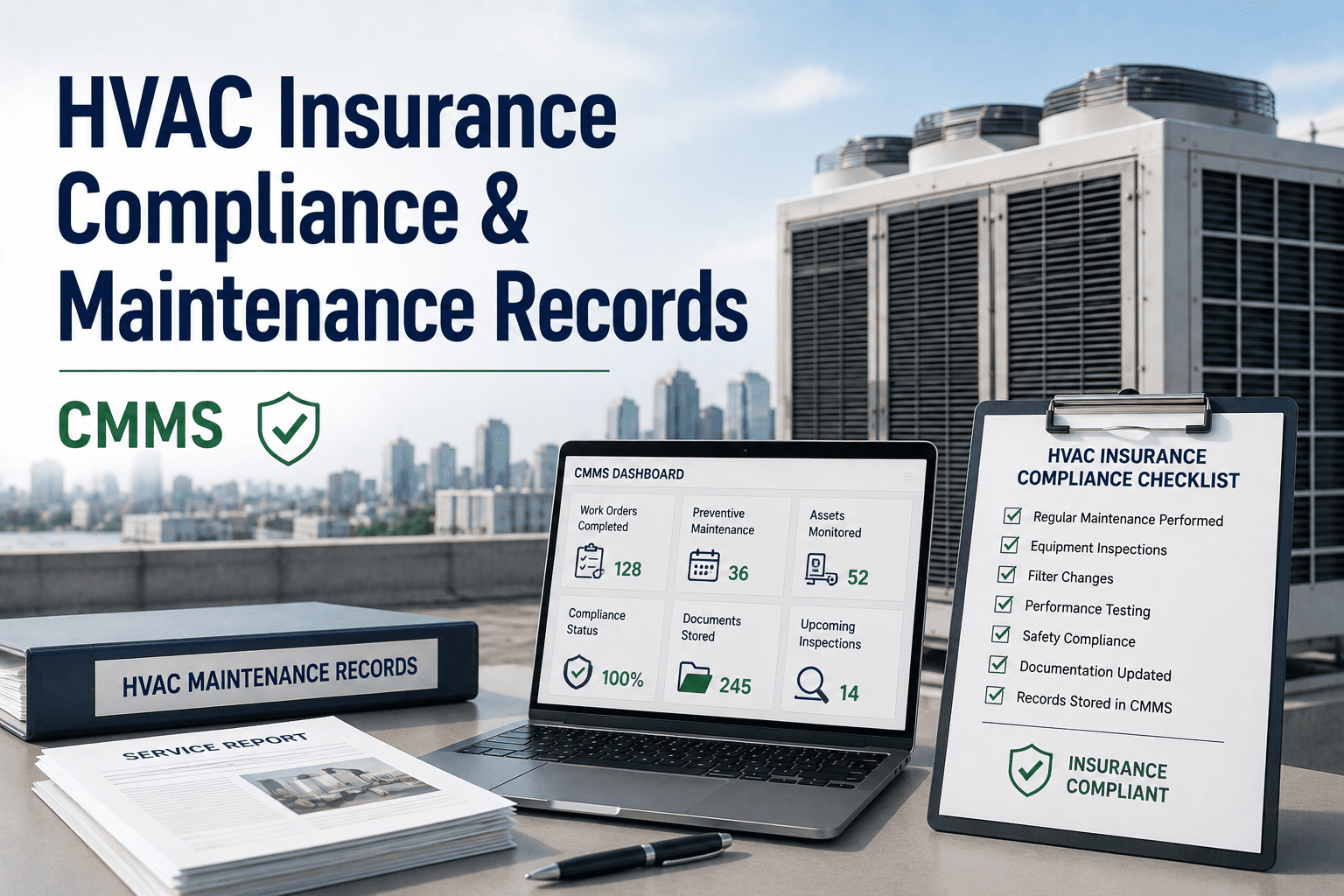
The auditor didn't ask for much—just the maintenance history on two rooftop units and the refrigerant tracking log for the past three years. Simple enough, if you have it. But the facility manager spent four hours digging through file cabinets, email threads, and three different technicians' notebooks. He found roughly 80% of the records. The missing 20% triggered a Non-Conformance Report, extended the audit by two additional days, and put the facility on a corrective action timeline. The repair work had been done. The filters had been changed. The refrigerant had been properly handled. But without documentation, none of it counted. EPA Section 608 requires detailed refrigerant records kept for a minimum of three years. OSHA expects documented proof that safety-critical maintenance occurred. The 2024 International Mechanical Code references ASHRAE Standard 180, which mandates documented inspection programs. In every case, the rule is the same: if it isn't documented, it didn't happen.
67%
Reduction in documentation time with automated CMMS tracking
Infodeck 2025
8x
First-year ROI on CMMS investment from downtime reduction alone
Limble CMMS
42%
Fewer safety incidents with automated compliance tracking
Infodeck 2025
Why HVAC Maintenance Documentation Matters More Than Ever
HVAC documentation isn't bureaucracy—it's the evidence that your maintenance program exists and functions. Without it, you can't prove compliance during an audit, defend a warranty claim, justify a capital replacement, or identify why the same unit keeps failing every six months. Every undocumented repair is a liability waiting to surface at the worst possible moment.
The stakes have intensified. OSHA serious violations now carry penalties up to $16,550 per instance in 2025, while willful or repeated violations can reach $161,323. EPA environmental violations can cost up to $69,733 per day for serious infractions. The AIM Act has expanded refrigerant documentation requirements, demanding detailed logs of usage, leak inspections, repairs, and equipment tracking throughout the lifecycle. Facilities still relying on paper logs face a fundamental problem: paper can be lost, damaged, backdated, or incomplete—and auditors know it. Facilities that switch to digital HVAC maintenance logging eliminate these vulnerabilities from day one.
Regulatory Penalty Exposure Scale
What a single documentation failure can cost your facility
$16,550
OSHA Serious Violation (per instance)
$44,539
EPA Section 608 Penalty (per day)
$69,733
EPA Serious Environmental (per day)
$161,323
OSHA Willful / Repeated Violation
Low ExposureCritical Exposure
The 5 Essential HVAC Documentation Types
Not all maintenance records serve the same purpose. A complete HVAC documentation program requires five distinct log types, each capturing different data at different intervals for different stakeholders. Missing any one of them creates a gap that auditors, insurers, or equipment failures will eventually expose.
01
Inspection Logs
Daily walkthroughs, weekly operational checks, quarterly component inspections — the baseline evidence that your program runs consistently.
Proves compliance with ASHRAE 180 inspection schedules
02
Work Order Records
Every repair, service call, and corrective action — your equipment's complete medical history.
ProblemRoot CauseParts UsedLabor HoursResolution
Builds failure analysis history for replacement planning
03
PM Schedule Records
Preventive tasks completed on time, deferred, or missed — proof your PM program executes as designed.
Task TypeFrequencyCompletion DateChecklistNext Due
Demonstrates proactive maintenance to auditors and insurers
04
Refrigerant Tracking
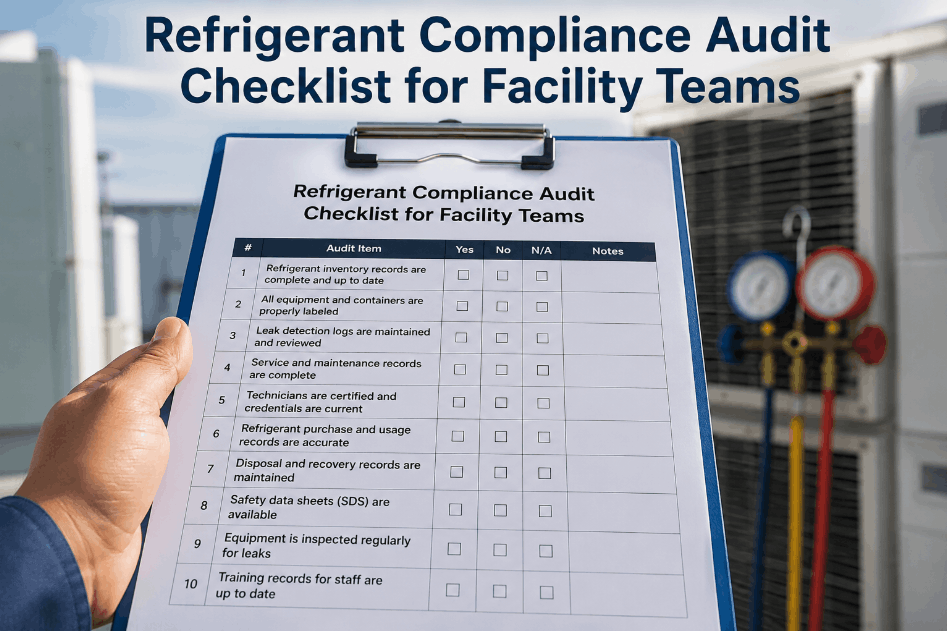
Every pound added, recovered, or recycled — the EPA's most closely scrutinized HVAC record category.
TypeQuantitySystem IDTech CertLeak Rate
Required by EPA Section 608 — 3-year minimum retention
05
Asset Lifecycle Records
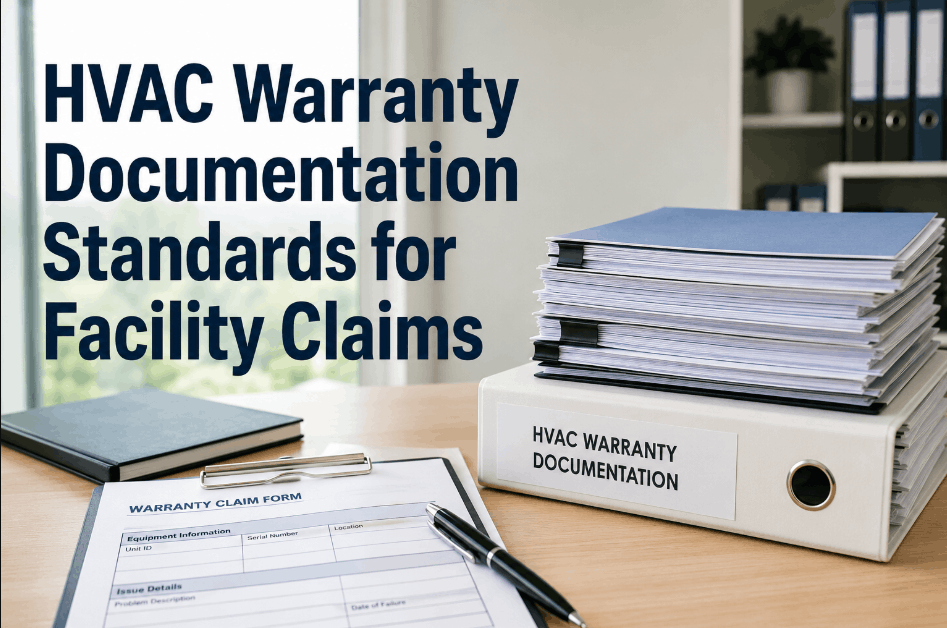
From installation to disposal — specs, warranty, modifications, and performance benchmarks that drive budgets.
Make/ModelSerialInstall DateWarrantyEfficiency
Drives capital planning and replacement budgeting decisions
Documentation Gaps That Trigger Audit Failures
Auditors aren't looking for perfection—they're looking for patterns. A single missing record might not raise a flag. But systematic gaps in documentation signal a program that isn't functioning. According to Gartner research, poor data quality costs organizations an average of $12.9 million annually. In maintenance operations, 30% of issues trace directly back to inaccurate or incomplete CMMS records. Facilities that centralize their maintenance records digitally reduce documentation-related audit findings dramatically.
6 Documentation Gaps Auditors Always Find
Missing Technician Signatures
Paper forms skipped, lost, or never completed after field work
Non-Conformance Report issued — work considered unverified
No Refrigerant Tracking Log
Decentralized records split across technician notebooks
EPA Section 608 violation — up to $44,539/day penalty
Incomplete PM Completion Records
Tasks marked "done" without checklist results or timestamps
PM program credibility questioned — extended audit scope
No Root Cause Documentation
Technicians record the "fix" but not the "why" — no failure data
Each technician records differently — no enforced template
Data analysis impossible — trends hidden in inconsistent entries
The Standard Every HVAC Log Entry Must Meet
A maintenance log is only as useful as the information it captures. Incomplete entries—"changed filter" or "checked unit"—are functionally worthless for compliance, analysis, or legal defense. Every entry should answer six questions, and facilities using a CMMS platform can enforce this structure automatically through required fields that won't let technicians close a work order until every field is complete. If your team is still working from blank notebooks, book a walkthrough to see how structured digital forms transform record quality overnight.
The 6-Field Documentation Standard
Every HVAC maintenance entry must answer these questions
WHO
Name, certification level, and employee ID of the technician who performed the work
WHAT
Specific task performed, parts used with manufacturer numbers, and any deviations from SOP
WHEN
Date, start/end time, and total labor hours — timestamps, not approximations
WHERE
Specific asset ID, unit location, building zone — not "rooftop unit" but "RTU-07 Building C"
WHY
Root cause of the issue or reason for service — scheduled PM, complaint response, or alarm trigger
RESULT
Outcome, follow-up required, condition rating, and next scheduled action date
Eliminate Documentation Gaps Permanently
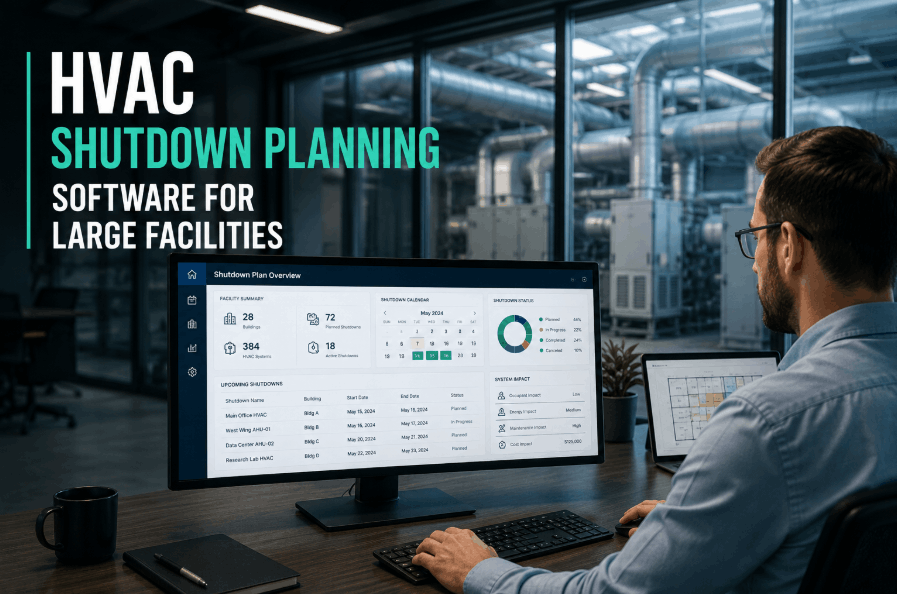
See how structured digital work orders enforce complete records on every task — no blank fields, no missing signatures, no audit surprises.
The Department of Energy estimates that organizations achieve 5-20% annual energy savings through proper operations and maintenance practices. But those savings require consistent documentation that paper-based systems simply cannot deliver at scale. Enterprise facilities managing 50 or more locations achieve 34% faster maintenance response times and 41% lower compliance risk when using centralized CMMS platforms. The economic case for digital documentation is measurable: every $1 of deferred maintenance becomes $4 in capital renewal costs, and facilities running equipment to failure pay 3-10 times more than those with proper maintenance programs. Sign up and start tracking your HVAC maintenance digitally to capture savings from day one.
Paper Logs vs. Digital CMMS
Side-by-side across 7 critical capabilities
Swipe to compare on mobile
Capability
Paper-Based
Digital CMMS
Audit Retrieval Time
Hours to days
Under 30 seconds
Record Completeness
Varies by technician
Enforced required fields
Tamper Prevention
Easily altered or backdated
Timestamped audit trail
Multi-Site Visibility
Impossible without travel
Real-time dashboard
Trend Analysis
Manual, time-consuming
Automatic pattern detection
Photo / File Attachment
Separate filing required
Embedded in work order
Disaster Recovery
Lost if physically damaged
Cloud-backed, redundant
Digital CMMS reduces audit preparation from 2 weeks to 2 hours on average
Expert Perspective: Building an Audit-Proof Documentation System
Maintenance documentation is not an administrative burden — it is a compliance control system. Every work order, inspection, and calibration task should be time-stamped, technician-signed, and archived digitally. During audits, facilities must immediately retrieve complete maintenance histories for any asset, including supporting SOPs, calibration certificates, photos, and technician certifications. Manual methods cannot provide this level of traceability. The organizations achieving 545% ROI over 20 years from preventive maintenance are the ones that invested in digital documentation infrastructure first.
50%
Reduction in total maintenance costs compared to reactive approaches with proper planned maintenance documentation
75-85%
Of catastrophic equipment failures prevented with IoT-enabled CMMS platforms and consistent monitoring records
30-45%
Total maintenance cost reduction achieved by facilities using predictive maintenance with full documentation trails
The facilities succeeding with documentation don't treat it as a separate activity from maintenance—they've embedded it directly into the workflow. When a technician completes a repair, the documentation is part of closing the work order, not a separate step performed later or forgotten entirely. Healthcare facilities lead CMMS adoption at 81% among large facilities, driven by Joint Commission requirements that mirror the documentation rigor every commercial HVAC program should aspire to. If you are ready to see how automated documentation workflows operate in practice, schedule a platform demo to watch the complete workflow from task creation through audit-ready reporting.
Make Every Maintenance Record Audit-Ready
Join facility teams using OXmaint to automate documentation, enforce compliance standards, and eliminate the audit scramble permanently.
What HVAC maintenance records does OSHA require facilities to keep?
OSHA requires documented proof that safety-critical maintenance has been performed, including lockout/tagout procedures, hazard communication records, and equipment inspection logs. For HVAC specifically, this includes documented filter changes, coil cleaning, indoor air quality checks, and any maintenance affecting occupant safety. Serious violations carry penalties up to $16,550 per instance in 2025, while willful or repeated violations can reach $161,323. A digital CMMS creates timestamped, technician-signed records that satisfy OSHA documentation requirements automatically.
How long must EPA refrigerant tracking records be retained?
EPA Section 608 requires facilities to maintain refrigerant tracking records for a minimum of three years. These records must include the type and quantity of refrigerant added or removed, the date of service, the servicing technician's EPA certification number, the specific equipment serviced, and leak rate calculations for systems containing 50 or more pounds of refrigerant. Under the AIM Act, documentation requirements have expanded further to include full lifecycle tracking. Violations can trigger penalties up to $44,539 per day per violation.
What is the ROI of switching from paper-based logs to a digital CMMS?
Research from Limble CMMS indicates organizations can achieve approximately 8x ROI on their CMMS investment within the first year, accounting for downtime reduction, maintenance cost savings, and productivity improvements. Digital systems reduce documentation time by 67%, cut safety incidents by 42% through automated compliance tracking, and slash audit preparation from weeks down to hours. Over a 20-year horizon, the transition from reactive to documented preventive maintenance delivers a 545% return on investment according to industry analysis.
How does a CMMS enforce complete documentation on every work order?
Modern CMMS platforms use required fields, mandatory checklists, and work order closure rules that prevent technicians from marking a task complete without filling in every critical data point. This includes technician signature, parts used, labor hours, condition ratings, photos, and follow-up actions. Some platforms embed regulatory checklists directly into specific equipment types — for example, automatically requiring refrigerant tracking fields on any HVAC work order involving a unit with more than 15 pounds of refrigerant. Electronic signatures and timestamped audit trails provide the tamper-proof documentation that paper systems cannot.
Which HVAC equipment should be prioritized for documentation and monitoring?
Start with single-point-of-failure equipment where downtime affects entire building zones — typically central air handling units and chillers. Next, prioritize any equipment containing regulated refrigerants for EPA Section 608 compliance, followed by units with active warranty coverage requiring documented maintenance history. Equipment approaching end-of-life should also be documented closely, as accurate lifecycle records directly inform capital replacement budgets. For facilities with 15 or more pounds of refrigerant in any system, quarterly leak inspections with full documentation are now effectively mandatory under AIM Act requirements.