HVAC Maintenance Strategies Compared: Reactive vs Preventive vs Predictive Maintenance",
By Mark Strong on March 25, 2026
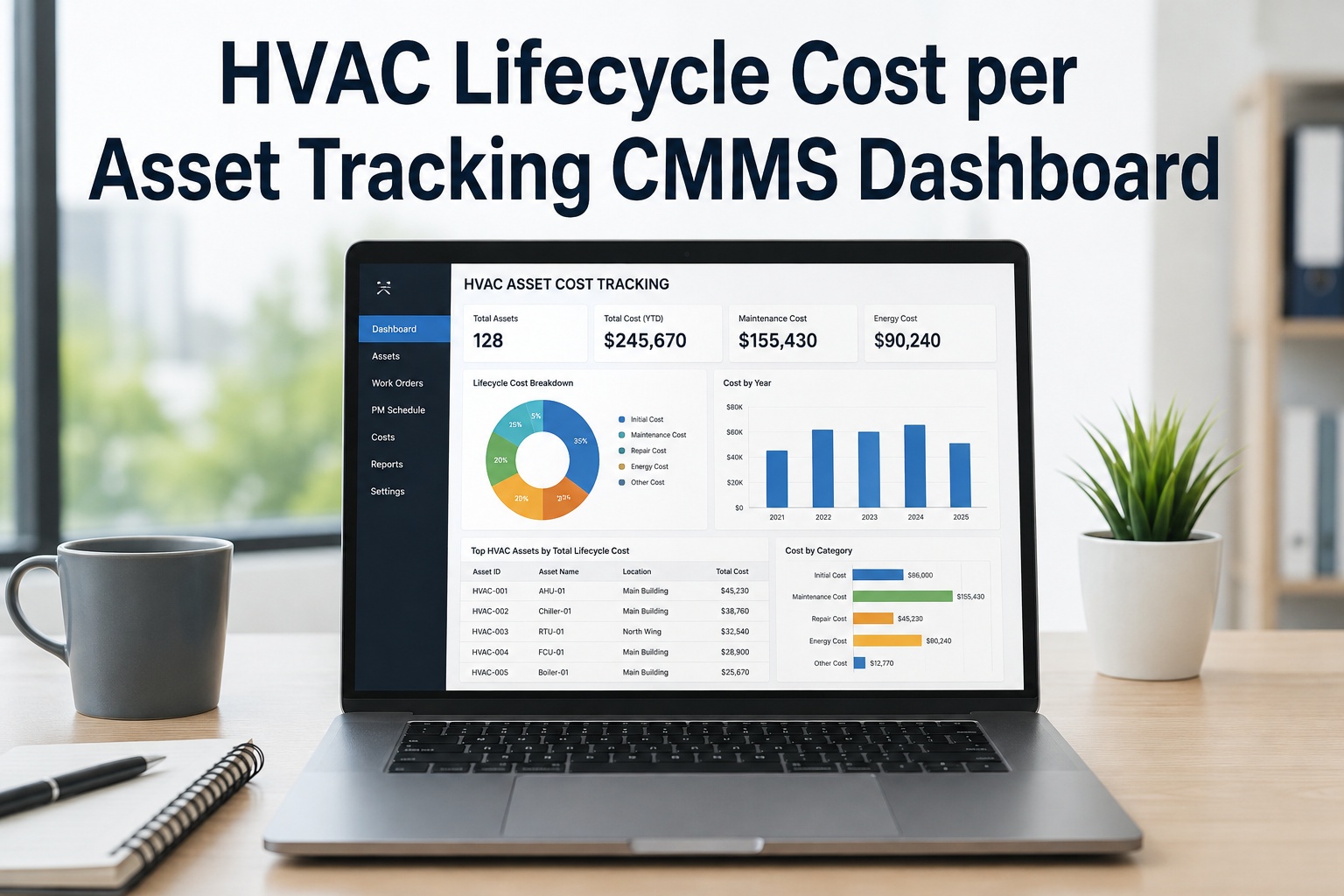
HVAC maintenance is not a single strategy — it is a spectrum. Reactive maintenance costs 3 to 9 times more than planned work and delivers unpredictable expenses. Preventive maintenance wastes 30 to 40% of its budget on unnecessary interventions. Predictive maintenance eliminates both failure modes but requires data infrastructure to execute. The right answer is not one of these three — it is knowing which strategy to apply to which asset, and when. This guide compares all three approaches across cost, downtime, ROI, and implementation complexity, so your team can build the hybrid program that delivers the highest return on your specific portfolio. Sign up free on OxMaint to activate your Predictive Maintenance Console, or book a demo to see all three strategies running on one platform.
One platform. All three strategies. Applied to the right asset at the right time.
OxMaint's Predictive Maintenance Console runs reactive work orders, preventive PM schedules, and condition-based predictive alerts on a single dashboard — so your team never applies an expensive strategy where a cheaper one would do.
Before comparing in depth, here is the complete picture — every dimension that matters when choosing a maintenance strategy, across all three approaches.
HVAC Maintenance Strategy Comparison — 2026
10 dimensions that determine which strategy delivers the highest return for each asset class
Dimension
Reactive
Preventive
Predictive
Cost per sq ft / year
$1.80–$2.50
$0.90–$1.40
$0.70–$1.10
Emergency call frequency
High — unpredictable
Reduced 25–35%
Reduced 55–75%
Equipment lifespan
10–12 years
15–20 years
20–25 years
Budget predictability
Very low
Moderate
High
Energy efficiency impact
None — degrades over time
15–20% improvement
20–40% improvement
Wasted maintenance spend
High — emergency premium
30–40% unnecessary PM
Minimal — data-driven
Implementation complexity
None — default state
Low — CMMS + schedules
Medium-High — IoT + data
Documented ROI
Negative vs alternatives
545% per dollar (JLL)
8–12% more than PM alone
Downtime reduction
Baseline — no reduction
44% less downtime
70–75% less breakdown time
Best applied to
Low-cost, non-critical, fast-replace assets only
Standard commercial HVAC — the baseline for all facilities
Mission-critical, high-value assets with failure cost above $10K
Section 02
Reactive Maintenance — The Most Expensive Default
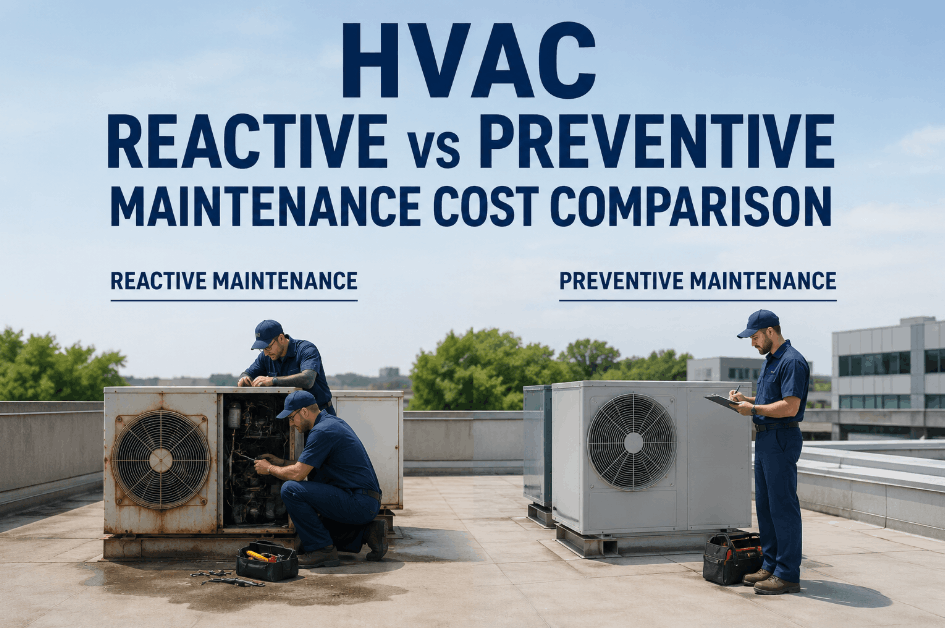
Reactive maintenance is not a strategy — it is the absence of one. Run equipment until it fails, then pay emergency rates to fix it. For some assets, this is the right economic choice. For most HVAC equipment, it is a documented path to higher costs, shorter lifespans, and unpredictable budget variance.
Reactive Maintenance
Fix it when it breaks
How It Works
No scheduled service. Equipment runs until a fault occurs or performance degrades enough to trigger a complaint. Maintenance team responds to failures, not to conditions. Also called run-to-failure or corrective maintenance.
Where It Costs You Most
Emergency labor premium
1.5× – 3× standard rates
Expedited parts markup
$275–$690 above ground shipping
Cascade damage
Seized bearing → belt failure → coil damage
Budget per sq ft
$1.80 – $2.50 / sq ft / year
When Reactive IS the Right Choice
Low-cost, easily replaceable assets (unit heaters under $1,500)
Non-critical zones where failure has no occupant impact
Assets where PM cost exceeds realistic failure cost
Any HVAC unit with replacement value above $10,000
Chillers, RTUs, or AHUs serving occupied commercial space
Any equipment where failure triggers safety, compliance, or lease risk
4–6%
Of Replacement Asset Value spent annually by reactive-dominant operations vs 1.5–2.5% RAV for best-in-class
Section 03
Preventive Maintenance — The Baseline Standard (and Its Waste Problem)
Preventive maintenance is the right foundation for every HVAC program. It reduces emergency calls 25–35% within 90 days of implementation and delivers a documented 545% ROI. But it has a structural inefficiency problem: 30 to 40% of PM visits service equipment that needed nothing, while genuine developing failures between visits go undetected.
Preventive Maintenance
Service it before it breaks — on a calendar
How It Works
Maintenance tasks scheduled at fixed intervals — monthly filter changes, quarterly coil cleans, annual full inspections — regardless of actual equipment condition. The most widely deployed strategy: 71% of maintenance professionals use it as their primary approach.
Key Metrics
Emergency call reduction
25–35% within 90 days
Documented ROI
545% per dollar invested (JLL)
Downtime reduction
44% less than reactive
Budget per sq ft
$0.90 – $1.40 / sq ft / year
The Waste Problem — Why PM Alone Falls Short
Where PM budget actually goes
62% — Useful PM
38% — Wasted
30–40% of PM visits service equipment that needed nothing — replacing components with months of remaining life, inspecting units running perfectly
What PM Cannot Catch
Bearing degradation developing between quarterly visits
Slow refrigerant leaks accumulating week by week
Gradual coil fouling reducing efficiency 1–2% per week
Control drift causing silent energy waste between inspections
545%
ROI — every $1 invested in PM returns $5.45 in avoided emergency repairs, energy costs, and deferred capital (JLL study)
Still running your PM program on spreadsheets? That is where 30–40% of wasted spend hides.
OxMaint automates PM scheduling, tracks completion rates, and flags missed intervals before they become emergency calls — eliminating the administrative gap that makes paper-based PM programs fail. Start free and have your first automated PM schedule running in 72 hours.
Predictive Maintenance — Condition-Based, Data-Driven, Highest ROI
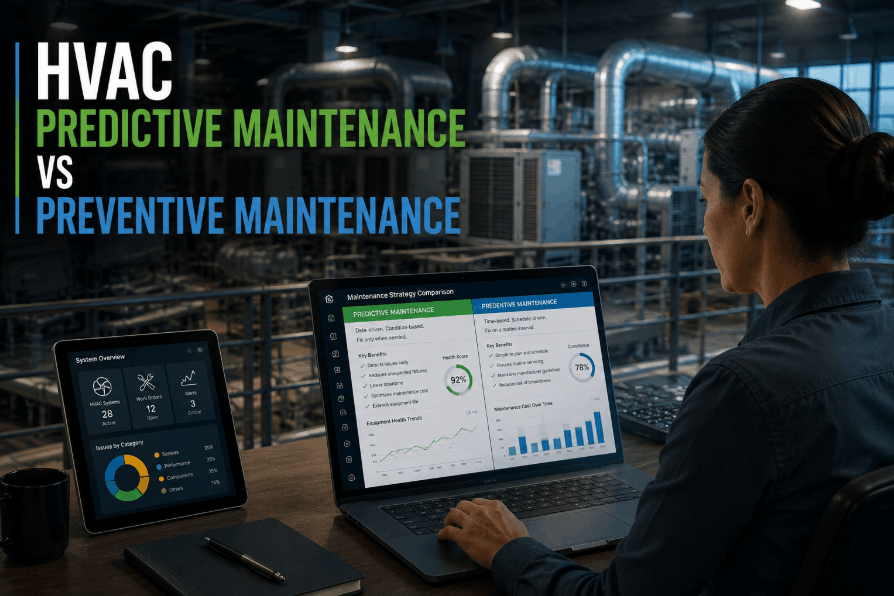
Predictive maintenance does not run on a calendar. It runs on data. IoT sensors monitor vibration, temperature, current draw, and refrigerant pressure continuously — and AI-powered analytics identify degradation patterns weeks before they produce a failure. The result: maintenance triggered only when equipment actually needs it, not because the calendar says so.
Predictive Maintenance
Service it when the data says it needs it
What Gets Monitored
Vibration patterns — bearing wear detected 8–14 weeks before seizure
Power consumption — current spike signals mechanical friction or hidden blockage
Refrigerant pressure — pinhole leaks detected continuously, not at next annual visit
Coil approach temperature — thermal degradation 1–2% per week identified before efficiency loss becomes visible
Documented Outcomes
70–75%
Reduction in system breakdowns (Energy Reports, 2022)
35–45%
Decrease in breakdown duration when failures do occur
55–75%
Emergency call reduction vs reactive maintenance baseline
20–30%
HVAC system lifespan extension vs standard PM programs
$340K
Documented avoided failures in 6 months across one portfolio — compressor bearings, fan motor winding, refrigerant leaks, and cooling tower degradation all caught weeks before failure
Section 05
Which Strategy for Which Asset — The Asset Tiering Framework
The single most expensive mistake in HVAC maintenance is applying one strategy uniformly across all equipment. Putting a $180,000 chiller on the same reactive policy as a $1,200 unit heater is negligent. Putting both on intensive predictive monitoring wastes budget. The framework below assigns the right strategy to each asset class.
Asset Tier Classification — Apply the Right Strategy Per Tier
Classify every HVAC asset into one of three tiers before building your maintenance program
Tier 1
Mission-Critical, High-Value
Strategy: Predictive + Preventive
Asset Examples
Central plant chillers, primary AHUs, rooftop units on critical zones, data center cooling, operating room HVAC
Replacement value above $50,000
Failure triggers occupant, compliance, or revenue impact
Emergency repair cost above $10,000
IoT sensors + CMMS-linked condition alerts + full PM schedule
Tier 2
Standard Commercial
Strategy: Preventive
Asset Examples
Standard office RTUs, split systems, fan coil units, ventilation fans, secondary AHUs
Replacement value $5,000–$50,000
Failure affects comfort but not operations or safety
Regular PM prevents the majority of failures at manageable cost
CMMS-automated PM schedules + digital checklists + completion tracking
Tier 3
Non-Critical, Low-Cost
Strategy: Reactive (Accepted)
Asset Examples
Janitor closet unit heaters, storage area exhaust fans, minor zone supplemental units, low-use portable equipment
Replacement value under $2,000
Failure has minimal operational consequence
PM cost exceeds realistic failure cost
CMMS asset record only — no PM schedule. Track replacements for capital planning
Have you classified your HVAC assets into tiers? That is where the hybrid strategy starts.
OxMaint's asset registry lets you classify every unit by tier, replacement value, and criticality — then auto-applies the right PM schedule or predictive alert threshold to each one. Book a demo to see asset tiering in action on your facility type.
12-Month Transition Roadmap: From Reactive to Hybrid
You cannot jump from reactive to full predictive maintenance in one move. The transition has four phases, each building the data foundation the next phase requires. The roadmap below has been validated across hundreds of commercial HVAC portfolios.
12-Month Implementation Roadmap
Four phases — each with a defined outcome and measurable result
Phase 1
Month 1–2
Asset Registry and Tier Classification
Enter all HVAC assets into CMMS with replacement cost, age, building criticality, and tonnage
Classify each unit into Tier 1, Tier 2, or Tier 3 using the asset tiering framework above
Document current reactive spend — establish emergency vs planned work order baseline ratio
Phase Outcome
Complete asset visibility — you know what you have, what it costs to replace, and what tier it belongs in
Phase 2
Month 2–4
Launch PM for All Tier 1 and Tier 2
Build calendar-based PM schedules in CMMS for all Tier 1 and Tier 2 equipment with standardized checklists
Set CMMS-automated work order generation — no manual scheduling after this point
Track PM completion rates weekly — target 90%+ within 60 days of launch
Phase Outcome
25–35% emergency call reduction within 90 days — the fastest single ROI move in any HVAC program
Phase 3
Month 4–8
Deploy IoT Sensors on Top Tier 1 Equipment
Install IoT sensors on the top 20% of Tier 1 equipment — prioritize units with highest emergency call history
Integrate sensor alerts with CMMS work orders — condition-triggered tasks replace manual inspection rounds
Prove predictive ROI on 30–40 units before expanding fleet-wide
Phase Outcome
Predictive value proven with data — avoided failures documented, ROI calculated per asset
Phase 4
Month 8–12
Full Hybrid Program — Scale and Optimize
Expand sensors to all Tier 1 equipment — refine PM frequencies for Tier 2 based on accumulated condition data
Formalize Tier 3 reactive policy with asset replacement tracking and capital planning triggers
Optimize technician routing — predictive alerts enable geographic batching of proactive service visits
Full Program Outcome
41–55% emergency call reduction. 84–91% first-time fix rate. Maintenance spend per sq ft reduced from $1.80–$2.50 to $0.70–$1.10
Frequently Asked Questions
No. Predictive delivers the highest ROI on Tier 1 critical assets (chillers, primary AHUs) where failure cost exceeds $10,000. For standard Tier 2 equipment, preventive maintenance with CMMS tracking delivers 545% ROI at lower cost. For low-value Tier 3 assets, reactive is the most economical choice. The winning strategy is a hybrid — right approach, right asset.
Most facilities see a 25–35% reduction in emergency calls within 90 days of launch. Energy savings appear in the first billing cycle after the first PM round. The documented 545% ROI compounds over a full year through avoided emergency repairs, lower energy bills, and extended equipment life.
Start with a CMMS with IoT integration — OxMaint's Predictive Maintenance Console connects to vibration, temperature, current, and pressure sensors. Sensor hardware for a 30–40 unit pilot runs $150–$400 per unit. Pilot on your highest-risk Tier 1 assets, prove ROI with real data, then expand — no large upfront commitment required.
Check your planned-to-reactive work order ratio. A healthy program runs 70–80% planned work. If more than 40–50% of your maintenance budget goes to unplanned repairs and emergency calls, you are reactive-dominant. Other signals: no formal PM schedule, maintenance triggered by complaints, and no documented asset history. OxMaint surfaces this ratio automatically from your work order data.