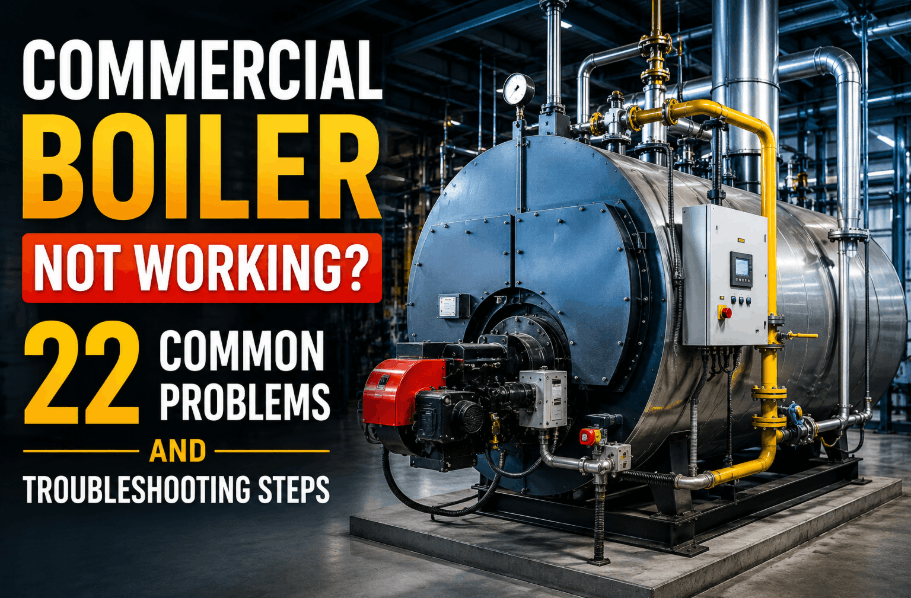
A commercial boiler not working on a cold morning is more than an inconvenience — it is a cascade of consequences. Tenants call, operations halt, and every hour the system stays down compounds cost and liability. The good news: the vast majority of commercial boiler faults follow predictable patterns, and a structured boiler troubleshooting sequence resolves most of them before an engineer even needs to be called. This guide covers the 22 most common commercial boiler problems, the diagnostic steps that fix them fast, and the maintenance systems that prevent them from recurring. To manage preventive maintenance schedules and fault histories in one place, Sign Up Free with Oxmaint and give your team the visibility they need.
OXMAINT FOR FACILITIES TEAMS
Stop Reactive Boiler Repairs Before They Start
Track boiler service history, schedule preventive maintenance, and get fault alerts before a lockout shuts down your building. Join thousands of facility managers optimizing their heating uptime.
Why Commercial Boiler Problems Differ from Residential Faults
Commercial boilers operate under higher demand cycles, serve multiple zones simultaneously, and carry regulatory obligations that residential units do not. When a commercial boiler won't start or enters lockout, the root cause is rarely a single failed component — it is almost always a combination of deferred maintenance, a missed service interval, or a control fault that accumulated over weeks. Understanding this distinction is the first step in effective boiler fault diagnosis.
The 22 faults below are grouped by system: ignition and burner, pressure and circulation, heat exchanger and flue, controls and sensors, and fuel supply. Work through the relevant group first, then use the cross-system checks if the fault persists. For teams that want a structured digital log for every fault and repair, Book a Demo to see how Oxmaint structures fault-to-resolution workflows.
Ignition and Burner Faults — Faults 1–6
01
Boiler Won't Ignite — Hard Lockout
The Problem: The burner fails to establish a flame after multiple ignition attempts, triggering a safety lockout to prevent unburned gas accumulation.
How to Fix: Check spark electrode gap (3–4 mm) and carbon fouling. Verify gas valve is open and inlet pressure is within manufacturer specification.
02
Intermittent Ignition — Flame Failure
The Problem: Flame is established but lost within seconds, usually due to a failing detector or an unstable air-to-gas ratio.
How to Fix: Clean the ionisation probe or UV cell. Inspect the burner head for blockages and verify stable gas pressure during the ignition phase.
03
Pilot Light Failure (Standing Pilot)
The Problem: Standing pilot fails to remain lit, often due to a worn thermocouple or a partially blocked pilot orifice.
How to Fix: Clean the pilot orifice and test the thermocouple’s millivolt output. Replace the thermocouple if output is below threshold.
04
Gas Valve Not Opening
The Problem: Burner controller calls for heat but the valve fails to open, resulting in an ignition failure lockout.
How to Fix: Confirm 24V/120V signal reaches the valve coil. If voltage is present but valve is shut, replace the gas valve solenoid.
05
Combustion Air Fan Failure
The Problem: The burner cannot proceed with ignition because the fan fails to prove air flow via the pressure switch.
How to Fix: Check for a seized fan motor or blocked air intake. Test the air pressure switch and replace if it fails to close under fan pressure.
06
Low Gas Pressure Fault
The Problem: Inlet gas pressure drops below the minimum threshold required for safe burner operation, triggering a safety shut-off.
How to Fix: Verify gas supply pressure with a manometer. Check for restrictions in the gas line or undersized regulators for the total plant load.
Pressure and Circulation Faults — Faults 7–12
07
Low System Pressure Shutdown
The Problem: Sealed system pressure drops below the low-limit switch (typically 0.5–0.8 bar), resulting in an automatic safety lockout.
How to Fix: Repressurise the system to 1.2–1.5 bar. Inspect the expansion vessel pre-charge and check the system for visible leaks at joints/valves.
08
High System Pressure / PRV Lifting
The Problem: System pressure exceeds the 3-bar safety limit, causing the Pressure Relief Valve to lift and discharge water.
How to Fix: Check for a waterlogged expansion vessel or a leaking fill valve (filling loop). Verify the pressurisation unit is not over-pumping.
09
Circulation Pump Failure
The Problem: Loss of flow through the primary heat exchanger causes a rapid rise in temperature and a high-limit safety lockout.
How to Fix: Check pump power supply and rotation. Bleed air from the pump housing and verify the pump speed is sufficient for the system head.
10
Airlock in Heat Exchanger
The Problem: Trapped air prevents water circulation through the boiler, leading to localised boiling noises and overheating trips.
How to Fix: Systematically vent all high-point air vents. Ensure automatic air vents (AAVs) are open and functioning correctly.
11
Zone Valve or End Switch Failure
The Problem: The boiler fires but specific building zones remain cold due to a valve failing to open or signal for heat.
How to Fix: Manually override the zone valve to check for flow. Test the actuator motor and the end switch continuity.
12
Magnetite / Sludge Blockage
The Problem: Iron oxide buildup restricts flow and reduces heat transfer efficiency, leading to noisy operation and cold radiators.
How to Fix: Install a high-capacity magnetic filter on the return line. Perform a power flush and replenish system inhibitor to BS 7593.
Heat Exchanger and Flue Faults — Faults 13–16
13
Boiler Overheating / High-Limit Trip
The Problem: Flow temperature exceeds the safety setpoint (typically 95°C), causing a hard lockout to protect the heat exchanger.
How to Fix: Check the pump for seizure and verify zone valves are open. Inspect the high-limit thermostat for failure or calibration drift.
14
Heat Exchanger Limescale Buildup
The Problem: Hard water scale reduces heat transfer, leading to localized "kettling" noises and progressively higher flue gas temperatures.
How to Fix: Descale the heat exchanger using an approved chemical agent. Verify the operation of the building's water softener system.
15
Flue Blockage / Spillage
The Problem: Flue gases cannot escape, causing them to back up and trigger the flue gas thermostat or CO sensor.
How to Fix: Inspect the flue terminal for debris or bird nests. Verify the flue runs are intact and have the correct slope.
16
Condensate Trap Blockage
The Problem: Acidic condensate backs up into the burner, causing a gurgling noise and eventually a flame failure lockout.
How to Fix: Clear the condensate trap and inspect the drain pipe for blockages or freezing in external sections.
Controls, Sensors, and Electrical Faults — Faults 17–19
17
Electronic Controller Fault Codes
The Problem: The boiler displays an alphanumeric code indicating a specific safety or component failure mode.
How to Fix: Record the code before resetting. Cross-reference with the manufacturer's manual to identify the specific faulty circuit.
18
Sensor Drift / Failure
The Problem: Flow/return NTC sensors provide incorrect temperature data, leading to false high-limit trips or poor modulation.
How to Fix: Measure sensor resistance against the manufacturer's R-T chart. Replace any sensor that deviates >5% from the nominal value.
19
BMS Communication Loss
The Problem: The boiler fails to respond to building demand because the interface link (Modbus/BACnet) has dropped.
How to Fix: Check network cabling and interface card power. Verify the BMS is correctly polling the boiler’s address.
72% of unscheduled boiler breakdowns are preceded by detectable warning signs — structured maintenance logs catch them weeks before lockout.
Fuel Supply and Auxiliary Faults — Faults 20–22
20
Oil Nozzle / Pump Wear
The Problem: Oil-fired burners experience poor atomization or flame failure due to nozzle erosion or pump pressure drops.
How to Fix: Replace the nozzle at every service (annual). Test pump pressure and suction vacuum using a pressure gauge kit.
21
Pressurisation Unit Pump Fault
The Problem: The unit fails to maintain system pressure, leading to chronic low-pressure boiler lockouts.
How to Fix: Inspect the unit's break tank and pump motor. Verify the fill pressure setting matches the boiler’s requirement.
22
Cold Weather Protocol Failure
The Problem: Multiple systems fail simultaneously in sub-zero temps due to frozen condensate or increased oil viscosity.
How to Fix: Insulate external pipework and use trace heating if necessary. Verify oil tank heaters are functional before the winter season.
Commercial Boiler Troubleshooting: Diagnostic Sequence at First Call
Step 1
Record the Fault Code
Note the exact code displayed on the burner controller or boiler display. Photograph it. Do not reset yet. This code is the most valuable piece of diagnostic data.
Step 2
Check Utilities
Confirm gas supply is live, electrical supply to the boiler panel is present, and no fuses or MCBs have tripped. Approximately 15% of faults are actually supply interruptions.
Step 3
Check System Pressure
Read the system pressure gauge. Below 0.8 bar typically triggers a lockout. If safe, repressurise via the filling loop to 1.2–1.5 bar and reset to see if pressure holds.
Step 4
Check Condensate Drain
In cold weather, pour warm water over external condensate pipework. If the boiler fires after this, the condensate was frozen. Insulate the pipe immediately.
Reactive vs Preventive: The Cost of Commercial Boiler Downtime
| Fault Scenario |
Reactive Approach |
Preventive Approach |
Cost Difference |
| Heat exchanger scaling |
Emergency descale or replacement; 2–5 day downtime |
Annual inhibitor check and water treatment; 2hr planned task |
−80% cost |
| Circulation pump seizure |
Emergency pump replacement; same-day courier; 6–12hr downtime |
Annual bearing check; pump replaced at scheduled service |
−65% cost |
| Flue terminal blockage |
Emergency CO shutdown; engineer visit; tenant disruption |
Seasonal flue inspection; 30-min scheduled task |
−90% cost |
PREVENTIVE MAINTENANCE PLATFORM
Replace Your Fault Log Spreadsheet with a System That Works
Oxmaint gives facilities teams a structured way to track boiler service history, schedule preventive tasks, and respond to faults with full asset context — from any device.
Frequently Asked Questions — Commercial Boiler Faults
What should I check first when a commercial boiler won't start?
Start with the basics before assuming a component fault: check gas supply is live, electrical supply to the boiler panel is present, no MCBs have tripped, and system pressure is within the normal operating range (typically 1.0–1.5 bar). Record any fault code displayed before resetting. In cold weather, check the condensate drain for freezing on condensing boilers.
How often should commercial boilers be serviced to prevent breakdowns?
Commercial gas boilers require an annual service by a Gas Safe registered engineer at minimum. High-cycle applications benefit from a mid-year interim inspection covering burner combustion, heat exchanger condition, and water treatment. Annual service should include combustion analysis and safety device testing.
What does a boiler lockout mean, and is it safe to reset it?
A boiler lockout is a safety state the burner controller enters when it detects a fault condition. It is safe to attempt a single reset after noting the fault code and checking basic utilities. If the boiler relocks on the same code, do not continue resetting; call a Gas Safe engineer to diagnose the root cause.
Why does my commercial boiler keep losing pressure?
Chronic pressure loss in a sealed system indicates a system leak, a waterlogged expansion vessel, or a faulty pressurisation unit fill valve. Repressurise and monitor over 48 hours. If pressure drops again, inspect the expansion vessel pre-charge and check the system for visible leaks at joints.
What is the most cost-effective way to reduce commercial boiler breakdown frequency?
The highest return interventions are: annual professional service, a magnetic filter on the boiler return, correct inhibitor concentration maintained to BS 7593, and a documented fault log. Teams using a CMMS to manage these tasks achieve 30–50% lower maintenance costs compared to reactive approaches.
Can a facilities manager legally reset a commercial boiler?
A facilities manager can legally perform a single lockout reset — resetting is not a Gas Safe restricted activity. However, any work involving the gas train, burner components, heat exchanger, or flue MUST be performed by a Gas Safe registered engineer. Document the fault and inform your contractor.
OXMAINT FOR FACILITIES MANAGEMENT
Turn Your Commercial Boiler From a Liability Into a Managed Asset
Stop managing boiler faults from memory and spreadsheets. Oxmaint structures your preventive maintenance programme, captures every fault and service record, and alerts your team before the next breakdown happens.
Structured boiler service scheduling and automated reminders
Full fault and repair history by asset, accessible from any device
Works across single sites and multi-site portfolios
No complex setup · Start logging assets today · See results within 30 days