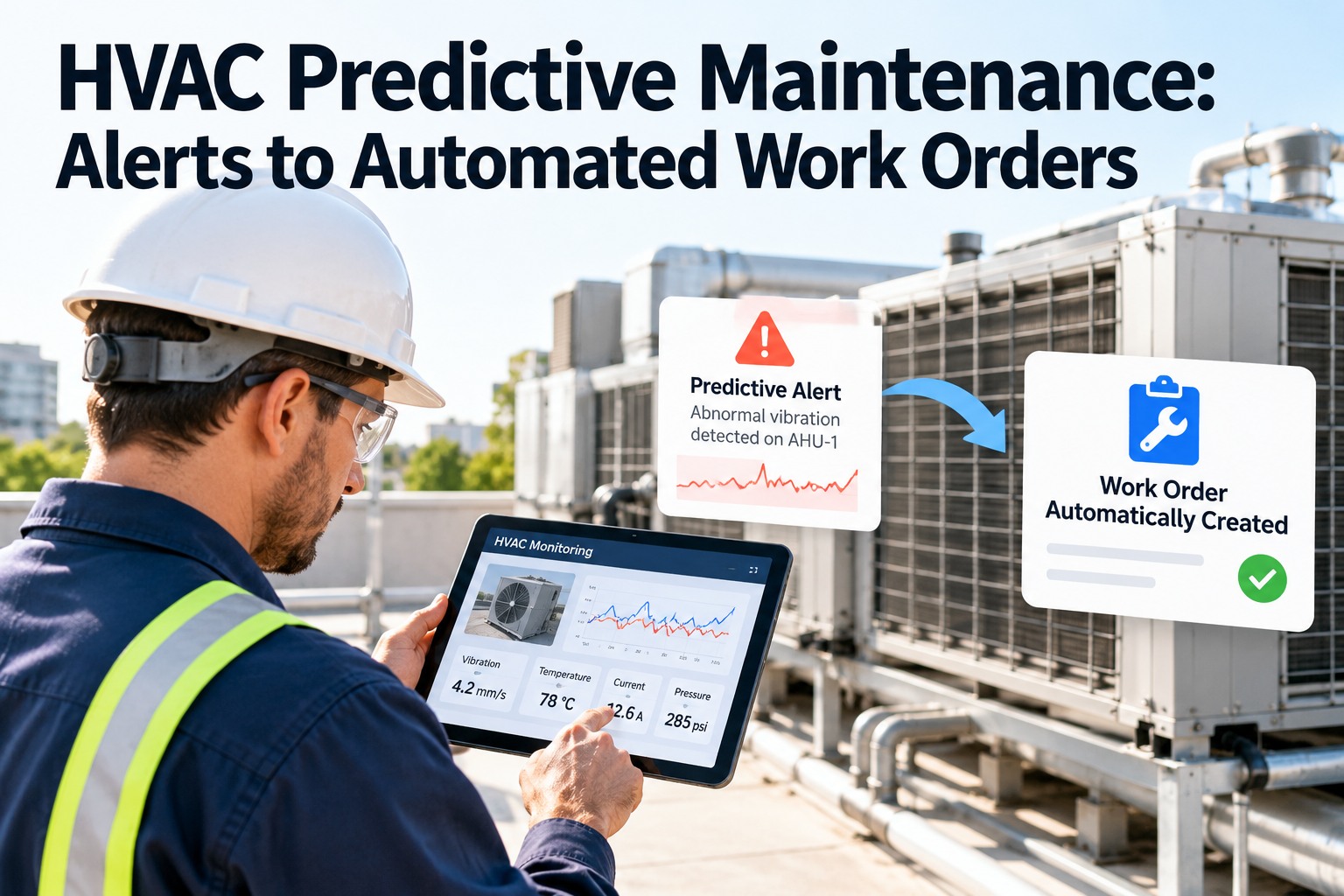
Most HVAC predictive maintenance programs don't fail at detection — they fail at the hand-off. The sensors work, the alert fires three weeks before the bearing seizes, and then it lands in an inbox where it sits behind forty others until the unit fails anyway. An alert that doesn't become a work order is just noise with a timestamp. The value of predictive maintenance isn't the prediction; it's the action the prediction triggers. This article follows the whole loop — from sensor alert to prioritized, automated work order — and where it breaks. OXMAINT AI — the AI-powered maintenance management software — closes that loop by turning each alert into a ranked work order automatically.
HVAC Predictive Maintenance: Alerts to Work Orders
A prediction is only worth the action it starts. The real win is the loop — monitor, detect, prioritize, and raise the work order automatically, before the failure arrives. The OXMAINT AI maintenance management software turns each alert into a ranked job instead of another line in an inbox.
The Alert-to-Action Loop
Predictive maintenance is a pipeline, and it's only as strong as its weakest stage. A perfect sensor feeding an alert nobody triages is worthless; so is a fast work order built on a bad reading. Here's the full loop, stage by stage; book a demo to see the loop running in OXMAINT AI.
Sensors watch the parameters that drift before a failure — vibration, temperature, motor current, pressure, airflow — continuously, not once a quarter on a walk-around.
A reading crosses a threshold, or a pattern drifts from the asset's normal baseline — the early signature of a developing fault, caught while it's still weeks away.
Severity of the reading meets criticality of the asset, so a failing rooftop unit over a server room outranks a minor drift on a spare — no flat queue of equal alarms.
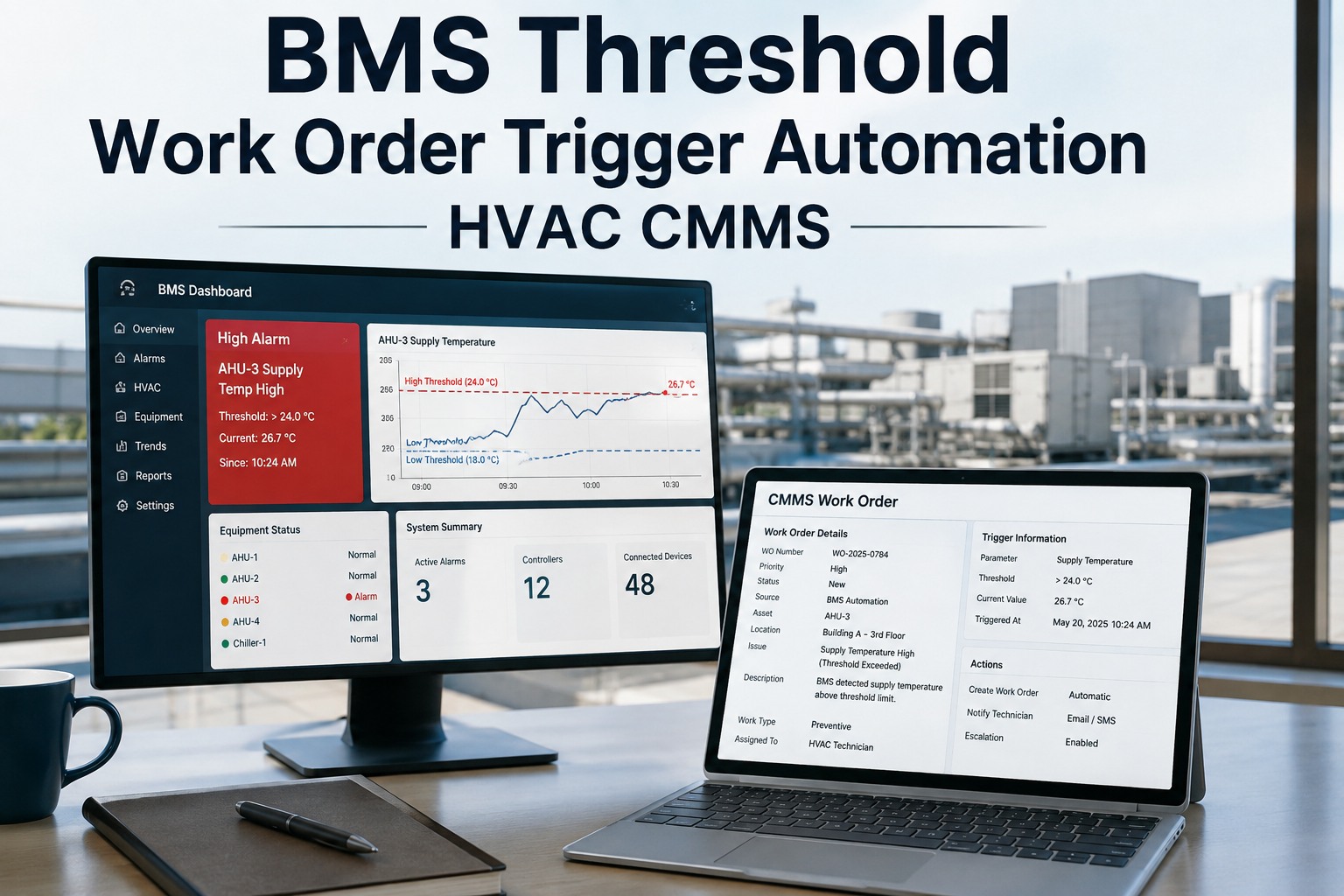
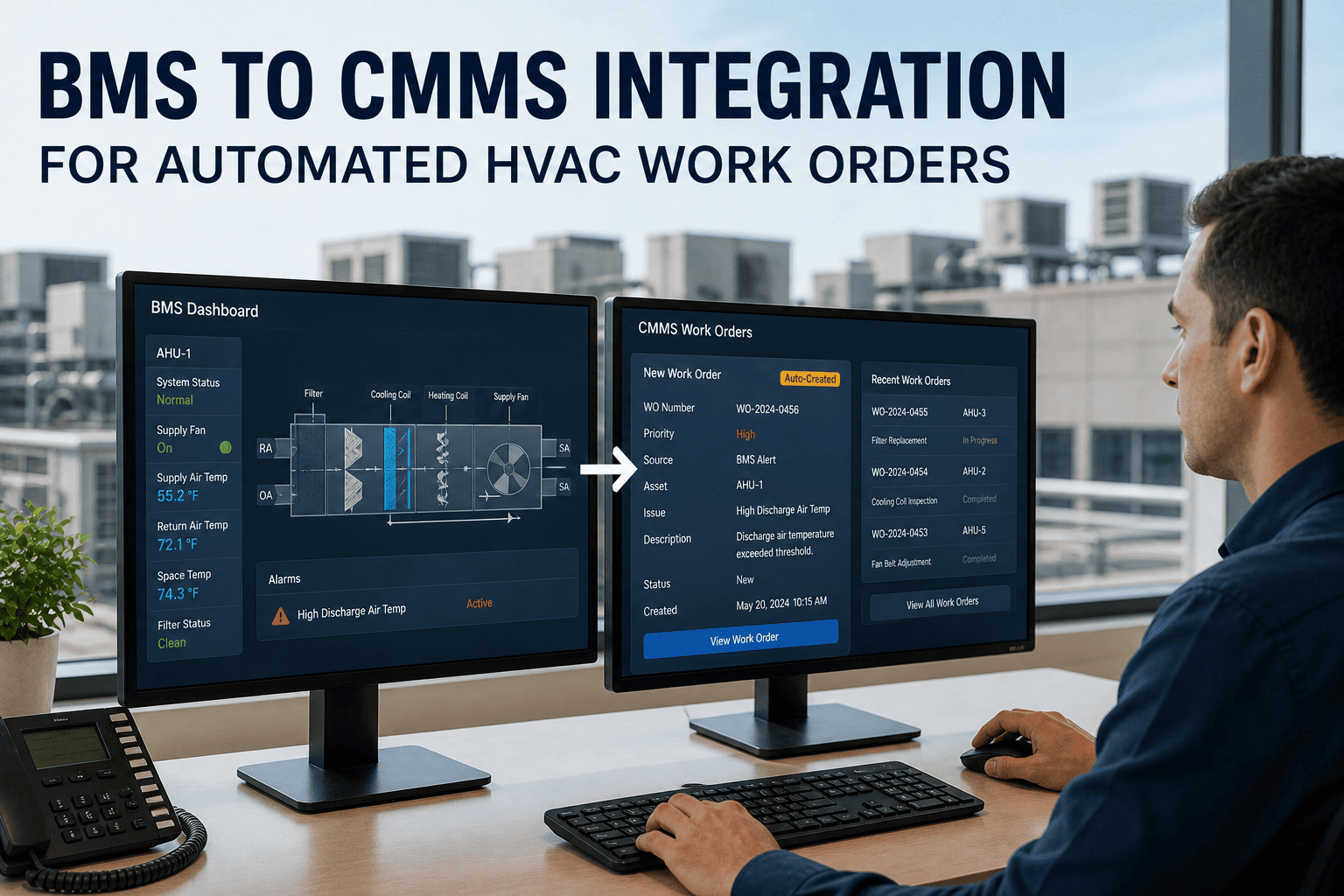
The alert becomes a work order on its own — asset, fault, reading and likely parts attached — so nobody rekeys it and nothing waits on someone noticing the alarm.
The job routes to the right technician, gets fixed before the failure, and the outcome feeds back — tuning the baseline so the next alert is sharper and the false alarms fade.
Where the Loop Usually Breaks
Predictive programs rarely fail for lack of sensors — they fail at the joins between stages. These are the three breaks that turn a promising rollout into an ignored dashboard; start free and close the gaps in OXMAINT AI.
What HVAC Predictive Monitoring Watches
The loop starts with the right signals. These are the parameters that drift ahead of common HVAC failures, and what a change in each one tends to mean; book a demo to see these monitored in OXMAINT AI.
The Alert Isn't the Win. The Work Order Is.
Detecting a failure three weeks early means nothing if the fix doesn't get scheduled. The OXMAINT AI maintenance management software turns each alert straight into a prioritized work order with the asset, fault and parts attached — so the prediction always lands as action, not another alarm to triage.
How Alerts Get Prioritized
Not every alert deserves the same urgency — prioritization is what keeps the program from becoming noise. Two factors set the order, and together they decide what gets worked first; start free and set priority rules in OXMAINT AI.
How far the parameter has drifted and how fast. A vibration level edging up slowly is watch-and-wait; one climbing sharply toward a limit is act-now. The rate of change often matters as much as the value.
What the unit serves. The same alert on a chiller cooling an operating theatre or a data hall is a different priority than on a redundant unit over a storeroom. Consequence of failure sets the stakes.
Cross the two and every alert lands in the right place in the queue — critical-asset, high-severity jobs at the top, minor drifts on spares at the bottom. That ranking is the difference between a program people trust and one they tune out. Book a demo to see priority scoring.
How OXMAINT AI Closes the Loop
Turning predictions into action depends on the alert and the work order being one connected flow, not two disconnected tools. Here's what the OXMAINT AI maintenance management software brings; start free and run the whole loop in OXMAINT AI.
We spent a year putting sensors on our critical HVAC and barely moved the needle, because the alerts just piled up in an email folder nobody owned. The change wasn't more sensors — it was wiring the alerts straight into work orders, ranked by how critical the asset was. Suddenly the warnings turned into scheduled jobs the day they fired. We're catching compressor and bearing issues weeks ahead now, and the team actually trusts the alerts because the noise got ranked out.
Frequently Asked Questions
Make Every Prediction Land as a Job — Not Another Alarm.
Close the loop with the OXMAINT AI maintenance management software — condition monitoring, threshold and anomaly alerts, priority scoring by severity and criticality, automatic work orders, and feedback that sharpens every future alert. Stop collecting warnings and start acting on them before the failure arrives.