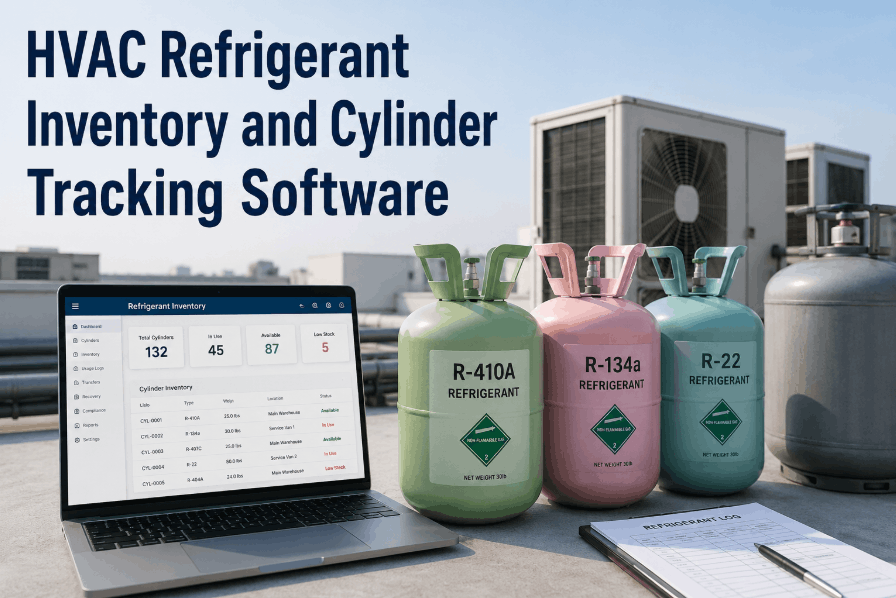
A single untracked refrigerant cylinder—a 30-pound R-410A tank sitting in a service van, an R-22 recovery cylinder forgotten in a warehouse corner, a nitrogen bottle borrowed between crews—represents far more than a $150–$500 asset walking out the door. It represents an EPA compliance violation waiting to happen, a refrigerant leak that goes unreported, a technician making an emergency supply run because he doesn't know there are six full cylinders in the next van over, and a quarterly inventory count that shows $15,000 in "shrinkage" that nobody can explain. The regulatory stakes alone are severe: EPA Section 608 requires documented tracking of all refrigerant purchases, usage, and disposal. A single failed audit can trigger fines of $44,539 per day per violation. Yet most HVAC contractors still track cylinders on clipboards, spreadsheets, and the honor system—creating compliance gaps that grow wider with every service call. Serial number tracking transforms refrigerant cylinder management from a liability into a controlled, auditable, profitable operation. Every cylinder tagged, every movement logged, every gram accounted for—from the moment it arrives at your facility until the moment it's recovered, reclaimed, or returned to the supplier.
$44,539
EPA fine per day per violation for improper refrigerant handling documentation
15–25%
Average annual refrigerant inventory shrinkage without serial tracking
$8–15K
Typical annual loss per service fleet from untracked cylinders
100%
Audit trail accuracy required for EPA Section 608 compliance
Why Clipboard Tracking Fails Every HVAC Operation
The refrigerant tracking challenge isn't a technology problem—it's a workflow problem. Technicians are focused on fixing equipment, not paperwork. Cylinders move between vans, warehouses, job sites, and suppliers constantly. Manual systems that work in a three-truck operation collapse completely when you scale to fifteen trucks, multiple warehouses, and hundreds of active cylinders. The result is always the same: compliance gaps, inventory losses, and operational chaos that costs far more than any tracking system.
Problem
Cylinder Location Unknown
Which van has the R-410A? Is the recovery cylinder at the shop or the job site? Without real-time location tracking, dispatchers waste 20–30 minutes per day calling technicians to locate cylinders—while techs make unnecessary supply runs for refrigerant that's already in the fleet.
Problem
Weight & Contents Unverified
A cylinder labeled "full" might be half-empty. A "recovery" tank might be contaminated. Without weight tracking at every transfer, technicians arrive at jobs with insufficient refrigerant, return trips multiply, and contaminated refrigerant gets charged into customer systems.
Problem
Chain of Custody Broken
Who had the cylinder last? When did it leave the warehouse? Manual sign-out sheets get lost, forgotten, or falsified. When cylinders disappear, there's no trail to follow—and no accountability for the $200–$500 walking out the door.
Problem
EPA Documentation Gaps
Section 608 requires tracking every pound of refrigerant from purchase through recovery. Manual systems create gaps—a cylinder used on three jobs with no usage recorded, a recovery tank sent for reclamation with no manifest, a purchase invoice that never gets linked to inventory.
How Serial Number Tracking Works
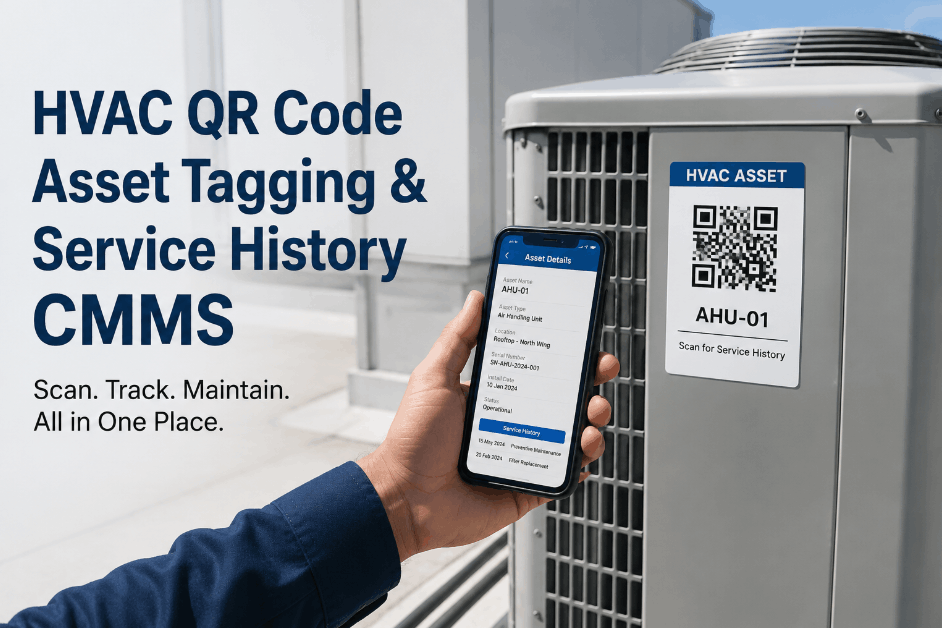
Modern cylinder tracking systems assign a unique digital identity to every refrigerant container in your fleet. Each cylinder gets a durable barcode or RFID tag linked to its serial number in your CMMS. Every transaction—receiving, issuing, transferring, weighing, recovering, returning—is captured with a mobile scan that takes three seconds and creates a permanent, auditable record.
1
Cylinder Receipt & Registration
New cylinders are scanned upon delivery, linking manufacturer serial number, refrigerant type, tare weight, and supplier invoice to a permanent digital record. The cylinder enters your tracked inventory the moment it crosses your dock.
2
Warehouse Issue & Van Assignment
When a cylinder is issued to a technician, a quick scan records who took it, which vehicle it's assigned to, and the current weight. The system knows exactly which cylinders are in each van at all times.
3
Job Site Usage Logging
Technicians scan the cylinder at the job site and enter weight before and after service. The system automatically calculates refrigerant used and links it to the work order, equipment, and customer—creating the EPA-required usage record.
4
Recovery Cylinder Tracking
Recovered refrigerant is logged to dedicated recovery cylinders with source equipment, contamination status, and weight. When the recovery cylinder is full, it's flagged for pickup and linked to the reclamation manifest.
5
Return, Reclaim & Disposal
Empty virgin cylinders are returned to suppliers with documented tare weights. Recovery cylinders go to certified reclaimers with full chain-of-custody documentation. Every cylinder's final disposition is recorded and auditable.
Refrigerant Types: Complete Tracking Coverage
Serial number tracking systems handle every refrigerant type in commercial and residential HVAC service—from legacy R-22 phase-out inventory to new low-GWP alternatives. Each refrigerant type has specific handling, recovery, and documentation requirements that the tracking system enforces automatically.
Common HFC Refrigerants
R-410A (Puron)
GWP: 2,088 | Cylinder: 25 lb
Primary refrigerant for residential and light commercial AC systems. High cost per pound makes tracking ROI significant. Requires dedicated recovery cylinders—cannot mix with other refrigerants.
R-22 (Freon)
GWP: 1,810 | Phase-out: Complete
Legacy refrigerant no longer manufactured. Existing inventory is extremely valuable ($50–$100/lb). Strict tracking prevents diversion and ensures compliant recovery from decommissioned systems.
R-134a
GWP: 1,430 | Cylinder: 30 lb
Used in automotive AC, commercial refrigeration, and chillers. Cross-contamination with R-12 is common problem—tracking prevents mixed refrigerant from entering clean systems.
R-404A / R-507A
GWP: 3,922 / 3,985 | Cylinder: 24 lb
Commercial refrigeration refrigerants for supermarkets, cold storage, and food service. High GWP means regulatory pressure increasing—accurate tracking supports transition planning.
Low-GWP & Specialty Gases
R-32
GWP: 675 | Mildly Flammable (A2L)
Next-generation residential AC refrigerant. Lower GWP but requires A2L safety handling procedures. Tracking system enforces technician certification verification before issue.
R-454B (Opteon XL41)
GWP: 466 | A2L Classification
Leading R-410A replacement for new equipment. Different pressure characteristics require tracking to prevent accidental use in R-410A systems. Serial tracking ensures correct cylinder for each job.
CO2 (R-744)
GWP: 1 | High Pressure
Natural refrigerant for transcritical commercial systems. Extremely high operating pressures require specialized cylinders and equipment. Tracking prevents standard cylinder misuse.
Nitrogen & Trace Gases
Non-refrigerant | Support gases
Nitrogen for pressure testing and brazing, trace gases for leak detection. Not EPA-regulated but represent significant inventory cost. Serial tracking prevents loss and ensures availability.
Start Tracking Every Cylinder Today
OxMaint provides complete refrigerant cylinder tracking with barcode scanning, weight logging, EPA compliance reports, and real-time inventory visibility across your entire fleet.
Manual vs. Digital Tracking: Complete Comparison
Scroll horizontally on mobile
EPA Compliance: What Serial Tracking Documents Automatically
EPA Section 608 regulations require HVAC contractors to maintain detailed records of refrigerant purchases, usage, recovery, and disposal. Serial number tracking captures every required data point automatically as part of normal workflow—eliminating the compliance paperwork burden while creating an audit trail that exceeds regulatory requirements.
Refrigerant Acquisition Records
Every cylinder received is linked to supplier invoice, purchase date, refrigerant type, quantity, and cost. The system maintains a complete purchase history that reconciles with supplier records and proves legal acquisition of all refrigerant in inventory.
Service Event Documentation
Each refrigerant charge is logged with customer name, equipment serial number, refrigerant type, quantity added, technician certification number, and work order reference. This creates the per-equipment usage history required for systems containing 50+ pounds.
Recovered Refrigerant Tracking
All recovered refrigerant is logged with source equipment, recovery date, quantity, contamination status, and recovery cylinder serial number. The system tracks cumulative recovery cylinder contents until transfer to a certified reclaimer.
Reclamation & Disposal Chain
When recovery cylinders are sent to certified reclaimers, the system generates manifests documenting cylinder serial numbers, contents, weights, and destination. Return credits are reconciled against shipped quantities automatically.
Compliance Report Generation
One-click reports show refrigerant purchases, usage by customer and equipment, recovery totals, and disposal documentation for any time period. Annual EPA reports that took days to compile manually are generated in seconds.
ROI Analysis: Cylinder Tracking Investment vs. Return
$12,500
Eliminated Cylinder Shrinkage
Reducing inventory loss from 20% to under 3% on $60K annual refrigerant spend
$8,400
Reduced Emergency Supply Runs
Eliminating 2 unnecessary supply runs per week at $80 average cost (labor + fuel + markup)
$6,200
Technician Time Savings
Saving 15 minutes per tech per day on cylinder paperwork and phone calls (15 techs × $35/hr)
$4,800
Inventory Optimization
Reducing cylinder float from 90 to 60 units—$30K less working capital at 16% carrying cost
$3,600
Compliance Labor Reduction
Eliminating 6 hours monthly of manual record compilation and reconciliation
Implementation Guide: Getting Started with Cylinder Tracking
"
The contractors who succeed with refrigerant tracking start with a complete physical inventory and tag every cylinder before going live. Trying to track cylinders gradually—tagging them as they come through the warehouse—creates a parallel system where some cylinders are tracked and some aren't. That ambiguity defeats the purpose. Take a Saturday, count every cylinder in every van and warehouse location, tag them all, enter starting weights, and flip the switch. From that moment forward, no cylinder moves without a scan. Within two weeks, your team will wonder how they ever operated without it—and your inventory accuracy will jump from 70% to 98%.
Complete physical inventory before go-live—tag every cylinder on the same day
Use durable tags rated for outdoor/vehicle environments—cheap labels fail in months
Make scanning mandatory—no exceptions, no workarounds, no "I'll log it later"
Weekly variance reports catch problems early—don't wait for quarterly inventory counts
Track Every Cylinder. Document Every Gram. Pass Every Audit.
OxMaint delivers complete refrigerant cylinder tracking with mobile barcode scanning, real-time inventory visibility, automated EPA compliance reports, and seamless integration with your service workflow. Stop losing cylinders and start building an audit-proof operation.
Frequently Asked Questions
What type of tags work best for refrigerant cylinders?
For most HVAC operations, durable polyester barcode labels with industrial adhesive provide the best balance of cost and durability. These labels withstand temperature extremes, UV exposure, oil, and cleaning chemicals for 3–5 years. Apply them to the cylinder collar (not the tank body) to avoid damage during handling. For high-turnover operations or harsh environments, consider metal asset tags with stamped barcodes or RFID tags embedded in protective housings. RFID adds cost ($5–$15 per tag vs. $0.50–$2 for barcodes) but enables bulk scanning—useful for warehouse inventory counts. Whichever tag type you choose, standardize on one approach across your entire fleet to simplify scanning workflow.
How do technicians record cylinder weights in the field?
Most technicians already carry refrigerant scales for charging operations. With serial tracking, they simply scan the cylinder barcode, place it on the scale, and enter the weight in the mobile app—a 30-second process. The system records timestamp, location (GPS), technician ID, and weight automatically. For operations that want to eliminate manual weight entry, Bluetooth-enabled refrigerant scales can transmit weights directly to the tracking app. This adds hardware cost ($400–$800 per scale vs. $150–$300 for standard scales) but eliminates data entry errors and speeds the process to under 15 seconds. The key is making weight logging part of the standard job site workflow—cylinder gets scanned and weighed before the first hose is connected, and again before it goes back in the van.
What happens when a cylinder is transferred between technicians or vehicles?
Every custody transfer requires a scan by both parties—the technician releasing the cylinder and the technician receiving it. The releasing tech scans the cylinder and selects "Transfer Out" with the receiving tech's name. The receiving tech scans the same cylinder and confirms "Transfer In." The system logs both scans with timestamps, creating an unbroken chain of custody. If only one tech is present (leaving a cylinder at the warehouse, for example), a single scan to the warehouse location is sufficient. The system flags any cylinder that shows "Transfer Out" without a corresponding "Transfer In" within 24 hours—catching cylinders that get lost in transit or forgotten in parking lots.
How does the system handle recovery cylinders with mixed refrigerant sources?
Recovery cylinders are tracked as separate inventory items with their own serial numbers. When a technician recovers refrigerant, they scan both the source equipment (or record equipment details if not tagged) and the recovery cylinder. The system logs the refrigerant type, estimated quantity, contamination status, and source into that recovery cylinder's record. As the cylinder accumulates refrigerant from multiple jobs, the system maintains a complete history of everything that went into it. When the recovery cylinder is sent for reclamation, the manifest includes the full contents history—essential documentation for certified reclaimers and EPA compliance. Recovery cylinders containing mixed or contaminated refrigerant are flagged to prevent accidental reuse.
What reports does the system generate for EPA compliance?
The system generates all documentation required under EPA Section 608 with one click. Standard reports include: Refrigerant Purchase Summary (all acquisitions by type, supplier, date, and quantity), Usage by Equipment (refrigerant added to systems containing 50+ pounds, required for leak rate calculations), Recovery Log (all refrigerant recovered with source equipment, dates, quantities, and disposition), Reclamation Manifests (documentation of recovered refrigerant sent to certified reclaimers), Technician Certification Report (verification that all refrigerant transactions were performed by certified technicians), and Annual Summary (total purchases, usage, recovery, and disposal by refrigerant type for annual reporting). Reports can be filtered by date range, refrigerant type, customer, or technician—and exported to PDF for auditor submission.