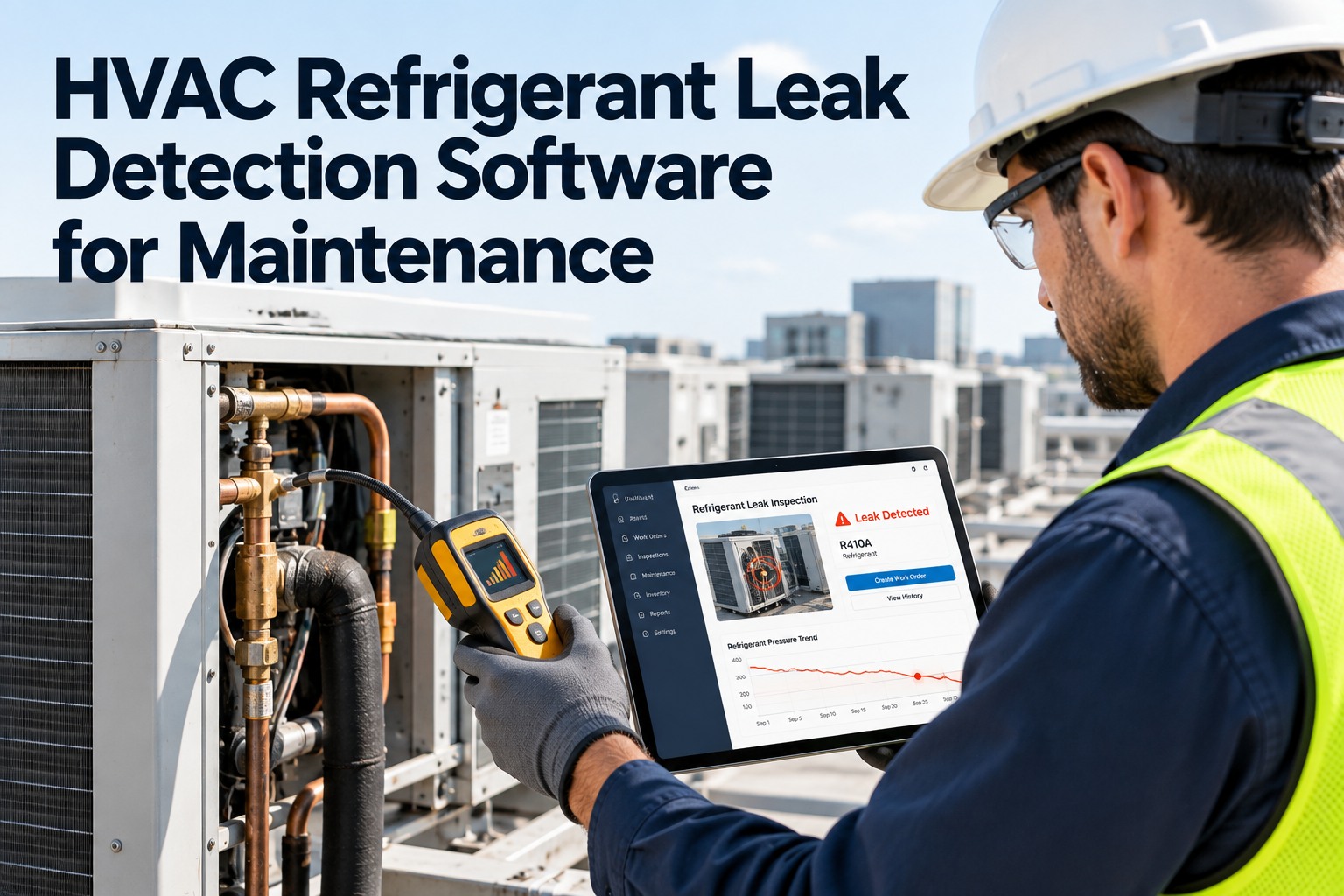
HVAC Refrigerant Leak Detection Software for Maintenance

By Willam Jerry on October 10, 2026

rl-hvac-refrigerant-leak-detection-maintenance-software

Finding a refrigerant leak is only the first step. The harder part is making sure it gets a work order, a repair, a retest and a record, and that the next technician can see the same unit has leaked before. When that history lives in a technician's notebook or a shared spreadsheet, the same fitting gets topped up again and again, and nobody can say how much refrigerant a unit has really lost. OxMaint AI maintenance management software keeps the whole leak lifecycle in one place, from inspection to verified repair.

HVAC Refrigerant Leak Detection Software · Maintenance Records · 2026

HVAC Refrigerant Leak Detection Software for Maintenance.

Topping up a leaking unit without a record hides the real problem. OxMaint AI connects refrigerant leak inspections, issues found, work orders and follow-up PM in one platform, so every leak has an owner, a repair and a history tied to the asset.

1Leak inspection
checklist on a phone
→
2Leak logged
asset, location, refrigerant
→
3Work order
repair assigned and tracked
→
4Retest & PM
recheck scheduled automatically
5 steps
from first detection to verified repair
1 record
per leak, linked to the asset
Repeat
leaks become visible in asset history
Region-specific
rules on leak checks and records vary

The Leak Lifecycle: What Should Happen After Detection

A leak that is found but not tracked is easy to lose. Each step below should leave a record behind. Start free and run each step in OxMaint AI.

1
Detect
Inspection finds a suspected leak using a detector, dye, soap solution or sensor alarm. The technician records the unit, location and method.
2
Raise the work order
The finding becomes an assigned job with a priority and due date, instead of a note on a visit report.
3
Repair
The fix, parts used and refrigerant added or recovered are logged against the same asset.
4
Verify
A retest confirms the repair held. Only then is the leak closed out.
5
Recheck
A follow-up inspection is scheduled so a repeat leak shows up in the asset history, not as a surprise.

Where Refrigerant Leaks Usually Hide

Knowing the common leak points makes inspections faster and more consistent. Build them into the checklist for every unit. Book a demo to see leak points added to an inspection template.

Brazed joints
Stress, vibration and poor joints can open over time.
Flare fittings
Common on smaller systems, sensitive to tightening and vibration.
Valves & Schrader cores
Service ports and valve stems that seep slowly.
Evaporator & condenser coils
Corrosion and pinholes, often hard to see.
Vibrating lines
Pipes that rub on supports or flex near compressors.
Oil staining
Oily residue at a joint is a common clue to look closer.

Leak Detection Methods at a Glance

MethodBest forLimit to know
Electronic detector Pinpointing leaks at joints and fittings Needs correct sensitivity and technique
UV dye Slow leaks that are hard to trace Needs time and a UV light to confirm
Soap or bubble solution Quick checks on accessible fittings Misses very small or hidden leaks
Pressure or vacuum test Checking a repaired system holds Does not locate the leak
Fixed gas sensors Continuous monitoring in plant rooms Alarm still needs a response and a record

The Same Unit, the Third Top-Up. Does Anyone Know?

If leak history is not tied to the asset, repeat leaks look like new problems. OxMaint AI keeps every inspection, repair and refrigerant top-up on the unit's record, so patterns are visible before they become repeat call-outs.

What a Good Leak Record Contains

Whatever rules apply to your equipment, a complete record answers who, what, where, how and what happened next. Start free and capture these fields on a phone.

Refrigerant Leak Record · Example
AssetRTU-04 · Roof
Refrigerant typeAs on nameplate
Detection methodElectronic detector
Leak locationEvaporator coil joint
Refrigerant added / recoveredRecorded in kg or lb
Repair & partsWork order + parts used
Retest resultPass / Fail
Technician & dateSigned on completion

Rules Differ by Region and Equipment

Leak checks, repair timelines and record-keeping requirements depend on your location, refrigerant and system size, for example under national refrigerant management or F-gas regulations. Confirm what applies to your sites with your compliance lead. Software does not replace that, but it keeps the records easy to find. Book a demo to see audit-friendly records.

Equipment list
Units, refrigerant type and charge on file.
Inspection history
Dates, methods and findings per unit.
Repair evidence
Work orders, parts and retest results.
Contractor records
Who serviced which unit and when.

How OxMaint AI Supports Leak Management

Leak Inspection Checklists
Mobile forms with photos and readings.
Issue to Work Order
A leak found becomes an assigned repair.
Asset History
Every leak and repair on the unit's record.
Recheck PM
Follow-up inspections raised automatically.
Parts & Cost Tracking
Materials and labour logged per repair.
Searchable Records
Find any unit's history in seconds.

Frequently Asked Questions

What is HVAC refrigerant leak detection software?
Software that manages leak inspections, findings, repair work orders and asset history for HVAC and refrigeration equipment. Start free and try it.
Does the software detect leaks itself?
Detection is done with tools like detectors, dye or fixed sensors. The software manages what happens next: the record, work order, repair and follow-up. Book a demo of the workflow.
What should a refrigerant leak record include?
The asset, refrigerant, detection method, location, amount added or recovered, repair, retest result, technician and date. Start free and use the template.
How does a CMMS help with repeat leaks?
It ties each leak to the asset, so repeat leaks and top-ups show up in the history and can trigger a deeper repair. Book a demo of asset history.
Can I track contractor repairs too?
Yes. External technician visits and findings can be logged against the same unit. Start free and add contractor visits.

Make Every Leak Findable, Fixable and Provable.

Log it, assign it, repair it, retest it and keep the record on the asset. Start with one building and see how much easier follow-up becomes.



Share This Story, Choose Your Platform!