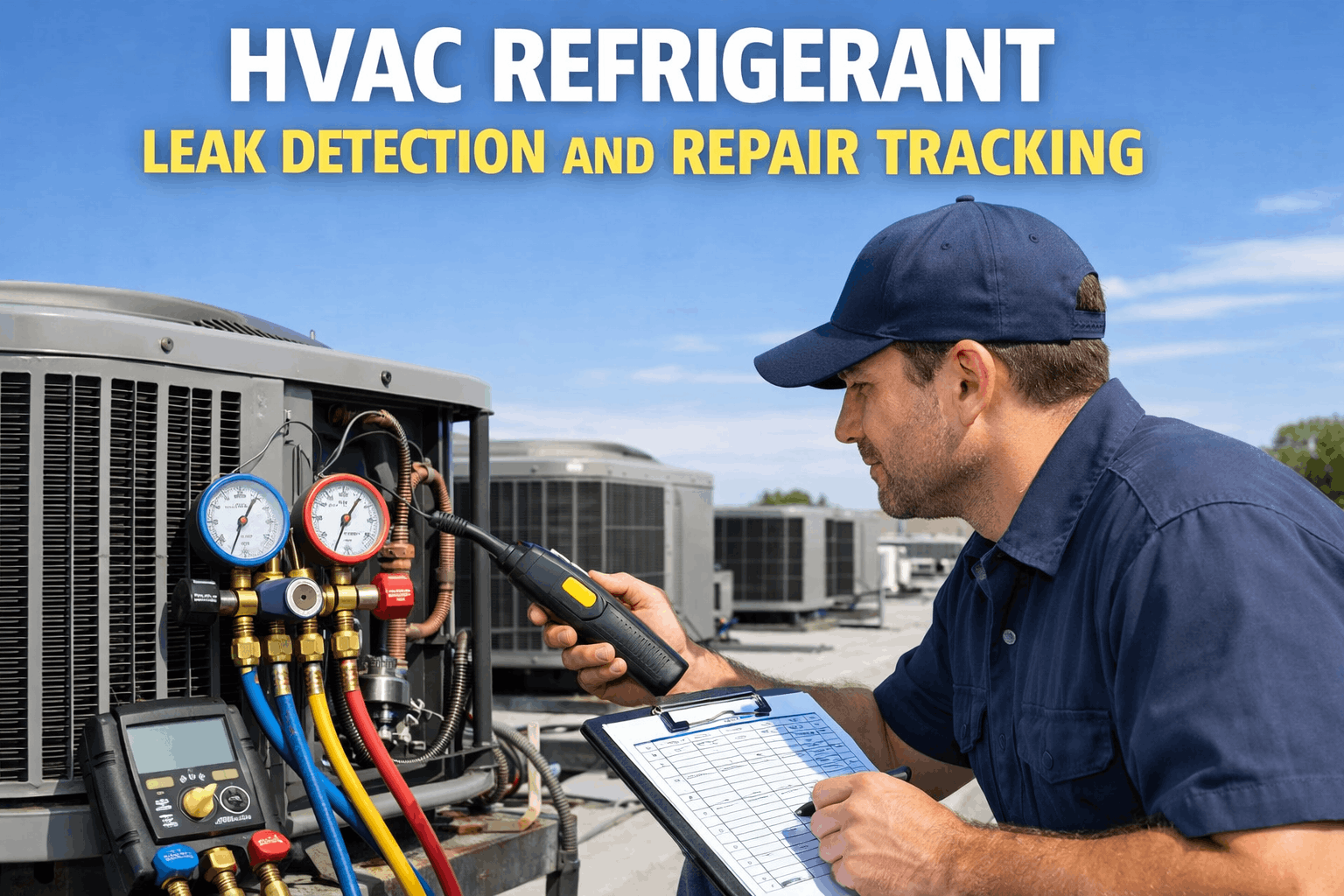
The EPA's HFC Management Rule under the AIM Act represents the most significant shift in refrigerant compliance since the Montreal Protocol. Starting January 1, 2026, facilities operating HVAC and refrigeration systems with just 15 pounds of HFC refrigerant face mandatory leak detection, repair timelines, and digital documentation requirements. This dramatic threshold reduction from the previous 50-pound standard means thousands of facilities previously exempt now fall under strict federal oversight. Understanding these requirements isn't just about avoiding penalties up to $69,733 per day—it's about transforming your maintenance operations into a competitive advantage through intelligent compliance tracking.
EPA AIM Act Compliance: Your Complete Guide to HFC Refrigerant Management
Navigate the 2026 refrigerant regulations with confidence. Master leak detection requirements, repair timelines, and digital documentation to keep your HVAC operations compliant and efficient.
Critical Compliance Deadlines You Cannot Miss
Leak Repair Requirements Active
Systems with 15+ lbs of HFC refrigerant (GWP >53) must comply with leak rate calculations and repair timelines. Start tracking now to avoid penalties.
Automatic Leak Detection (New Systems)
New industrial/commercial refrigeration systems with 1,500+ lbs must install ALD within 30 days of installation.
ALD for Existing Systems
Existing systems (installed 2017-2025) with 1,500+ lbs refrigerant must have automatic leak detection operational.
Reclaimed Refrigerant Mandate
Supermarket systems, refrigerated transport, and ice makers must use reclaimed HFCs for servicing and repairs.
The 15-Pound Threshold: Who's Now Affected?
Previous EPA Section 608 Threshold
Limited CoverageNew AIM Act Threshold (2026)
Expanded CoverageSystems Now Requiring Compliance:
Commercial Buildings
Medium-sized comfort cooling systems previously exempt
Retail Locations
Small supermarket refrigeration units
Healthcare Facilities
Medical cooling and HVAC equipment
Industrial Process
Manufacturing cooling systems
Understanding Leak Rate Thresholds & Repair Timelines
The EPA mandates specific leak rate calculations every time refrigerant is added to your system. Exceeding these thresholds triggers immediate action requirements.
Comfort Cooling
Air conditioning, heat pumps, and comfort cooling systems
Commercial Refrigeration
Grocery stores, warehouses, food service refrigeration
Industrial Process
Manufacturing, chemical processing, industrial cooling
Leak Rate Calculation Formula
Digital tracking systems like Oxmaint automate these calculations, ensuring accuracy and compliance documentation.
The 30-Day Repair Workflow: Step-by-Step
Initial Detection
Leak identified through inspection or ALD system alert. Document date, location, and initial leak rate calculation.
Immediate Repair
Certified technician repairs identified leaks. All repairs must be completed within 30 days (120 days for industrial process).
Initial Verification
Conduct verification test before adding refrigerant. Must demonstrate leak rate below threshold.
Follow-up Verification
Second test after system returns to normal operation. Required within 10 days of initial verification.
Documentation
Maintain records for 3+ years. Book a demo to see how digital documentation simplifies compliance.
Automatic Leak Detection (ALD) Requirements
Who Needs ALD?
- New industrial/commercial refrigeration systems with 1,500+ lbs refrigerant (GWP >53)
- Existing systems (2017-2025) with 1,500+ lbs by Jan 1, 2027
- Systems must be audited and calibrated annually
ALD System Capabilities
- Continuous monitoring and automatic alerts
- Detection sensitivity appropriate for refrigerant type
- Records of leak location and timestamp
- Integration with facility management systems
Financial Impact
EPA estimates leak repair and ALD requirements will save $19.5 million in 2026 alone by reducing refrigerant replacement costs. Sign up today to start realizing these savings.
Digital Documentation: Your Compliance Safety Net
The AIM Act requires comprehensive recordkeeping. Manual tracking is no longer sufficient for facilities managing multiple systems.
Full Charge Records
Document initial refrigerant charge for every system
Service History
Track all maintenance, repairs, and refrigerant additions
Leak Rate Calculations
Automated calculations with audit trails
Verification Tests
Initial and follow-up test documentation
Inspection Schedules
Quarterly for 500+ lbs, annual for 15-500 lbs
Retrofit/Retirement Plans
Required if repairs fail within 30 days
Non-Compliance Costs: What You Risk
Maximum civil penalty per day per violation
Maximum time to complete retrofit/retirement after plan submission
Minimum record retention period required by EPA
Beyond financial penalties, non-compliance creates operational disruptions, reputational damage, and potential EPA enforcement actions. Schedule a compliance assessment to identify gaps before they become violations.
Ready to Simplify Your AIM Act Compliance?
Join hundreds of facilities using Oxmaint to automate leak rate calculations, track repair timelines, and maintain audit-ready documentation. Don't let the January 2026 deadline catch you unprepared.
Frequently Asked Questions About EPA AIM Act Compliance
What is the difference between Section 608 and the AIM Act HFC Management Rule?
Section 608 of the Clean Air Act originally targeted ozone-depleting substances (ODS) with a 50-pound threshold. The AIM Act HFC Management Rule expands coverage to HFC refrigerants with a GWP greater than 53 and dramatically lowers the threshold to 15 pounds. This means many systems previously exempt now require full compliance including leak detection, repair timelines, and documentation.
How do I calculate the leak rate for my HVAC system?
The leak rate formula is: (Pounds of refrigerant added ÷ Full charge of appliance) × (365 ÷ Number of days since last addition) × 100. You must calculate this every time refrigerant is added (except after retrofits, new installations, or seasonal variances). Digital compliance platforms automate these calculations and maintain the required documentation trail.
What happens if I cannot repair a leak within 30 days?
If you cannot complete a verified repair within 30 days (or 120 days for industrial process refrigeration), you must create a retrofit or retirement plan within 30 days of the failed repair deadline. The retrofit or retirement must be completed within one year of the plan date unless you receive an extension from EPA. During this period, you must continue attempting repairs.
Do I need automatic leak detection for all my systems?
Automatic leak detection (ALD) is only required for industrial process refrigeration and commercial refrigeration systems with 1,500 pounds or more of HFC refrigerant (GWP >53). New systems need ALD by January 1, 2026, while existing systems installed between 2017-2025 have until January 1, 2027. Systems with 15-1,499 pounds require manual leak inspections but not automatic detection.
Which refrigerants are affected by the 15-pound threshold?
The threshold applies to HFC refrigerants and substitutes with a Global Warming Potential (GWP) greater than 53. Common affected refrigerants include R-134a (GWP 1,430), R-404A (GWP 3,922), R-410A (GWP 2,088), and R-407C (GWP 1,774). Natural refrigerants like CO2, ammonia, and hydrocarbons with GWP below 53 are exempt from these specific requirements.
How long must I keep refrigerant management records?
EPA requires maintenance of all refrigerant records for at least three years. This includes leak rate calculations, repair documentation, verification tests, retrofit/retirement plans, and ALD calibration records. Digital recordkeeping systems ensure easy retrieval during EPA audits and help demonstrate ongoing compliance.
Transform Compliance Into Competitive Advantage
The AIM Act isn't just another regulatory burden—it's an opportunity to optimize your HVAC operations, reduce refrigerant costs, and demonstrate environmental leadership. With Oxmaint, compliance becomes automatic, documentation becomes effortless, and your team can focus on what matters most: keeping your facilities running smoothly.