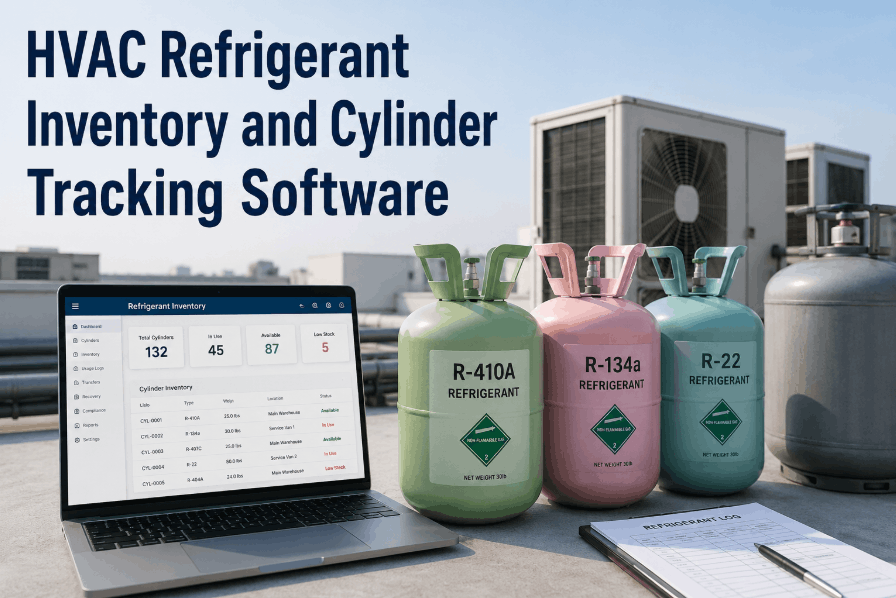
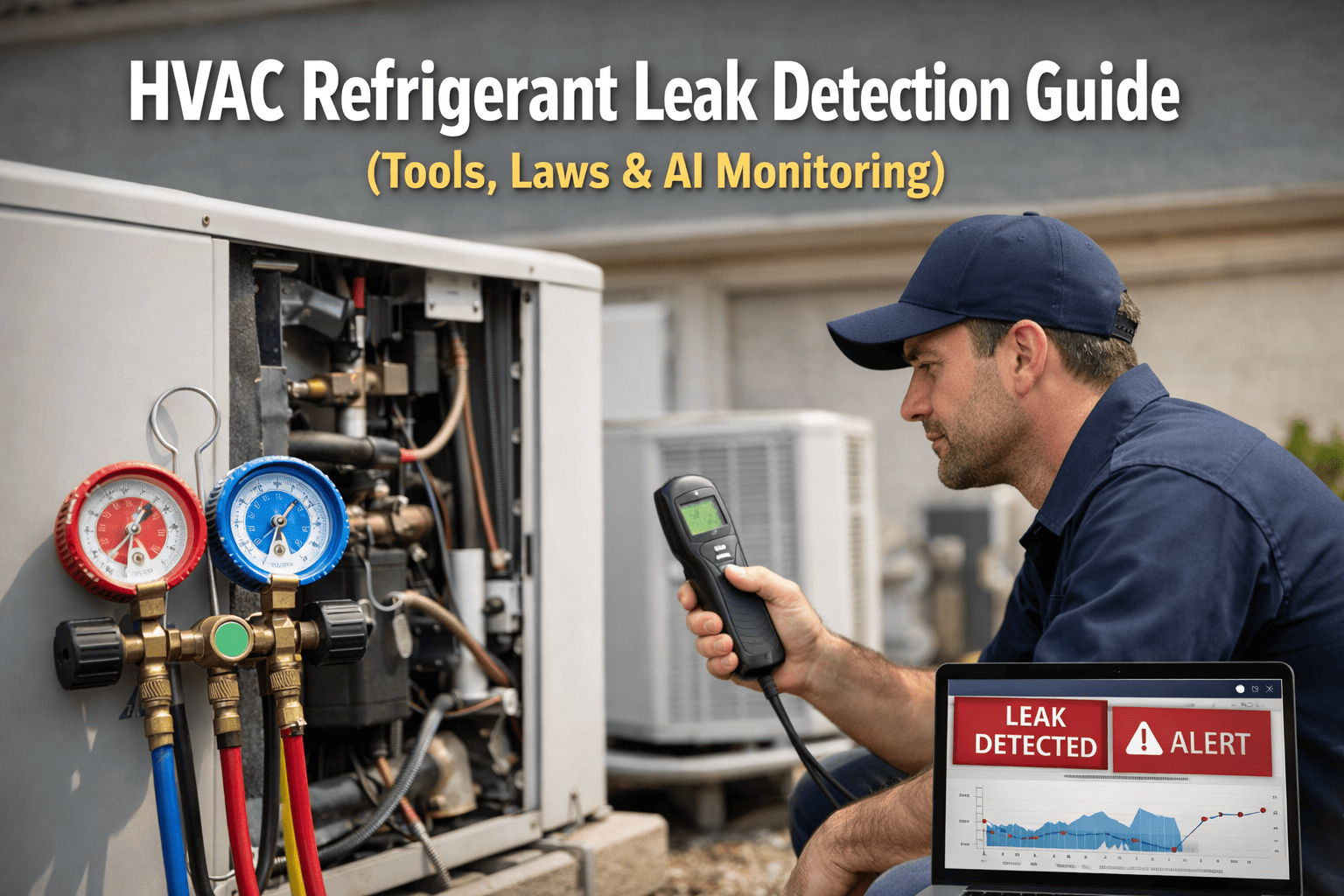
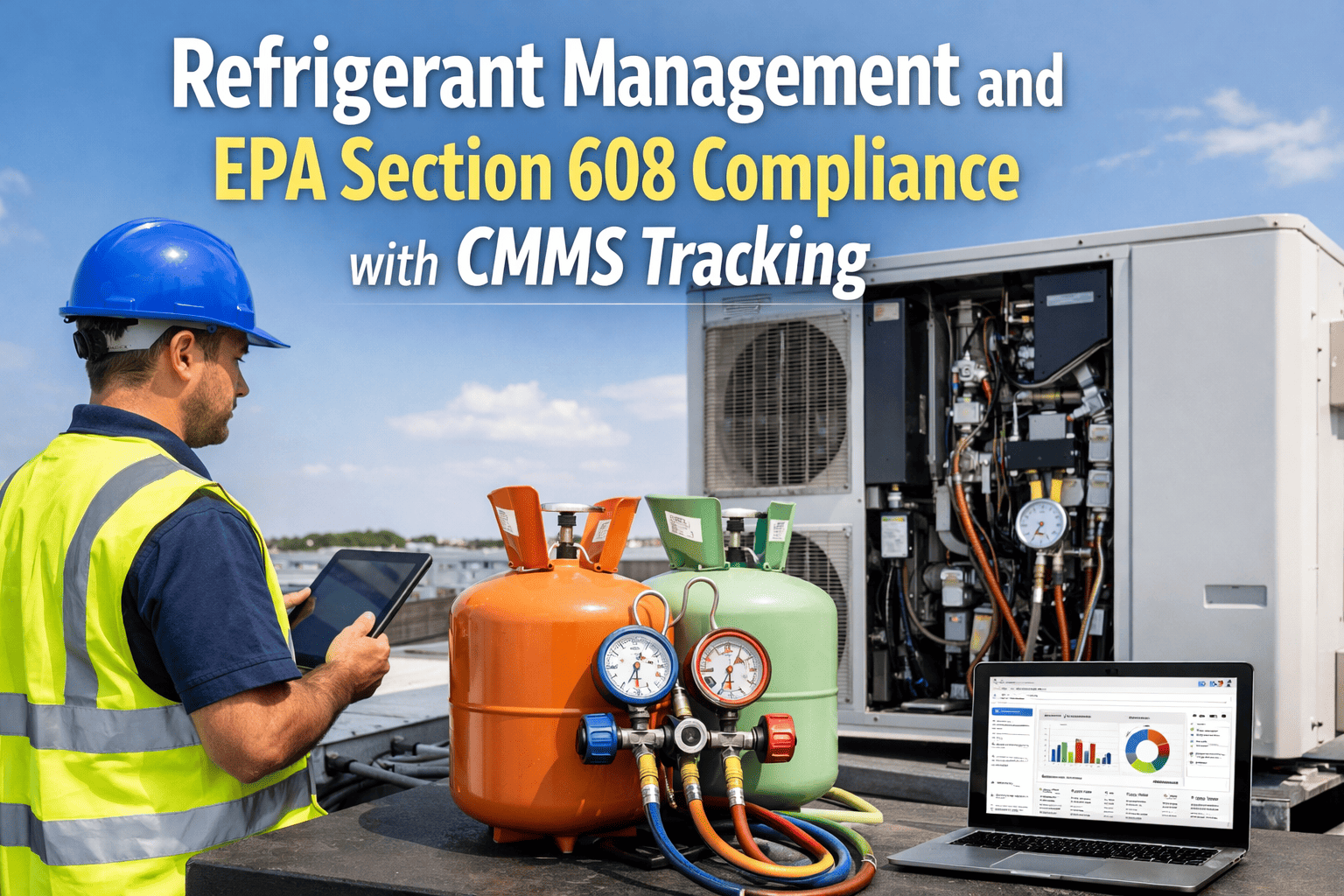
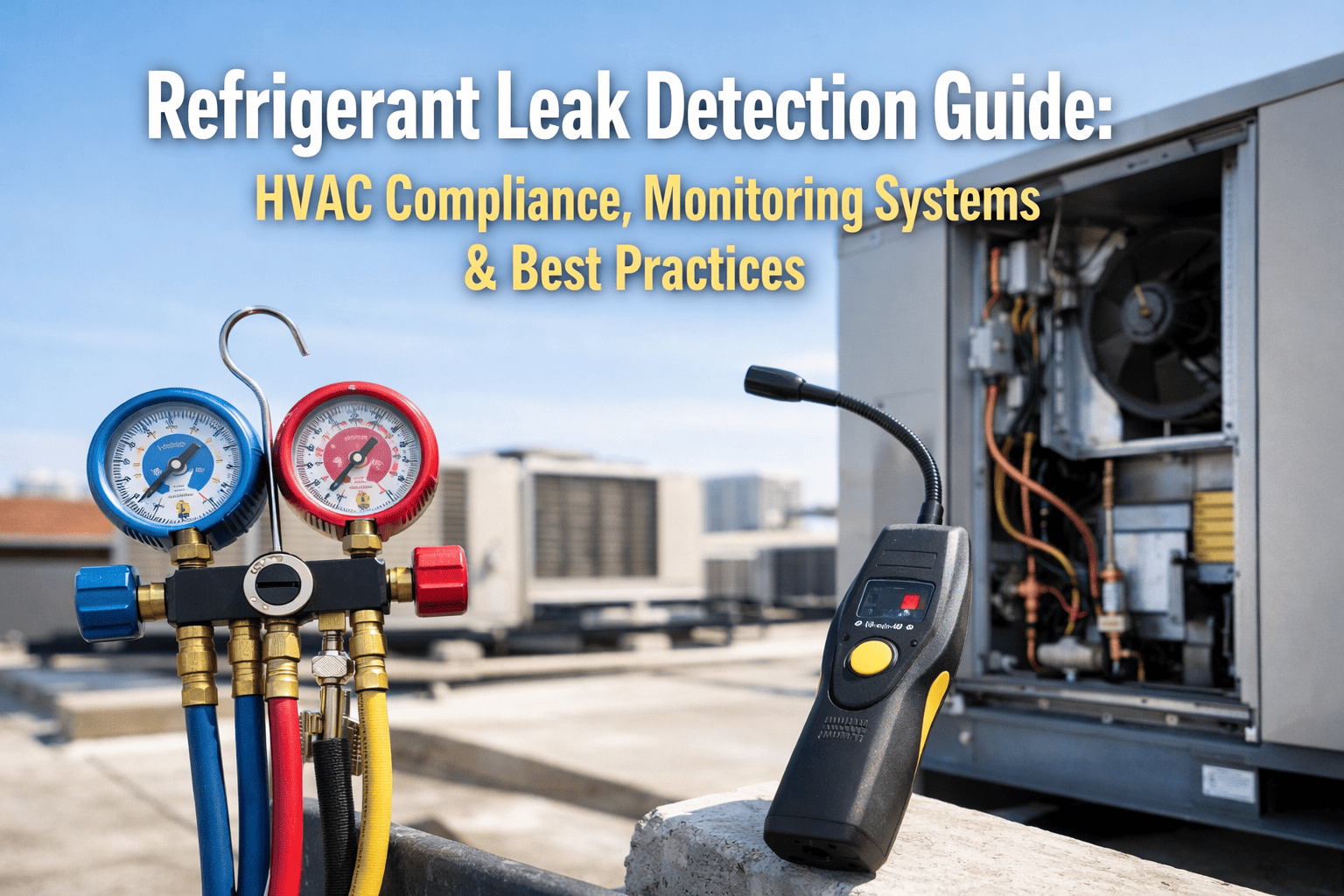
Refrigerant compliance is no longer a paperwork exercise — it is a legally enforced, financially consequential obligation that is tightening every year. The AIM Act has set binding HFC phasedown schedules that reduce the production and import of high-GWP refrigerants by 85% through 2036. EPA Section 608 requires documented inspection, leak repair, and recordkeeping for any system containing 50 or more pounds of refrigerant. The F-Gas Regulation in the EU applies structured inspection frequency requirements by GWP and charge size with strict reporting obligations. For facility managers operating buildings with multiple chillers, rooftop units, and precision cooling systems — each with its own refrigerant type, charge size, inspection history, and repair log — manual tracking via spreadsheet or paper logbook is no longer a viable compliance strategy. A dedicated refrigerant compliance software platform eliminates the documentation risk, automates inspection scheduling, flags leak rates that trigger regulatory reporting thresholds, and generates audit-ready reports on demand. Start a free OxMaint trial to begin tracking refrigerant compliance across your facility, or book a demo to see the compliance tracking module in action.
Refrigerant Compliance Obligations — What Applies to Your Facility
The regulatory landscape for refrigerant management spans three overlapping frameworks. Understanding which rules apply — by equipment size, refrigerant type, and jurisdiction — is the first step in building a compliant program.
What Refrigerant Compliance Software Must Track — by System
Every refrigerant-containing system in your facility portfolio requires its own documented record. The table below defines the minimum data fields required per system to satisfy EPA 608, AIM Act, and F-Gas requirements simultaneously.
| Data Field | Required By | Update Frequency | Compliance Risk if Missing |
|---|---|---|---|
| Refrigerant type and GWP | EPA 608 / F-Gas / AIM | At installation; update on retrofit | Cannot calculate leak rate or CO2-eq charge |
| Full charge size (lbs or kg) | EPA 608 / F-Gas | At installation; verify annually | Drives inspection frequency and repair thresholds |
| Leak inspection date and result | EPA 608 / F-Gas | Per regulation frequency — at minimum annually | Direct regulatory violation; penalty exposure |
| Refrigerant added (date, quantity, technician) | EPA 608 / F-Gas | Every service event where refrigerant added | Cannot calculate annual leak rate — violation |
| Annual leak rate calculation | EPA 608 | Calculated annually from charge and top-up data | Cannot determine if repair obligation triggered |
| Leak repair date and method | EPA 608 / F-Gas | Within 30 days of leak discovery (EPA 608) | Exceeding repair deadline — direct violation |
| Post-repair verification test | EPA 608 / F-Gas | Within 30 days of repair completion | Repair not considered complete without verification |
| Technician EPA 608 certification number | EPA 608 | Recorded at every service event | Uncertified technician — regulatory violation |
| Refrigerant transition plan (for high-GWP systems) | AIM Act / F-Gas | At each equipment replacement decision | Capital planning risk; rising refrigerant costs |
How Annual Leak Rate Is Calculated and When It Triggers Action
The annual leak rate is the single most important number in refrigerant compliance — it determines whether your repair obligation is triggered and what the regulatory consequences are. Most FM teams are not calculating it correctly, or not calculating it at all.
Low-GWP Refrigerant Transition Planning — What Facilities Need to Know
The AIM Act phasedown makes refrigerant transition planning a financial planning requirement, not just an environmental one. The table below shows the transition landscape for the most common HVAC refrigerants in commercial buildings.
| Current Refrigerant | GWP | Primary Application | Low-GWP Alternative | New Alt. GWP | Transition Urgency |
|---|---|---|---|---|---|
| R-410A | 2,088 | Commercial HVAC — RTUs, splits, FCUs | R-454B / R-32 | 466 / 675 | High — phasedown accelerating |
| R-22 | 1,810 | Legacy HVAC and refrigeration | R-422D / R-407C (interim) | 2,730 / 1,774 | Critical — R-22 no longer produced |
| R-404A | 3,922 | Commercial and industrial refrigeration | R-448A / R-449A | 1,387 / 1,282 | Critical — banned in new EU equipment |
| R-134a | 1,430 | Chillers and transport refrigeration | R-1234yf / R-1234ze | 4 / 7 | Moderate — long-term planning required |
| R-407C | 1,774 | Split systems and chillers | R-32 (in suitable equipment) | 675 | Moderate — evaluate at next major service |
Automate Refrigerant Compliance Across Your Entire Portfolio
OxMaint's Compliance Tracking module manages every refrigerant-bearing system in your facility — scheduled leak inspections, refrigerant top-up logs, automatic leak rate calculation, repair deadline alerts, and audit-ready reports for EPA, AIM Act, and F-Gas requirements. Stop managing compliance in spreadsheets. Start managing it in software built for it.
What HVAC Compliance and Refrigerant Specialists Say
Refrigerant Compliance Software — Common Questions
Automate Refrigerant Compliance Across Your Entire Portfolio
Stop managing compliance in spreadsheets. Start managing it in software built for it.