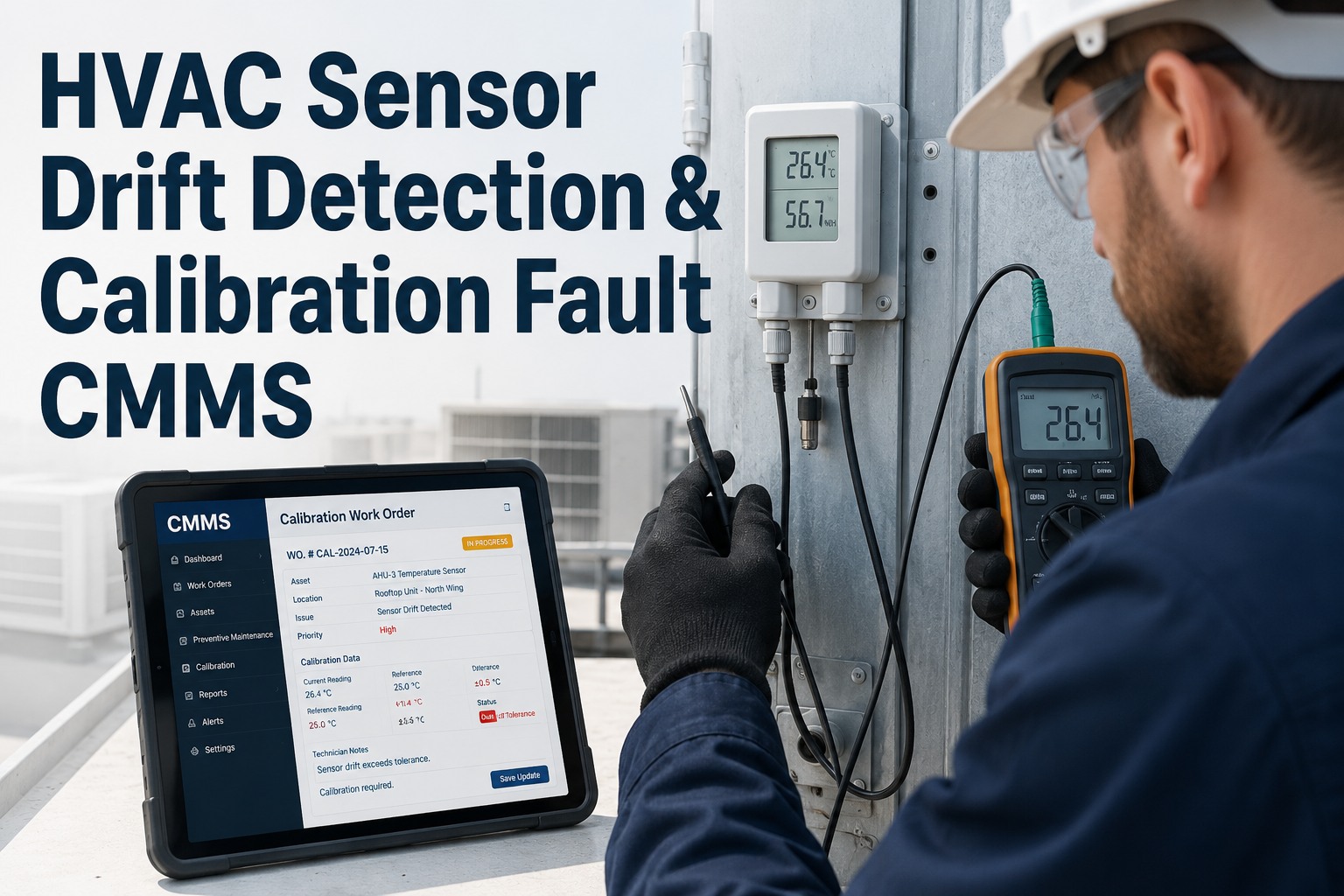
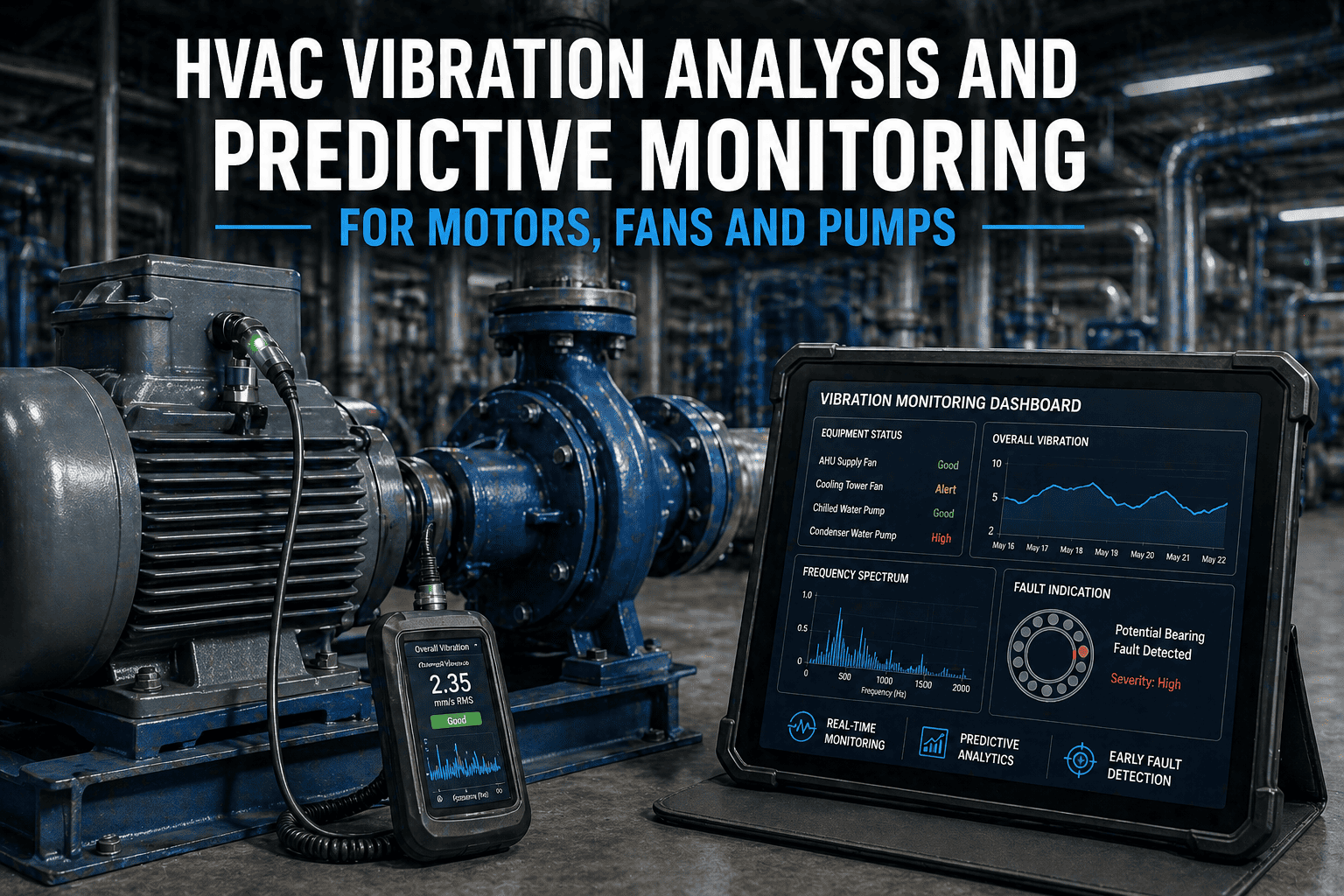
Predictive HVAC maintenance fails not because the technology doesn't work, but because sensor deployment lacks a structured methodology. Facilities install vibration sensors on compressors without monitoring the discharge lines that predict bearing failure earlier; they monitor supply air temperature without tracking the refrigerant pressure differential that signals coil fouling weeks before performance degrades. Sign Up Free to integrate sensor data with Oxmaint's predictive maintenance workflows. A sensor deployment model answers three questions before any hardware is purchased: which assets carry the highest downtime cost if they fail, which failure modes generate the earliest detectable signal, and which sensor type captures that signal at acceptable cost-per-insight. Book a Demo to see how Oxmaint structures sensor data into actionable predictive maintenance triggers. Without this model, facilities accumulate sensor infrastructure that generates data without generating decisions — and the blind spots that cause unplanned failures remain exactly where they were before the sensors were installed.
Deploy Sensors Where Failures Hide — Not Where Hardware Is Easy
Oxmaint integrates vibration, temperature, pressure, and runtime sensor data with structured predictive maintenance workflows — covering critical HVAC assets before blind spots expand into unplanned failures.
The Sensor Deployment Prioritization Framework: Asset Criticality First
The first principle of a sensor deployment model is that sensor budget should follow downtime cost, not equipment count. A facility with 40 HVAC units and a $30,000 sensor budget cannot instrument everything meaningfully — but can achieve near-complete predictive coverage of its 8 Tier 1 critical assets while establishing condition monitoring on 12 Tier 2 units. The remaining 20 lower-criticality units continue on scheduled maintenance without sensors, because the cost of an unmonitored failure on those units is lower than the cost of sensor infrastructure that would prevent it. Oxmaint's asset criticality framework structures this prioritization automatically, generating a sensor deployment roadmap sorted by downtime cost per asset class. Sign Up Free to build your predictive maintenance asset prioritization model in Oxmaint.
Sensor Type Selection: Matching Detection Method to Failure Mode
Each HVAC failure mode generates a distinct physical signal — and each sensor type detects only the signals it was designed to capture. Vibration sensors detect rotating component degradation (bearings, impellers, belt wear) weeks before failure; pressure sensors detect refrigerant leaks, coil fouling, and flow restrictions; temperature sensors detect heat exchanger inefficiency and air distribution imbalance; runtime sensors detect operational pattern shifts that indicate capacity degradation. The critical error in most sensor programs is selecting sensors based on availability and cost rather than failure mode alignment — resulting in instrumented assets that still fail without warning because the relevant signal isn't being captured. Book a Demo to see how Oxmaint maps sensor types to HVAC failure modes in its predictive maintenance configuration.
Eliminating Blind Spots: Where Unmonitored Failures Concentrate
In most facility HVAC programs, 80% of unplanned failures originate from 20% of assets — and those assets share a common characteristic: they are instrumented for basic runtime monitoring but lack the pressure or vibration sensors that would detect their specific failure modes. The compressor monitored for runtime hours but not bearing vibration. The chiller with supply temperature sensors but no refrigerant pressure differential monitoring. The cooling tower with flow rate data but no fan vibration baseline. Each represents a structural blind spot where failure is predictable but undetected because the wrong sensor type was deployed. Oxmaint's failure mode mapping process identifies these mismatches during onboarding, generating a sensor gap analysis that prioritizes corrective deployment by downtime cost per unmonitored failure mode. Sign Up Free to run a sensor gap analysis on your critical HVAC assets.
Building the Sensor Deployment Roadmap: Phased Investment Model
A predictive HVAC sensor program should not be deployed in a single capital event — it should follow a phased roadmap that delivers measurable ROI at each stage and uses early-phase data to validate sensor selection decisions before scaling. Phase 1 instruments the 10–15% of assets responsible for 60–70% of unplanned downtime cost, generating 12–18 months of baseline data. Phase 2 extends coverage to mid-criticality assets using Phase 1 findings to refine sensor type selection. Phase 3 completes coverage of remaining assets with validated configurations. This phased approach reduces total sensor program cost by 25–35% versus a simultaneous full deployment, because Phase 1 findings consistently identify sensor type mismatches that would have been replicated across all assets without the validation step. Book a Demo to design your phased sensor deployment roadmap in Oxmaint.
Cover Critical Assets Before Blind Spots Expand
Oxmaint structures predictive HVAC sensor deployment by failure mode, asset criticality, and downtime cost — connecting sensor data to automated work orders before failures become emergencies.
Frequently Asked Questions
Decide Where Sensors Go. Cover Critical Assets. Eliminate Blind Spots.
Oxmaint's predictive HVAC platform maps failure modes to sensor types, ingests vibration, temperature, pressure, and runtime data, and generates automated work orders before failures reach critical threshold — covering your highest-cost assets before reactive patterns solidify.