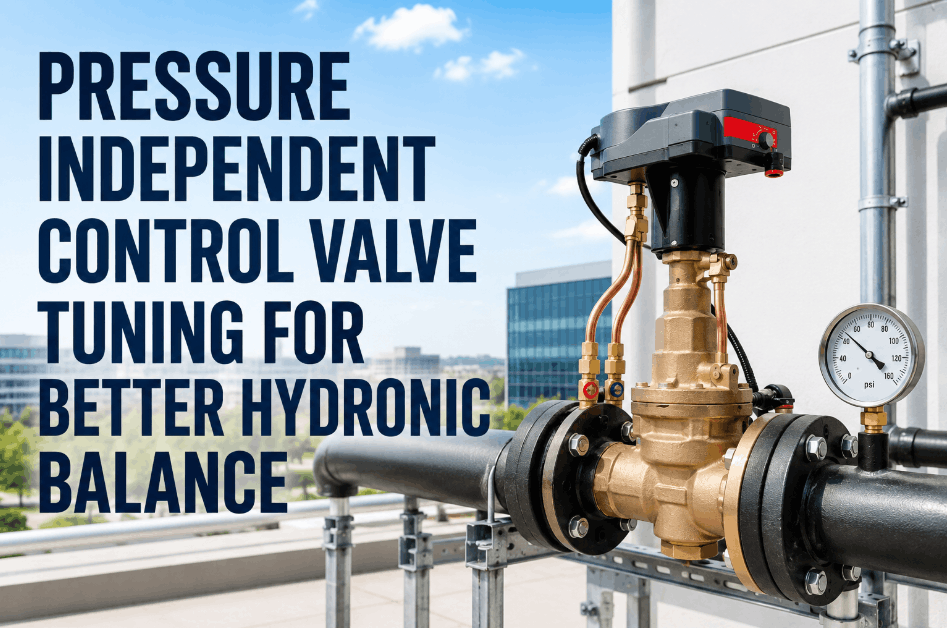
Pressure independent control valve (PICV) tuning is one of the most overlooked commissioning steps in hydronic systems — yet it directly determines whether chilled water and heating loops deliver stable flow to every zone. When flow limits are left at factory defaults, valve response curves are unverified, and loop instability is unresolved, hydronic balance collapses across variable flow systems and building comfort becomes impossible to maintain consistently. Maintenance and engineering teams using Sign Up Free on OxMaint can log PICV tuning work orders, track flow limit configurations by zone, and build a structured verification database that makes hydronic balance a repeatable, documented outcome rather than a commissioning assumption. Structured PICV tuning benchmarking turns valve performance data into system-level scheduling precision.
Why PICV Tuning Is Critical for Hydronic System Balance
Pressure independent control valves are designed to maintain constant flow regardless of differential pressure fluctuations — but only when properly commissioned and tuned. Without verified flow limits, calibrated actuator response, and documented zone performance data, PICVs behave unpredictably under part-load conditions, creating loop imbalances that degrade comfort and increase energy consumption. Book a Demo to see how OxMaint captures valve tuning records, tracks zone flow verification data, and builds the benchmark database your hydronic system needs for reliable performance across all operating conditions.
Six Dimensions of Pressure Independent Control Valve Tuning
A complete PICV tuning program covers more than flow limit adjustment. It connects actuator stroke verification, differential pressure response, zone thermal stability, balancing authority confirmation, and loop instability correction into a single hydronic performance picture. Sign Up Free on OxMaint to begin capturing valve tuning data by zone and build the verification baseline your hydronic scheduling and maintenance teams depend on.
Flow Limit Configuration and Zone Demand Alignment
PICV flow limits must match design load requirements for each zone — not factory defaults. Capturing configured flow limits in OxMaint work orders by zone and air handler reveals mismatches between valve settings and actual thermal loads, identifying which zones are over-served or starved of flow at design conditions.
Actuator Response Curve Verification
Valve actuator response must be verified against the control signal across the full stroke range. Logging stroke timing, control signal linearity, and dead-band width in OxMaint identifies actuators with degraded response that cause hunting, overshooting, or sluggish reaction to zone load changes.
Differential Pressure Range Confirmation
PICVs maintain flow independence only within their rated differential pressure operating range. Verifying that system differential pressure at each valve location falls within specification — and logging out-of-range conditions as maintenance findings — prevents flow instability that defeats the valve's pressure compensation function entirely.
Loop Instability Identification and Root Cause Logging
Hunting, cycling, and pressure oscillations in hydronic loops frequently trace to incorrectly tuned PICVs interacting with pump speed control. Capturing instability symptoms, loop locations, and confirmed root causes in OxMaint builds a searchable diagnostic record that accelerates future troubleshooting and guides system-wide rebalancing decisions.
Zone Thermal Stability and Comfort Outcome Linkage
Valve tuning effectiveness is ultimately measured by zone thermal stability. Linking supply air temperature deviation, zone setpoint adherence, and comfort complaint frequency to PICV tuning records in OxMaint identifies which valve adjustments produce lasting comfort improvement and which require further correction.
Rebalancing Trend Reporting and Seasonal Performance Tracking
OxMaint generates PICV performance trend reports by zone, loop, and season — allowing facilities teams to identify valves that require retuning as building loads shift and system conditions evolve. Benchmark data replaces reactive service calls with planned verification cycles that protect hydronic balance year-round.
PICV Tuning Benchmarks by Hydronic System Configuration
Valve tuning complexity and loop instability risk vary significantly by system type, building configuration, and operating pressure range. Comparing your actual PICV performance profile against configuration-specific benchmarks identifies where flow limit corrections and actuator recalibration have the highest impact on hydronic balance. Book a Demo to explore how OxMaint tracks PICV tuning work orders alongside hydronic system maintenance data in one platform.
| System Configuration | Primary Tuning Challenge | Typical Tuning Interval | Instability Risk | OxMaint Maintenance Lever |
|---|---|---|---|---|
| Variable Primary Chilled Water | Flow limit mismatch at low-load conditions | Annual + post-recommission | High | Zone flow limit tracking + differential pressure logs |
| 4-Pipe Fan Coil Systems | Actuator hunting between heating and cooling valves | Bi-annual verification | Medium–High | Actuator response capture + comfort outcome linkage |
| Condenser Water Loops | Pressure variation from cooling tower staging | Seasonal + load shift events | Medium | Differential pressure range confirmation + trend reports |
| High-Rise Perimeter Loops | Static pressure variation by floor creating flow imbalance | Annual + tenant change events | High | Loop instability logging + rebalancing trend reporting |
| Campus District Systems | Building interconnect pressure fluctuations | Seasonal + system expansion | High | Zone-level benchmark database + escalation alert triggers |
How Untuned PICVs Compound Hydronic System Risk
Hydronic imbalances from untuned pressure independent control valves do not resolve themselves. They compound through loop instability, energy waste, comfort complaints, accelerated actuator wear, and deferred balancing work — each of which reduces the system's ability to maintain setpoints reliably across changing load conditions. Book a Demo to see how OxMaint connects PICV tuning data with hydronic maintenance scheduling to surface compounding balance risk before it affects occupant comfort or energy performance.
Building a PICV Tuning Program with OxMaint
Register All PICVs by Zone, Loop, and Design Flow Specification
Create a complete PICV asset register in OxMaint with zone location, loop assignment, valve model, differential pressure rating, and design flow limit for each device. This asset foundation enables tuning work orders to capture performance data in context and supports accurate comparison against design intent.
Log Tuning Work Orders with Flow Limit and Actuator Data
Capture every PICV tuning activity in OxMaint as a structured work order with configured flow limit, actuator stroke time, differential pressure reading, control signal linearity, and initial zone response. Structured tuning records replace handwritten commissioning sheets with searchable, trend-ready performance data.
Establish Performance Benchmarks by Zone and Loop Type
Use OxMaint reporting tools to analyze tuning history and set benchmark performance targets by zone classification, loop type, and seasonal operating condition. Benchmark targets replace verbal commissioning expectations with documented performance standards that support hydronic balance verification and energy reporting.
Configure Instability Alerts and Retuning Triggers
Set comfort deviation and loop instability thresholds in OxMaint that trigger escalation alerts when zone performance degrades below benchmark targets. Automated alerts give facilities managers visibility into emerging hydronic balance issues before they generate tenant complaints or energy anomalies in monthly utility reports.
Report PICV Performance Trends Across Seasons and System Events
Use OxMaint dashboards to track valve flow limit accuracy, actuator response trends, zone thermal stability, and loop instability frequency across seasons, tenant changes, and system modifications. Turn PICV tuning data into facilities governance reporting without manual aggregation or spreadsheet compilation.
Frequently Asked Questions: Pressure Independent Control Valve Tuning
What is pressure independent control valve tuning for hydronic systems?
PICV tuning is the process of verifying and adjusting flow limit settings, actuator response, and differential pressure operating range to ensure each valve delivers the correct flow to its zone regardless of system pressure variation — restoring hydronic balance and improving comfort reliability.
How do flow limits affect hydronic balance in variable flow systems?
Incorrectly configured flow limits cause zones to receive more or less water than their design load requires — creating loop imbalances, pump instability, and comfort drift that persist regardless of control system adjustments. Verified flow limits are the foundation of stable hydronic performance.
How does OxMaint support PICV tuning and hydronic balance programs?
OxMaint captures PICV tuning work orders with flow limit configurations, actuator response data, differential pressure readings, and zone comfort outcomes — building a benchmark database that makes repeatable, documented hydronic balance achievable for every zone and loop configuration.
What causes loop instability in pressure independent control valve systems?
Loop instability typically traces to flow limits set above zone design loads, valves operating outside their rated differential pressure range, or actuator response miscalibration — all of which cause hunting and pressure oscillations that destabilize variable speed pump control.
How often should PICV tuning verification be performed?
Annual verification covers most stable systems; additional tuning checks should follow major tenant changes, system expansions, or seasonal recommissioning events. OxMaint automates tuning work order scheduling so verification cycles are maintained without manual planning overhead.