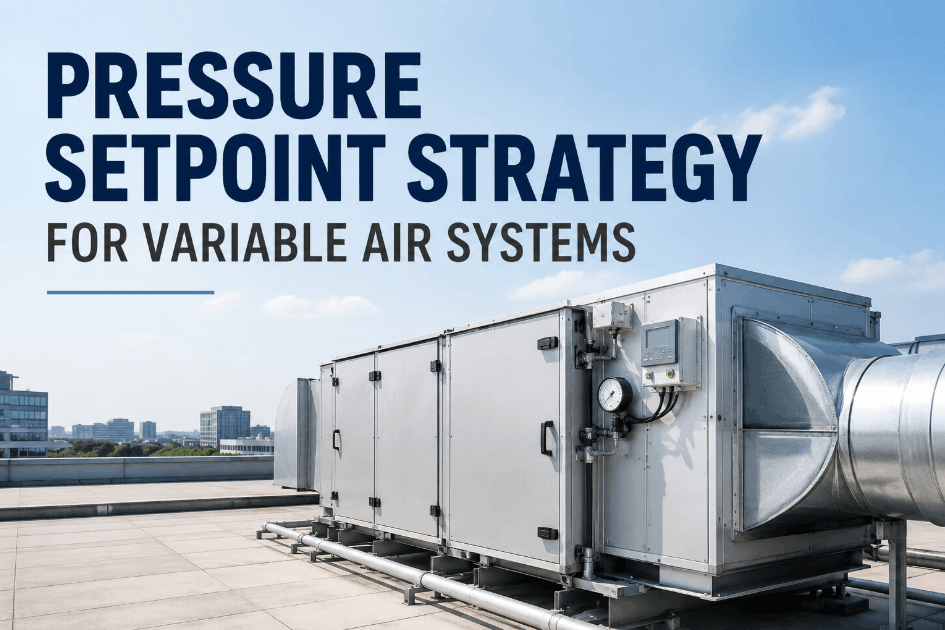
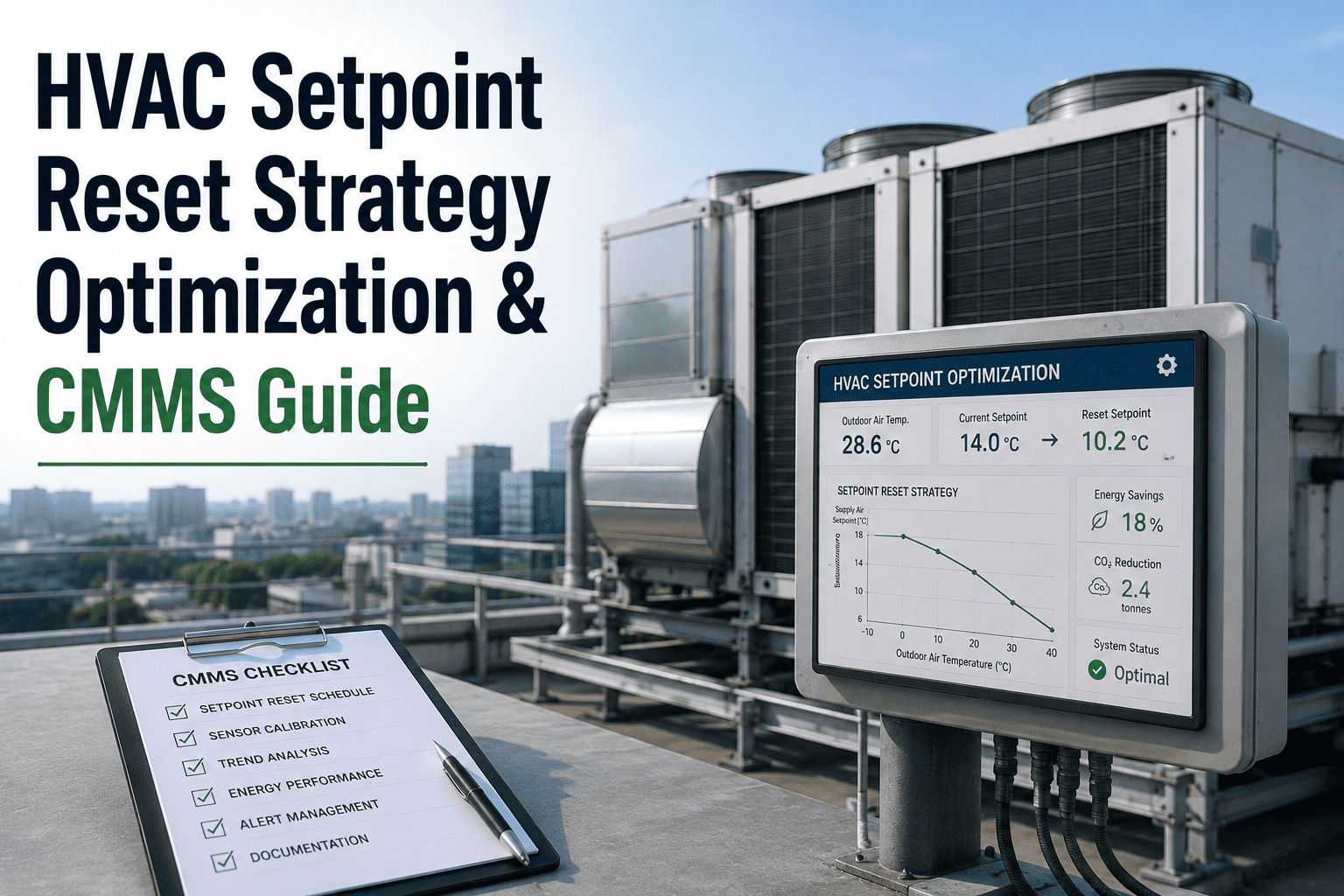
Pressure setpoint strategy for variable air systems determines whether VAV zones maintain comfort stability or chase demand swings that waste energy and accelerate damper and actuator wear. Maintenance and building automation teams that Sign Up Free on OxMaint can log static pressure readings, track setpoint deviation per zone, and tie pressure-related work orders to the specific air handling units and VAV boxes responsible — replacing reactive alarm response with structured preventive monitoring. When setpoints are calibrated against actual zone load behavior and reviewed as occupancy patterns change, systems stabilize and energy waste from unnecessary duct pressure reduces measurably. Book a Demo to see how OxMaint structures HVAC asset data and PM scheduling for variable air volume system environments.
Maintenance · Blog · Building HVAC Operations
Pressure Setpoint Strategy for Variable Air Systems
Keep VAV systems stable and efficient by basing static pressure setpoints on zone load behavior, occupancy patterns, and duct pressure response — not fixed defaults from commissioning.
18–31%Fan energy reduction achievable when VAV static pressure setpoints are optimized by zone demand reset
3×Faster VAV damper and actuator wear when static pressure is set higher than required for actual zone load
64%Of VAV comfort complaints trace to static pressure setpoints not adjusted since original commissioning
2.2×Longer mean time between VAV box service events when setpoint strategy is reviewed against live zone data
Six Factors That Determine the Right Static Pressure Setpoint for Variable Air Systems
A static pressure setpoint is not a commissioning number to leave unchanged — it is a control decision that should reflect how the building actually loads across seasons, occupancy schedules, and zone configurations. Book a Demo to see how OxMaint connects VAV asset records, PM schedules, and pressure-related work order history into a structured maintenance view for building operations teams.
Factor 1
Zone Load Profile
Peak and average airflow demand per zone established from actual occupancy and equipment load data — not design-day assumptions — as the basis for setpoint calibration.
Foundation
Factor 2
Critical Zone Identification
The zone farthest from the AHU or with the highest resistance identified as the critical path — static pressure setpoint must satisfy this zone without over-pressurizing others.
Control Logic
Factor 3
Demand-Based Reset Strategy
Static pressure setpoint adjusted downward during periods of low zone demand — reducing fan energy consumption without compromising airflow to any zone requesting full flow.
Energy
Factor 4
Duct Leakage Baseline
Duct system leakage rate factored into setpoint — systems with significant leakage require higher pressure to deliver design airflow, masking an underlying maintenance issue.
System Health
Factor 5
Seasonal Setpoint Review
Cooling and heating season load profiles differ significantly — setpoints calibrated for summer peak often over-pressurize during transition seasons, wasting energy and stressing VAV boxes.
Seasonal
Factor 6
Static Pressure Sensor Location
Sensor positioned two-thirds of the way down the longest duct run provides the most representative reading — sensors placed too close to the AHU produce setpoints that starve terminal zones.
Measurement
The Setpoint Neglect Cascade — How Static Pressure Misconfiguration Compounds in VAV Systems
Leaving VAV static pressure setpoints at commissioning defaults is not a neutral decision — it is a compounding energy and equipment cost that builds across every season without a single alarm. Sign Up Free to structure setpoint review and VAV asset PM tracking in OxMaint before the cascade below reaches Stage 4 or 5 in your building operation.
VAV Pressure Setpoint Neglect — 5 Stages from Fixed Default to Equipment Failure and Comfort Crisis
Stage 1
Commissioning Setpoint Left Unchanged
Static pressure setpoint remains at design-day value regardless of actual occupancy, seasonal load shifts, or zone reconfiguration after initial commissioning.
$0
Cost if reviewed and reset here
↓
Stage 2
Fan Runs at Excessive Pressure During Low Load
Variable speed fan maintains peak setpoint during partial-load periods — consuming 20–35% more energy than a demand-reset strategy would require for the same comfort outcome.
$2,100
Monthly fan energy overrun vs. optimal
↓
Stage 3
VAV Dampers and Actuators Wear Prematurely
High duct pressure forces VAV dampers to throttle more aggressively than necessary — actuator cycle count increases, accelerating mechanical wear and calibration drift.
$5,400
Accelerated VAV box service and parts cost
↓
Stage 4
Zone Comfort Complaints Begin
VAV boxes unable to maintain accurate flow control due to calibration drift and actuator wear — zone temperatures become unstable and occupant complaints increase.
$11,000
Reactive service and productivity impact
↓
Stage 5
AHU or Fan System Failure from Sustained Overload
Fan motor or AHU components fail from sustained operation at excessive static pressure — emergency repair required and system down pending parts and technician availability.
$22,000+
Emergency AHU repair and downtime cost
OxMaint CMMS Capabilities for VAV System Pressure Management
Effective VAV pressure setpoint management requires structured asset tracking, PM scheduling, and work order history — all connected to the specific air handling units and terminal units responsible for each zone. Book a Demo to see OxMaint's HVAC asset management capabilities applied to variable air volume system environments.
VAV Asset Registry
Full
Every AHU, VAV box, and sensor as a tracked asset
Each component in the variable air system — AHU, VAV box, actuator, pressure sensor — maintained as a distinct asset with service history and PM schedule in OxMaint.
Pressure-Linked Work Orders
Auto
Work orders tied to specific pressure anomaly observations
Pressure deviation observations logged as structured work order triggers — linking the anomaly to the responsible asset and routing it to the right technician with full context.
Seasonal PM Scheduling
Per Season
Setpoint review PMs scheduled at seasonal transitions
OxMaint PM schedules trigger setpoint review and VAV calibration work orders at seasonal changeover — ensuring pressure strategy stays aligned with actual zone load behavior.
Multi-Zone Dashboard
Live
All zones, AHUs, and open work orders in one view
Facility managers see VAV system status, open maintenance work orders, and PM compliance across all zones in the building from a single OxMaint operations dashboard.
"
We had been running our VAV system at the original commissioning setpoint for three years without review. When we finally tracked zone load data and reset static pressure seasonally using what we logged in OxMaint, our fan energy dropped noticeably and our VAV box call-back rate from the building automation team dropped by almost a third within six months.
Building Operations Manager — Multi-Tenant Commercial Office Facility
Root Causes of VAV Static Pressure Problems in Commercial Buildings
Static pressure control failures in variable air systems cluster around a consistent set of configuration, maintenance, and system design gaps. Sign Up Free to address the root causes below through structured VAV asset tracking and PM scheduling in OxMaint.
VAV Static Pressure Control Failure — Root Cause Distribution (%)
Setpoint never revised since commissioning
72%
No demand-reset strategy configured in BAS
64%
Pressure sensor in suboptimal duct location
55%
VAV actuator calibration drift undetected
47%
Duct leakage increasing effective pressure demand
39%
Zone reconfiguration without setpoint review
31%
VAV Pressure Setpoint Management Maturity Score
Score 5 = demand-reset with seasonal review and structured PM · Score 1 = commissioning default unchanged since installation
5
Optimized — Demand Reset with Live Zone Monitoring
Static pressure setpoint reset continuously based on zone demand; VAV calibration reviewed seasonally with structured PM work orders in the CMMS.
Action: Review sensor placement and critical zone identification annually as tenant layouts change.
4
Managed — Seasonal Review, No Continuous Reset
Setpoints reviewed and adjusted at seasonal transitions but no automatic demand-reset logic configured in the building automation system.
Action: Configure demand-reset control logic in the BAS to capture energy savings during partial-load periods.
3
Basic — Annual Review Only, Fixed Setpoint Between Reviews
Setpoint checked annually but unchanged between reviews — missing seasonal load variation and zone reconfiguration impacts throughout the year.
Action: Move to quarterly setpoint review cadence aligned with seasonal changeover PM work orders.
2
Reactive — Setpoint Changed Only After Comfort Complaints
Static pressure adjusted only when zone complaints or alarm events force a review — no proactive setpoint management in place.
Action: Establish a baseline setpoint review schedule tied to VAV calibration PM work orders in the CMMS.
1
No Management — Commissioning Default Unchanged
Static pressure setpoint at original commissioning value with no review, no zone load analysis, and no PM schedule for VAV calibration.
Action: Conduct immediate setpoint audit and implement VAV asset tracking in a CMMS to establish a management baseline.
Stop Running VAV Systems at the Wrong Pressure.
OxMaint connects VAV asset records, PM scheduling, and pressure-related work orders so your building team manages setpoints proactively — not reactively after complaints arrive.
Frequently Asked Questions
What is static pressure setpoint in a VAV system and why does it matter?
The static pressure setpoint is the duct pressure the fan maintains to supply sufficient airflow to all VAV zones — set too high it wastes energy and accelerates equipment wear; set too low it starves zones and causes comfort failures.
What is demand-based static pressure reset for variable air systems?
Demand reset reduces the static pressure setpoint as zone airflow demand falls below peak levels — the fan delivers only the pressure needed for actual load, cutting fan energy without compromising any zone's airflow requirement.
How often should VAV static pressure setpoints be reviewed?
Setpoints should be reviewed at each seasonal changeover (minimum quarterly) and any time tenant layouts change, occupancy patterns shift significantly, or new equipment is added to served zones.
How does OxMaint support VAV system pressure management?
OxMaint tracks each AHU, VAV box, actuator, and sensor as individual assets with service history and PM schedules — enabling setpoint review and VAV calibration work orders to be planned, assigned, and tracked in one platform.
Does duct leakage affect VAV static pressure setpoint strategy?
Yes — significant duct leakage forces higher setpoints to compensate for air loss, making the system appear to need more pressure when the underlying issue is a maintenance problem requiring duct sealing or repair.
Start Managing VAV Pressure Setpoints with Structured Maintenance Data.
OxMaint gives building operations teams the VAV asset visibility, PM scheduling, and work order history needed to keep variable air systems stable and efficient. Free to start.