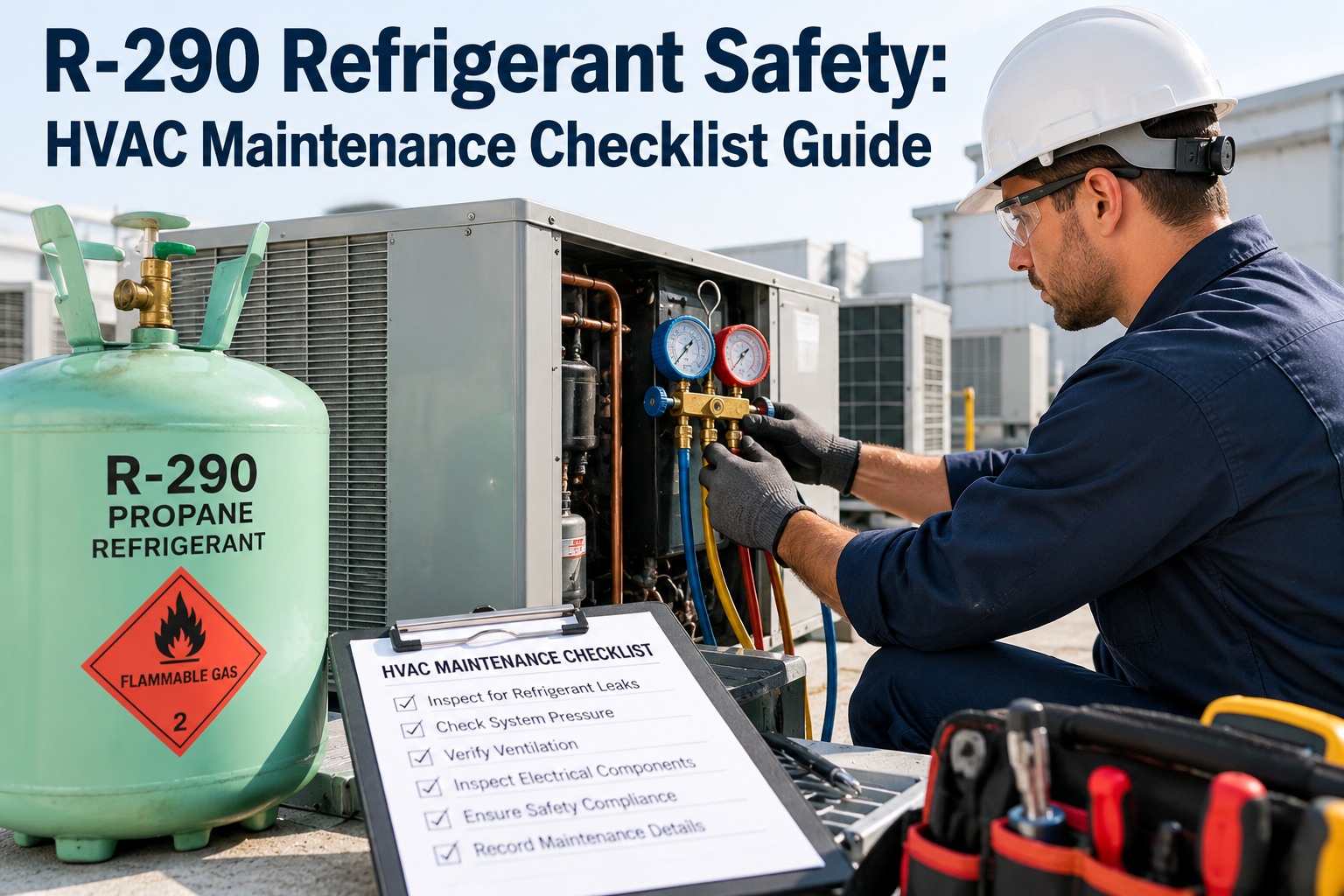
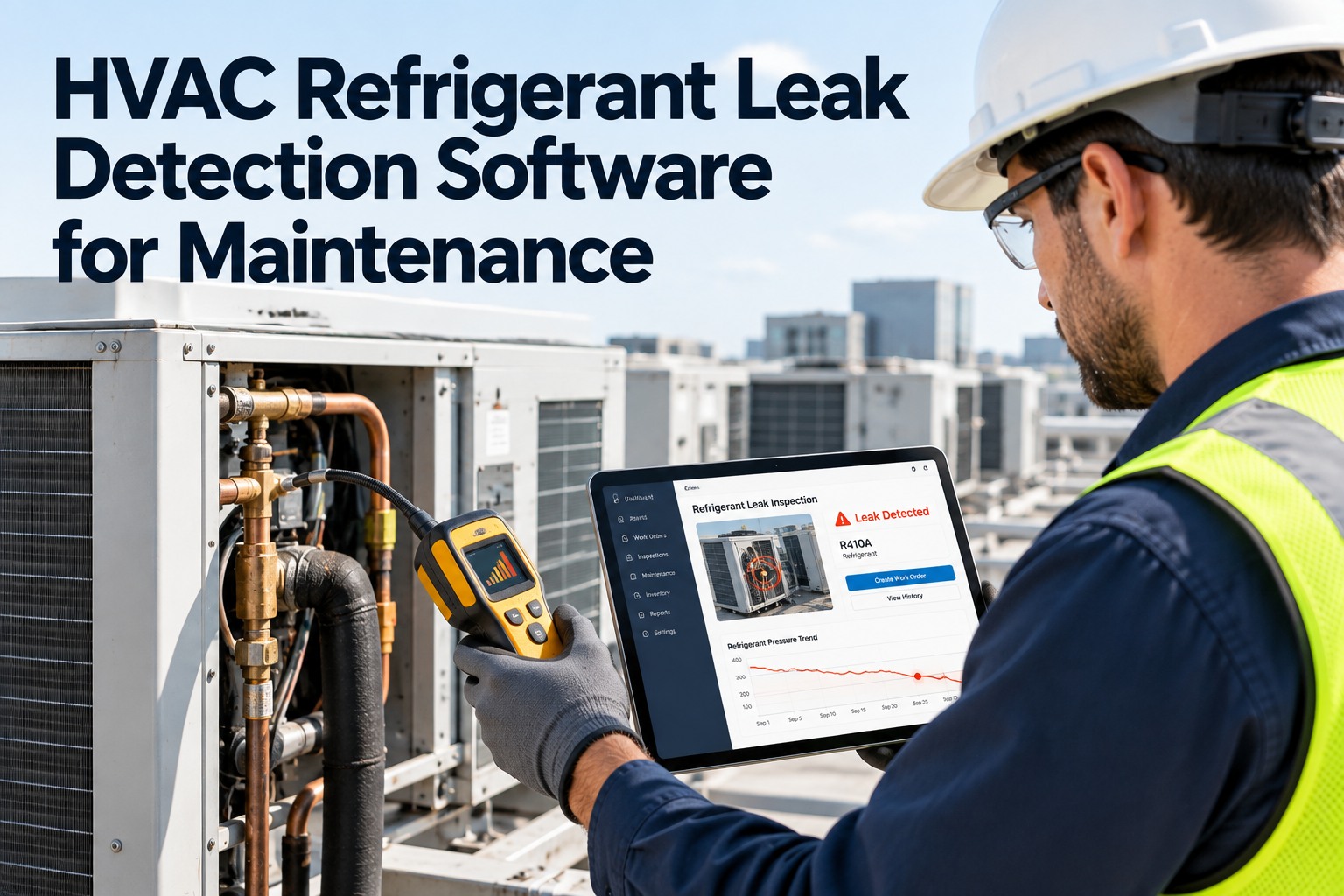
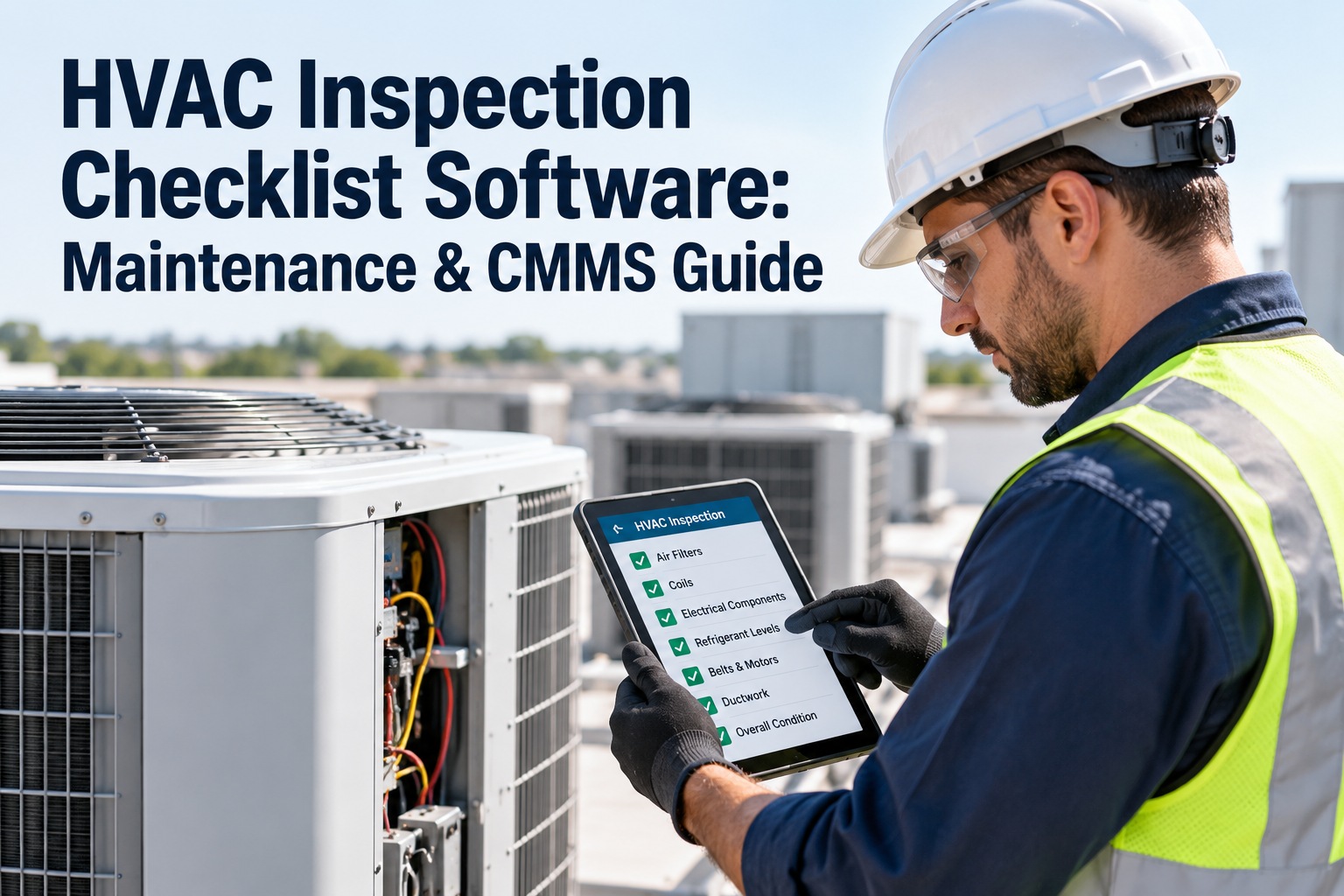
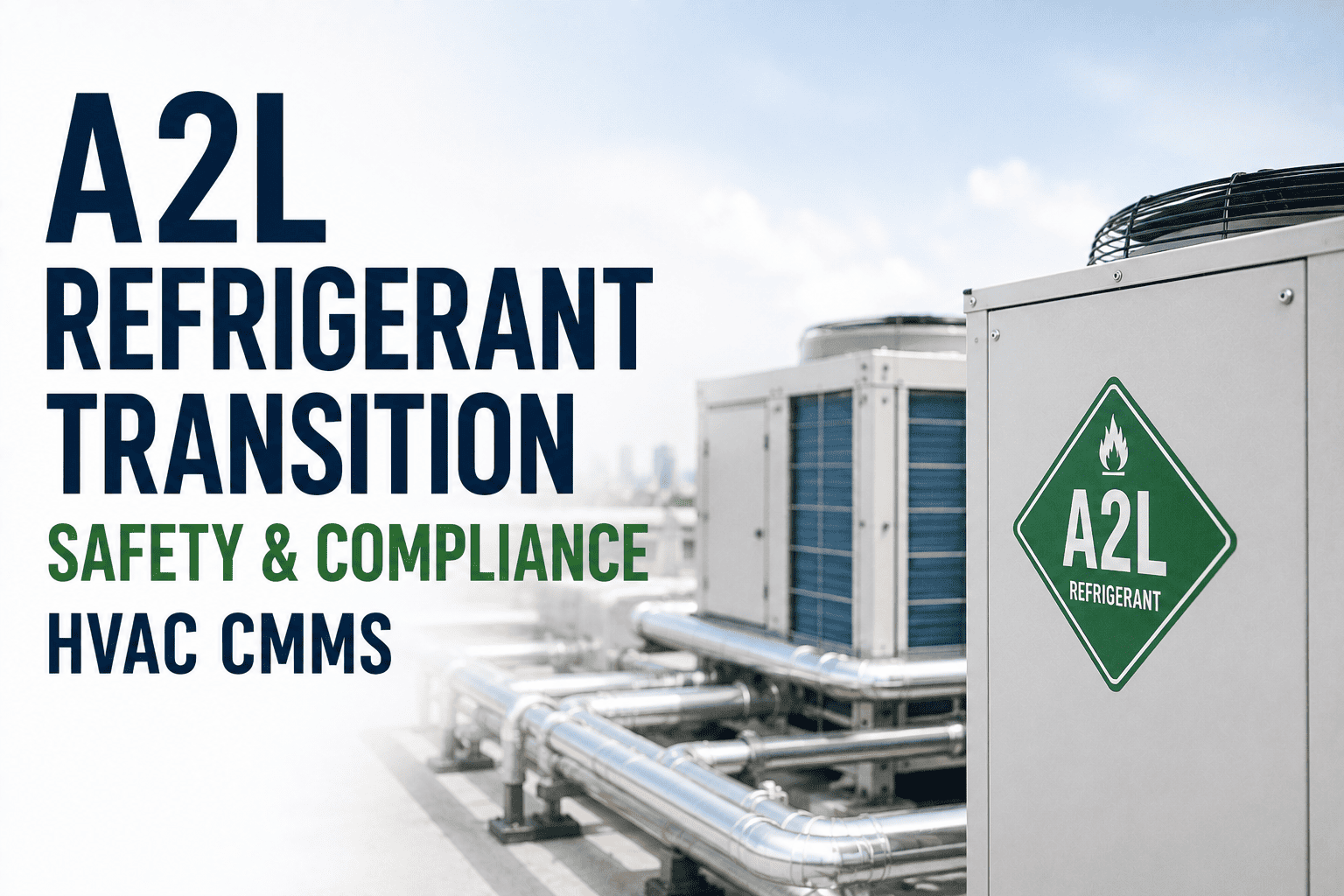
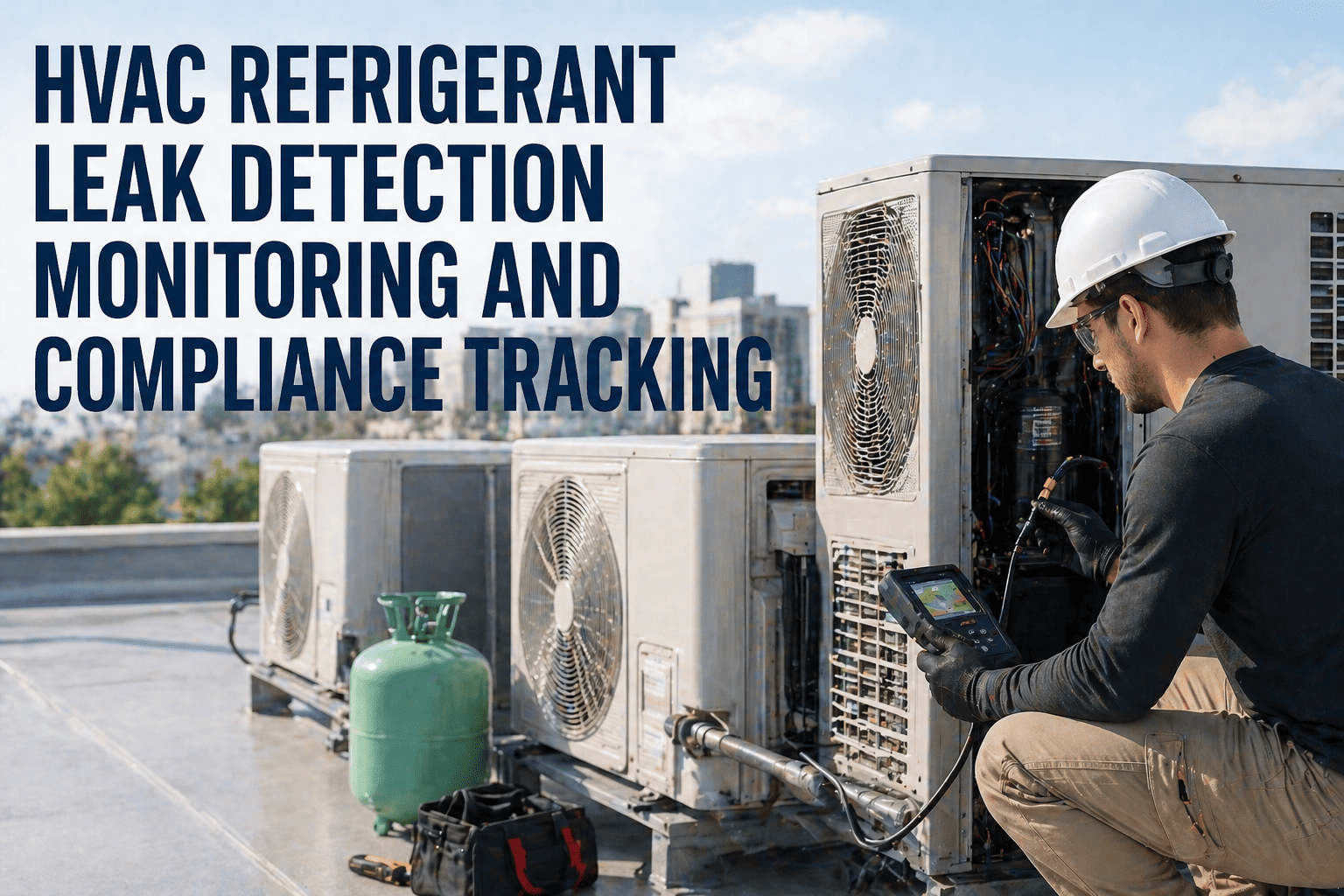
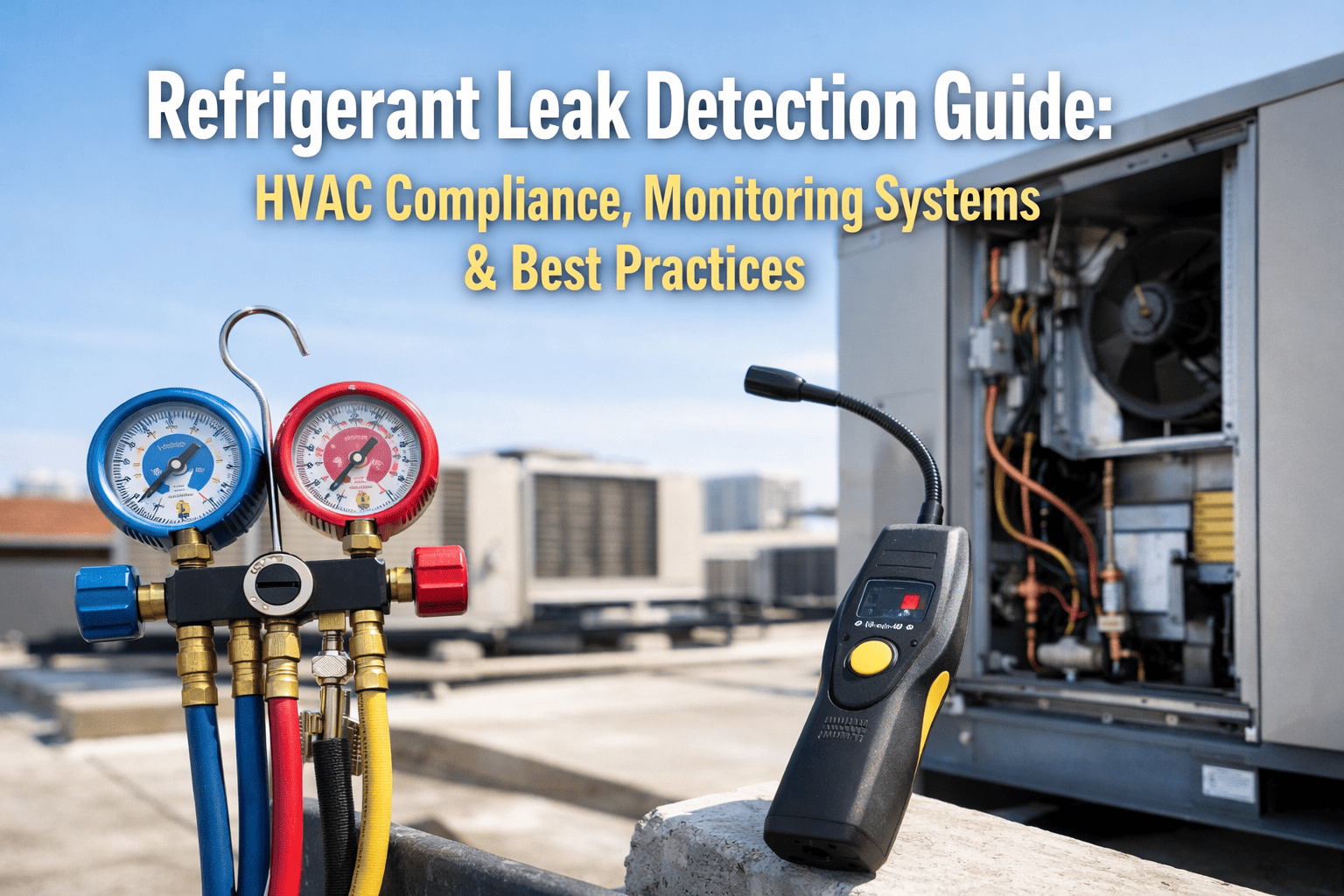
R-290 is propane — a near-zero-GWP refrigerant that cools beautifully and burns readily. An A3 flammable charge turns a routine service call into a fire risk the moment a spark, a pilot light or a halide detector meets a leak. This is the R-290 refrigerant safety maintenance checklist, organized by hazard control, and how OXMAINT AI, the AI-powered HVAC CMMS, enforces the procedure and keeps the safety record.
Controls & Airside · HVAC · R-290 Refrigerant Safety Checklist · 2026
R-290 Refrigerant Safety: HVAC Maintenance Checklist Guide
A disconnect spark, an unseen leak pooling at floor level, a torch on a system that wasn't recovered — with an A3 refrigerant, any one is a fire. OXMAINT AI, the AI-powered CMMS and maintenance management software, puts the R-290 safety procedure on every work order, requires the critical sign-offs, and keeps a timestamped record of each service.
1Control ignition
·
2Detect & ventilate
·
3Recover safely
R-290 AT A GLANCE
A3Safety class — higher flammability, lower toxicity
GWP 3Near-zero global warming potential
~150 gTypical North American charge limit per system
25% LFLMitigation margin under UL/IEC 60335-2-40
SAFETY FIRST
R-290 is flammable. This checklist is general guidance — only trained, qualified technicians should service flammable-refrigerant systems, following the OEM manual, UL/IEC 60335-2-40 and local code. When in doubt, stop and escalate.
The Safety Checklist, By Hazard Control
R-290 safety isn't one rule — it's six domains of control that together keep flammable gas away from an ignition source. Work every domain on each service; tick each item as it's confirmed. You can book a demo to see the R-290 SOP in OXMAINT AI.
With An A3 Refrigerant, The Procedure Is The Safety Device.
A halide detector used by habit, a torch on a system someone assumed was empty — flammable-refrigerant incidents come from skipped steps, not bad luck. A work order that carries the SOP and requires the critical sign-offs makes the safe method the only path to closing the job.
The Non-Negotiables
Some R-290 rules are hard stops — break one and the job is unsafe regardless of everything else done right. Treat these as gate conditions, not preferences, and you can start free and flag the non-negotiables in OXMAINT AI.
No halide detector
It produces a flame or spark — only an electronic HC detector near a flammable charge.
No flame before recovery
Never apply a torch to a system still holding R-290 — recover and purge first.
Detector at floor level
Propane sinks; a detector mounted high can miss a pool building at the floor.
Vent only outdoors
Never into a building or a low space — keep ignition sources well clear of the point.
Trained techs only
Flammable-refrigerant service needs specialized training — not a job for the untrained.
Pure R-290, exact charge
No mixing; charge to the OEM spec, since these systems are highly charge-sensitive.
How OXMAINT AI Enforces It
A safety procedure that lives in a binder gets skipped under time pressure; one built into the work order does not. OXMAINT AI attaches the R-290 SOP to every flammable-refrigerant task, requires the critical steps before closure, and keeps the evidence, and you can book a demo to see enforced safety SOPs in OXMAINT AI.
◉
SOP On Every Work Order
The R-290 safety checklist travels with the task, so the method is in hand at the equipment, not a memory.
◉
Required Critical Sign-Offs
Ignition survey, detector running and recovery-before-flame must be confirmed before the job can close.
◉
Technician Qualification Check
Only techs with current flammable-refrigerant training can be assigned the task.
◉
Leak-Detector Tool Register
HC detectors and fixed sensors tracked with calibration due dates, flagging a lapsed device.
◉
Timestamped Safety Records
Each service, leak result and sign-off kept on the asset for safety audits and incident review.
◉
Per-Asset R-290 Flag
Flammable-refrigerant equipment marked so the right SOP and precautions trigger every time.
“
When we moved refrigeration onto R-290 for the GWP win, our real worry was the human factor — a tech reaching for the halide detector out of habit, or torching a line they assumed was empty. Building the flammable-refrigerant SOP into the work order, gating closure on the ignition survey and recover-before-flame steps, and limiting the task to trained techs turned safety from a poster into a workflow. Every R-290 service now leaves a signed record behind it.
HVAC-R Safety & Compliance Lead · Food Retail Chain
Frequently Asked Questions
Why does R-290 need special safety handling?
Because R-290 is propane — an A3 refrigerant that is highly flammable, though low in toxicity and near-zero in global-warming potential (GWP 3). A leak that reaches its flammable range near any ignition source can ignite, so servicing requires ignition-source control, continuous leak detection, spark-free tools and recovery before any flame.
Book a demo to see the R-290 SOP in OXMAINT AI.
What's the charge limit for R-290 systems?
In North America, self-contained equipment has typically been limited to charges under about 150 grams, and in Europe systems above roughly 140 grams generally require a leak-detection sensor. Standards continue to evolve, so always confirm the current limit for the equipment class against UL/IEC 60335-2-40 and local code.
Where should an R-290 leak detector be placed?
Low. Propane is heavier than air and pools at floor level, so a portable hydrocarbon detector goes at the lowest point of the work area, and fixed sensors are positioned where a leak would collect — often near the evaporator. Run detection for the whole job, because R-290 carries no odorant to warn you by smell.
Can I braze an R-290 system?
Only after the refrigerant is recovered and the system purged. Never apply a torch to a sealed system still holding R-290. Evacuate both sides, purge with nitrogen, and prefer cutting components out or using flameless lock-ring fittings; after brazing, crimp the process lines and leak-test with a hydrocarbon detector.
How does a CMMS support R-290 safety?
It makes the safe method the only path: the R-290 SOP rides on every work order, critical steps like the ignition survey and recover-before-flame must be signed off before closure, only trained technicians can be assigned, leak detectors are tracked with calibration dates, and every service leaves a timestamped record for audit.
Start free and enforce R-290 safety in OXMAINT AI.
Keep The Charge Small, The Sparks Away, The Record Complete.
Run R-290 refrigerant safety on the OXMAINT AI maintenance management software — the hazard-control checklist on every work order, required sign-offs on the ignition survey and recovery-before-flame, trained-technician gating, a leak-detector tool register, and timestamped safety records. Make the safe procedure the workflow, not the poster.