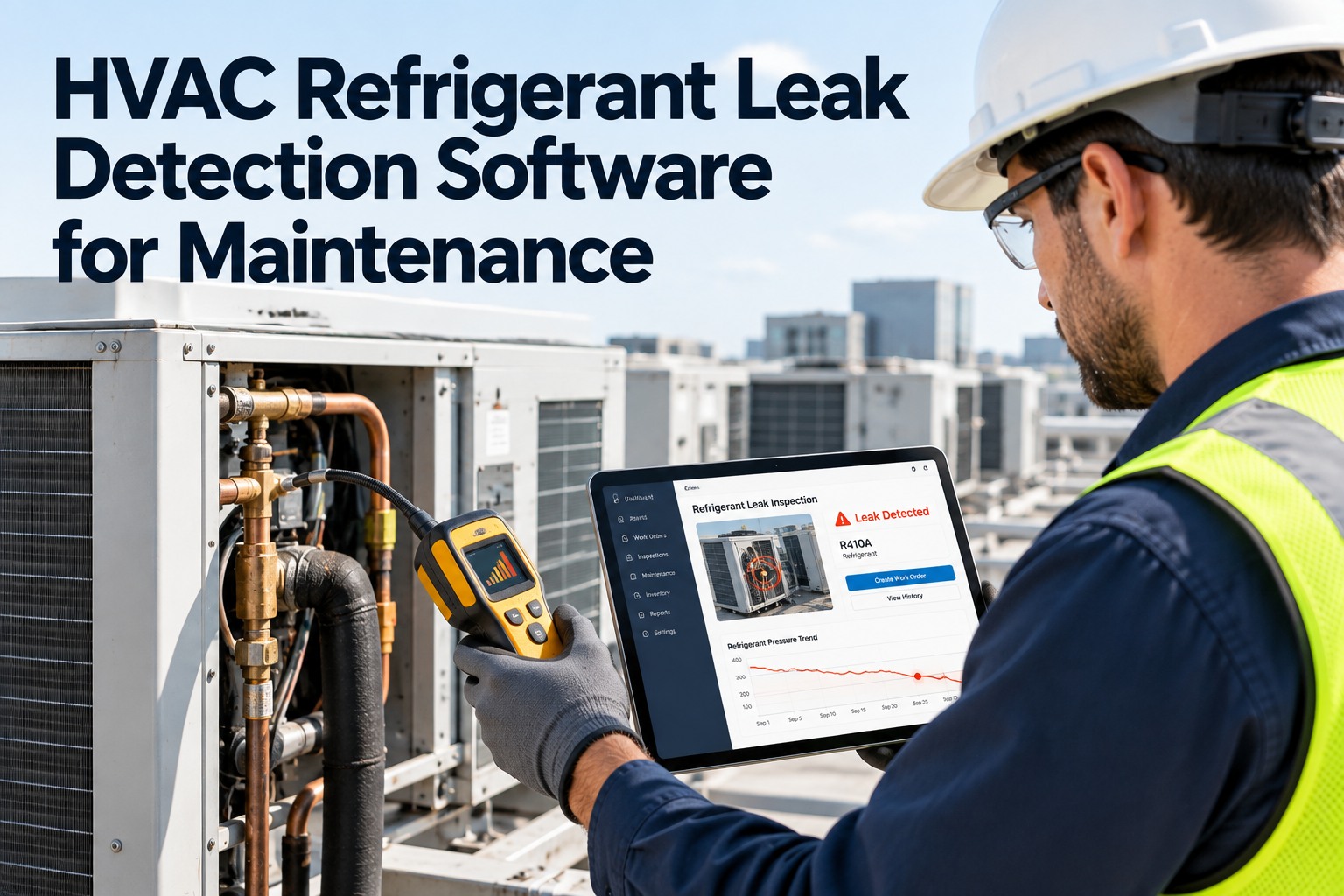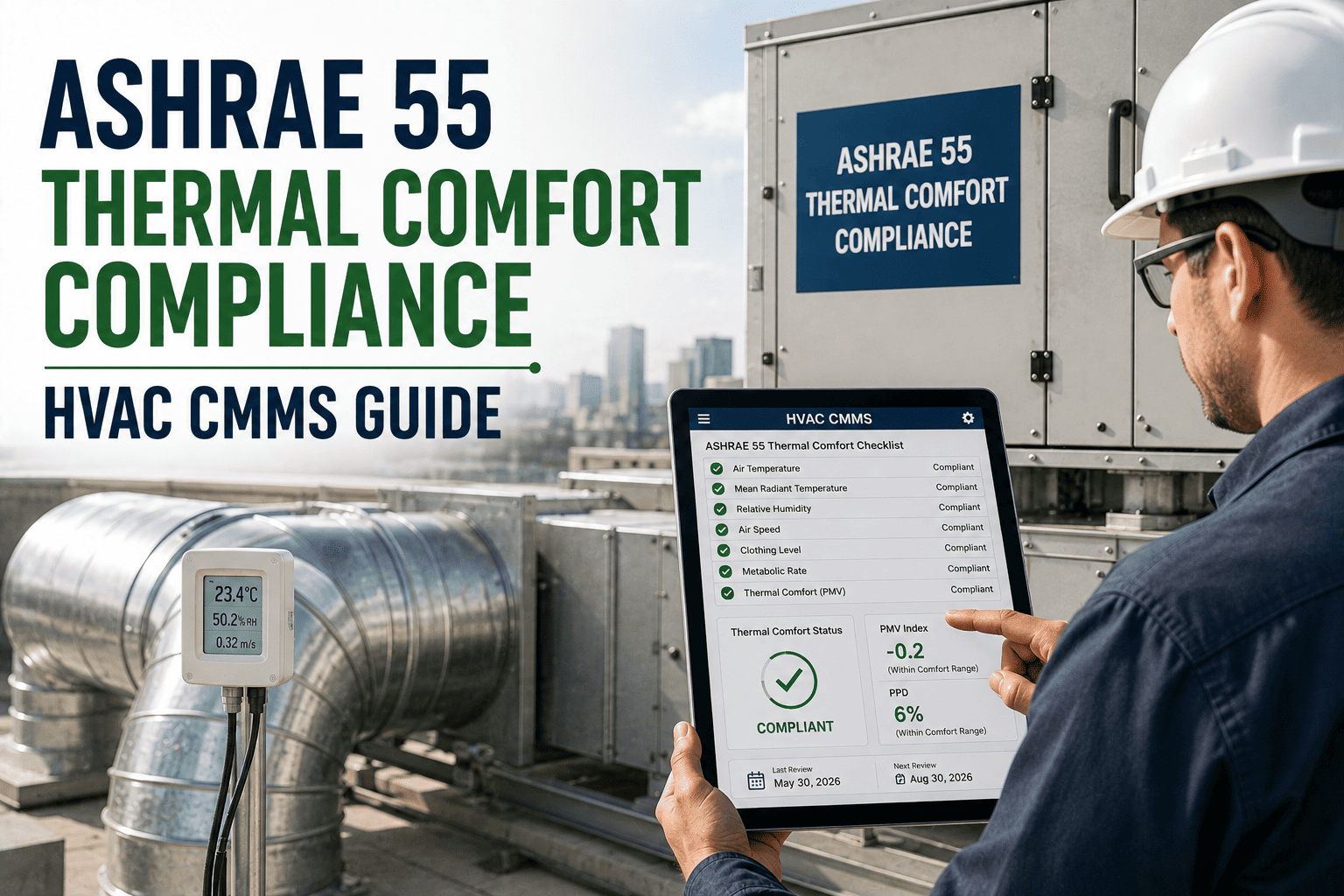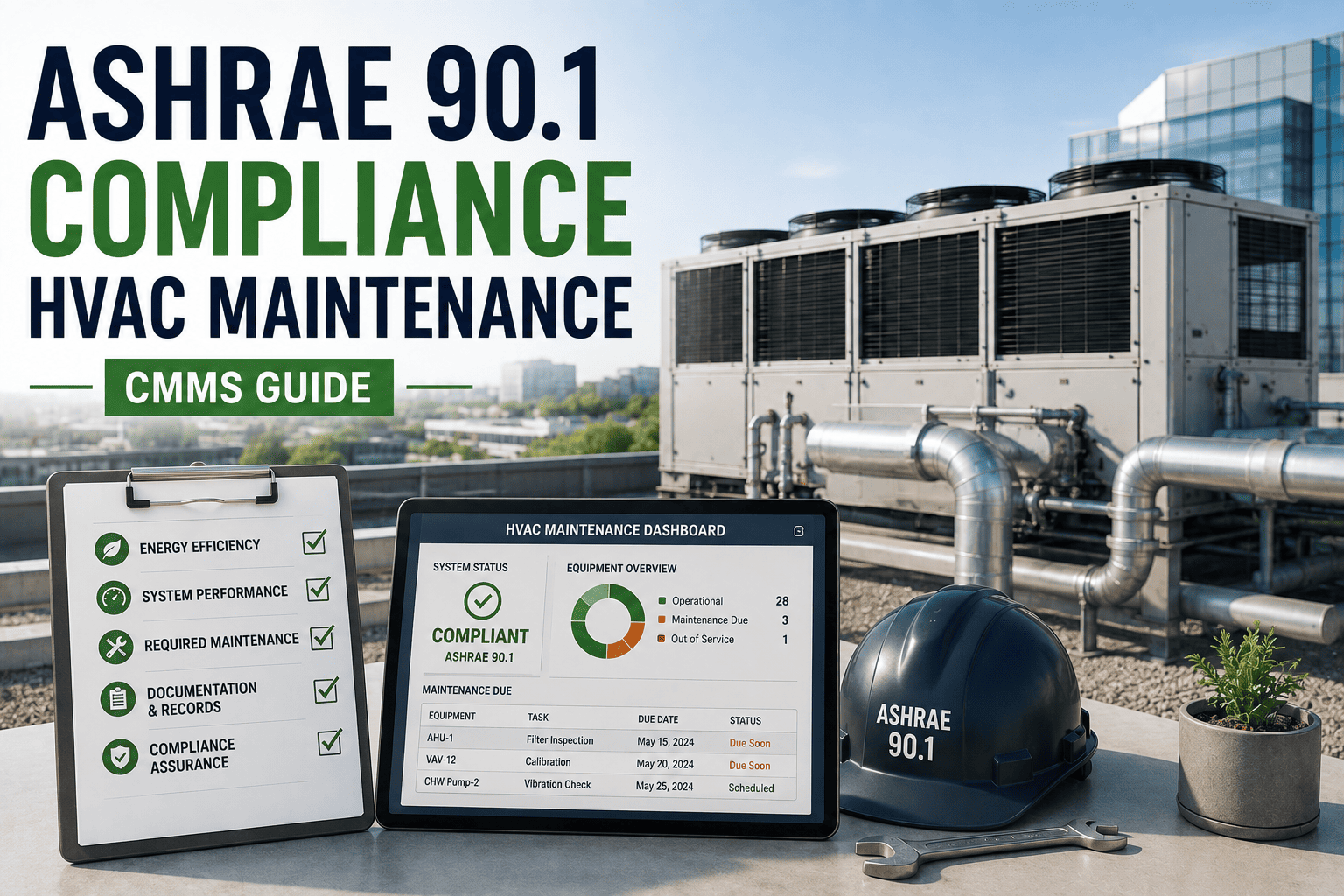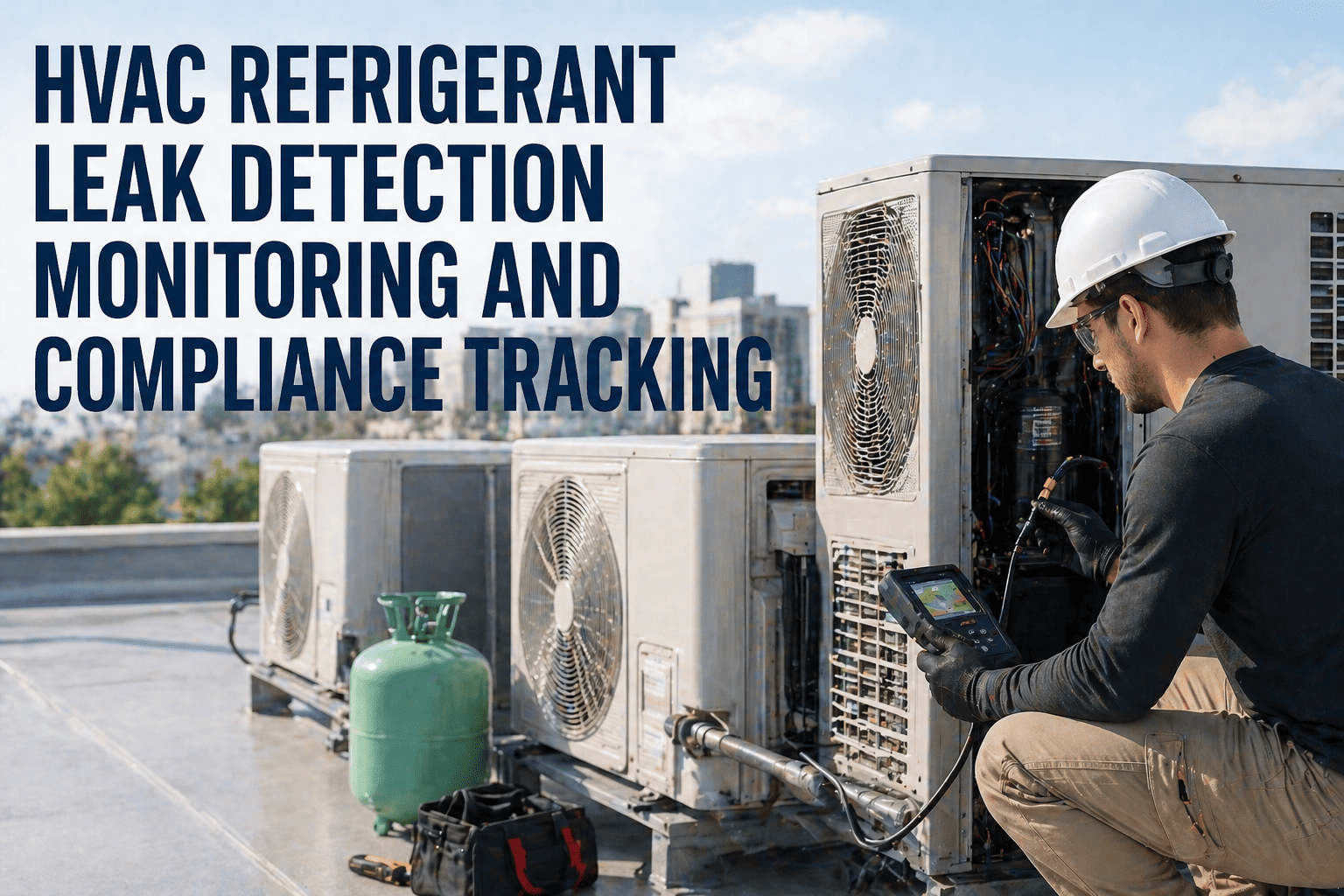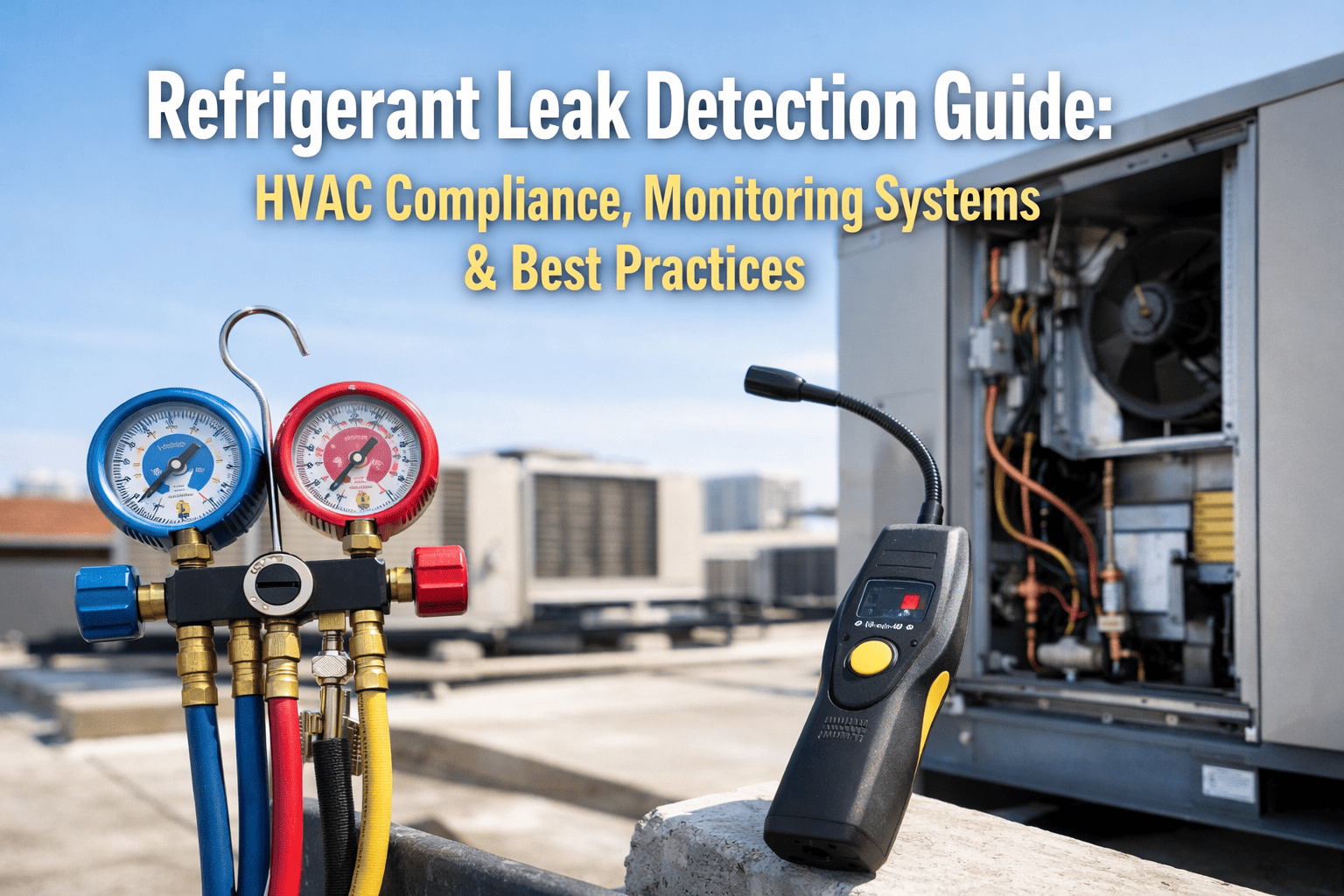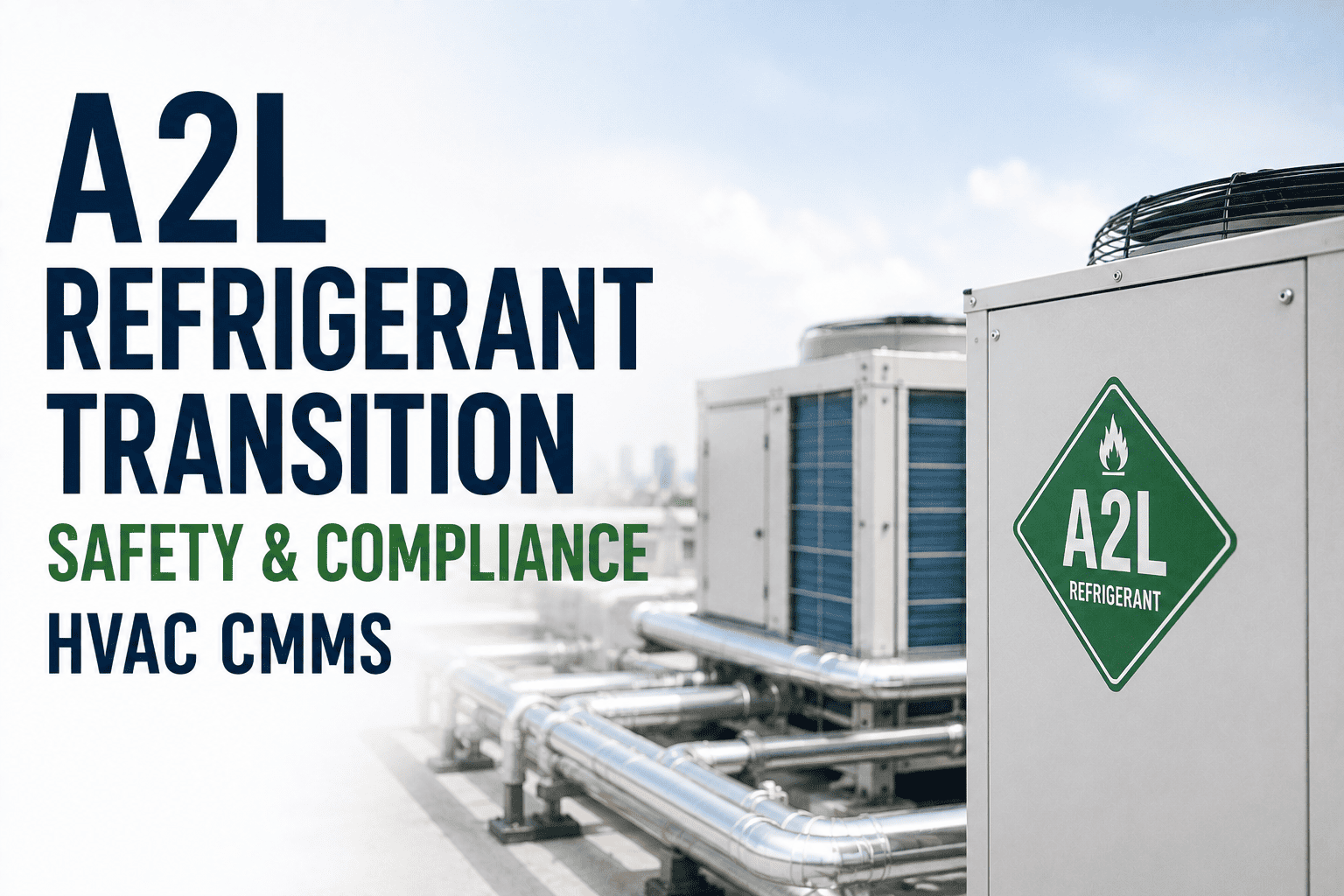
The A2L refrigerant transition is reshaping how HVAC maintenance and reliability teams classify, monitor, and service equipment — driven by ASHRAE 34 safety standards that reclassify commonly used refrigerants like R-32 and R-454B as mildly flammable. With the A2L compliance 2026 deadline approaching, facility managers must upgrade leak detection sensor infrastructure, rewrite preventive maintenance procedures, and maintain rigorous A2L refrigerant documentation to stay audit-ready. Failing to prepare risks not only regulatory penalties but also catastrophic equipment failure and voided warranties. OxMaint's AI-powered CMMS streamlines this shift by tracking A2L-classified assets, automating compliance work orders, and centralizing safety documentation — you can Start Free Trial today or book a demo to see the full transition toolkit in action.
Is your maintenance team ready for the A2L refrigerant transition?
ASHRAE 34 reclassifies R-32 and R-454B as mildly flammable. By 2026, every asset on your floor needs updated safety procedures, leak detection sensors, and audit-ready documentation — or you risk compliance failure, voided warranties, and unplanned downtime.
Over 70% of commercial HVAC systems will require updated PM schedules, sensor calibration tasks, and technician safety certifications before the mandate takes effect.
What makes A2L refrigerants different for HVAC safety?
A2L refrigerants are classified by ASHRAE Standard 34 as having lower toxicity (A) and mild flammability (2L) — meaning they can burn under specific conditions, requiring fundamentally different maintenance and monitoring protocols than legacy R-410A systems.
| Safety Attribute | R-410A (Legacy Class A1) | R-32 / R-454B (Class A2L) |
|---|---|---|
| Flammability Classification | Non-flammable (A1) | Mildly flammable (2L) |
| Burning Velocity | N/A | ≤ 10 cm/s |
| Leak Detection Requirement | Optional / manual | Mandatory continuous sensors |
| GWP (Global Warming Potential) | 2,088 | 466 – 675 |
| Service Technician Certification | Standard EPA 608 | Updated A2L-specific training required |
The 4-phase A2L transition timeline for maintenance teams
A successful A2L transition follows a structured 12-month rollout. Here is the phased timeline reliability managers use to move from asset discovery to full compliance — without disrupting uptime.
Asset Discovery & Risk Audit
Inventory every HVAC unit, classify refrigerant type, and flag A2L-affected assets. Benchmark current PM intervals, sensor coverage, and technician certification gaps. Most 180-asset plants find 40–60% of units will need A2L handling protocols.
Sensor & Safety Upgrade
Install A2L-compliant leak detection sensors with wired alerts to the BMS. Rewrite lockout-tagout (LOTO) procedures for mildly flammable refrigerants and update spare parts inventory with A2L-rated components and PPE.
CMMS Integration & PM Rewrite
Migrate asset data into a centralized A2L refrigerant CMMS. Trigger automated preventive maintenance work orders for sensor calibration, leak checks, and refrigerant recovery — replacing paper logs with digital audit trails.
Compliance Audit & Go-Live
Run a full ASHRAE 34 A2L compliance audit using CMMS-generated reports. Verify technician certifications, validate sensor calibration logs, and confirm all A2L refrigerant documentation is ready for EPA and insurance inspections.
How OxMaint powers your A2L safety standard compliance
Manual spreadsheets and paper work orders cannot keep up with the documentation density of A2L compliance. OxMaint's AI-powered CMMS and EAM platform turns A2L transition from a liability into a structured, measurable process — cutting audit prep time by up to 80%.
A2L Asset Classification & Tracking
Tag every chiller, RTU, and split system by ASHRAE 34 refrigerant class. OxMaint maintains a live registry of A2L-certified assets, warranty status, and service history — eliminating the blind spots that cause 30% of compliance failures.
Automated Leak Detection PM Schedules
Auto-generate work orders for A2L leak detection sensor calibration, refrigerant level checks, and ventilation inspections. Predictive maintenance triggers based on runtime and historical leak data cut unplanned downtime 30–50%.
Audit-Ready A2L Documentation
Every work order, sensor reading, and refrigerant recovery event is timestamped and stored in a searchable digital trail. Generate ASHRAE 34, EPA, and insurance compliance reports in one click — no more scrambling during audits.
A2L Spare Parts & PPE Inventory
Track A2L-rated replacement components, refrigerant cylinders, and technician PPE with automated reorder points. Avoid 4–6 hour downtime events caused by stocking the wrong non-A2L-rated parts during emergency repairs.
A2L leak detection and safety checklist for HVAC teams
A2L compliance requires documented, repeatable safety procedures. Use this checklist to validate that every mildly flammable refrigerant system on your floor meets ASHRAE 15 and 34 safety standards before the 2026 deadline.
- Continuous A2L leak detection sensors installed within 1m of each evaporator and compressor rack
- Sensor calibration logged in CMMS every 6 months with automated PM triggers
- Hardwired sensor alerts connected to BMS and mobile work-order notifications
- Updated LOTO procedures reflecting mildly flammable refrigerant isolation protocols
- Technicians certified for A2L handling with records stored in CMMS personnel module
- Refrigerant recovery equipment rated for A2L class with logged usage history
- Asset registry tagging every unit by ASHRAE 34 class, refrigerant type, and charge volume
- Digital audit trail of all leak checks, repairs, and refrigerant additions — exportable for EPA
- Warranty and insurance documentation linked to each A2L asset record
The cost of waiting: what A2L non-compliance really costs
A 180-asset commercial facility spending $42K annually on HVAC maintenance faces an estimated $67K in first-year A2L transition costs — but delaying compliance until 2026 triples that figure through emergency retrofitting, downtime, and penalty exposure.
"When we mapped our A2L transition, we had 96 HVAC units with zero digital documentation. OxMaint gave us a classified asset registry, automated sensor-calibration PMs, and a one-click audit report in under 6 weeks. We cut our compliance prep time by 70% and passed our joint commission inspection without a single finding."
See OxMaint on your A2L assets — book a 30-min demo
Walk through a live A2L transition workspace: asset classification, automated leak detection PMs, and audit-ready documentation — configured for your facility.
Frequently asked questions about A2L refrigerant transition
What is the A2L refrigerant transition deadline?
The federal A2L compliance deadline takes effect January 1, 2026, per the AIM Act and EPA SNAP rules. By this date, new HVAC equipment must use A2L-classified refrigerants like R-32 and R-454B, and existing systems must have updated safety documentation, leak detection, and service procedures in place. Facilities should begin the transition process at least 12 months ahead to avoid emergency retrofitting costs.
Are A2L refrigerants safe for commercial HVAC systems?
Yes, A2L refrigerants are safe when properly managed. They are classified as mildly flammable, meaning they require a higher concentration and specific conditions to ignite compared to highly flammable gases. With continuous leak detection sensors, proper ventilation, updated LOTO procedures, and technician A2L certification, the risk is manageable and well-documented under ASHRAE 15 and 34 standards.
How does a CMMS help with A2L refrigerant compliance?
A CMMS like OxMaint centralizes A2L compliance by tracking every asset by ASHRAE 34 refrigerant class, automating preventive maintenance work orders for leak sensor calibration, and storing a searchable digital audit trail of all refrigerant handling events. This eliminates paper logs, reduces audit prep time by up to 80%, and ensures no A2L-rated asset misses a required inspection. You can explore the full compliance toolkit when you Start Free Trial.
What is the difference between R-32 and R-454B refrigerants?
Both are A2L-classified mildly flammable refrigerants replacing R-410A. R-32 has a GWP of 675 and is a single-component refrigerant, making it easier to reclaim and recycle. R-454B has a lower GWP of 466 and is a blended refrigerant designed as a closer drop-in match for R-410A system designs. Both require the same A2L safety protocols, leak detection sensors, and technician certifications under ASHRAE 34.
What leak detection is required for A2L refrigerant systems?
ASHRAE 15 and 34 standards require continuous refrigerant leak detection sensors installed in equipment rooms and near A2L system components where refrigerant could accumulate. Sensors must trigger alarms at set thresholds (typically 25% of the lower flammability limit), be calibrated every 6 months, and have alerts integrated into the building management system. All calibration and testing events must be documented for compliance audits — which OxMaint automates through scheduled PM work orders.
Start your A2L transition in OxMaint today
Join maintenance teams using OxMaint to classify A2L assets, automate leak detection PMs, and generate audit-ready documentation — all in one AI-powered CMMS.
Free 14-day trial · No credit card