An RTU that loses 15% cooling efficiency from a fouled condenser coil and a slipping belt is still running — so nobody notices until the energy bill spikes or the tenant calls. Rooftop units are the most cost-effective commercial HVAC equipment to maintain preventively, because every component is accessible in one location and every PM task directly prevents the two most expensive failure modes: compressor burnout and heat exchanger cracking. OxMaint's Preventive Maintenance module automates RTU PM across your full rooftop fleet — filter alerts, coil cleaning cycles, economizer verification, and seasonal changeover WOs auto-generated per unit. Book a 15-minute demo to see RTU PM scheduling in OxMaint.
Rooftop Unit (RTU) Maintenance: The Most Cost-Effective PM in Commercial HVAC
Quarterly filter changes, coil cleaning before fouling costs you efficiency, economizer calibration, belt tensioning, and seasonal servicing — scheduled and tracked per RTU across your full rooftop fleet.
RTU Seasonal Maintenance Calendar — What to Do and When
RTU PM Task Schedule — Frequency, Standard, and OxMaint Action
| PM Task | Frequency | Standard | OxMaint Action |
|---|---|---|---|
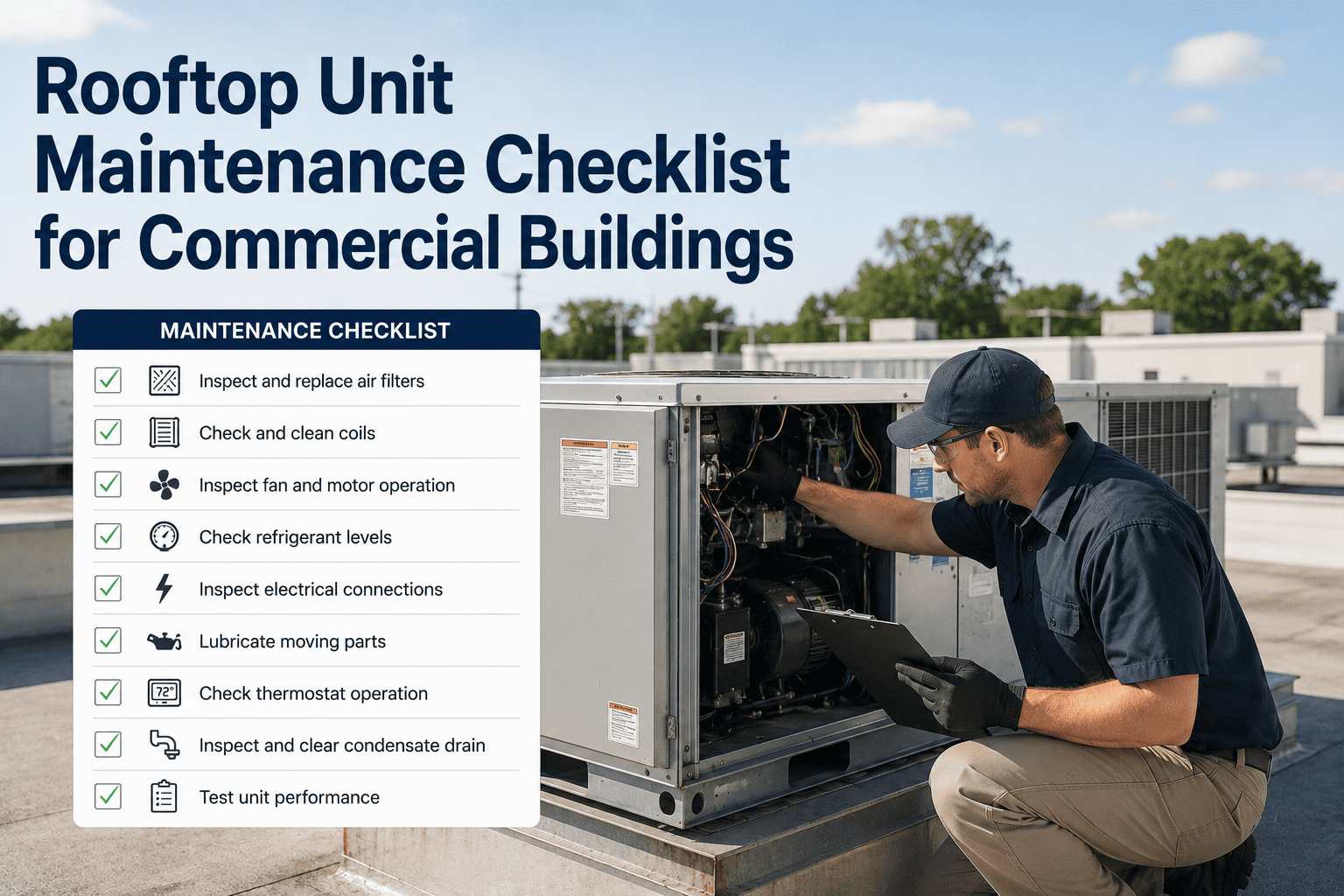
| Filter ΔP inspection | Monthly | ASHRAE 180 §6.1 | Monthly WO — replacement triggered at threshold ΔP |
| Condensate drain flush | Monthly (summer) / Quarterly (winter) | ASHRAE 180 | Seasonal PM WO — algae finding triggers urgent corrective |
| Drive belt visual inspection | Monthly | ASHRAE 180 §6.5 | Monthly WO — wear rating recorded, replacement WO on cracking/glazing |
| Compressor amp draw | Monthly | ASHRAE 180 §6.5 | Monthly WO — measured vs nameplate FLA recorded per RTU |
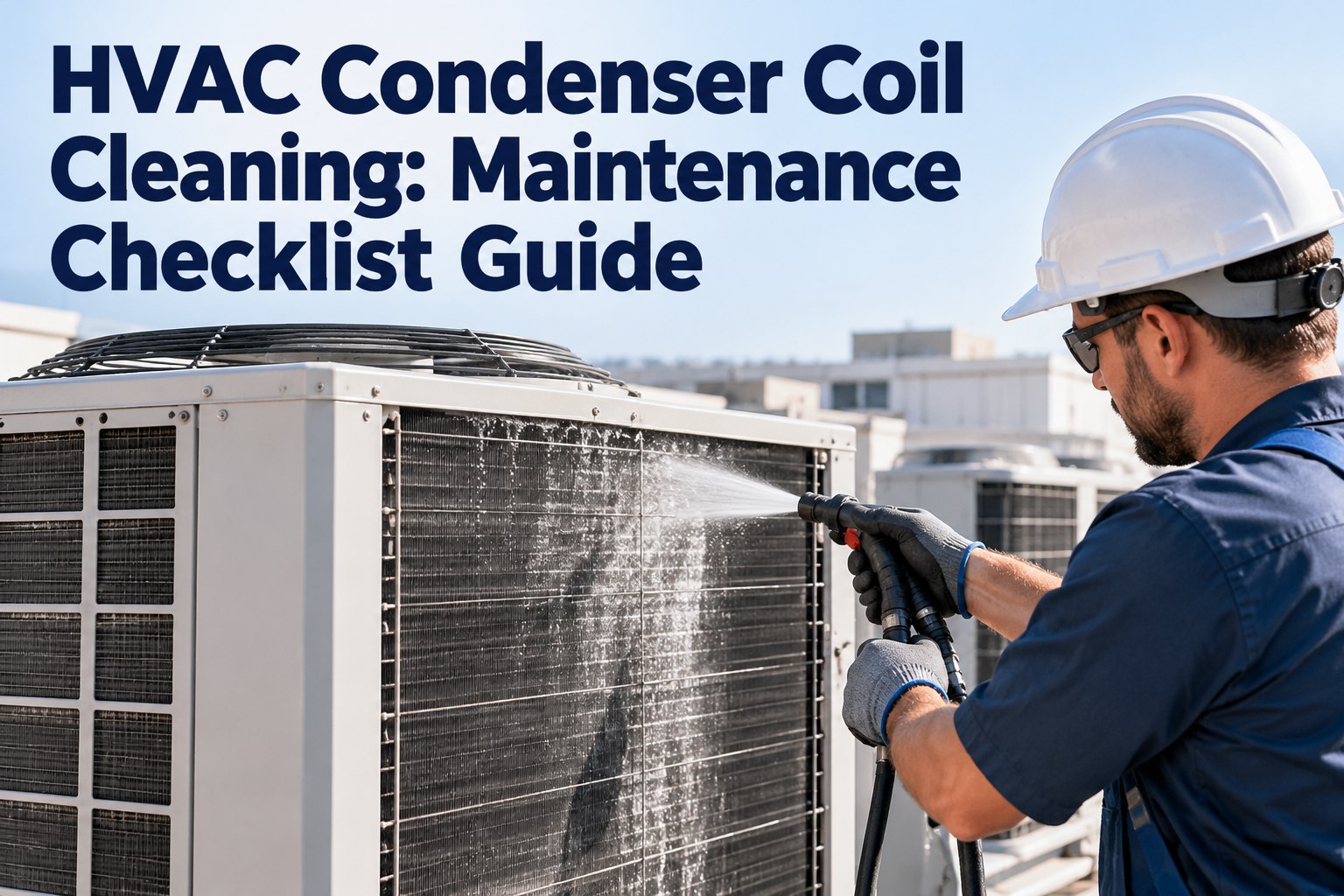
| Condenser coil visual | Monthly | ASHRAE 180 §6.2 | Monthly WO — debris or fin damage triggers cleaning/repair WO |
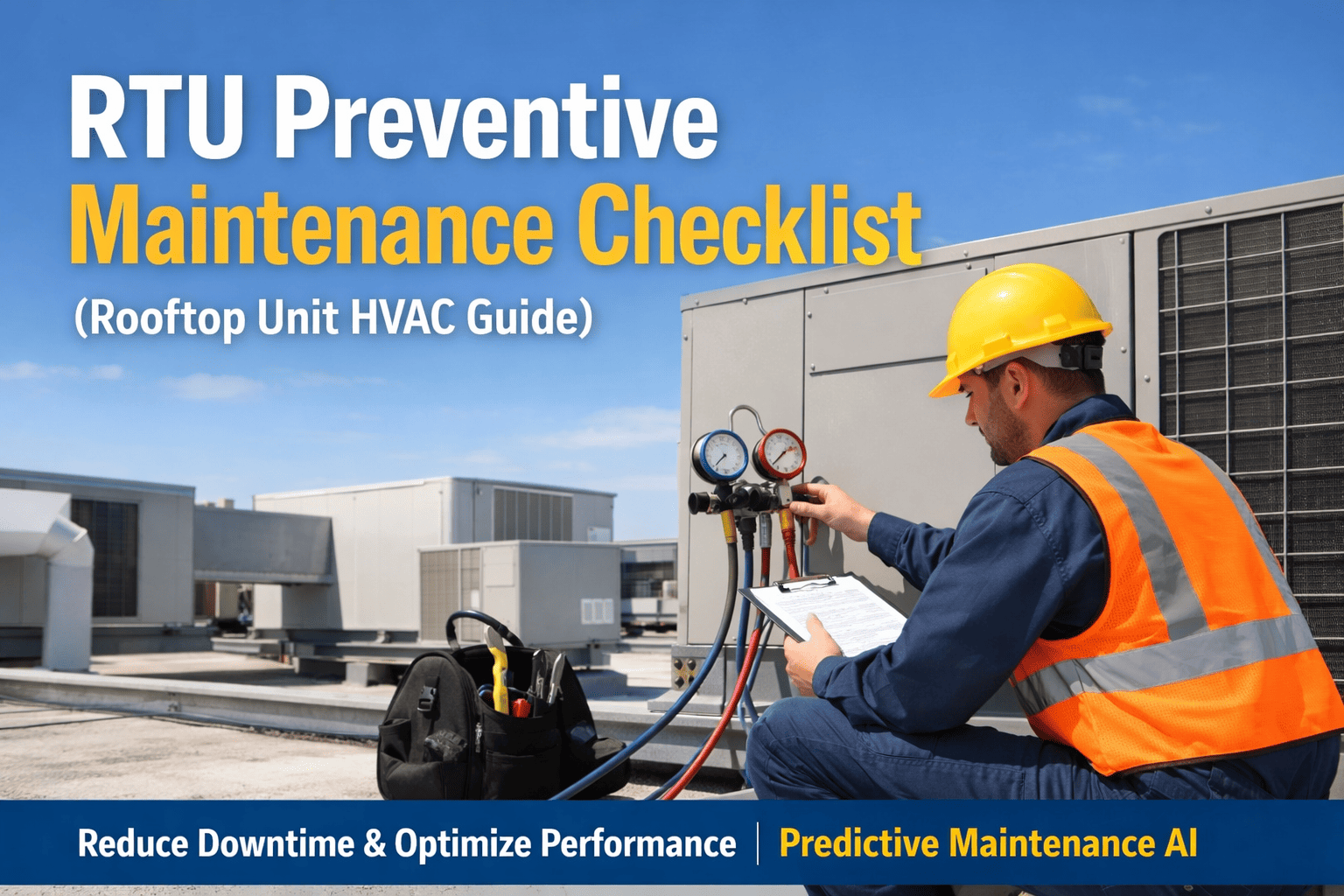
| Refrigerant system pressure check | Quarterly | ASHRAE 180 §6.3 | Quarterly WO — suction/discharge vs chart stored per RTU asset |
| Economizer full-stroke test | Quarterly | ASHRAE 180 §6.7 | Quarterly WO — stroke range and position feedback deviation recorded |
| Electrical connection check | Quarterly | NFPA 70 / ASHRAE 180 | Quarterly WO — thermal scan findings trigger retorque or replacement WO |
| Condenser coil chemical clean | Annual (spring) | ASHRAE 180 §6.2 | Annual PM WO — approach temp before and after documented per coil |
| Evaporator coil clean | Annual or on condition | ASHRAE 180 §6.2 | Annual PM WO — approach temp recorded, chemical method noted |
| Drive belt replacement | Annual (fall) or on condition | ASHRAE 180 §6.5 | Annual PM WO — belt size, brand, and tension spec recorded |
| Burner and heat exchanger inspection | Annual (fall) | ASHRAE 180 / NFPA 54 | Annual PM WO — crack inspection result and combustion analysis stored |
| BAS controls calibration and setpoints | Annual (seasonal changeover) | ASHRAE Guideline 11 | Seasonal PM WO — setpoints before and after documented per RTU |
| Fan motor bearing lubrication | Annual or per manufacturer | Manufacturer schedule | Annual PM WO — grease type and quantity per bearing recorded |
| Full filter replacement (calendar fallback) | Biannual (spring and fall) | ASHRAE 180 §6.1 | Biannual PM WO — MERV rating and filter size recorded per RTU |
Sign in to OxMaint to activate your RTU PM programme — all 15 tasks auto-generated per unit with seasonal scheduling and component-level record storage.
Book a Demo — See RTU Preventive Maintenance Managed Per Unit in OxMaint.
Seasonal PM scheduling · Filter ΔP alerts · Condenser coil approach trending · Belt wear inspection · Economizer stroke test · Refrigerant pressure records — all per RTU asset.
The RTU is the easiest piece of commercial HVAC equipment to maintain well and the most commonly maintained poorly. Everything is accessible on the roof in one cabinet. The maintenance tasks are simple, well-documented in ASHRAE 180, and the consequences of skipping them are linear and predictable: skip the belt for two years and you get belt failure, skip the coil cleaning for three years and you get 15–20% efficiency loss, skip the heat exchanger inspection and you get carbon monoxide. What makes RTU maintenance so consistently neglected is not the difficulty of the work — it is the absence of a system that generates the work order, assigns it, tracks its completion, and stores the result. A CMMS with RTU PM templates solves this problem in a morning. The PM itself takes a technician two hours per unit per season.
How OxMaint Manages RTU Preventive Maintenance Across Your Fleet
Book a Demo — See OxMaint Managing Your Full RTU Preventive Maintenance Programme.
Per-unit seasonal PM scheduling · Condenser coil approach trending · Belt inspection records · Economizer calibration · Heat exchanger safety documentation · Fleet-wide dashboard. Every RTU. Every season. Every task tracked.
RTU Maintenance — Common Questions
How often should RTU filters be replaced?
Filter replacement should be triggered by differential pressure, not calendar alone. Inspect monthly and replace when ΔP exceeds the manufacturer's maximum — typically 150–250 Pa above a clean baseline depending on MERV rating. Calendar-based replacement as a fallback: biannual (spring and fall) for most commercial RTUs, quarterly for high-particulate environments. OxMaint generates monthly inspection WOs and creates a replacement WO automatically when ΔP crosses the configured threshold. Sign in to configure ΔP-triggered filter alerts in OxMaint.
What is the most cost-effective single RTU PM task?
Annual condenser coil chemical cleaning is the highest-ROI single RTU maintenance task. A fouled condenser coil causes 15–20% efficiency loss and raises discharge pressure — increasing compressor work and accelerating wear. A 2-hour cleaning costing $200–$400 in labour and materials recovers this efficiency and extends compressor life. The second highest-value task is annual belt replacement: a $30–$60 belt prevents a $3,000–$8,000 compressor burnout if the belt breaks under load. Book a demo to see coil cleaning and belt PM scheduling in OxMaint.
How do you test an RTU economizer and what does calibration involve?
Economizer testing involves: commanding the damper from 0% to 100% open and verifying blade movement matches command; checking position feedback signal accuracy at the BAS (position vs command deviation); verifying the minimum OA position delivers the designed OA CFM; and confirming the economizer enable/disable logic responds correctly to outdoor air temperature. Calibration adjusts position feedback and minimum position set-points back to design values. OxMaint generates quarterly economizer stroke test WOs with position deviation recorded per RTU. Sign in to configure economizer verification WOs in OxMaint.
Can OxMaint manage RTU maintenance for a multi-building portfolio?
Yes. OxMaint manages RTU fleets across multiple buildings and sites from a single portfolio dashboard. Each building's RTU assets are registered independently with their own PM schedules — but portfolio managers see compliance, outstanding WOs, and component condition across all buildings in one view. When a property manager needs to show a tenant or insurer that every RTU has had its seasonal service, the report is generated in minutes. Book a demo to see multi-building RTU management in OxMaint.