Heat pumps now represent the fastest-growing segment of commercial HVAC electrification — and the most maintenance-intensive. Unlike conventional gas-fired systems, heat pumps operate across heating and cooling modes, reversing refrigerant cycles seasonally, which means every component — compressors, reversing valves, expansion devices, coils, and refrigerant circuits — must be inspected and serviced to dual-mode specifications. When a commercial heat pump fails in January during peak heating demand, the facility impact is immediate and severe. OxMaint's preventive maintenance platform gives commercial facility teams the scheduling engine, inspection checklists, and condition-tracking tools to keep heat pump systems running at rated COP year-round — across portfolios of any size.
Heat Pump Maintenance Software for Commercial Facilities
Compressor health tracking, refrigerant charge verification, coil fouling schedules, reversing valve inspection, and COP baseline monitoring — the complete maintenance framework for commercial heat pump reliability.
Why Commercial Heat Pumps Fail — And What It Costs
Commercial heat pumps are precision refrigeration systems operating at 15–150 tons capacity. Their dual heating/cooling cycle creates failure modes not found in chiller-only systems. Understanding the five primary failure mechanisms is the foundation of an effective maintenance programme.
| Failure Mode | Primary Cause | Warning Signs | Avg. Downtime Cost |
|---|---|---|---|
| Compressor failure | Liquid slugging, refrigerant contamination, oil breakdown | Elevated current draw, discharge temp rise, vibration change | $18,000–$65,000 |
| Refrigerant undercharge | Slow leak, improper service, valve failure | COP degradation, suction pressure low, frost pattern irregular | $4,000–$22,000 |
| Reversing valve failure | Solenoid failure, mechanical damage from liquid refrigerant | Mode switching failure, temperature differential collapse | $6,000–$28,000 |
| Coil fouling | Dust, biofilm, debris accumulation on coil surfaces | Head pressure rise, suction pressure drop, COP loss 15–30% | $2,500–$12,000 |
| Expansion valve blockage | Moisture in refrigerant circuit, debris, wax contamination | Superheat deviation, unstable suction pressure, frost at valve | $3,000–$15,000 |
OxMaint schedules every inspection task in this guide automatically — with mobile technician dispatch, parameter logging, and asset history built in. Book a demo or start free today.
01 — Refrigerant Charge Management
Refrigerant undercharge is the single most common cause of commercial heat pump COP degradation and compressor overheating. A 10% refrigerant undercharge reduces heating COP by 15–20% and increases compressor discharge temperature by 8–12°C — a direct path to compressor valve and piston wear. Charge verification must be a scheduled PM task, not an event triggered by visible performance loss.
02 — Coil Cleaning Schedules and Fouling Impact
Coil fouling is silent and cumulative. A fouled condenser coil on a commercial heat pump in heating mode forces the refrigerant circuit to work at artificially elevated condensing temperatures — reducing heating output by 10–25% and driving up compressor head pressure toward trip limits. Most facilities only clean coils after a performance complaint or high-pressure alarm, which means months of degraded efficiency have already accumulated.
Visual inspection every 90 days for debris, cottonwood/seed lodgement, and fin damage. Chemical coil cleaner application with low-pressure rinse every 6 months (spring and fall). Document coil cleanliness rating (1–5 scale) in OxMaint work order. Fin comb damaged sections during spring clean.
Indoor coils accumulate biofilm, dust, and in food-adjacent applications, grease. Annual coil cleaning with alkaline cleaner rated for the coil material. Drain pan inspection and biocide treatment concurrent with coil clean. Document refrigerant-side pressure drop before and after cleaning to quantify fouling severity.
Log condensing pressure or saturated condensing temperature at each PM visit. A rising condensing temperature trend at constant outdoor ambient is diagnostic of coil fouling before visual inspection would detect it. OxMaint's asset KPI tracking allows trending this parameter across service visits to catch degradation early.
COP Impact — Fouling vs. Maintained Coils
Measured COP data from a 36-ton commercial air-source heat pump over 18 months — comparing a maintained coil protocol versus an as-found fouled baseline. Same outdoor ambient conditions, same load profile.
03 — Compressor Health and Reversing Valve Checks
The compressor is the highest-value component in a commercial heat pump — typically $8,000–$25,000 in parts and labour to replace on a rooftop unit. Compressor health monitoring through amperage trending, vibration measurement, and discharge temperature logging provides 4–8 weeks of advance warning before a failure event in most cases.
Live KPI Dashboard — Heat Pump Portfolio
Representative view of OxMaint's heat pump asset dashboard for a 12-unit commercial portfolio. Each KPI is tracked per unit with threshold alerts and PM compliance status.
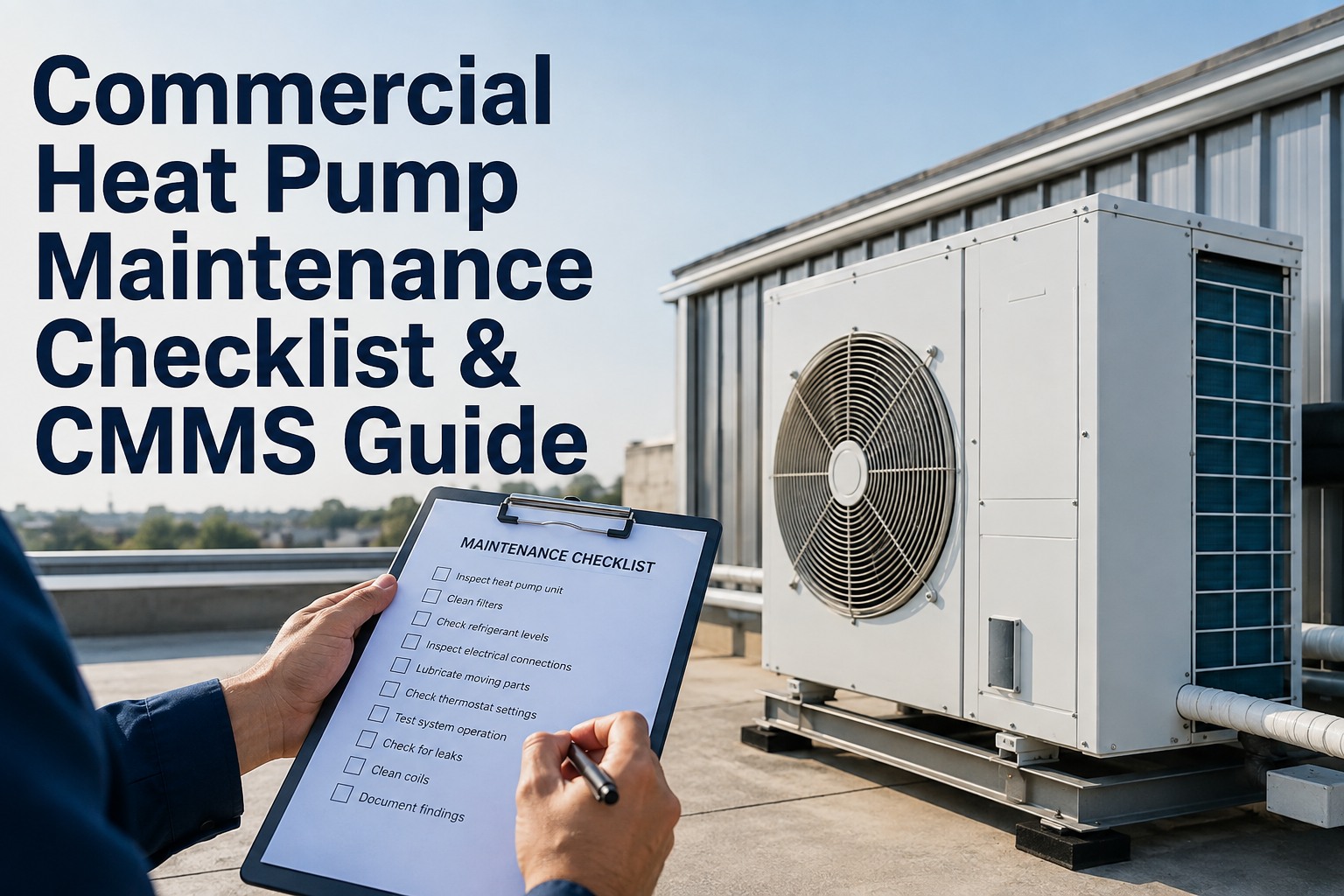
Heat Pump Maintenance Checklist
Minimum inspection touchpoints for a commercial air-source or water-source heat pump. All readings should be logged against the asset record in your CMMS. OxMaint digitizes this entire checklist into mobile work orders with parameter capture fields.
Run This Checklist Digitally — On Every Heat Pump, Every Visit
OxMaint converts every inspection item into a mobile work order with parameter capture, technician sign-off, and automatic PM scheduling. Most commercial HVAC teams are live within one week.
Expert Review
The maintenance gap in commercial heat pump electrification projects is substantial and underappreciated. Most facilities managers have years of experience with conventional chiller and boiler maintenance schedules, but heat pumps introduce operating modes and failure mechanisms — reversing valve integrity, refrigerant-side acid contamination, defrost cycle performance, seasonal charge verification — that require specific protocol updates to existing PM programmes. What I consistently see in underperforming heat pump installations is not equipment failure so much as maintenance programmes that were not updated when the equipment was replaced. The coil fouling impact on COP is particularly significant in cold-climate heating applications because operators rarely correlate rising energy bills with a maintenance task they could control. A CMMS like OxMaint that tracks COP as an asset KPI alongside scheduled PMs makes this connection visible — and preventable — before it becomes an unplanned failure or a missed low-carbon performance target.
Frequently Asked Questions
Your Heat Pump Maintenance Programme Starts Here
The inspections in this guide only deliver results when executed consistently — every seasonal changeover, every coil clean, every refrigerant check. OxMaint gives commercial facility teams the scheduling infrastructure to run this programme automatically, with full asset history and compliance documentation built in. Start free or book a 30-minute walkthrough for your portfolio.