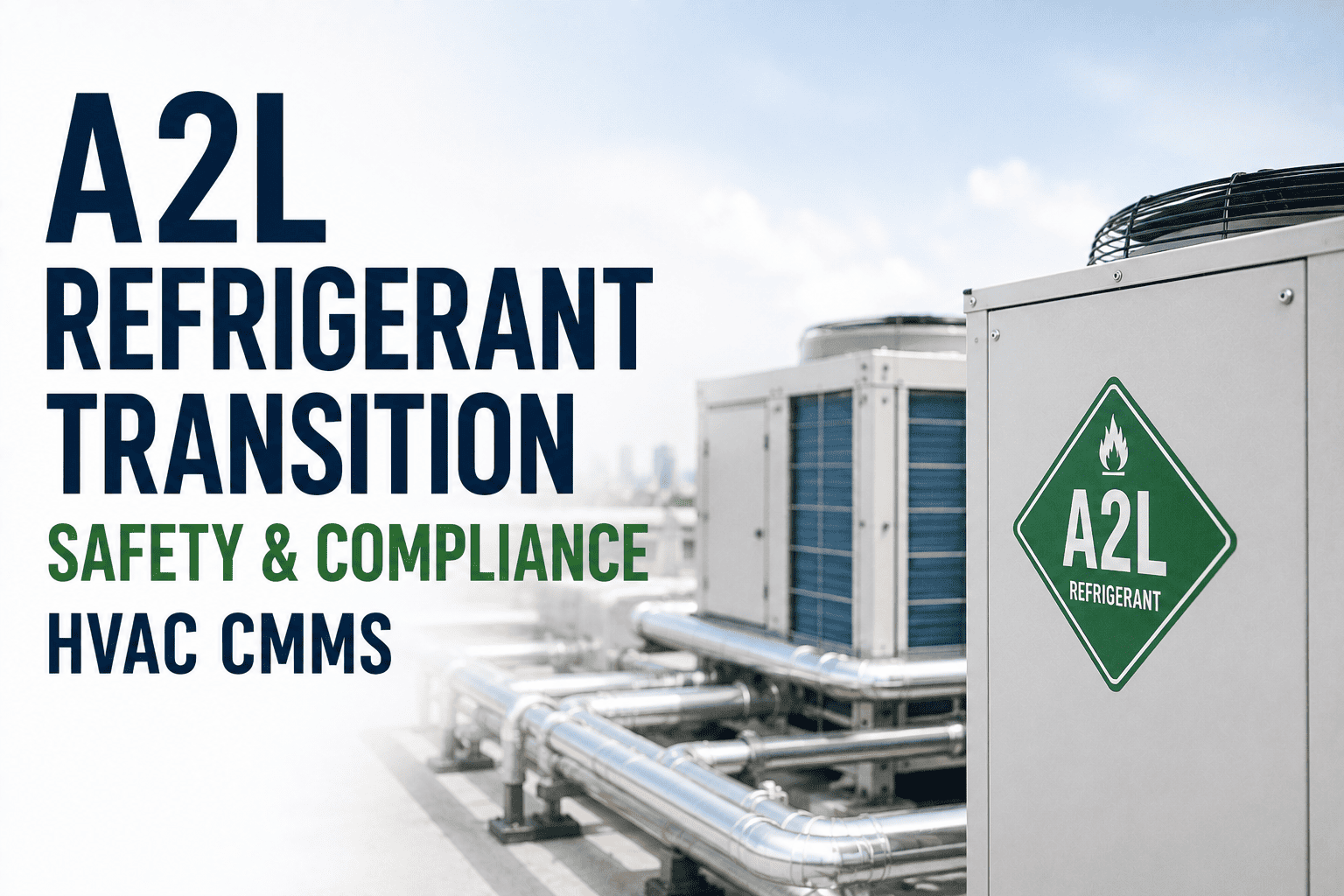
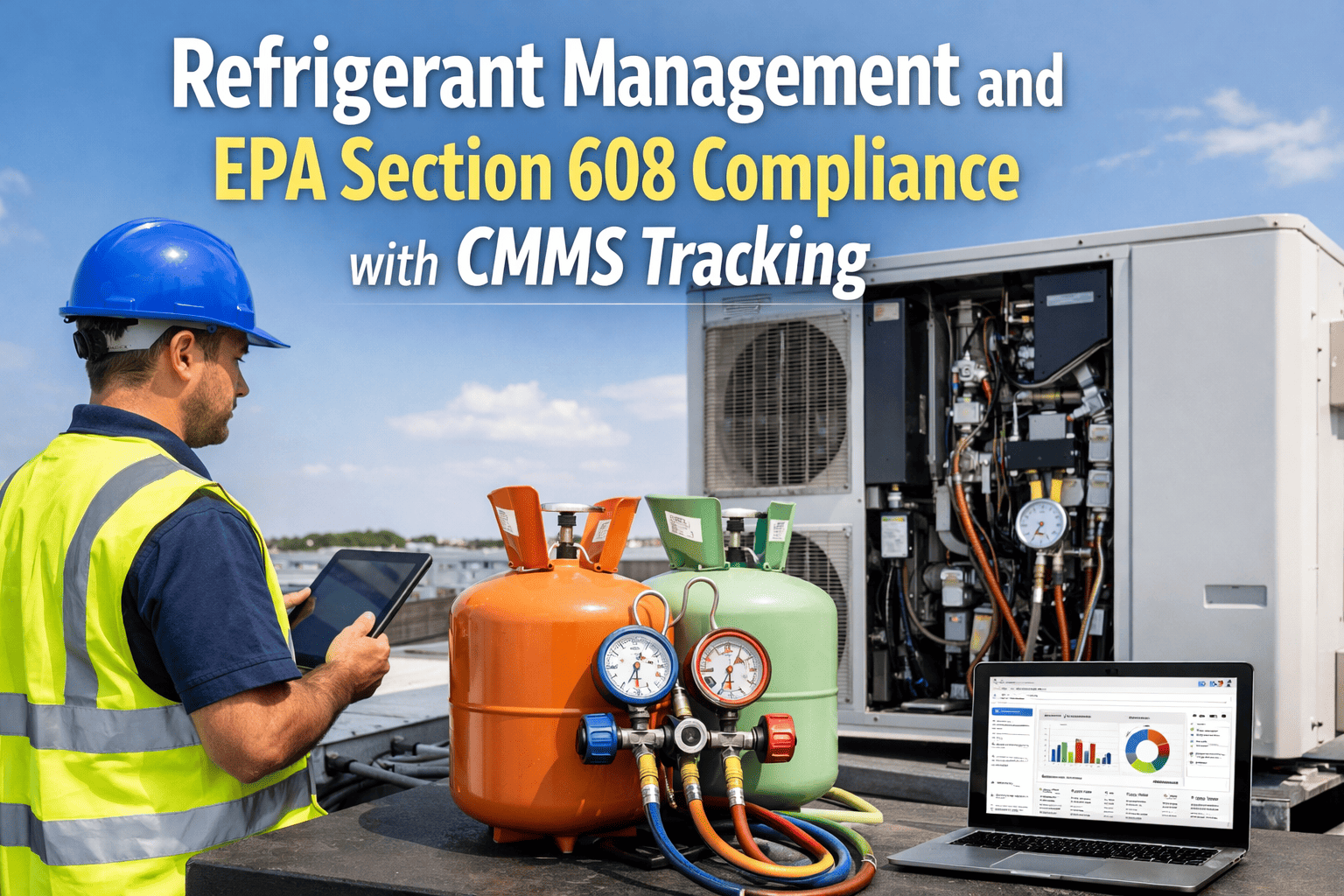
The EPA's AIM Act mandated that all new residential and light commercial HVAC equipment transition away from R-410A to refrigerants with a Global Warming Potential of 700 or less as of January 1, 2025. R-454B (GWP 466) and R-32 (GWP 675) are now the primary replacements — and both carry an A2L mildly flammable classification that changes every protocol your technicians follow. OxMaint's compliance tracking platform gives HVAC teams the asset register, leak logging, technician task workflows, and audit-ready reporting to manage this transition without gaps. Book a demo to see refrigerant compliance workflows configured for your fleet.
Low-GWP Refrigerant Transition
Maintenance Guide
Everything HVAC maintenance teams need to manage the R-410A phase-down — asset tracking, leak logs, A2L safety protocols, and EPA compliance documentation in one connected system.
What the AIM Act Means for HVAC Maintenance Teams
The AIM Act targets an 85% reduction in HFC production and consumption by 2036. The 2025 milestone restricted new equipment from using R-410A — but existing systems may remain in service. For maintenance teams, this creates a split-fleet reality: legacy R-410A systems being serviced alongside new A2L equipment. Both require separate tool inventories, separate certification paths, and separate documentation workflows. Teams managing this without a structured compliance platform are exposed to documentation gaps that carry EPA fines.
HFC phasedown target by 2036 under the AIM Act — driving ongoing refrigerant availability constraints for R-410A servicing
Lower GWP of R-454B compared to R-410A, making it the primary replacement for new residential and light commercial equipment
Projected societal benefits from 2022 to 2050 from the HFC allocation programme, per EPA calculation
A2L Refrigerants: What Changes in the Field
| Protocol Area | R-410A (A1 — Non-flammable) | R-454B / R-32 (A2L — Mildly Flammable) |
|---|---|---|
| Tools & Equipment | Standard HVAC manifold gauges and recovery equipment | A2L-rated tools required — non-sparking, rated for mild flammability |
| Charge Limits | No specific room-size charge limit restrictions | Specific charge limits per room volume — manufacturer instructions mandatory |
| Oil Type | POE oil compatible | Manufacturer-specific oil type — not interchangeable between refrigerant types |
| Leak Detection | Standard electronic detector | A2L-compatible detector required; different sensor sensitivity thresholds |
| Technician Certification | EPA Section 608 Type I/II/Universal | Section 608 remains required; additional A2L safety training recommended |
| Documentation | Refrigerant purchase and recovery records | Same records plus A2L charge limit verification per installation |
4 Things OxMaint Tracks for Refrigerant Compliance
Asset Register by Refrigerant Type
Every unit is tagged with refrigerant type, charge quantity, installation date, and applicable regulation. Split-fleet visibility — R-410A legacy and A2L new equipment — managed in one asset register with separate task templates per type.
Leak Log with Date & Quantity
Every leak event is recorded against the unit asset with date, quantity recovered, technician ID, and corrective action. EPA Section 608 requires records to be maintained — OxMaint generates the log automatically from technician task completion.
A2L Protocol Task Checklists
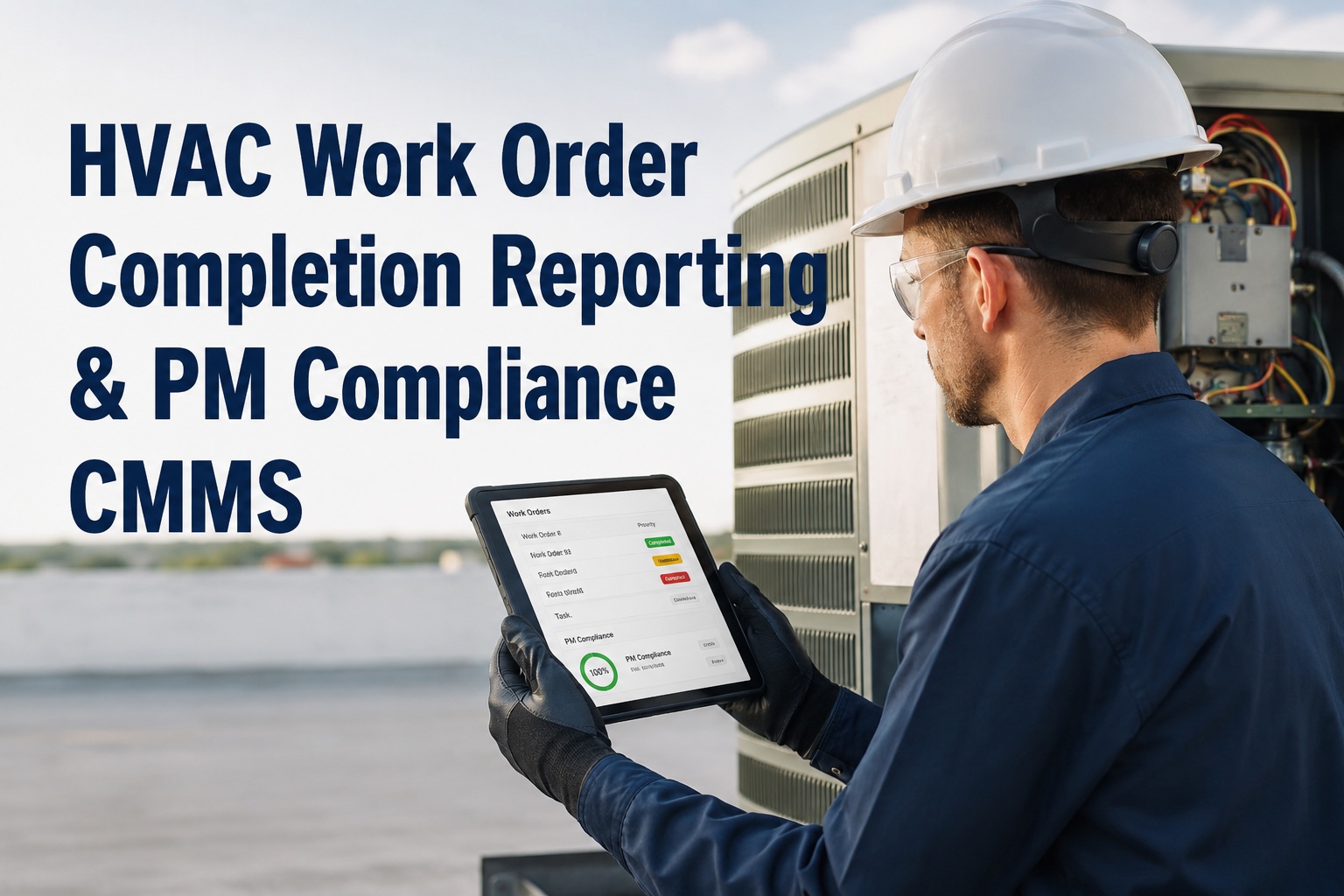
Technician task cards for A2L systems include A2L-specific steps: tool rating verification, room volume charge limit check, manufacturer oil confirmation. Steps cannot be skipped — completion is required before work order closure.
Compliance Report Export
Audit-ready refrigerant reports export with one click — refrigerant type per asset, leak events by date range, technician certifications on file, and corrective action closure status. Structured for EPA, insurance, and LEED documentation requirements.
Get Ahead of Refrigerant Compliance
OxMaint configures your asset register, leak logs, A2L task workflows, and compliance reports for your entire HVAC fleet — legacy R-410A and new low-GWP equipment together.
The R-454B transition is not simply a chemical swap — it is a complete operational shift impacting every aspect of the maintenance workflow, from safety protocols to tool inventories. HVAC teams managing mixed fleets without structured digital tracking face documentation gaps that are invisible in day-to-day operations but become liabilities during EPA audits, insurance reviews, and LEED certification processes. The teams navigating this transition successfully are those that built their compliance infrastructure before the pressure of a mixed fleet arrived on the bench."