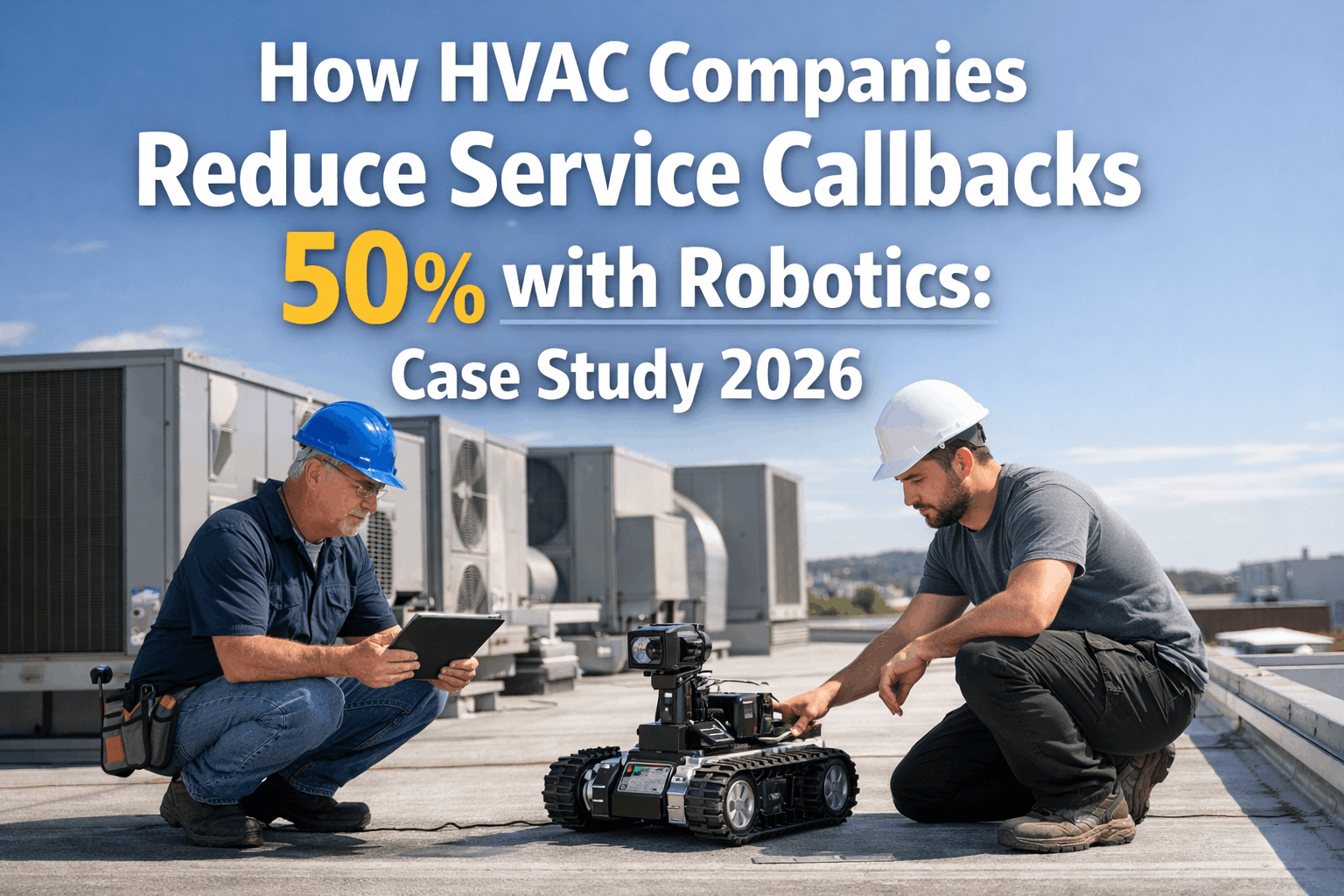
Commercial building maintenance is entering its robotic era. The convergence of ROS 2 (Robot Operating System 2), AI-powered navigation, and Building Management System (BMS) integration is enabling autonomous service robots that can inspect ductwork, monitor HVAC equipment, patrol mechanical rooms, and collect environmental data — all without a technician on site. The service robotics market was valued at $47.10 billion in 2024, growing at 15.9% CAGR, while building automation systems reached $82-97 billion with HVAC controls commanding 34% of market share. ROS 2 has matured from a research framework into production-grade middleware, with DDS-based communication, real-time performance, cross-platform support, and security features that make it viable for commercial facility applications. With ROS 1 Noetic reaching end-of-life in May 2025, every new robotic platform is being built on ROS 2, and vendors are layering fleet management, OTA updates, and BMS integration on top. For HVAC contractors and facility managers, this means robots that don't just clean floors — they actively participate in maintaining building systems, feeding inspection data into your maintenance management platform and triggering work orders when they detect anomalies.
The real opportunity isn't the robot itself — it's connecting robotic data to your maintenance workflow. When a ROS 2 robot detects a vibrating compressor bearing, a refrigerant leak signature, or abnormal duct temperature, that finding needs to become a prioritized work order assigned to the right technician. Oxmaint CMMS bridges robotic sensor data and your HVAC asset and work order system — so nothing a robot finds gets lost before a human acts on it. Talk to our team.
Autonomous Robots Are Becoming
Your Building's Maintenance Crew
ROS 2-powered service robots inspect, monitor, and report on HVAC systems in commercial buildings — navigating autonomously, integrating with BMS, and feeding findings directly into maintenance workflows.
Why ROS 2 for HVAC Service Robots
ROS 2 isn't just another software framework — it's the operating system that makes autonomous HVAC robots commercially viable in real buildings with real people:
Real-Time Performance
ROS 2's DDS (Data Distribution Service) middleware provides deterministic communication with configurable Quality of Service (QoS) settings. This means robots can maintain consistent SLAM maps across large commercial buildings — critical when navigating 50,000+ sq ft facilities with multiple floors, corridors, and mechanical rooms where GPS doesn't work.
Built-In Security
Unlike ROS 1, ROS 2 includes authentication and encryption mechanisms — non-negotiable for robots operating in occupied commercial buildings. Secure communications prevent unauthorized access to robot controls or the building data they collect, meeting enterprise IT and cybersecurity requirements.
Open-Source Ecosystem
Apache 2.0 licensing means HVAC robotics companies can build proprietary applications on top of proven navigation, perception, and control libraries without licensing fees. The Nav2, SLAM Toolbox, and MoveIt2 packages alone save thousands of development hours. ROS-Industrial extends capabilities into facility maintenance use cases.
BMS & API Integration
ROS 2's node-based architecture makes it straightforward to bridge robot sensor data with BACnet, Modbus, and REST API endpoints used by building management systems. Robots become mobile data collectors that feed directly into Siemens Desigo, Johnson Controls Metasys, Honeywell, or any BMS platform — and into CMMS systems for maintenance execution.
Fleet Management
ROS 2's multi-robot support enables fleet coordination — multiple robots covering different floors or zones of a large campus, sharing map data, avoiding conflicts, and collectively building a complete picture of building condition. Private 5G and Wi-Fi 6 stabilize robot communications across floors and buildings.
Cross-Platform & Edge AI
Native support for Linux, Windows, and macOS — plus compatibility with NVIDIA Jetson edge computing — means robots can run AI inference locally for real-time anomaly detection. Edge processing enables sub-second response to detected hazards without cloud latency, critical for occupied building safety.
Connect Robot Findings to Your HVAC Maintenance Workflow
Oxmaint links autonomous robot inspection data to your work order system — auto-generating maintenance tasks when robots detect equipment anomalies, air quality issues, or system degradation across your commercial buildings.
7 HVAC Applications for ROS 2 Building Robots
Mechanical Room Patrol
Autonomous UGVs perform scheduled rounds of mechanical rooms, capturing thermal images of compressors, pumps, and electrical panels, recording acoustic signatures for vibration analysis, and detecting refrigerant or gas leaks. Replaces 2-3 daily manual walkthrough rounds per building.
Ductwork Inspection
Compact duct-crawling robots with 4K cameras and environmental sensors navigate commercial ductwork to assess contamination levels, insulation condition, damper positions, and structural integrity — generating visual reports linked to duct zone asset records in your CMMS.
Indoor Air Quality Mapping
Mobile robots equipped with CO₂, PM2.5, VOC, temperature, and humidity sensors create real-time IAQ heat maps as they patrol building zones. Identifies areas with poor ventilation, overcrowding-related CO₂ spikes, or HVAC system imbalances requiring airflow adjustment.
Thermal Infrastructure Scanning
Robots with thermal cameras perform systematic thermal surveys of electrical panels, switchgear, piping insulation, and HVAC equipment — detecting hot spots, insulation failures, and electrical faults before they become emergencies. Data feeds directly into predictive maintenance algorithms.
Rooftop Unit Monitoring
Weather-rated outdoor robots or drones inspect rooftop HVAC units — checking condenser coil condition, refrigerant line insulation, belt/bearing noise, electrical connections, and drainage. Eliminates the need for technicians to access roofs for routine condition assessments.
Elevator & Multi-Floor Navigation
ROS 2 robots with elevator API integration autonomously move between floors of multi-story commercial buildings — performing inspection rounds across entire properties without human assistance. Private 5G/Wi-Fi 6 maintains connectivity during floor transitions.
After-Hours Security + Maintenance Patrol
Robots perform combined security and maintenance patrols during unoccupied hours — checking for water leaks, unusual temperatures, equipment alarms, open access panels, and security anomalies. Dual-purpose deployment maximizes robot ROI and building protection.
ROS 2 Robot ↔ BMS ↔ CMMS Integration Architecture
The power of ROS 2 HVAC robots lies in their integration with existing building systems:
From Robot Sensors to Repair Completion — One Platform
Oxmaint turns ROS 2 robot data into maintenance action — automated work orders, asset condition tracking, and complete audit trails from robotic detection through technician resolution across every floor of your buildings.
RaaS: Robotics-as-a-Service for HVAC
The biggest barrier to robotic adoption — upfront capital cost — is dissolving through Robotics-as-a-Service (RaaS) subscription models:
Frequently Asked Questions
What is ROS 2 and why does it matter for HVAC service robots?
ROS 2 (Robot Operating System 2) is an open-source software framework that provides the foundational libraries, tools, and communication middleware needed to build robot applications. For HVAC service robots, ROS 2 matters because it delivers real-time performance (DDS middleware maintains consistent navigation in large buildings), built-in security (authentication and encryption for occupied commercial environments), multi-robot fleet support (coordinating multiple robots across floors and zones), and seamless integration with BMS protocols (BACnet, Modbus, REST APIs). ROS 1 reached end-of-life in May 2025, making ROS 2 the standard for all new robotic platforms. Its Apache 2.0 license means manufacturers can build commercial products without licensing fees, while benefiting from proven navigation (Nav2), SLAM, and perception libraries maintained by a global developer community.
What HVAC tasks can building robots actually perform today?
Current ROS 2-powered building robots perform seven main HVAC-related functions: Mechanical room patrol — thermal imaging of compressors, pumps, and electrical panels with acoustic vibration analysis and gas leak detection; Ductwork inspection — 4K camera crawlers assessing contamination, insulation, and damper condition; IAQ mapping — mobile CO₂, PM2.5, VOC, temperature, and humidity sensing creating real-time air quality heat maps; Thermal scanning — systematic thermal surveys detecting hot spots, insulation failures, and electrical faults; Rooftop unit monitoring — outdoor-rated robots or drones inspecting condenser coils, refrigerant lines, and drainage; Multi-floor navigation — elevator-integrated autonomous patrol across entire buildings; After-hours combined patrol — security plus maintenance inspection during unoccupied periods. These robots don't repair equipment — they're autonomous data collectors that feed findings into your maintenance system for human follow-up.
How do ROS 2 robots integrate with building management and CMMS systems?
Integration happens at three layers: Robot-to-BMS — ROS 2's node architecture bridges sensor data to BACnet, Modbus, or REST API endpoints used by building management platforms (Siemens Desigo, Johnson Controls Metasys, Honeywell). Robots feed real-time thermal, acoustic, and environmental data into the BMS alongside traditional fixed-sensor data. BMS-to-CMMS — anomaly detections trigger automated work order generation in your CMMS, assigned to the correct trade with robot-captured evidence (images, thermal maps, sensor readings) attached. CMMS-to-Operations — technicians receive mobile work orders with exact location, visual evidence, and severity classification. After repair, before/after data is recorded and asset condition updated. Elevator and access control APIs enable multi-floor navigation, while private 5G/Wi-Fi 6 maintains robot connectivity across building transitions.
What does RaaS (Robotics-as-a-Service) cost for commercial buildings?
RaaS shifts robotic HVAC inspection from capital expenditure to operating expense. Typical subscription pricing ranges from $1,500-$5,000/month per robot depending on building size, patrol frequency, and sensor configuration — compared to $50,000-$150,000+ for outright purchase. RaaS subscriptions typically include hardware maintenance, OTA software updates, fleet management dashboard, and SLAs tied to measurable outcomes (square footage patrolled, inspections completed, uptime guarantees). The subscription model aligns with facility management budgets, enables technology upgrades without additional capital, and transfers maintenance risk to the provider. For multi-building portfolios, fleet-level RaaS agreements typically offer volume pricing. Most providers offer pilot programs — typically 3-6 months on a single floor or building — before committing to full-portfolio deployment.
Ready to Add Robotic Intelligence to Your Building Maintenance?
Oxmaint connects ROS 2 robot data to your complete HVAC maintenance program — asset mapping, automated work orders, compliance tracking, and visual history for every building in your commercial portfolio.