RTU Maintenance Checklist: Seasonal Rooftop Unit Inspection & Service Guide
By Mark Strong on March 30, 2026
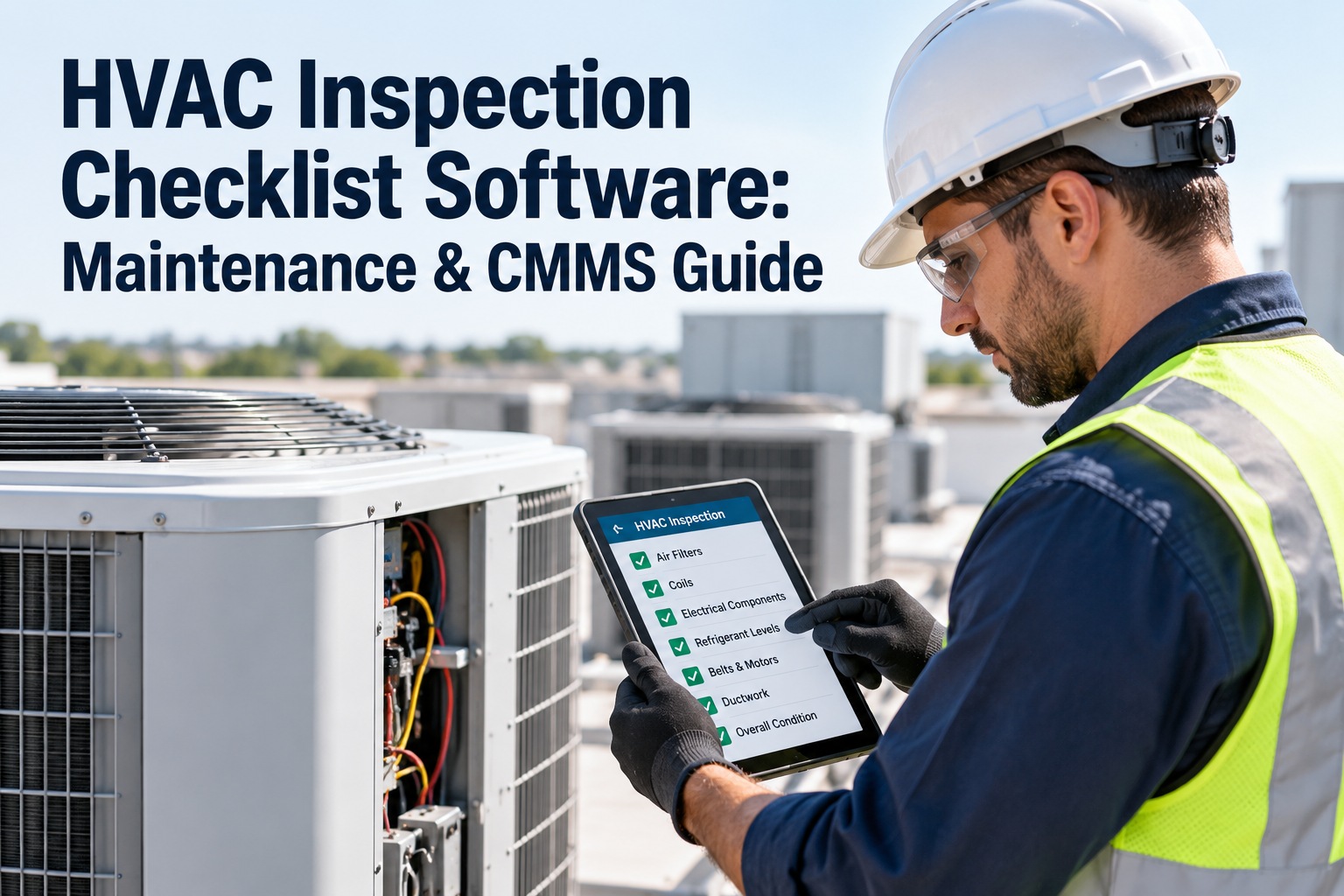
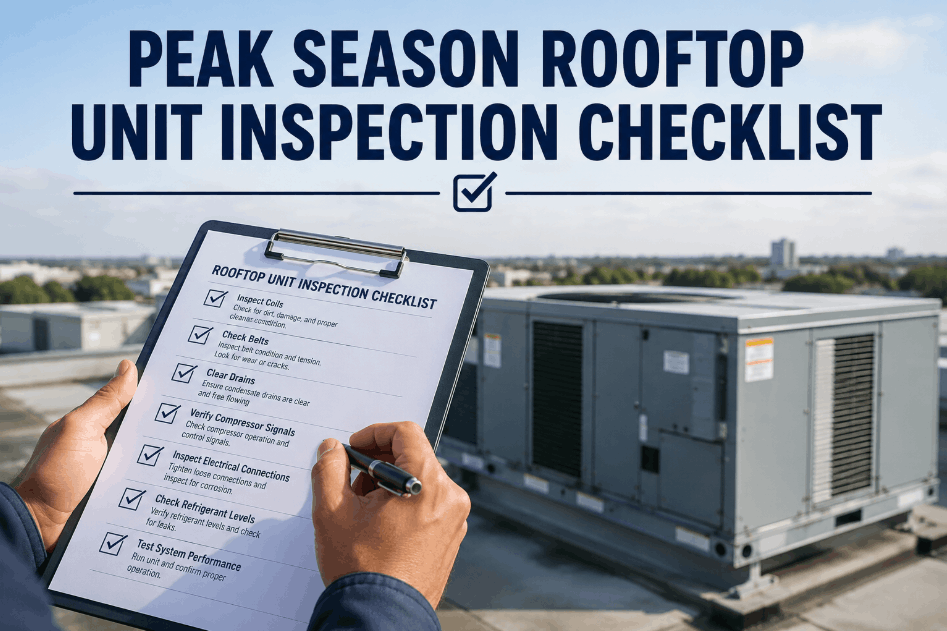
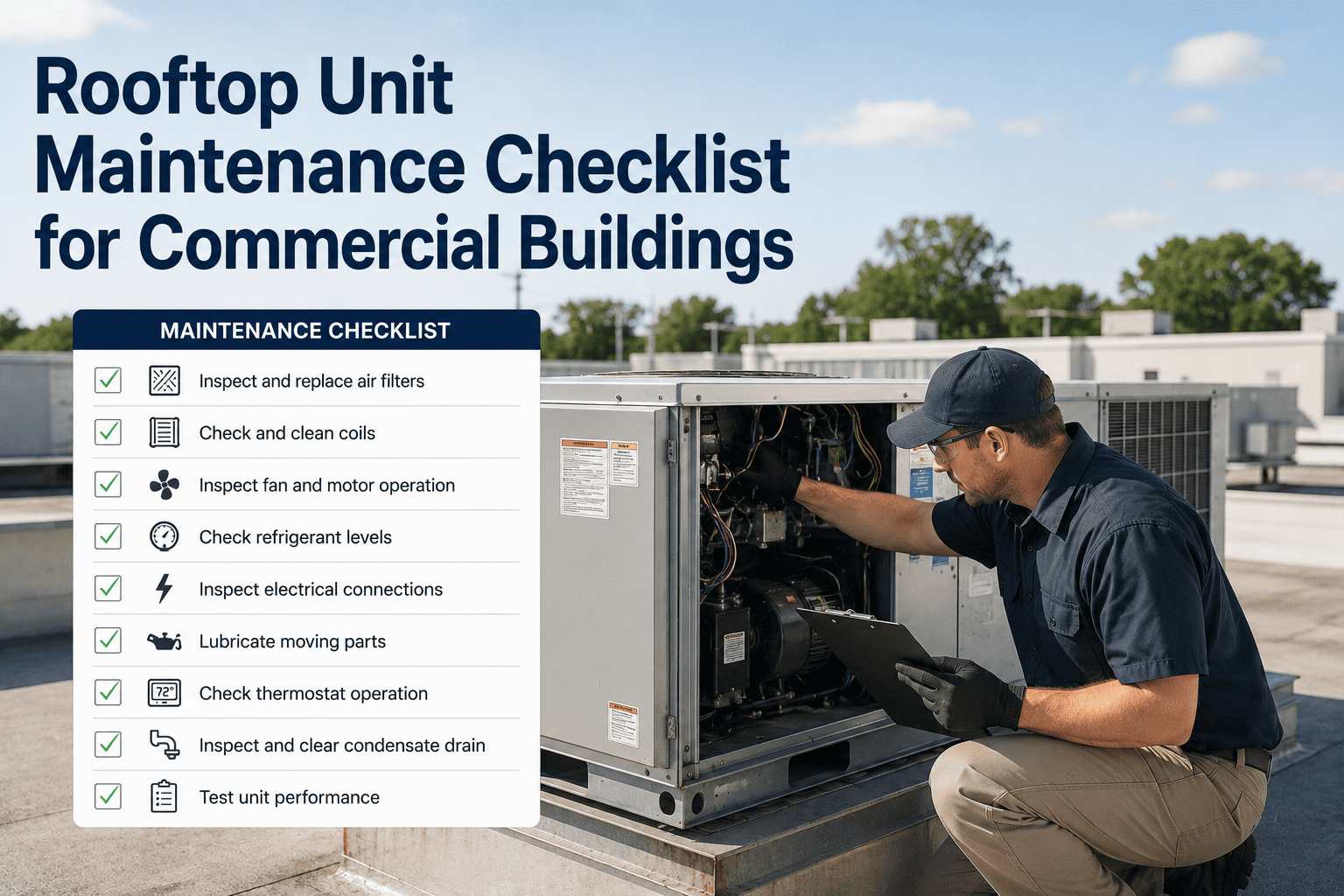
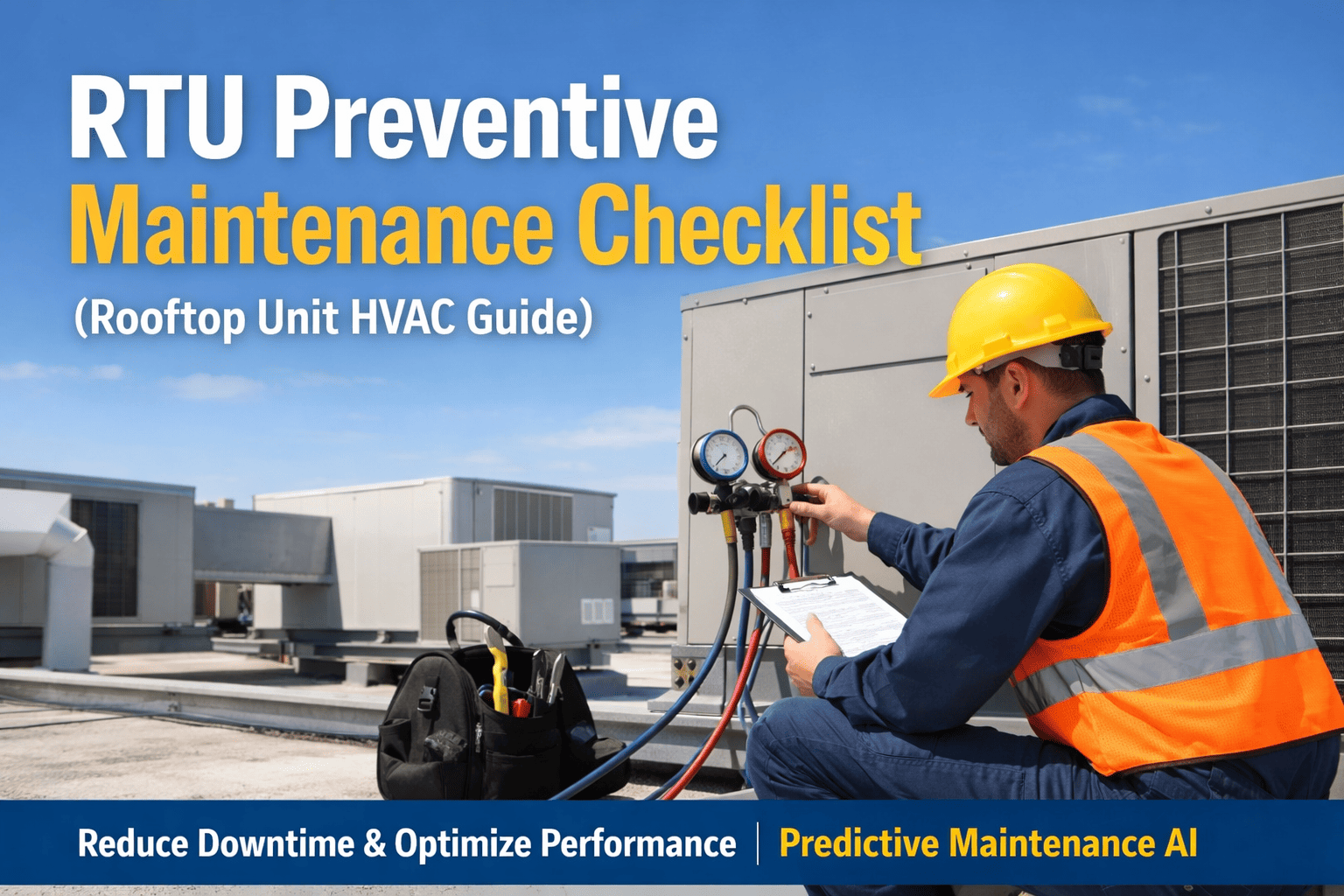
Rooftop units fail more often in the first week of the cooling season and the first cold snap of fall than at any other time — not because of sudden equipment degradation, but because pre-season inspections were skipped, deferred, or rushed. An RTU on a commercial rooftop operates in one of the harshest environments in building systems: UV exposure, extreme temperature swings, vibration from fan operation, and unrestricted weather exposure year-round. This seasonal maintenance checklist covers every critical inspection point for all RTU types — from pre-cooling and pre-heating season preparation through quarterly refrigerant monitoring, coil cleaning, electrical verification, and annual comprehensive service — with the acceptance criteria and measurement standards that keep rooftop units running efficiently for their full design life. Book a demo to see OxMaint's RTU preventive maintenance module with seasonal scheduling, condition-based alerts, and digital sign-off configured for your rooftop unit inventory.
Seasonal PM Checklist • All RTU Types
RTU Maintenance Checklist
Seasonal Rooftop Unit Inspection and Service Guide — Spring through Annual
of RTU compressor failures occur in the first 30 days of the cooling season from deferred pre-season PM
25%
energy savings from maintaining clean RTU coils and correct refrigerant charge throughout the season
6
inspection phases from pre-cooling season through annual comprehensive service
85+
individual inspection items with acceptance criteria, measurement fields, and sign-off requirements
⚠
RTU refrigerant work must be performed by EPA Section 608-certified technicians. All refrigerant additions must be logged with the quantity, type, and technician certification number. Heat exchanger inspection for gas-fired RTUs is a life-safety requirement — a cracked heat exchanger that allows combustion gases into the supply air stream is an immediate carbon monoxide risk.
Seasonal Inspection Frequency Overview
Monthly
Quarterly
Pre-Season
Annual
Filter Inspection
Refrigerant and Coils
Heat Exchanger (Gas RTU)
Electrical and Controls
Fan and Belt Drives
Cabinet and Weatherproofing
Full inspection requiredVisual check only
Phase 1: Pre-Cooling (Spring)
→
Phase 2: Cooling Season
→
Phase 3: Pre-Heating (Fall)
→
Phase 4: Heating Season
→
Phase 5: Electrical & Controls
→
Phase 6: Annual
PHASE 1: PRE-COOLING SEASON
01
Pre-Cooling Season Inspection (Spring)
Before first cooling demand • Certified HVAC technician • Complete before outdoor temperature exceeds 65°F
The pre-cooling season inspection is the highest-value PM event in the RTU annual cycle. A compressor started with a failed run capacitor, low refrigerant charge, or dirty condenser coil will fail within the first few days of the cooling season — typically during the first heat wave, when service lead times are longest and rental equipment is hardest to source.
Inspection ItemAcceptance CriteriaPrioritySign
Test compressor start capacitor and run capacitor with a capacitor tester — measure capacitance and compare to rated value; capacitor reading more than 10% below rated value indicates imminent failure; replace before first start. Start cap: ______ uF Rated: ______ uF Run cap: ______ uF Rated: ______ uFWithin 10% of rated capacitance. Replace if outside tolerance before first cooling call.Critical______
Clean condenser coil with low-pressure coil cleaner and rinse — inspect fin straightness and clean fin surfaces from inside out; heavily fouled condenser coil raises condensing pressure, reduces capacity, and causes high-pressure lockouts on the first hot day. Coil condition before cleaning: ______No debris between fins. All fins straight or straightened. Coil surface clean after rinse.Critical______
Verify refrigerant charge using superheat and subcooling at design conditions — a system with incorrect charge from the prior season will fail efficiently within the first month; log pressures and calculated values. Suction: ______ psig Discharge: ______ psig Superheat: ______°F Subcooling: ______°FSuperheat within manufacturer spec (typically 10 to 20°F). Subcooling 10 to 15°F for TXV systems.Critical______
Inspect and clean evaporator coil — check for mold, biological growth, and fouling on fin surfaces; a moderately dirty evaporator coil reduces airflow and raises suction pressure simultaneously; clean with no-rinse coil cleaner applied to drain pan side. Evap coil condition: ______Fins clean. No visible biological growth. Drain pan clear of debris and draining freely.High______
Clean and test condensate drain pan and drain line — flush drain with water and confirm free flow; add biocide tablets; inspect pan for cracks or corrosion; a blocked drain on a rooftop RTU overflows directly into the supply air stream and ceiling tiles below. Drain flow confirmed: Y / N Biocide added: Y / NFree drain flow confirmed. Pan clean and free of biological growth. Biocide treatment applied.High______
Replace filters with correct MERV-rated replacement filters — log MERV rating, filter size, and replacement date; confirm no bypass gaps around filter frame; measure and record static pressure drop across clean filters as the new baseline for the cooling season. Filter dP clean baseline: ______ in. w.g.New filters installed. MERV rating matches specification. No bypass gaps. Baseline dP recorded.Standard______
PHASE 2: COOLING SEASON
02
Cooling Season Quarterly Inspection
Every quarter during cooling operation • Certified HVAC technician • Record all readings at near-design load conditions
Refrigerant MonitoringCompressor AmpsSupply Air Temperature
Inspection ItemAcceptance CriteriaPrioritySign
Measure and record refrigerant pressures, superheat, and subcooling at current outdoor ambient conditions — compare to previous quarterly log; a suction pressure drop of more than 5 psig between quarters at similar outdoor temperature indicates refrigerant loss. Suction: ______ psig Discharge: ______ psig Ambient: ______°FPressures consistent with prior quarter at comparable ambient. No more than 5 psig drop in suction.Critical______
Measure compressor running amps on all phases and compare to nameplate FLA — compressor amps above FLA during normal cooling indicates refrigerant overcharge, high condensing pressure, or motor deterioration; record outdoor ambient temperature at time of measurement. L1: ______A L2: ______A L3: ______A FLA: ______AWithin 10% of nameplate FLA at current conditions. Phase imbalance below 2%.Critical______
Measure supply air temperature and compare to design specification — supply air above 58°F during full cooling demand indicates coil fouling, low refrigerant charge, or insufficient airflow; record supply air, return air, and outdoor ambient temperature simultaneously. Supply air: ______°F Return air: ______°FSupply air within 2°F of design at current load and ambient conditions.High______
Inspect condenser coil for mid-season fouling from cottonwood, pollen, or rooftop debris — rooftop RTU condenser coils in urban and landscaped environments can fully block within 60 days of spring cleaning; check and rinse if significant fouling found. Mid-season fouling found: Y / NLess than 20% fin blockage. Rinse if greater blockage found. Log cleaning in service record.High______
Check filter differential pressure against clean baseline — replace filters if differential has risen more than 0.5 in. w.g. above the clean baseline recorded at pre-season service; log replacement date and MERV rating. Current filter dP: ______ in. w.g. Baseline: ______ in. w.g.Within 0.5 in. w.g. of clean baseline. Replace if above threshold regardless of calendar date.Standard______
OxMaint Preventive Maintenance
Auto-schedule seasonal RTU inspections for your entire rooftop unit inventory
Pre-cooling and pre-heating season tasks auto-generated per RTU, refrigerant log compliance tracked, filter differential pressure trending — all in one mobile-accessible PM platform.
A cracked heat exchanger in a gas-fired RTU allows combustion gases including carbon monoxide to mix with the supply air stream. This is a life-safety emergency — not a maintenance finding to defer. The fall pre-heating inspection must include a physical heat exchanger inspection with the heat exchanger firing and the indoor fan operating, which is the only test condition that reveals cracks from differential thermal expansion.
Inspection ItemAcceptance CriteriaPrioritySign
Perform heat exchanger inspection with burner firing and indoor blower operating — hold a flame probe or smoke pencil at each heat exchanger port while the blower is running; flame deflection or smoke drawn into the heat exchanger indicates a crack allowing conditioned air to enter the combustion side. Crack found: Y / NNo flame deflection. No smoke drawn into heat exchanger. Unit tagged out of heating service if crack found.Critical______
Visually inspect heat exchanger surface with flashlight for cracks, holes, rust-through, or stress fractures — pay particular attention to the area around the burner port, flue collar, and any areas showing rust staining on the exterior of the heat exchanger shell. Condition: ______No visible cracks, holes, or rust-through. Surface rust only — no pitting or perforation.Critical______
Perform combustion analysis at steady-state heating operation — measure CO, O2, and flue temperature; CO above 100 ppm in the flue requires immediate burner adjustment; record values for comparison to previous fall service. CO: ______ ppm O2: ______% Flue temp: ______°F Efficiency: ______%CO below 100 ppm. O2 2 to 4%. Combustion efficiency above 78%. Shut down if CO above 400 ppm.Critical______
Inspect burner and heat exchanger for insect nests, debris accumulation, or blockage in flue passages — RTUs on rooftops accumulate nesting material in heat sections during the summer cooling-only period when burners are inactive; clear all obstructions before first heat callNo nesting material. No debris in burner assembly or flue passages. All passages clear and unobstructed.Critical______
Test gas pressure at burner manifold — measure and record manifold pressure at both high fire and low fire; compare to manufacturer specification; manifold pressure outside specification causes combustion problems, nuisance ignition failures, or heat exchanger overheating. High fire: ______ in. w.c. Low fire: ______ in. w.c.Within manufacturer manifold pressure specification at both firing rates. No pressure fluctuation during steady-state operation.High______
Test igniter and flame sensor operation — measure igniter resistance (silicon carbide igniters fail high or open; hot surface resistance should be 40 to 90 ohms cold); measure flame sensor microamp signal; signal below 0.5 uA causes nuisance ignition failures and service calls mid-heating-season. Igniter: ______ ohms Flame signal: ______ uAIgniter within rated resistance range. Flame signal above 1.0 uA. Replace igniter if cracked or carbon-tracked.High______
PHASE 4: HEATING SEASON PM
04
Heating Season Quarterly Checks
Quarterly during heating operation • Qualified HVAC technician • Gas and electric heat RTUs
Gas TrainElectric Heat StripsSupply Temperature
Inspection ItemAcceptance CriteriaPrioritySign
Test high-temperature limit switch (rollout and overheat limit) — verify high-temperature safety cuts out the burner at the correct temperature and requires manual reset; a limit that does not trip correctly allows heat exchanger overheating leading to accelerated cracking and potential fire hazard. Limit trips at: ______°F Set point: ______°FTrips within 10°F of setpoint. Requires manual reset. Does not re-ignite automatically after limit trip.Critical______
Measure supply air temperature during heating operation and compare to setpoint — supply air below heating setpoint at full heat call indicates heat exchanger issue, limit switch tripping, or gas valve not opening fully. Supply air (heating): ______°F Setpoint: ______°FSupply air within 3°F of heating setpoint at steady-state full heat call.High______
Inspect electric heat strips (electric RTUs) — measure amperage on each heat strip stage; a heat strip drawing below 80% of rated amperage indicates open element; measure element resistance cold to confirm. Stage 1: ______A Stage 2: ______A Stage 3: ______AEach heat strip stage within 10% of rated amperage. No open elements. Sequencer operates in correct stage order.High______
Check filter condition mid-heating-season — heating season in many climates uses less outdoor air, but fan runtime remains high; inspect filter differential pressure and replace if above threshold; dusty winter conditions can load filters faster than expected. Filter dP: ______ in. w.g.Within 0.5 in. w.g. of clean baseline. Replace if above threshold.Standard______
PHASE 5: ELECTRICAL AND CONTROLS
05
Electrical, Controls and Fan Drive Inspection
Quarterly and semi-annual • All RTU types • Qualified HVAC technician
Belts and BearingsContactor InspectionControls CalibrationEconomizer
Inspection ItemAcceptance CriteriaPrioritySign
Inspect supply fan belt for cracking, glazing, and tension — apply 2 to 5 lbs perpendicular force at midspan and verify 1 inch deflection per foot of span; check sheave alignment with straight edge; belt dust in drive guard indicates slippage. Belt condition: ______ Tension: ______ lbs deflectionNo cracking or glazing. 1 inch deflection per foot span at 2 to 5 lbs force. Sheaves aligned within 1/16 inch.High______
Inspect compressor contactor contacts for pitting, erosion, or welded contact surfaces — a pitted contactor that re-energises the compressor without the normal delay causes liquid slugging on restart; measure contact resistance if pitting is visible. Contactor condition: ______Contact surfaces smooth with no pitting deeper than 1mm. No welded contacts. Contact gap within specification.High______
Test economizer damper operation — verify outside air damper opens to full position and closes fully at lockout conditions; measure actuator stroke time; test changeover control to confirm economizer enables at correct outdoor air enthalpy or dry-bulb temperature. OA position range: ______ to ______ %Full open and full close positions achieved. Changeover setpoint activates at correct outdoor condition.High______
Calibrate thermostat or zone controller against a calibrated reference thermometer — a thermostat reading 3°F high causes the unit to over-cool or under-heat continuously; recalibrate if offset exceeds 2°F from reference. Thermostat reading: ______°F Reference: ______°FThermostat within 1°F of calibrated reference. Recalibrate or replace if offset exceeds 2°F.High______
Lubricate fan shaft bearings and motor bearings per OEM specification — do not exceed rated grease quantity; check bearing surface temperature during operation; apply to grease fittings with hand grease gun only, not a power gun, to avoid seal rupture. Bearing temp: ______°FBearing surface temperature below 180°F. Grease fitting accepts lube without pressure buildup.Standard______
PHASE 6: ANNUAL
06
Annual Comprehensive Service and Cabinet Inspection Full System
Annual • Certified HVAC technician • Combines pre-season tasks with comprehensive structural and refrigerant review
The annual RTU service is the one inspection event that covers refrigerant compliance documentation, cabinet weatherproofing, motor electrical testing, and complete refrigerant system review. Deferred annual service on a rooftop unit typically manifests as mid-season compressor failure, cabinet water ingress into electrical components, or refrigerant loss that triggers EPA leak rate violations before the problem is identified.
Inspection ItemAcceptance CriteriaPrioritySign
Perform comprehensive refrigerant leak test of entire system with calibrated electronic leak detector — test all connections, service valves, compressor shaft seal area, and coil connections; document all test points and results; calculate annual leak rate if refrigerant was added during the prior 12 months. Annual leak rate: ______%No active leaks detected. Annual leak rate below EPA threshold. All test points documented in service record.Critical______
Inspect RTU cabinet panels, access doors, and roof curb gaskets for weather integrity — water ingress through deteriorated cabinet gaskets reaches electrical components, control boards, and the supply air stream; inspect all panel seams, door gaskets, and pipe penetration seals. Water ingress evidence found: Y / NNo water staining on internal components. All cabinet gaskets pliable and sealing. Curb gasket intact with no gaps.Critical______
Test motor insulation resistance on supply fan motor and condenser fan motors with megohmmeter — insulation resistance below 1 megohm indicates moisture intrusion or insulation breakdown; rooftop motor insulation degrades faster than interior motors due to thermal cycling and condensation. Supply fan motor: ______MΩ Condenser fan motors: ______MΩInsulation resistance above 1 megohm on all motors. Downward trend below 5 megohm requires investigation.High______
Inspect compressor crankcase heater operation — crankcase heater maintains oil temperature during standby to prevent refrigerant migration; heater failure leads to liquid slugging on compressor start; check heater current draw to confirm heater is operational. Crankcase heater current: ______ACrankcase heater drawing rated current. Heater surface warm to touch during standby with unit off.High______
Generate annual RTU performance report and update equipment maintenance history in CMMS — document seasonal kW/ton at comparable load conditions versus prior year, refrigerant additions logged, component replacements made, and next season pre-service scope recommended by the attending technicianPerformance report completed and filed in CMMS asset record. Next season scope documented. Parts forecast updated.Standard______
SIGN-OFF
Inspection Sign-Off Record
Technician Name
Inspection Date
RTU Tag / Location
RTU Model / Serial
Refrigerant Type / Charge
Supervisor Sign-Off
Critical Findings Summary
RTU Operating Status
How OxMaint Manages RTU Preventive Maintenance
Seasonal RTU PM is only reliable when every unit in the inventory gets its pre-season inspection before the demand season starts — not the ones on the busiest buildings, not the easiest to reach, all of them.
SEA
Seasonal PM Auto-Scheduling
Pre-cooling and pre-heating season inspection tasks auto-generated per RTU asset 30 days before the target service window — assigned to the right technician with the seasonal checklist attached before the first call-out of the season.
REF
Refrigerant Log Compliance
All refrigerant additions logged with quantity, type, technician certification number, and EPA annual leak rate calculation per unit. Refrigerant charge history trended per RTU across seasons to identify slow leaks before EPA reporting thresholds are crossed.
TRD
Seasonal Performance Trending
Supply air temperature, compressor amps, and refrigerant pressure readings stored per RTU across seasonal PM visits. Year-over-year performance comparison identifies aging units for capital planning before they fail during peak season.
HEX
Heat Exchanger Inspection Records
Fall heat exchanger inspection results stored per RTU with photo documentation. Any unit with a cracked heat exchanger finding is flagged for immediate follow-up work order — no heat exchanger finding is ever left in an unclosed state in the asset record.
INV
Multi-Unit Inventory View
All RTUs in the building or portfolio visible on one dashboard — seasonal inspection status, last service date, open corrective actions, and next scheduled PM per unit — so no RTU falls through the pre-season gap in a large inventory.
WO
Automatic Corrective Work Orders
Any PM finding rated Action or Critical generates a linked corrective work order pre-populated with the finding, RTU location, and photo evidence — assigned to the right contractor before the technician leaves the rooftop, not after a report is written and reviewed.
OxMaint Preventive Maintenance
Run Every RTU Pre-Season Inspection Before Demand Season Starts
OxMaint auto-schedules seasonal RTU inspections across your entire rooftop unit inventory, tracks refrigerant log compliance, trends performance data season over season, and generates corrective work orders the moment a finding is entered — so no unit reaches the first heat wave without a completed pre-cooling service.
01How often should a commercial RTU receive a full PM service?
At minimum, commercial RTUs should receive two pre-season inspections per year — a pre-cooling season service in spring before the first cooling call and a pre-heating season service in fall before the first heat call. Each pre-season service covers coil cleaning, refrigerant verification, filter replacement, safety device testing, and a seasonal-mode-specific inspection (heat exchanger in fall, capacitors and condenser coil in spring). Additional quarterly visits during peak cooling season to monitor refrigerant pressures, compressor amps, and filter condition are recommended for RTUs in high-occupancy buildings or dusty environments. Book a demo to see seasonal RTU scheduling in OxMaint.
02How do you detect a cracked heat exchanger on a gas RTU?
The most reliable field test for a cracked RTU heat exchanger is the flame deflection or smoke test conducted with the burner firing and the indoor blower running simultaneously. With both operating, a crack in the heat exchanger creates a pressure differential that draws supply air into the combustion side — causing a flame probe or smoke pencil held near heat exchanger ports to deflect toward the crack. Visual inspection alone is insufficient because many heat exchanger cracks only open under the thermal expansion that occurs when the unit is firing. Carbon monoxide detectors in the supply air stream can also indicate a breached heat exchanger, but the combustion test is the definitive diagnostic method.
03Why do RTU compressors fail most often at the start of the cooling season?
Most cooling season compressor failures trace back to one of three conditions that develop during the winter off-season: run capacitor degradation (capacitors age whether or not the compressor is operating, and a marginal capacitor that would have struggled through summer often fails on the first start of the season under the combination of cold-soak stress and high ambient startup current); crankcase heater failure during winter allowing refrigerant migration into the oil (which causes liquid slugging on first start); or refrigerant loss from a slow leak during the off-season that leaves the system with insufficient charge for the first hot day's demand. All three root causes are fully preventable with a spring pre-cooling inspection that tests capacitors, verifies crankcase heater operation, and checks refrigerant charge before the first seasonal start.
04What is the correct RTU refrigerant superheat and subcooling target?
For fixed-orifice metering device RTUs, target superheat is typically 10 to 20°F measured at the suction line at the evaporator outlet, with the exact target varying by manufacturer and outdoor ambient temperature. For TXV-equipped RTUs, superheat is controlled by the valve and the diagnostic target is subcooling, which should be 10 to 15°F at the liquid line service valve. Both values must be measured at steady-state operating conditions with the outdoor ambient temperature recorded, as correct values shift significantly with ambient. Always cross-reference the manufacturer's charging chart specific to the RTU model and refrigerant type rather than applying generic superheat targets across all units.
05Can OxMaint manage seasonal RTU PM for a large multi-building portfolio?
Yes. OxMaint is specifically suited to multi-building RTU portfolios where the scheduling challenge is ensuring every unit in a large inventory receives its pre-season inspection within the correct window — not just the accessible or high-priority units. Each RTU is a separate asset record with its own seasonal PM schedule, refrigerant log history, and maintenance record. Portfolio-level dashboards show pre-season inspection completion rates, overdue seasonal tasks, and open corrective actions across every building without requiring manual status reports. Refrigerant addition logs are maintained per unit with EPA annual leak rate calculations generated automatically from the charge history. Book a demo to see multi-building RTU management in OxMaint.