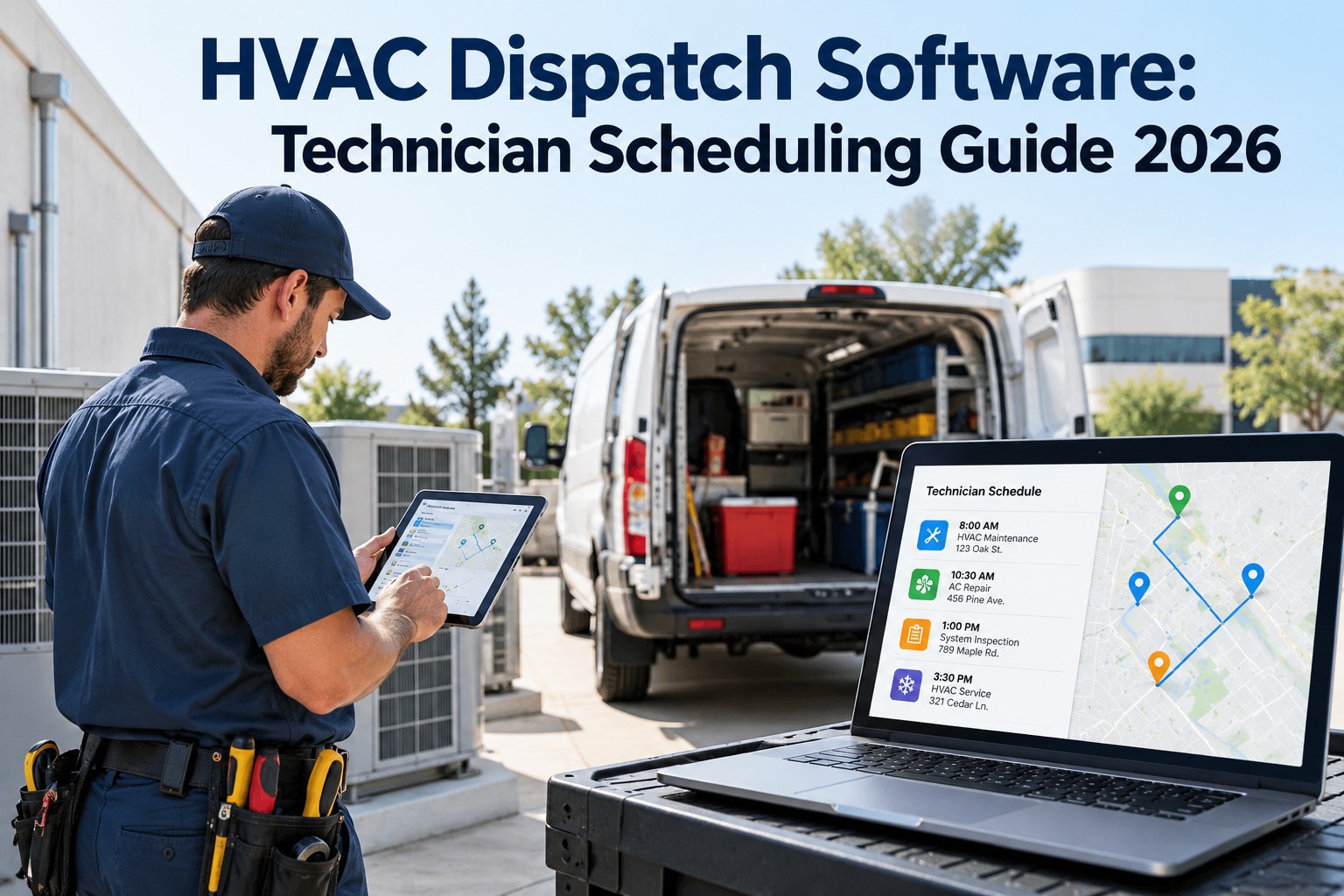
Your HVAC service agreements are signed, filed, and forgotten—until something breaks. A customer calls about a chiller that's been down for six hours. Your team scrambles to find the contract terms. Is that unit covered? What's the guaranteed response time? Who's the assigned technician? If pulling up that information takes more than ten seconds, you're already losing. Service agreements are supposed to protect both your business and your customers, but without a dedicated portal to manage them, they become static documents that nobody references until there's a dispute. The average commercial HVAC service company manages 150–300 active agreements at any given time, yet most still track them through spreadsheets, shared drives, or filing cabinets. The result: missed renewals, SLA violations, and customers who feel ignored between scheduled visits.
74%
Of HVAC customers say poor communication is their top frustration with service providers
23%
Average annual revenue lost from service agreement non-renewals due to lack of visibility
2.5x
Higher customer retention rate for HVAC companies offering self-service portals
Why HVAC Service Agreements Need a Customer Portal
A service agreement without a portal is a promise without proof. Your customers signed a contract expecting priority response, scheduled maintenance, and transparent billing—but most never see evidence of that value until something goes wrong. Meanwhile, your internal team spends hours each week fielding calls about appointment dates, coverage details, and invoice histories that customers should be able to access themselves. A customer portal transforms the service agreement from a static contract into a living, visible relationship between your HVAC company and every building you maintain.
Facilities that sign up for a dedicated service agreement portal eliminate the communication gap immediately: customers check their own coverage terms, view upcoming PM schedules, track open work orders, and access complete service history—without calling your office. This isn't just convenience. It's the difference between a customer who renews automatically and one who shops for a new provider because they feel uninformed. Industry data shows that HVAC companies with customer-facing portals achieve renewal rates above 85%, compared to the industry average of 60–65%.
What a Service Agreement Customer Portal Should Include
Not all portals deliver equal value. The ones that actually drive customer retention and operational efficiency share a specific set of features—each one mapped to a real pain point that HVAC service companies and their customers face daily. Here's what belongs in a portal built for service agreement management.
1
Agreement Dashboard
Customers see all active agreements, covered equipment, SLA terms, and contract expiration dates in one view
Eliminates the #1 support call: "What does my agreement cover?"
2
PM Schedule Visibility
Full preventive maintenance calendar showing upcoming visits, completed inspections, and technician assignments
Customers who see scheduled maintenance happening are 3x more likely to perceive agreement value
3
Service Request Submission
Customers submit work requests directly through the portal with asset selection, issue description, and priority tagging
Digital submission cuts average request-to-dispatch time by over 60% versus phone or email
4
Work Order Tracking
Real-time status updates on every open request—from submitted to assigned, in-progress, and completed
Reduces "where's my technician?" calls by up to 80%
5
Service History & Reports
Complete audit trail of every visit, repair, part replacement, and inspection finding across all covered assets
Facility managers use this data for capital planning and budget justification
6
Renewal & Billing Management
Automated renewal reminders, invoice access, payment history, and agreement upgrade options available on demand
Auto-renewal workflows recover up to 20% of agreements that would otherwise lapse
The Customer Experience Gap: With Portal vs. Without
The difference between HVAC service companies that retain customers and those that churn them often comes down to visibility. When customers can see their agreement working—maintenance happening on schedule, requests being tracked, history being documented—they stay. When they can't, they assume nothing is happening and start taking bids from competitors. Here's the concrete difference a portal makes across every customer touchpoint.
Swipe to compare all columns
Sources: ACHR News Service Management Survey, HVAC Industry Benchmarking Report 2024
Every row in that table represents a moment where customers either feel confident in their agreement or start questioning its value. Service companies that sign up to give customers portal access report measurable improvements in satisfaction scores and dramatic reductions in inbound support calls—freeing office staff to focus on revenue-generating work instead of answering status questions.
Stop Losing Refrigerant, Money, and Compliance Standing
Oxmaint connects robotic leak detection outputs to a complete maintenance platform — every detection event becomes a work order, every repair gets verified, every pound of refrigerant is tracked from purchase through recovery. EPA-ready compliance documentation generated automatically.
Priority Tiers for Service Agreement Customers
Not every service agreement customer receives the same response level—and they shouldn't. Tiered agreements let HVAC companies offer differentiated service that matches what each customer is willing to pay for, while a customer portal makes those tiers visible and enforceable. When customers can see exactly what their tier includes, disputes over response times and coverage scope drop significantly.
Response: Under 2 Hours | 24/7 Coverage
Priority dispatch, all parts included, quarterly PMs, dedicated account manager, full portal access with analytics
Response: Within 4 Hours | Business Hours + Emergency
Priority scheduling, labor included, semi-annual PMs, portal access with service history and scheduling
Response: Within 8 Hours | Business Hours Only
Discounted labor rates, annual PM included, portal access with work order tracking and basic reporting
Response: Next Business Day | Standard Scheduling
Standard rates, annual inspection, portal access with agreement details and service request submission
The portal enforces these tiers automatically. When a Platinum customer submits a request, the system routes it ahead of the queue and triggers an immediate dispatch notification. When a Bronze customer submits the same request, it enters the standard scheduling workflow. This removes subjective decision-making from your dispatch team and ensures every customer gets exactly what their agreement promises. Companies ready to see tier-based routing in action can schedule a demo to watch the automated workflow from request submission through technician dispatch.
KPIs That Prove Your Portal Is Working
Launching a customer portal is the starting point—measuring its impact is what drives continuous improvement. These metrics tell you whether the portal is actually strengthening customer relationships and reducing operational overhead, or just adding another system nobody uses.
Agreement Renewal Rate
Target: 85%+
Measures customer retention strength. Portals with visible service history and easy renewal workflows consistently outperform manual processes.
Portal Adoption Rate
Target: 70%+ of agreement customers
Percentage of agreement customers actively using the portal monthly. Low adoption signals onboarding or usability issues that need attention.
Inbound Call Reduction
Target: 40%+ decrease
Tracks reduction in status inquiry calls after portal launch. Every call deflected saves 8–12 minutes of office staff time.
SLA Compliance Rate
Target: 95%+
Percentage of service requests resolved within the agreed response time. Portal visibility creates accountability that drives compliance.
These KPIs aren't just internal metrics—they're the proof points that justify premium agreement pricing to your customers. When you can show a facility manager that their SLA was met 97% of the time, with documented service history for every asset, renewal conversations become formalities. Teams that sign up for real-time agreement analytics can pull these numbers on demand, turning data into retention leverage.
Expert Perspective: Building a Portal That Customers Actually Use
The HVAC companies losing service agreement customers aren't losing them on price—they're losing them on experience. A customer who can log in, see their next PM visit scheduled for Tuesday, review what was done at the last visit, and submit a new request in under a minute feels in control. A customer who has to call your office, leave a voicemail, and hope someone calls back feels forgotten. The portal isn't a technology upgrade. It's a relationship upgrade. And in a market where switching costs are low, the relationship is the retention strategy.
Make Value Visible
Show customers every PM visit, every inspection report, every part replaced. When they can see the agreement working, they never question the price at renewal time.
Simplify Service Requests
The portal should let customers submit a request in under 60 seconds—select asset, describe issue, submit. Anything more complex and they'll pick up the phone instead.
Automate Renewal Workflows
Send reminders at 90, 60, and 30 days before expiration. Include a portal link showing the full year of service delivered. Let them renew or upgrade with a single click.
The HVAC service companies winning the most agreement renewals have one thing in common: they've given customers a portal that makes the value of their agreement undeniable. Every completed PM, every resolved work order, every response time met—all documented and accessible. If you're ready to build that level of transparency into your customer relationships, book a free demo to see the complete service agreement portal in action.
Turn Service Agreements Into Customer Loyalty
Give your HVAC customers a portal where every agreement, every PM visit, every work order, and every invoice is visible on demand. OXmaint automates the entire service agreement lifecycle—from onboarding to renewal—so your team focuses on service, not status calls.
Frequently Asked Questions
What is a service agreement customer portal for HVAC?
A service agreement customer portal is a secure, web-based platform where your HVAC customers can view their active agreements, see covered equipment and SLA terms, track upcoming and completed preventive maintenance visits, submit service requests, monitor work order status in real time, and access their complete service history. It replaces phone calls, emails, and manual lookups with self-service access—improving customer satisfaction while reducing your team's administrative workload.
How does a customer portal improve service agreement renewal rates?
Portals improve renewal rates by making the value of the agreement visible throughout the contract period—not just at renewal time. When customers can see every PM visit completed, every emergency response met within SLA, and every repair documented with photos and parts used, the agreement justifies itself. Automated renewal reminders at 90, 60, and 30 days before expiration, combined with one-click renewal options, further reduce lapse rates. HVAC companies with customer portals report renewal rates above 85%, compared to the industry average of 60–65%.
What features should an HVAC service agreement portal include?
An effective portal should include an agreement dashboard showing coverage terms, covered assets, and expiration dates; a preventive maintenance calendar with upcoming and completed visits; a service request submission form with asset selection and priority tagging; real-time work order tracking from submission through completion; complete service history and inspection reports; and billing management with invoice access, payment history, and renewal options. Each feature should be accessible from both desktop and mobile devices.
How does a portal reduce inbound support calls?
Most inbound calls to HVAC service companies fall into predictable categories: coverage questions, appointment scheduling, repair status checks, and invoice inquiries. A customer portal answers all of these through self-service. Customers check their own coverage terms instead of calling. They view their PM schedule instead of asking about the next visit. They track work order status in real time instead of calling for updates. Facilities with portals report 40–60% reductions in status-related inbound calls within the first 90 days of deployment.
Can service agreement tiers be managed through the portal?
Yes. A properly configured portal displays tier-specific information to each customer—showing their response time guarantee, included services, PM frequency, and coverage scope based on their agreement level. When customers submit service requests, the system automatically routes and prioritizes them based on their tier. Platinum customers get immediate dispatch notifications while Bronze customers enter standard scheduling. This automation removes subjective decision-making from your dispatch team and ensures consistent SLA compliance across all agreement tiers.