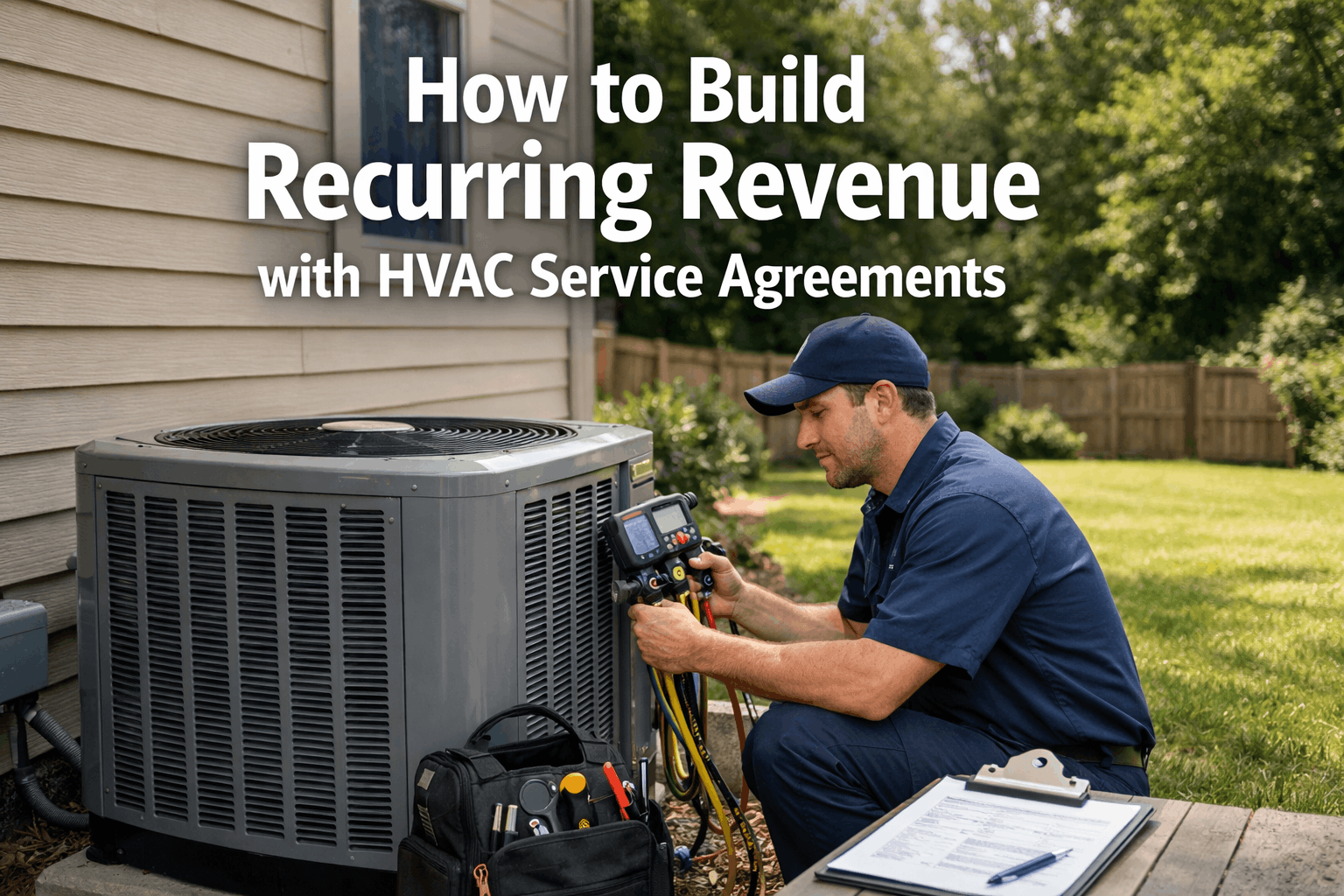
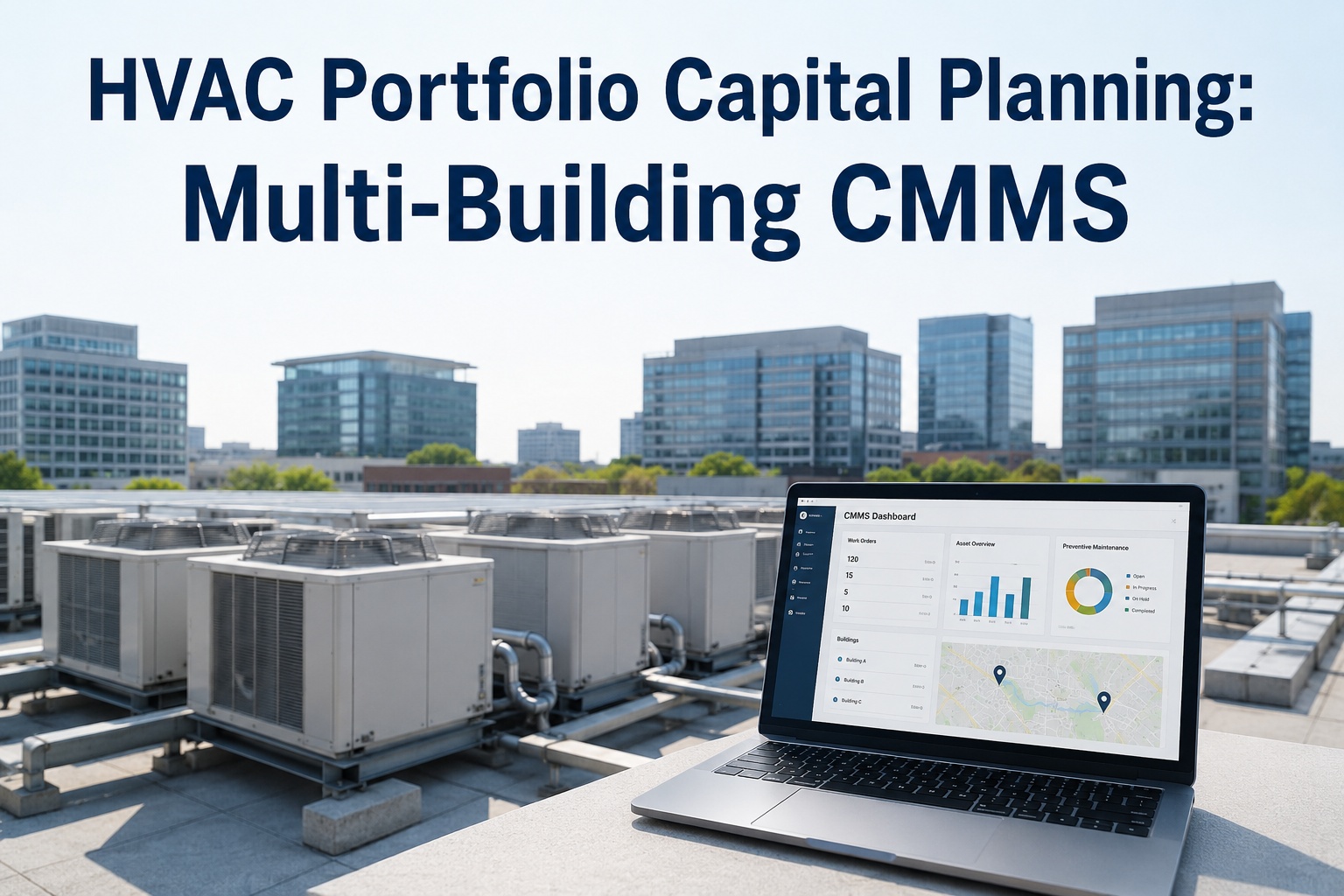
Your best HVAC technician just finished a $4,200 compressor replacement. The customer paid, shook hands, and walked away. You may never hear from them again—until the next emergency, which they might give to whoever answers the phone first. That single transaction generated revenue once. A service agreement on that same system would generate revenue every month for years, with predictable cash flow, lower customer acquisition costs, and a maintenance relationship that makes the next equipment sale almost automatic. Yet most HVAC contractors leave this money on the table. Industry surveys show that fewer than 35% of residential HVAC companies and under 50% of commercial contractors actively sell service agreements. The ones that do report 20–40% higher annual revenue per customer and dramatically lower seasonal revenue swings. The difference isn't technical skill—it's business model design.
$3.2B
Estimated U.S. HVAC service agreement market size, growing 8–10% annually
42%
Higher profit margins on service agreement revenue compared to one-time repair calls
78%
Of agreement customers purchase equipment replacements from their existing service provider
Why Recurring Revenue Changes Everything for HVAC Businesses
One-time service calls are unpredictable by nature. You can't forecast when a condenser will fail or when a customer will call about a noisy blower motor. That unpredictability creates the feast-or-famine revenue cycle that plagues most HVAC companies—slammed in summer and winter, scrambling for work in spring and fall. Service agreements flip that dynamic entirely. Instead of waiting for equipment to break, you're scheduling maintenance proactively, collecting monthly or annual fees regardless of weather patterns, and building a customer base that generates revenue whether or not something fails.
HVAC companies that sign up to manage service agreements digitally see the compounding effect within the first year: predictable monthly revenue, higher technician utilization during slow seasons, and a customer retention rate that makes growth arithmetic instead of guesswork. The math is straightforward—if you add 20 agreements per month at an average of $35/month, you're generating $8,400 in new monthly recurring revenue within a year. That's over $100,000 annually in predictable income that didn't exist before, and it compounds every year you retain those customers.
The Service Agreement Revenue Model: 6 Building Blocks
Building a profitable service agreement program isn't as simple as slapping a monthly fee on your existing maintenance services. The HVAC companies generating serious recurring revenue have engineered their agreements around six specific building blocks—each one designed to maximize both customer value and company profitability.
1
Tiered Agreement Design
Offer 3 tiers (Basic, Premium, Elite) with clear value differentiation—response time, parts coverage, PM frequency, and portal access
Three tiers capture 40% more revenue than single-option agreements by matching price to willingness to pay
2
Strategic Pricing
Price based on equipment type, age, criticality, and zone—not flat rates. Include monthly payment options to lower the commitment barrier
Monthly billing converts 2x more prospects than annual upfront pricing on residential agreements
3
Systematic Sales Integration
Present agreements at every service touchpoint—after installations, during repairs, at PM visits. Train every technician to introduce the offer
Technicians who present agreements at the point of service close at 3x the rate of follow-up sales calls
4
Automated Fulfillment
Use a CMMS to auto-generate PM work orders, schedule visits, assign technicians, and track every deliverable in the agreement
Automated scheduling ensures 100% of promised PM visits actually happen—the #1 driver of perceived value
5
Customer Portal Access
Give every agreement customer a portal showing their coverage, PM schedule, service history, and work order status in real time
Portal access increases perceived agreement value by making every service delivery visible to the customer
6
Renewal & Expansion Engine
Automate renewal reminders 90 days out, present upgrade options based on service history, and track expansion revenue per account
Automated renewals recover 20%+ of agreements that would otherwise lapse from simple inattention
Revenue Comparison: One-Time vs. Agreement-Based Service
The financial case for service agreements isn't theoretical—it shows up in every metric that matters to HVAC business owners. From revenue predictability to customer lifetime value, agreement-based models outperform transactional service in every category. The difference becomes more dramatic as your agreement base grows, because recurring revenue compounds while one-time revenue resets to zero every month.
Swipe to compare all columns
Sources: ACCA Contractor Profitability Report, Service Nation Alliance Benchmarking Data
The customer lifetime value difference alone makes the case. A one-time repair customer might generate $600 and never call again. An agreement customer generates steady monthly revenue, buys additional repairs at higher margins because trust is established, and purchases their next equipment replacement from you instead of getting three competing bids. Companies that sign up to automate their agreement management stop leaving this compounding revenue on the table and start building the predictable income stream that funds growth.
Build Predictable Revenue from Every HVAC Customer
OXmaint automates your entire service agreement lifecycle—from tiered pricing and digital enrollment to PM scheduling, customer portal access, and automated renewals. Stop chasing one-time calls and start compounding recurring revenue.
Pricing Your HVAC Service Agreements for Maximum Revenue
Pricing is where most HVAC companies either leave money on the table or scare customers away. The contractors building the strongest recurring revenue programs use tiered pricing that gives every customer a reason to say yes—and a reason to upgrade. The key is anchoring each tier to tangible value differences that justify the price gap, not just adding features for the sake of differentiation.
$79–$149/month | Highest Margin Tier
2-hour priority response, all parts & labor included, quarterly PMs, full portal access, no overtime charges, annual system report
$39–$69/month | Best-Selling Tier
Same-day response, labor included, semi-annual PMs, 15% parts discount, portal access with scheduling and history
$19–$35/month | Entry Point Tier
Next-day response, annual tune-up, 10% repair discount, priority over non-agreement customers, basic portal access
Pay Per Call | Standard Rates
Standard scheduling queue, full-price repairs, no PM visits, no portal access, no priority status
The "No Agreement" row isn't filler—it's the most important row in the matrix. When customers see what they don't get without an agreement, the Basic tier becomes the obvious minimum. And the Premium tier, positioned as the best value with its "most popular" appeal, captures the majority of sign-ups. Contractors that schedule a demo to see automated tier management can watch how the system handles tiered pricing, auto-applies discounts, and escalates response times based on agreement level—eliminating the manual tracking that makes multi-tier programs feel unmanageable.
KPIs for Measuring Service Agreement Revenue Health
Growing recurring revenue requires tracking different metrics than a transactional service business. The KPIs below tell you whether your agreement program is building sustainable income or just adding administrative overhead. Track these monthly, and you'll see exactly where to invest to accelerate growth.
Monthly Recurring Revenue (MRR)
Target: 30%+ of total revenue
Total monthly income from active service agreements. Growing MRR reduces dependence on seasonal demand and emergency calls.
Agreement Attach Rate
Target: 40%+ of eligible customers
Percentage of service interactions that result in a new agreement sign-up. Below 20% signals a sales process or training gap.
Annual Renewal Rate
Target: 80%+
Percentage of agreements renewed at expiration. Below 70% means customers aren't seeing enough value—review your fulfillment and communication.
Revenue Per Agreement
Target: Growing quarterly
Average total revenue per agreement including base fee plus additional repairs and upgrades. Measures upsell effectiveness and agreement profitability.
The most revealing metric is the ratio of MRR to total revenue. HVAC companies where recurring agreement revenue exceeds 30% of total income consistently report higher valuations, easier access to financing, and smoother cash flow through seasonal transitions. Teams that sign up for automated agreement tracking and analytics can monitor all four KPIs on a live dashboard—catching revenue leaks before they become quarterly shortfalls.
Expert Perspective: What Top HVAC Companies Do Differently with Agreements
The HVAC companies building the strongest recurring revenue don't treat service agreements as an add-on—they treat them as the core business. Every installation ends with an agreement offer. Every repair visit includes a conversation about ongoing coverage. Every agreement customer gets a portal login before the technician leaves the site. The shift isn't about selling harder. It's about making the agreement so visible and so valuable that not renewing feels like a worse decision than signing up. When your customers can see every PM visit, every dollar saved on parts, and every hour of priority response they've received, the agreement sells itself at renewal.
Sell at Every Touchpoint
Train technicians to present agreements after every repair and installation. The moment a customer sees the bill for a one-time fix is the moment they're most receptive to ongoing coverage.
Deliver More Than Promised
Send post-visit reports with photos. Share energy efficiency tips after tune-ups. Proactively flag aging equipment. Customers who feel over-served never cancel.
Automate the Entire Lifecycle
From sign-up to scheduling to renewal, every step should happen without manual intervention. Automation ensures no PM visit is missed and no renewal falls through the cracks.
The contractors generating the highest recurring revenue share a common infrastructure: a CMMS platform that automates agreement fulfillment from the first PM visit to the renewal notification, with a customer portal that makes every service interaction visible. If you're ready to build that infrastructure for your business, book a free demo to see the complete agreement-to-revenue workflow.
Start Building Recurring Revenue from Your HVAC Customer Base
OXmaint gives you the tools to design tiered agreements, automate PM scheduling, track every deliverable, and give customers a self-service portal that drives renewals. Join the HVAC companies turning one-time service calls into compounding monthly income.
Frequently Asked Questions
How much recurring revenue can HVAC service agreements generate?
The revenue potential depends on your customer base size, agreement pricing, and tier mix. A company adding 20 residential agreements per month at an average of $35/month generates over $100,000 in new annual recurring revenue within the first year. Commercial agreements typically range from $150–$500/month per building, scaling significantly higher. The compounding effect is what makes agreements powerful—year-two revenue includes both new sign-ups and renewals from year one, creating a revenue base that grows without proportional increases in sales effort.
What should HVAC service agreements include to maximize renewals?
Agreements that renew at the highest rates include visible, tangible value: scheduled PM visits that actually happen on time, priority response guarantees with documented SLA compliance, parts and labor discounts that customers can see applied on every invoice, and a customer portal where all service activity is accessible on demand. The single biggest renewal driver is demonstrated value—customers who can see that their agreement delivered exactly what was promised renew at rates above 85%. Agreements that feel invisible between visits renew below 60%.
How should I price HVAC service agreement tiers?
Price tiers based on equipment type, age, criticality, and the scope of coverage—not flat rates. A proven structure includes three tiers: a Basic tier ($19–$35/month) covering annual maintenance and repair discounts, a Premium tier ($39–$69/month) adding semi-annual PMs, labor inclusion, and enhanced portal access, and an Elite tier ($79–$149/month) with quarterly PMs, full parts and labor coverage, and priority response. Monthly billing converts significantly more prospects than annual upfront pricing. The Premium tier should be positioned as the best value to capture the majority of sign-ups.
How do I get technicians to sell service agreements in the field?
The most effective approach is making the agreement pitch a standard part of every service interaction—not an optional upsell. Provide technicians with a simple one-page comparison showing what the customer just paid versus what they would have paid under an agreement. Train them to present the offer immediately after completing a repair, when the customer is most aware of the cost and inconvenience of reactive service. Incentivize sign-ups with per-agreement bonuses. Companies using this approach report technician-driven agreement attach rates above 35%.
What role does a CMMS play in scaling HVAC service agreements?
A CMMS automates every operational element of agreement fulfillment: auto-generating PM work orders based on agreement terms, scheduling visits by technician availability and equipment location, tracking parts and labor against coverage limits, sending customer notifications before and after visits, and triggering renewal workflows 90 days before expiration. Without automation, most companies hit a ceiling around 100–150 active agreements before administrative overhead overwhelms their team. With a CMMS, that ceiling effectively disappears—companies manage thousands of agreements with the same administrative staff.