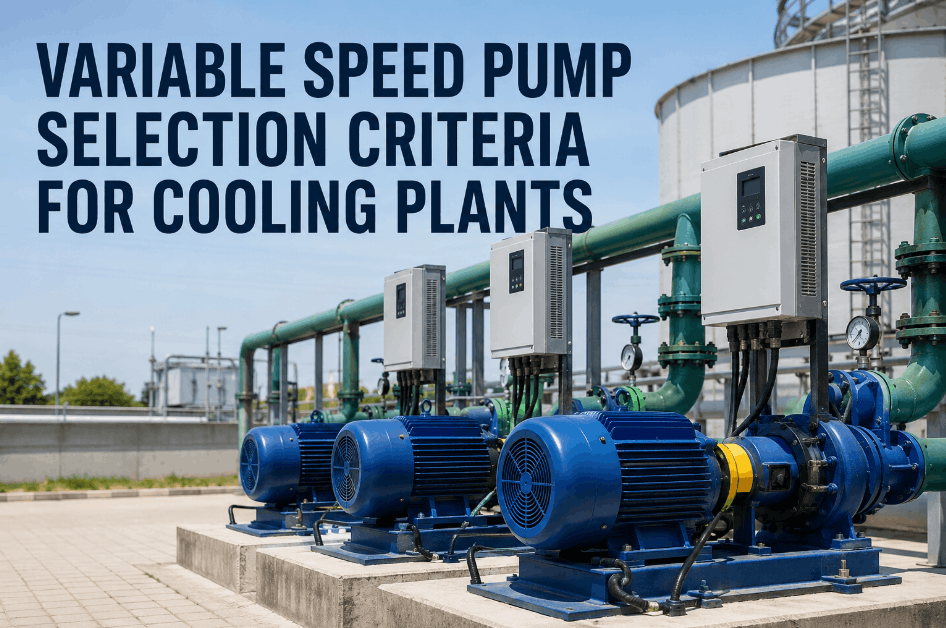
Variable speed pump selection for a chilled water plant rarely comes down to one spec sheet number — duty range, efficiency curve shape, redundancy requirements, and control system compatibility all pull engineers in different directions before a purchase order gets approved. Facility and plant teams using Sign Up Free on Oxmaint can register pump asset profiles with rated duty points, log performance data against connected sensor feeds, and compare lifecycle cost against existing equipment before a pump selection decision locks in years of operating cost. Getting variable speed pump selection right is what keeps a cooling plant efficient long after the procurement paperwork is filed.
Why Pump Selection Decisions Carry Long-Term Plant Risk
A pump that looks efficient on a single operating point can underperform across the rest of its duty range, and a selection made without redundancy planning leaves the plant exposed the first time a unit needs service. Book a Demo to see how Oxmaint links pump asset records to live sensor data so engineering teams can review real operating conditions before a replacement decision is finalized.
Five Factors That Drive Variable Speed Pump Selection Accuracy
Reliable pump selection means weighing the same criteria on every plant upgrade, not re-deriving the decision from a single vendor quote. Sign Up Free to start logging these criteria against your pump asset and plant records in Oxmaint.
Duty Range and Part-Load Performance
A pump sized only for peak design flow often runs inefficiently the rest of the year. Selection should weigh performance across the full range of expected operating conditions, not just the design point.
Efficiency Curve Shape Across Operating Conditions
Two pumps with the same peak efficiency rating can behave very differently at part load. The shape of the curve matters as much as the headline number on the spec sheet.
Redundancy and Standby Configuration
Selection decisions made without a redundancy plan leave critical loops exposed. Standby unit sizing and rotation strategy should be part of the original selection, not an afterthought.
Control System and VSD Compatibility
A pump that doesn't communicate cleanly with the existing building automation or VSD platform creates integration work that outlasts the original installation budget.
Lifecycle Cost Versus Purchase Price
The lowest quoted price rarely reflects the lowest total cost once energy use, maintenance frequency, and expected service life are factored into the comparison.
Pump Selection Risk by Plant Configuration
Selection risk isn't uniform across a plant — primary loop pumps that run continuously behave very differently from standby units that sit idle for months. Book a Demo to see how Oxmaint maps pump assets to plant configuration so engineering review effort goes where selection risk is highest.
| Configuration Type | Dominant Selection Factor | Selection Risk | Risk Level | Oxmaint Planning Lever |
|---|---|---|---|---|
| Primary Chilled Water Loops | Wide duty range demand | Part-load efficiency mismatch | High | Asset capacity profile comparison |
| Condenser Water Pumps | Variable flow with tower load | Curve mismatch at low load | Medium–High | Sensor performance logging |
| Secondary / Distribution Loops | Frequent flow modulation | VSD control compatibility | High | Work order history tracking |
| Standby / Redundant Units | Infrequent run cycles | Underused asset condition drift | Medium | PM scheduling for idle assets |
| Retrofit / Replacement Pumps | Matching legacy piping constraints | Spec mismatch with existing system | Critical | Lifecycle cost trend reporting |
How a Poor Pump Selection Decision Drives Operational Costs
When pump selection criteria get skipped or rushed, the costs show up well beyond the purchase price. Sign Up Free to connect pump asset data and plant performance records in Oxmaint and start building a selection process backed by real operating history.
Using Oxmaint to Standardize Pump Selection Across Plants
Selection accuracy improves once asset specs, sensor data, and plant history live in the same system instead of separate vendor spec sheets. Book a Demo to walk through how this roadmap fits your plant engineering process.
Register Pump Assets with Rated Duty and Capacity Profiles
Create asset records for existing and candidate pumps in Oxmaint with rated duty points, curve data, and redundancy configuration attached.
Log Sensor Data Against Real Operating Conditions
Connect pump assets to sensor feeds so actual flow, pressure, and run-time data is captured against the asset record, not estimated after the fact.
Track Work Order and Maintenance History by Pump Type
Log every service event against the specific pump asset so repair frequency and parts usage are visible when comparing models for the next selection cycle.
Compare Lifecycle Cost Across Candidate Pump Models
Use logged energy, maintenance, and parts data in Oxmaint to compare total cost of ownership instead of relying on purchase price alone.
Generate Performance Trend Reports for Capital Planning
Use Oxmaint reporting to identify pumps approaching end of efficient service life, supporting capital planning ahead of the next plant upgrade.
Frequently Asked Questions: Variable Speed Pump Selection
What criteria matter most when selecting a variable speed pump for a cooling plant?
Duty range, efficiency curve shape, redundancy needs, and control system compatibility are the four core criteria, with lifecycle cost weighing the final decision.
How does duty range affect long-term pump efficiency?
A pump sized only for peak load often runs inefficiently at part load, which is where most pumps spend the majority of their operating hours.
Why is redundancy planning part of pump selection?
Selecting a pump without a standby configuration leaves critical loops exposed the first time the primary unit needs service or fails unexpectedly.
How does Oxmaint support pump selection decisions?
Oxmaint links pump asset records to sensor data, work order history, and lifecycle cost tracking so engineering teams can compare options with real operating data.
Can pump performance data inform future capital planning?
Yes — trend reports built from logged pump history in Oxmaint help identify when aging equipment is signaling the need for a planned replacement.