A major automotive parts manufacturer lost $420,000 in a single week when their critical stamping press failed without warning. The maintenance team had been performing regular inspections, but they were relying on manual vibration checks and visual assessments that missed the subtle bearing degradation developing over months. Condition monitoring systems could have detected the problem 6-8 weeks earlier, allowing for planned maintenance during a scheduled shutdown. Modern manufacturing facilities using integrated condition monitoring report 70-85% fewer unexpected equipment failures and extend asset life by 30-50%. The difference between reactive firefighting and proactive reliability comes down to having the right monitoring technology continuously watching your critical equipment. Schedule a consultation to see how digital condition monitoring transforms manufacturing uptime.
Manufacturing Reliability
Condition Monitoring Systems for Manufacturing Plants
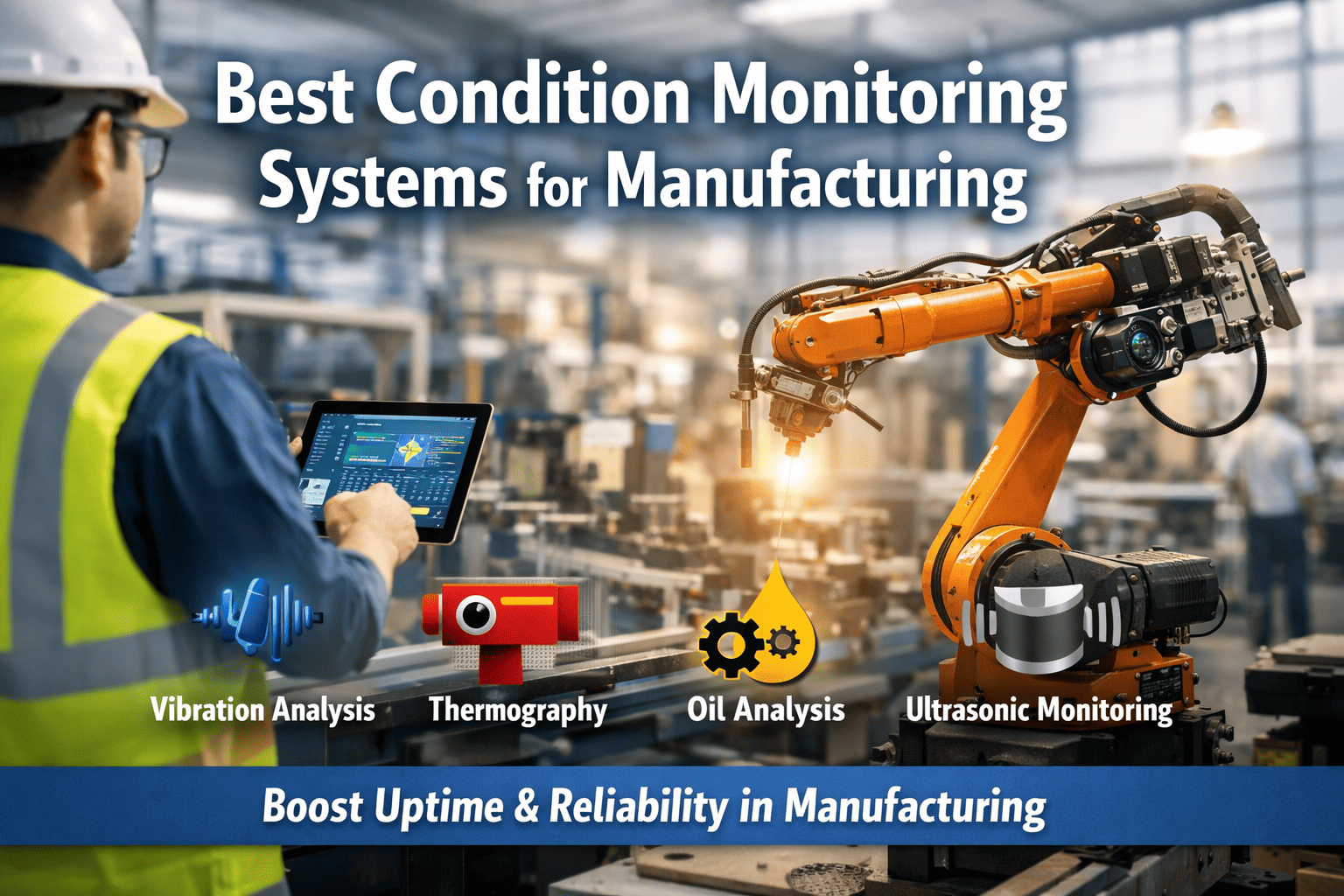
Real-time equipment health tracking through vibration analysis, thermal imaging, ultrasonic testing, and oil analysis to prevent failures before they happen
70-85%
Reduction in Unplanned Downtime
30-50%
Extended Equipment Lifespan
25-40%
Lower Maintenance Costs
24/7
Continuous Asset Monitoring
Why Traditional Inspections Miss Critical Equipment Failures
Walk-around inspections and scheduled oil changes kept factories running for decades, but modern manufacturing demands more. Production speeds have doubled, tolerances have tightened, and the cost of downtime has skyrocketed. A technician checking bearing temperature with a handheld thermometer once a month cannot detect the microscopic cracks forming inside a high-speed gearbox.
By the time human senses detect heat, noise, or vibration, the damage is already severe. Equipment operating at 3,600 RPM experiences 60 million stress cycles every 24 hours. A tiny imbalance or misalignment multiplies into catastrophic failure in weeks, not months. Manual inspections create dangerous blind spots between checks.
82%
of manufacturing equipment failures occur between scheduled inspections, when monitoring systems would have detected warning signs days or weeks earlier through continuous data collection and trend analysis.
Condition monitoring fills these gaps with sensors that never sleep, tracking hundreds of data points per second. These systems establish baseline performance signatures and immediately flag deviations that indicate developing problems. This shift from time-based to condition-based maintenance revolutionizes reliability.
Essential Condition Monitoring Technologies
Manufacturing plants need multiple monitoring technologies working together, as each technique reveals different failure modes and operates best on specific equipment types.
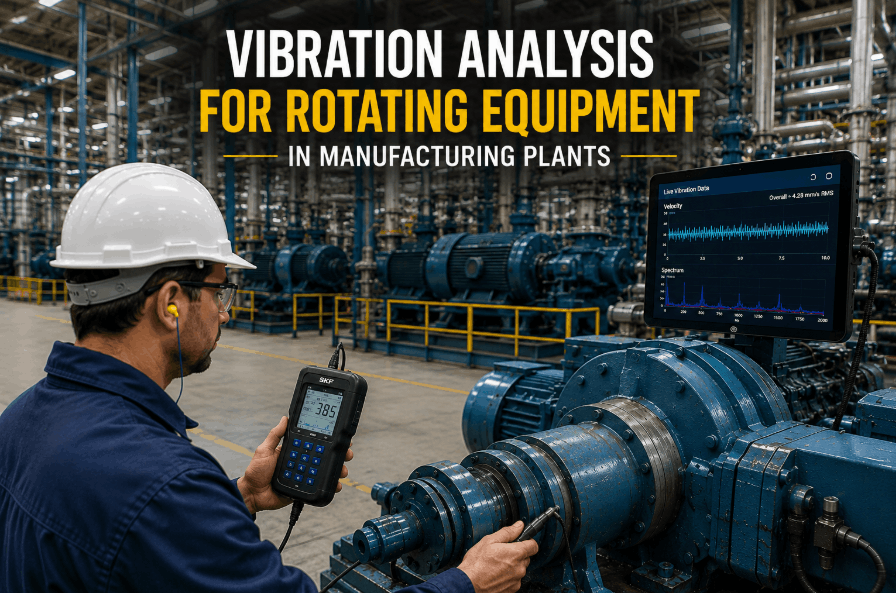
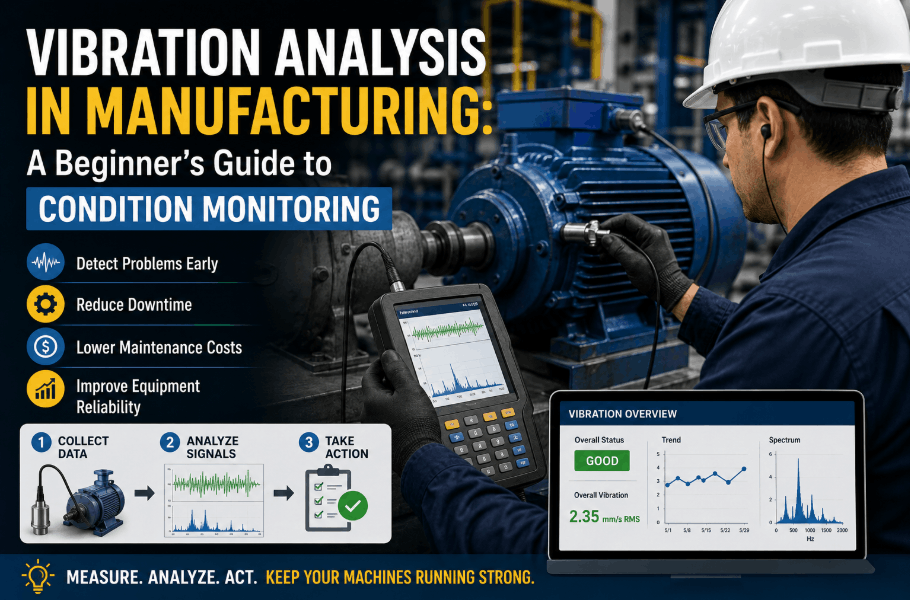
Accelerometers mounted on rotating equipment detect bearing wear, misalignment, imbalance, and looseness through frequency spectrum analysis. Critical for motors, pumps, compressors, and gearboxes running above 600 RPM.
Tri-axial sensors capture horizontal, vertical, and axial movement
FFT analysis identifies specific bearing fault frequencies
Velocity and acceleration trending predict failure windows
ISO 10816 severity standards for alarm thresholds
Infrared cameras and temperature sensors detect hot spots indicating electrical resistance, mechanical friction, or cooling system failures. Excellent for electrical panels, motor windings, and hydraulic systems.
Non-contact thermal scanning of energized equipment
Delta-T analysis compares similar components
Thermal pattern recognition for circuit board defects
Continuous RTD monitoring on critical bearings
High-frequency sound detection reveals friction, turbulence, and impact energy before vibration or heat become measurable. The earliest warning system for lubrication failures and steam trap leaks.
Acoustic decibel trending during bearing lubrication
Compressed air leak detection saves energy costs
Electrical corona and arcing detection
Valve internal leakage verification
Laboratory testing of lubricant samples identifies wear metals, contamination, and oil degradation. Essential for gearboxes, hydraulic systems, and compressors where internal wear is invisible.
Wear metal analysis (iron, copper, aluminum)
Viscosity breakdown and additive depletion tracking
Water and particulate contamination measurement
Acid number and oxidation trending
Monitoring current draw patterns detects rotor bar cracks, winding failures, and mechanical load issues without installing sensors on the motor itself. Non-invasive electrical signature analysis.
Phase current imbalance detection
Rotor bar defect identification through sidebands
Load fluctuation and mechanical binding alerts
Power quality and voltage distortion analysis
Hydraulic and pneumatic system health depends on maintaining proper pressures and flow rates. Sensor networks detect pump wear, filter clogging, and cylinder seal leakage before system failure.
Hydraulic system pressure drop trending
Filter differential pressure for clogging alerts
Pump flow rate degradation tracking
Accumulator precharge verification
Transform Reactive Maintenance Into Predictive Reliability
Oxmaint integrates all your condition monitoring data into one platform — vibration trends, thermal images, oil reports, and ultrasonic readings — with automated alerts and predictive failure analysis that prevents downtime before it starts.
Building an Effective Monitoring Strategy
Successful condition monitoring programs balance comprehensive coverage with practical implementation. Not every asset requires continuous monitoring, but critical equipment demands multiple redundant technologies.
1
Criticality Assessment & Asset Prioritization
Rank equipment by failure impact on production, safety, and costs. Focus permanent monitoring on assets where unplanned downtime exceeds $10,000 per hour or creates safety hazards. Medium-criticality equipment gets portable monitoring routes, while non-critical assets remain on time-based maintenance.
2
Baseline Development & Normal Signatures
Collect comprehensive baseline data when equipment is new or freshly rebuilt. Establish normal vibration spectra, operating temperatures, oil cleanliness levels, and ultrasonic signatures. These baselines become your reference for detecting abnormal changes that indicate developing failures.
3
Multi-Technology Coverage for Critical Assets
High-value rotating equipment needs vibration analysis plus temperature monitoring plus oil analysis. Redundant monitoring catches failures that single technologies miss. A motor with internal winding damage might show normal vibration but elevated current draw and temperature.
4
Alarm Thresholds & Escalation Protocols
Set three alarm levels: Alert (investigate within 7 days), Warning (schedule repair within 48 hours), and Danger (immediate shutdown consideration). Calibrate thresholds based on historical data to minimize false positives while catching genuine problems early.
5
Data Integration & Trend Visualization
Centralize all monitoring data in a CMMS that overlays vibration trends with maintenance history and production schedules. Technicians need dashboards showing equipment health at a glance, not spreadsheets requiring manual analysis.
6
Continuous Program Improvement & ROI Tracking
Document every failure prevented, comparing monitoring costs against avoided downtime expenses. Quarterly reviews identify monitoring gaps on equipment that failed unexpectedly. Adjust sensor placement, alarm settings, and inspection frequencies based on real performance data.
Common Equipment Monitoring Applications
Different manufacturing assets require specialized monitoring approaches based on their failure modes, operating conditions, and criticality to production continuity.
Electric motors driving conveyors, mixers, and process equipment need vibration monitoring for bearing health plus motor current analysis for winding and rotor integrity. Thermal imaging catches connection hot spots and cooling fan failures.
Recommended: Vibration sensors, current monitoring, thermal scans quarterly
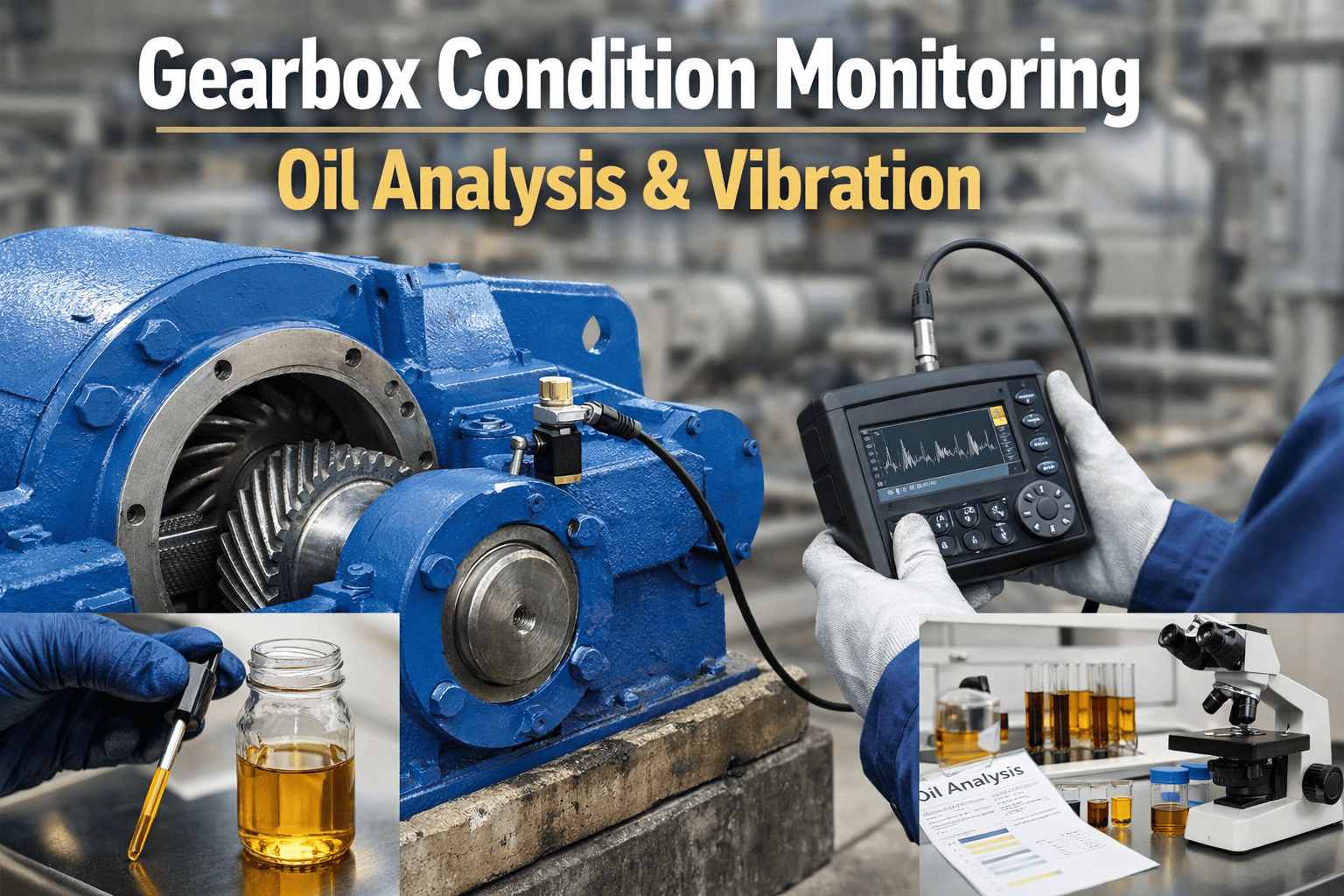
Enclosed gears require oil analysis for wear metal trending and vibration analysis for gear tooth mesh failures. Ultrasonic monitoring detects lubrication starvation before heat or vibration spike.
Recommended: Quarterly oil samples, monthly vibration, acoustic lubrication verification
Hydraulic systems demand pressure monitoring, oil cleanliness analysis, and pump vibration tracking. Temperature sensors on reservoir and return lines detect inefficient operation and internal leakage.
Recommended: Continuous pressure sensors, quarterly oil analysis, thermography
Compressors benefit from vibration analysis on bearings, thermal monitoring of intercoolers, and ultrasonic leak detection on distribution systems. Oil analysis tracks contamination in lubricated types.
Recommended: Permanent vibration sensors, monthly thermal scans, annual leak surveys
Large HVAC and process cooling equipment uses vibration monitoring for fan imbalance and bearing wear. Flow sensors detect pump degradation and thermal imaging reveals scale buildup reducing heat transfer efficiency.
Recommended: Monthly vibration routes, flow rate logging, semi-annual thermal imaging
High-precision spindles require extremely sensitive vibration analysis to detect bearing preload loss and thermal growth issues. Acoustic emission monitoring catches micro-cracks in cutting tool holders.
Recommended: Continuous spindle vibration, daily thermal checks, acoustic monitoring
Centralize Equipment Health Data In One Platform
Stop juggling spreadsheets, handheld analyzer files, and lab reports. Oxmaint creates a unified equipment health dashboard with automated trend analysis, failure prediction algorithms, and mobile data collection that turns monitoring data into maintenance decisions.
Implementation Roadmap & Budget Planning
Rolling out condition monitoring requires phased investment and careful technology selection to maximize ROI while building internal expertise.
Phase 1: Critical Equipment Audit (Month 1-2)
Budget: $5,000-$15,000
Conduct reliability-centered maintenance analysis identifying top 20 critical assets. Document current failure modes, downtime costs, and existing monitoring gaps. Establish baseline KPIs for MTBF and maintenance costs.
Phase 2: Portable Monitoring Program (Month 3-6)
Budget: $15,000-$40,000
Deploy handheld vibration analyzers, thermal cameras, and ultrasonic instruments. Train technicians on data collection routes covering all critical and high-priority equipment monthly. Build baseline vibration and thermal signatures.
Phase 3: Fixed Sensor Installation (Month 7-12)
Budget: $30,000-$100,000
Install permanent wireless vibration sensors, temperature RTDs, and pressure transducers on top 5-10 critical assets. Integrate sensors with SCADA or CMMS for continuous monitoring and automated alarming.
Phase 4: Advanced Analytics & Optimization (Year 2)
Budget: $20,000-$60,000 annually
Implement predictive analytics software that uses machine learning to forecast failure windows. Expand oil analysis program to quarterly testing. Add motor current signature analysis on VFD-driven equipment.
Frequently Asked Questions
What is the typical ROI timeline for condition monitoring systems?
Most manufacturers see ROI within 12-18 months through avoided downtime and extended component life. A single prevented failure on critical equipment often pays for the entire monitoring system.
Calculate your potential savings based on current downtime costs.
Which monitoring technology should we implement first?
Start with vibration analysis using portable route-based collection on rotating equipment. Vibration monitoring catches 60-70% of mechanical failures and requires minimal initial investment. Add thermal imaging second for electrical systems and motor monitoring.
How much training do maintenance technicians need?
Basic vibration analysis certification takes 40-80 hours of training. Most technicians become proficient in portable data collection within 2-3 months. Advanced diagnostics and spectrum analysis require Level II or III vibration analyst certification over 6-12 months of study and practice.
Can condition monitoring work on older equipment without sensors?
Absolutely. Portable monitoring tools work on any accessible equipment regardless of age. Magnetic-mount accelerometers, infrared cameras, and ultrasonic detectors require no permanent installation.
Speak with our team about retrofitting strategies for legacy assets.
What differentiates good monitoring software from basic data logging?
Advanced platforms automatically detect anomalies, predict failure timelines using trend analysis, and integrate with CMMS to trigger work orders. Basic loggers just store numbers. Quality software turns raw sensor data into actionable maintenance decisions with minimal manual analysis required.
How do wireless sensors handle harsh manufacturing environments?
Industrial-grade wireless vibration and temperature sensors feature IP67 or IP68 enclosures protecting against dust, moisture, and temperature extremes. Battery life ranges from 3-7 years depending on transmission frequency. Mesh network protocols ensure reliable data transmission even through metal structures.
Stop Reacting To Failures. Start Predicting Them.
Oxmaint brings enterprise-grade condition monitoring to manufacturers of all sizes. Our platform integrates vibration analysis, thermal imaging, oil reports, and ultrasonic data into one intelligent system that predicts failures weeks in advance and automatically schedules preventive interventions.