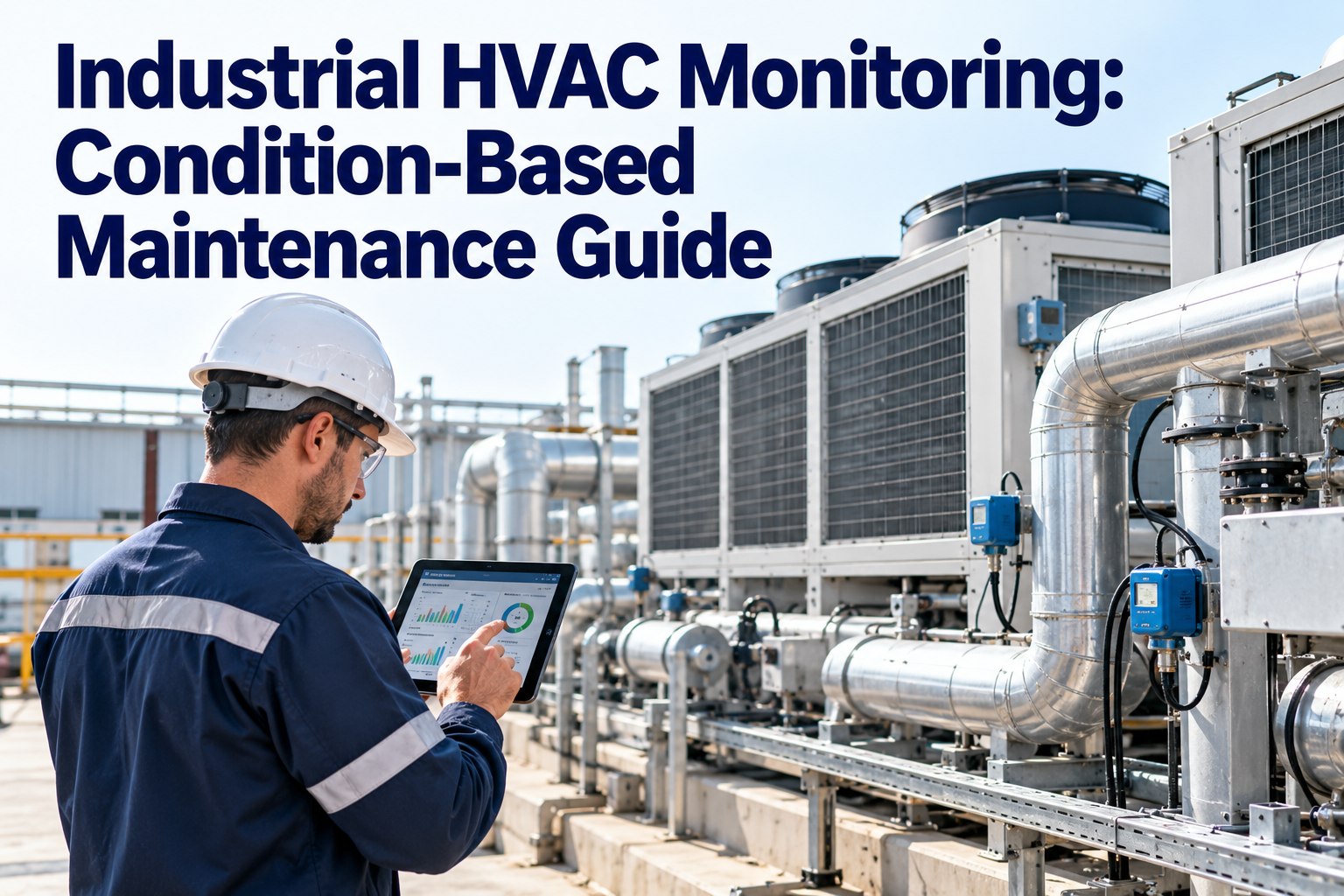
Manufacturing facilities depend on chillers to maintain critical process temperatures, protect equipment, and ensure product quality. When chillers fail unexpectedly, the consequences ripple across production lines—spoiled batches, equipment damage, and costly emergency repairs. AI-powered predictive maintenance transforms chiller management from reactive firefighting to proactive optimization, detecting potential failures weeks before they occur and reducing unplanned downtime by up to 85%. Schedule a consultation to discover how AI analytics can revolutionize chiller reliability at your facility.
Why Predictive Maintenance for Chillers Matters
Industrial chillers are complex systems with multiple failure points—compressors, condensers, evaporators, and control systems all require continuous monitoring. Traditional maintenance approaches rely on fixed schedules or wait-until-failure strategies, both of which leave significant reliability gaps and waste maintenance resources.
$180K
Average cost of a single unplanned chiller failure including production losses, emergency repairs, and product spoilage
85%
Reduction in unplanned downtime achieved through AI-powered predictive maintenance systems
30%
Decrease in maintenance costs by eliminating unnecessary preventive tasks and optimizing repair timing
25%
Extension in chiller lifespan through early detection and correction of degradation patterns
Ready to eliminate unexpected chiller failures? Join leading manufacturers using AI to predict and prevent equipment breakdowns before they impact production.
Sign Up Free
How AI Predicts Chiller Failures
AI-powered predictive maintenance combines IoT sensor networks, machine learning algorithms, and historical failure data to identify degradation patterns invisible to human operators. The system continuously learns from your specific equipment behavior, improving prediction accuracy over time.
01
IoT Sensor Integration
Vibration sensors, temperature probes, pressure transducers, and power monitors capture real-time data from compressors, condensers, evaporators, and refrigerant circuits at millisecond intervals.
02
Edge Data Processing
Industrial edge computers perform initial signal processing, feature extraction, and anomaly detection locally—ensuring critical alerts trigger immediately without cloud latency.
03
Machine Learning Analysis
Neural networks trained on millions of chiller operational patterns identify subtle degradation signatures—bearing wear, refrigerant leaks, fouling, and electrical issues—weeks before failure.
04
Predictive Alerts & Work Orders
When degradation thresholds are exceeded, the system automatically generates prioritized maintenance work orders with specific repair recommendations.
Sign up for Oxmaint to integrate predictive alerts with your maintenance workflow.
Common Chiller Failures AI Can Predict
AI analytics excel at detecting the early warning signs of chiller component failures that traditional monitoring methods miss. Each failure mode has distinct signatures in vibration, temperature, pressure, and electrical data that machine learning models can identify with high accuracy.
Compressor Bearing Wear
Vibration pattern analysis detects bearing degradation 4-8 weeks before failure. AI identifies specific frequency signatures indicating inner race, outer race, or rolling element damage.
Refrigerant Leaks
Pressure differential trends and superheat/subcooling analysis reveal refrigerant losses of less than 5% charge. Early detection prevents compressor damage and efficiency losses.
Condenser Fouling
Heat transfer degradation analysis correlates condenser approach temperature with ambient conditions, identifying fouling progression and optimal cleaning timing.
Evaporator Issues
Flow rate and temperature differential monitoring detects tube fouling, freeze-ups, and low flow conditions before they cause capacity reduction or equipment damage.
Electrical Degradation
Power quality analysis and motor current signature analysis identify winding insulation breakdown, phase imbalance, and contactor issues weeks before electrical failures.
Oil System Problems
Oil pressure trends and temperature patterns reveal lubrication issues, oil breakdown, and separator problems that lead to compressor failures if unaddressed.
Want to see AI predictions for your chillers? Book a personalized demo and we will show you how predictive analytics work for your specific equipment.
Book a Demo
Key Monitoring Parameters
Comprehensive chiller monitoring requires tracking dozens of parameters across mechanical, thermal, electrical, and refrigerant systems. AI models correlate these variables to build a complete picture of equipment health.
Traditional vs. AI-Powered Maintenance
Understanding the fundamental differences between traditional maintenance approaches and AI-powered predictive systems reveals why forward-thinking manufacturers are making the transition.
Traditional Maintenance
- Fixed-schedule preventive maintenance regardless of actual condition
- Reactive repairs after failures occur
- Manual inspections miss subtle degradation
- No correlation between operating conditions and wear
- High spare parts inventory for emergencies
15-20%
of maintenance budget wasted on unnecessary work
AI Predictive Maintenance
- Condition-based maintenance triggered by actual degradation
- Failures predicted 4-8 weeks in advance
- 24/7 automated monitoring catches all anomalies
- AI correlates load, ambient, and wear patterns
- Just-in-time parts ordering reduces inventory
85%
of failures predicted before occurrence
ROI of Predictive Chiller Maintenance
AI-powered predictive maintenance delivers measurable returns through multiple value streams—reduced downtime, lower maintenance costs, extended equipment life, and improved energy efficiency.
Reduction in unplanned downtime
Extended equipment lifespan
Energy efficiency improvement
Calculate your potential savings. Create a free Oxmaint account and our team will help model the ROI for your specific chiller fleet.
Sign Up Free
Industry Applications
AI-powered chiller predictive maintenance delivers value across every industry where cooling is critical to operations. Each sector has unique requirements that the platform adapts to automatically.
Implementation Timeline
Deploying AI-powered predictive maintenance follows a structured approach that delivers quick wins while building toward comprehensive monitoring coverage.
Week 1-2
Assessment
Chiller inventory and criticality ranking
Existing sensor evaluation
Integration requirements
Week 3-4
Sensor Deployment
IoT sensor installation
Edge gateway setup
Data connectivity testing
Week 5-6
AI Training
Baseline data collection
Model calibration
Alert threshold tuning
Week 7+
Live Monitoring
Predictive alerts activated
CMMS integration
Continuous optimization
Predictive maintenance is not about replacing your maintenance team—it is about giving them superpowers. When technicians know exactly what is degrading and how long they have to fix it, they can plan repairs around production schedules instead of scrambling during emergencies.
— Manufacturing Plant Manager
Transform Chiller Reliability with AI
Stop reacting to chiller failures and start predicting them. Oxmaint connects your chiller sensors to powerful AI analytics that detect degradation patterns weeks before failures occur—generating automatic work orders, optimizing maintenance schedules, and eliminating unplanned downtime.
Frequently Asked Questions
How far in advance can AI predict chiller failures?
For most mechanical failures like bearing wear and compressor issues, AI can provide 4-8 weeks advance warning. Electrical failures and refrigerant leaks are typically detected 2-4 weeks ahead. The prediction window depends on failure mode and degradation rate.
Schedule a consultation to learn how prediction timelines apply to your equipment.
What sensors are required for predictive maintenance?
Basic predictive capabilities require vibration sensors on compressors, temperature probes at key points, and pressure transducers on refrigerant circuits. Many modern chillers have built-in sensors that can be integrated. Our assessment identifies which sensors you have and what additions deliver the best ROI.
Can predictive maintenance integrate with our existing CMMS?
Yes. Oxmaint integrates with major CMMS platforms through APIs and standard protocols. Predictive alerts automatically generate work orders in your existing system with detailed diagnostic information and repair recommendations.
Sign up for a free account to explore integration options.
How accurate are AI predictions for chiller failures?
After the initial training period, prediction accuracy typically exceeds 90% for major failure modes. The system continuously learns from your specific equipment behavior, improving accuracy over time. False positive rates are typically below 5% after calibration.
What is the typical ROI timeline for implementation?
Most facilities see positive ROI within 6-12 months through avoided downtime and reduced emergency repairs. Facilities with critical cooling requirements or high downtime costs often achieve payback in 3-6 months.
Book a demo to discuss ROI projections for your operation.