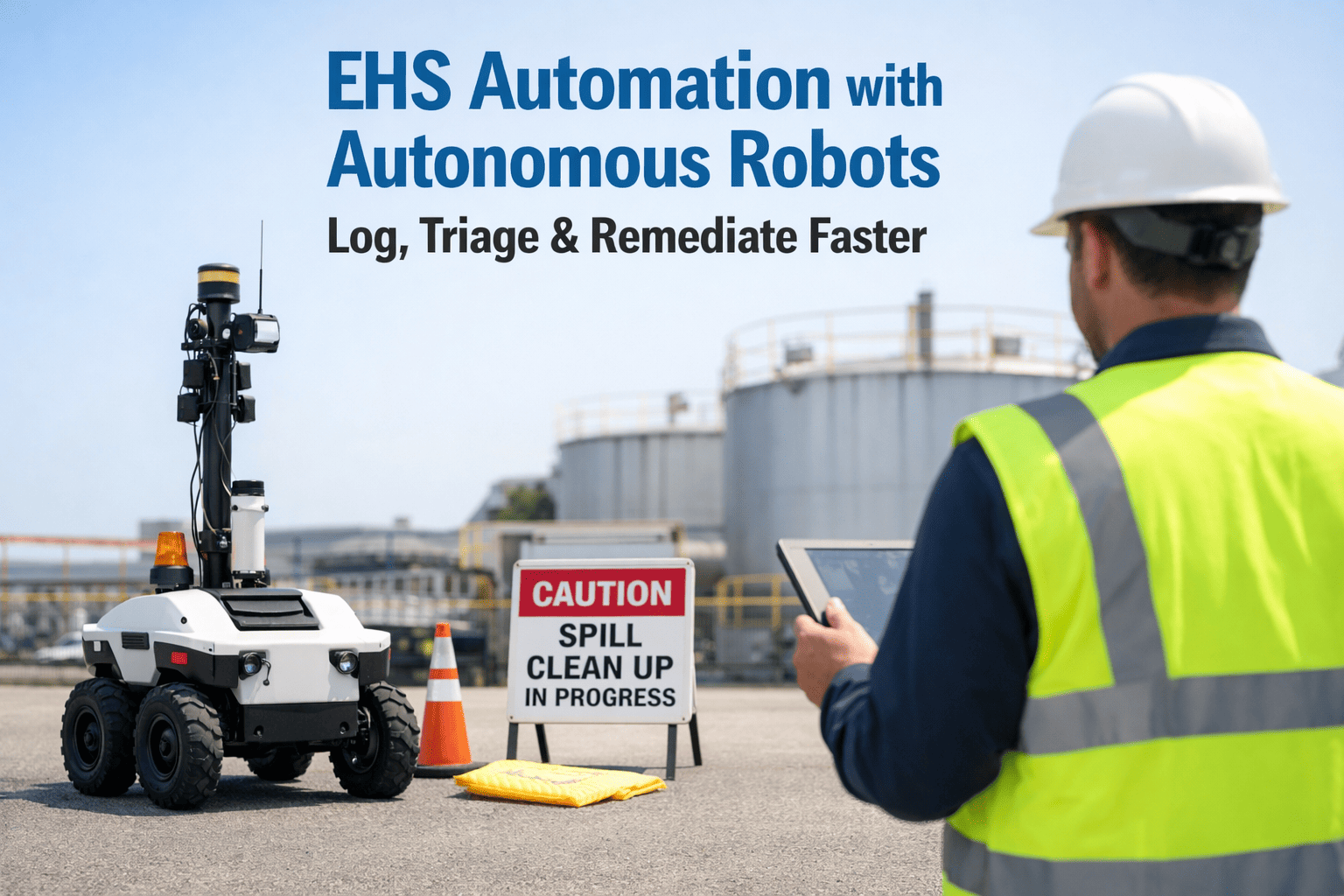
Every year, steel plants report hundreds of serious injuries and dozens of fatalities worldwide — many of them during routine safety inspections in high-risk zones near blast furnaces, coke ovens, and rolling mills. In 2024 alone, the World Steel Association recorded 67 fatalities across its member companies, with falls from height and contact with hazardous substances among the leading causes. What if those routine inspections never required a human to enter the danger zone at all? ANYmal, a four-legged autonomous inspection robot, is making that possible — walking patrol routes through the most hazardous areas of steel plants, capturing thermal, visual, and acoustic data at every checkpoint, and feeding findings directly into a CMMS platform to trigger immediate corrective action. Sign up for Oxmaint to see how robotic inspection data flows into automated maintenance workflows.
67
Global steel industry fatalities reported in 2024 — many during routine inspections in high-risk zones
80%
Reduction in worker exposure to hazardous substances when robotic patrols replace manual walks
270+
Inspection points covered daily by a single ANYmal robot at Outokumpu's steel facility
What Makes Steel Facilities So Dangerous for Manual Inspections
Steel manufacturing involves extreme conditions that no amount of PPE can fully neutralize for human inspectors. Blast furnace zones reach temperatures well above 1,000°C, coke oven batteries emit toxic gases including methane and carbon monoxide, and rolling mill areas present constant risks from heavy moving equipment and molten metal splashes. The 2025 explosion at U.S. Steel's Clairton Coke Works — which killed two workers during a routine gas valve maintenance procedure — underscored how even well-established facilities face catastrophic risks when humans interact directly with aging infrastructure in hazardous zones.
Manual safety walks compound these risks. Inspectors working near blast furnaces experience heat stress that limits patrol duration. Night shifts produce inconsistent observation quality. And paper-based or spreadsheet-driven EHS logging means hazards discovered at 2 AM may not become work orders until the following business day — if they get logged at all. For steel operations serious about proactive hazard management, book a demo to see how Oxmaint eliminates the gap between hazard detection and corrective action.
Extreme Heat Zones
Blast furnaces, ladle transfer areas, and reheating furnaces exceed 1,000°C. Human inspectors face heat exhaustion within minutes, limiting patrol coverage and observation quality.
Toxic Atmosphere
Coke oven operations produce methane, hydrogen, carbon monoxide, and volatile organic compounds. Prolonged exposure requires specialized respiratory equipment and strict time limits.
Mechanical Hazards
Rolling mills, cranes, conveyors, and heavy transport vehicles operate continuously. Inspection routes cross active production zones where visibility and noise are severe constraints.
Stop sending workers into danger zones for routine checks. Oxmaint connects robotic inspection data to automated work orders and EHS records — keeping your team safe and your compliance audit-ready.
Inside the ANYmal Patrol: Sensors, Navigation, and Real-Time Detection
ANYmal is not a concept robot — it is commercially deployed in steel production facilities today. Outokumpu, one of Europe's largest stainless steel producers, operates three ANYmal robots across sites in Germany, Sweden, and Finland, each handling up to 90 inspection checkpoints per shift. The robot's quadruped design, trained through reinforcement learning, allows it to climb industrial stairs, traverse grated walkways, and navigate the cluttered, multi-level environments that define steel plant layouts — terrain that wheeled robots simply cannot handle.
Detection Range: -40°C to 550°C
Identifies overheating bearings, refractory failures, steam leaks, and electrical hotspots without physical contact. Critical for monitoring equipment adjacent to furnaces where surface temperatures indicate early-stage degradation invisible to the naked eye.
Frequency: 0 — 384 kHz (ultrasonic)
Captures bearing wear signatures, compressed air leaks, and abnormal vibration patterns in rotating equipment. Ultrasonic frequencies reveal faults that audible-range inspection methods miss entirely, especially in high-ambient-noise steel environments.
Pan-Tilt: ±90° vertical, ±165° horizontal
Reads analog gauges, verifies valve positions, documents corrosion, captures safety signage compliance, and records housekeeping conditions. A 3,790-lumen LED spotlight enables full inspection capability in complete darkness.
360° LiDAR + 6 Depth Cameras
SLAM-based localization enables autonomous route execution across complex, multi-floor facilities. The robot avoids obstacles, reroutes around temporary obstructions, and returns to its docking station for recharging without human intervention.
From Patrol Data to Maintenance Action: The CMMS Connection
Collecting hazard data is only valuable if it reaches the right people and triggers the right response — fast. Without a direct connection between robotic inspection output and your maintenance management system, patrol findings sit in a separate dashboard, waiting for someone to review, interpret, and manually create work orders. That delay defeats the purpose of real-time detection. When ANYmal's patrol data feeds directly into your CMMS, every detected anomaly becomes an actionable maintenance task within minutes. Sign up for Oxmaint to connect robotic inspection output to automated work orders.
Hazard-to-Resolution Workflow
1
ANYmal Detects Anomaly
Thermal spike on conveyor bearing at checkpoint #47 — 38°C above baseline
2
Data Transmitted to CMMS
Thermal image, location tag, timestamp, severity score, and historical trend data pushed to Oxmaint via API
3
Work Order Auto-Generated
Priority maintenance task created with inspection evidence attached, assigned to the correct technician and shift
4
EHS Record Logged
Incident documented in compliance database with audit trail — ready for OSHA, ISO 45001, or internal review
5
Remediation Verified
Next patrol confirms repair completion — thermal reading returns to baseline, work order closed with before/after evidence
See the full detection-to-resolution loop in action. Our team will walk you through how Oxmaint processes robotic inspection findings into prioritized work orders and compliance-ready EHS logs.
Automated EHS Logging That Auditors Actually Trust
One of the most persistent challenges in steel plant safety management is proving inspection consistency. Human-led safety walks produce variable documentation quality — some inspectors are thorough, others skip checkpoints under time pressure, and paper-based records are difficult to verify during audits. Autonomous patrols solve this by generating identical, sensor-backed inspection transcripts for every single patrol run, every shift, every day.
What Gets Logged — Automatically
Real-World Results: Outokumpu's Robotic Safety Program
Outokumpu, a global stainless steel producer, became the first steel company to operationally deploy ANYmal robots for safety inspections. Starting in 2023, the company placed robots at three production sites — Krefeld (Germany), Avesta (Sweden), and Tornio (Finland) — targeting areas with high noise, dust, vibration, and chemical exposure. The results demonstrate what happens when autonomous patrols replace manual inspections in the most hazardous zones of a steel operation.
1,890
Inspection points covered weekly at the Avesta facility by a single robot — across acid areas that previously required extensive PPE and time-limited human entry
80%+
Estimated reduction in worker exposure to hazardous substances by transferring routine inspection tasks to robots
20%
Projected reduction in maintenance interventions related to hazardous repairs, thanks to early anomaly detection from continuous thermal monitoring
Use of AI and robotics for safety management is one of the cornerstones of our safety strategy. The robot technology helps us increase safety by reducing employee exposure to hazardous substances and environments, optimize production through preventive maintenance, and decrease environmental impacts.
— Thorsten Piniek, VP Health and Safety, Outokumpu
Where Autonomous Patrols Create the Most Value in Steel Operations
Not every area of a steel facility benefits equally from robotic inspection. The highest return comes from zones where human access is restricted, observation windows are narrow, and the consequences of missed hazards are severe. Here is where autonomous safety walks deliver outsized impact. Sign up for Oxmaint to ensure every robotic finding becomes a tracked, resolved maintenance action.
Hazards monitored: Refractory lining temperature, cooling system integrity, gas leak indicators, structural stress
Patrol frequency: Every 4 hours — impossible to sustain with human teams at this cadence
CMMS action: Thermal trend alerts trigger predictive maintenance before lining failures cause unplanned shutdowns
Hazards monitored: Gas accumulation, valve condition, structural cracking, temperature anomalies
Patrol frequency: Every shift — covering zones where the 2025 U.S. Steel explosion originated from a routine valve procedure
CMMS action: Valve condition reports auto-generate inspection work orders with photographic evidence
Hazards monitored: Bearing temperatures, belt alignment, guard conditions, lubrication leaks
Patrol frequency: Continuous during production — robot patrols alongside active operations
CMMS action: Acoustic anomaly scores trigger bearing replacement before catastrophic failure
Hazards monitored: Electrical hotspots, cable degradation, water intrusion, ventilation status
Patrol frequency: Daily — covering low-traffic areas that manual rounds frequently skip
CMMS action: Thermal scans of switchgear create preventive maintenance schedules based on degradation patterns
Turn Every Patrol Into a Safer Plant
Oxmaint transforms robotic inspection data into prioritized maintenance actions, automated EHS logs, and compliance-ready documentation — all in a single platform built for steel and heavy manufacturing operations.
Frequently Asked Questions
Can ANYmal safely operate near active blast furnaces and molten metal zones?
ANYmal is IP67-rated for dust and water resistance and designed for harsh industrial environments. While it patrols perimeter and adjacent zones rather than directly over molten metal, it effectively covers conveyor areas, utility corridors, structural walkways, and equipment rooms where the majority of detectable hazards develop before causing major incidents.
How does robotic patrol data connect to our existing CMMS or EHS software?
ANYmal's inspection findings can be integrated with Oxmaint via API, pushing anomaly reports, sensor data, and inspection transcripts directly into your work order management system. Each detection event auto-generates a prioritized task with evidence attached.
Book a demo to see the integration flow in detail.
Does this approach meet OSHA and ISO 45001 compliance requirements?
Yes. The combination of timestamped, GPS-tagged, sensor-verified patrol transcripts and Oxmaint's structured record-keeping produces documentation that satisfies OSHA general industry standards and ISO 45001 occupational health and safety management system requirements. Every patrol creates auditable proof of inspection frequency, coverage, and corrective actions taken.
Will autonomous robots replace our human safety inspectors?
No — autonomous patrols handle the repetitive, high-frequency, and hazardous inspection tasks, freeing safety professionals to focus on investigation, root cause analysis, training, and strategic EHS program development. The robot ensures nothing is missed between human-led audits and management reviews.
What does it take to get started with robotic inspections and CMMS integration?
A typical pilot starts with mapping high-risk patrol routes, configuring inspection checkpoints, and connecting the data feed to your CMMS. Oxmaint's team helps configure work order templates, EHS logging rules, and alert thresholds specific to your steel operation.
Sign up for a free account and our team will walk you through the setup process.