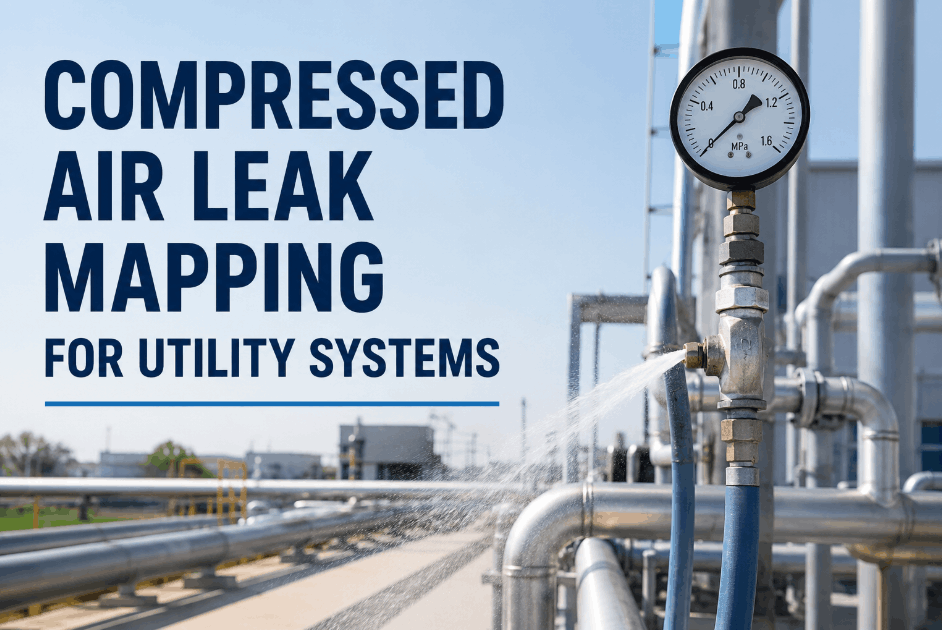
Compressed air is one of the most expensive utilities in a plant, and most leaks never get fixed in the order that actually saves the most money — they get fixed in the order someone happens to notice them. Leak prioritization ranks every known leak by audible loss, pressure drop, and runtime waste, so repair crews spend their time on the leaks draining the budget fastest instead of the ones nearest the walkway. Sign Up Free to start logging and ranking compressed air leaks in a connected CMMS, or Book a Demo to see how Oxmaint turns leak detection into prioritized work orders, and Book a Demo with your own utility map if you want a tailored walkthrough.
Energy Efficiency · Compressed Air Systems · 2026
Fix the Leaks That Are Actually Costing You Money
Oxmaint ranks compressed air leaks by pressure drop and runtime waste, so your repair crew targets the highest-cost leaks first instead of the most visible ones.
80%Less manual inspection time with AI-assisted leak detection
99.2%Detection accuracy on thermal and audible anomaly scans
62%Less unplanned downtime when utility issues are caught early
3xFaster repair prioritization by ranked runtime waste
What Goes Into a Leak Priority Score
Audible Loss
Signal: Hiss or whistle intensity
DetectionLogged at the point of discovery, often the first clue a leak exists before any measurement is taken.
Pressure Drop
Signal: PSI loss at the line
SeverityMeasures how much system pressure the leak is costing, a direct indicator of repair urgency.
Runtime Waste
Signal: Compressor hours wasted
CostEstimates how many extra compressor-running hours the leak forces across a shift, tying directly to energy cost.
Line Criticality
Signal: Downstream equipment
RiskLeaks on lines feeding critical production equipment rank higher than leaks on non-critical branches.
Thermal Signature
Signal: AI Vision Camera scan
AI ScanCamera-based thermal and visual anomaly detection finds leaks that audible walk-throughs miss.
Repair Effort
Signal: Access and parts needed
EffortBalances savings potential against how quickly the leak can realistically be repaired.
Most plants run an annual leak survey, log results on paper, and lose the data before the repair crew ever sees it. Sign Up Free and Oxmaint logs every detected leak directly into a ranked work order queue, combining AI Vision Camera scans with manual ultrasonic survey data so nothing gets lost between detection and repair. Book a Demo to see how leak ranking connects to your existing compressed air survey process, or Sign Up Free to set up your own leak priority queue.
Annual Leak Survey vs. Continuous Prioritized Repair
Rank Every Leak by What It's Actually Costing You.
Oxmaint turns leak detection into a prioritized work order queue based on pressure drop, runtime waste, and line criticality.
Frequently Asked Questions
How should compressed air leaks be prioritized?
Rank leaks by pressure drop, estimated runtime waste, and the criticality of the line they're on, so repair time goes to the leaks costing the most first.
Can Oxmaint detect leaks automatically?
Yes — the AI Vision Camera scans for thermal and visual anomalies continuously, supplementing manual ultrasonic surveys with always-on detection.
How is leak data turned into a work order?
Every detected leak is logged against the asset and line, then automatically ranked and routed into the maintenance queue as a prioritized work order.
Does leak tracking connect to energy cost reporting?
Yes — runtime waste estimates from each leak feed Oxmaint's analytics and reporting, giving a running view of energy cost impact.
Stop Losing Compressed Air to Guesswork.
Oxmaint ranks and routes every detected leak automatically. Free to start.