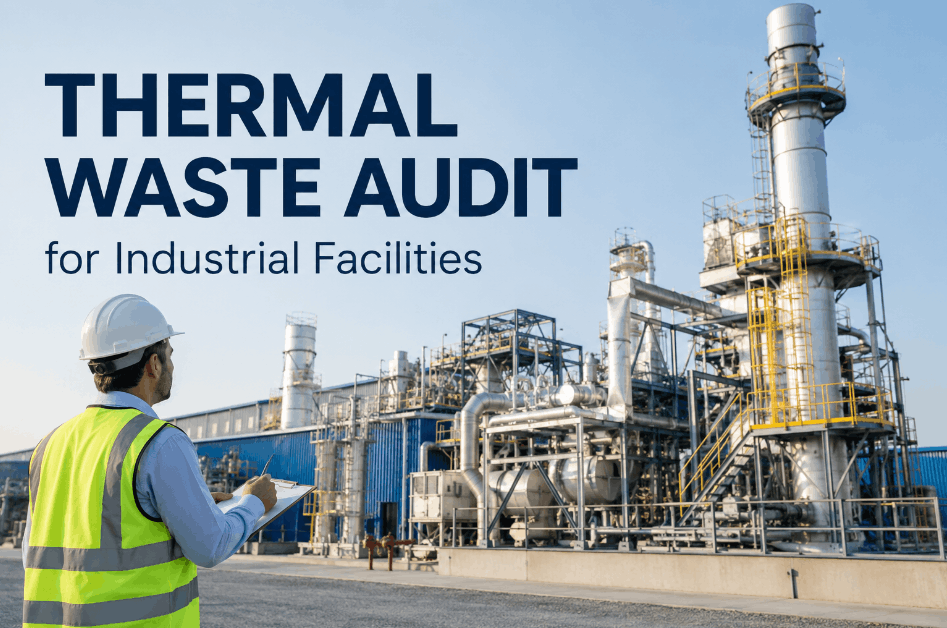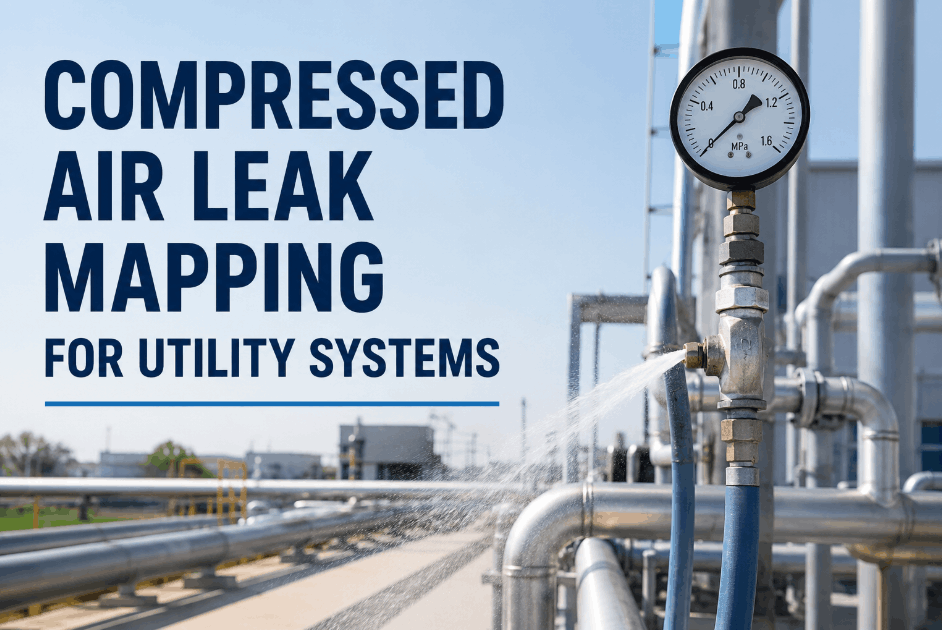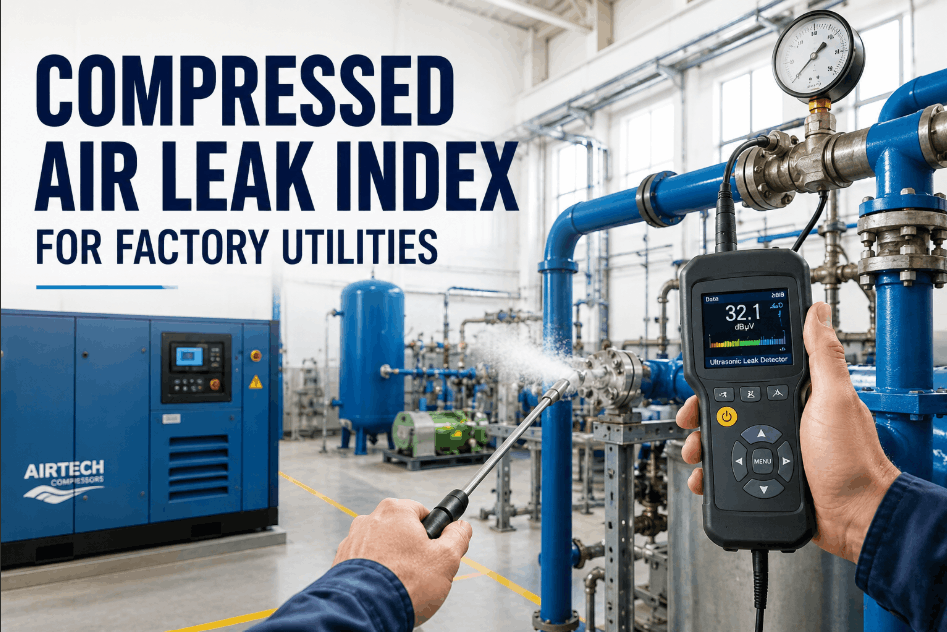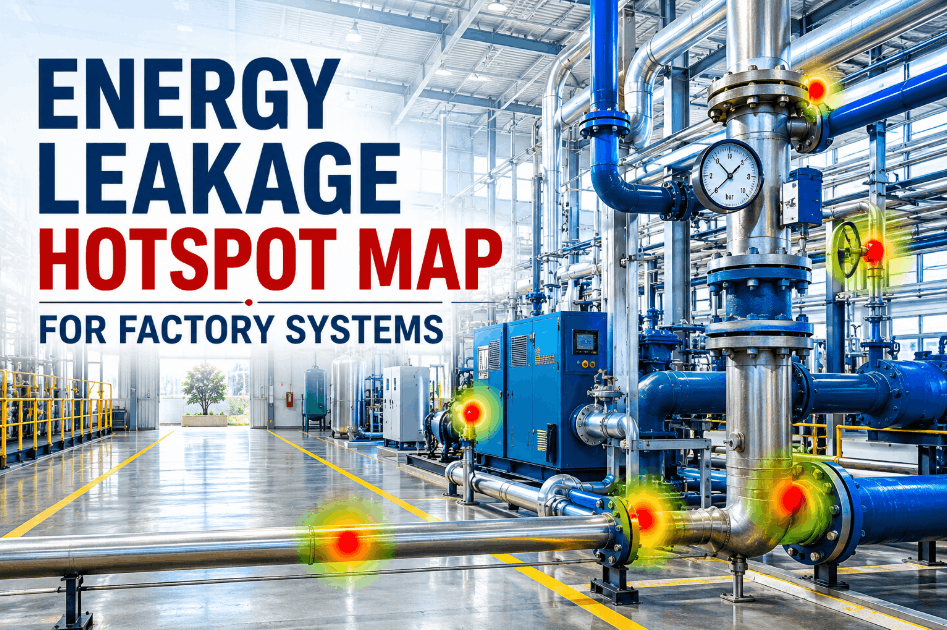
Energy losses in factory environments rarely announce themselves. Compressed air leaks develop gradually over months. Steam trap failures allow live steam to bypass heat exchangers without triggering alarms. Power distribution inefficiencies compound quietly across motor control centres and distribution panels. The cumulative result is a utility cost structure that is consistently higher than it should be — and a set of avoidable losses that remain invisible until someone maps them. Energy leakage hotspot mapping is the process of systematically identifying where compressed air, steam, and power losses are occurring across factory systems — quantifying their cost impact and prioritising corrective maintenance by the value of the waste being eliminated. Sign Up Free to start capturing energy-related inspection and corrective work orders in Oxmaint. Oxmaint AI helps maintenance teams schedule energy leakage inspections, capture field findings, and manage corrective work orders through to closure — building the audit trail that turns hotspot identification into documented energy savings. Book a Demo to see how Oxmaint tracks energy leakage inspection and repair compliance across your factory utility systems.
Map Where Your Factory's Energy Is Leaking Before It Disappears into Cost
Oxmaint AI helps maintenance teams schedule energy leakage inspections, capture hotspot findings, and manage corrective work orders — building a documented energy loss map that maintenance managers can act on and finance teams can measure against utility savings.
Why Energy Leakage Hotspots Stay Hidden in Factory Systems
Gap #1
No Systematic Inspection
Compressed air and steam leakage inspections are performed reactively after visible symptoms appear — rather than on scheduled rounds that would catch developing losses before they compound into significant energy cost.
Gap #2
Loss Pathway Unquantified
When leakage is identified, the energy loss is rarely quantified in cost terms — so corrective work orders compete for resources against other maintenance tasks without a business case anchored to the value of the waste being stopped.
Gap #3
Corrective Work Not Tracked
Leakage repairs are completed but not recorded against the original inspection finding — making it impossible to confirm which hotspots have been corrected, what savings were realised, and which losses remain unaddressed.
Gap #4
No Hotspot Priority Ranking
Multiple leakage points are identified across a facility but there is no structured method to rank them by energy loss value — so maintenance resources may be directed at small losses while larger ones continue unaddressed.
Gap #5
Steam Trap Failure Invisible
Failed-open steam traps pass live steam continuously but produce no visible symptom at the trap itself — requiring systematic thermographic or ultrasonic inspection to detect losses that otherwise continue indefinitely at significant cost.
Gap #6
Savings Never Documented
Even when leakage reduction programs deliver measurable energy savings, the work is never tied to a documented baseline and corrective record — making it impossible to report achieved savings to management or build the case for continued investment.
How Oxmaint AI Supports Energy Leakage Hotspot Management
01
Inspection Route Setup
Build scheduled energy leakage inspection routes in Oxmaint covering compressed air distribution, steam trap populations, and power distribution assets — with inspection frequency linked to system pressure, criticality, and historical loss rates.
→
02
Hotspot Field Capture
Inspectors capture leakage findings in the Oxmaint mobile app — recording location, loss severity, estimated energy cost, and photographic evidence directly against the asset record in real time.
→
03
Corrective Work Order Management
Oxmaint automatically generates corrective work orders from hotspot findings — ranked by energy loss value and assigned to the appropriate maintenance team with target completion dates and parts requirements pre-populated.
→
04
Savings Documentation
Completed corrective work orders close the loop on each hotspot record — building a documented baseline-to-correction audit trail that quantifies energy savings achieved and supports ongoing investment in leakage reduction programs.
What Oxmaint Captures Per Energy Leakage Inspection Record
Inspection Data Layer
Leakage location and asset linked per inspection finding
Loss severity and estimated energy cost captured per hotspot
Photographic and measurement evidence attached to finding record
Corrective Workflow
Corrective work orders auto-generated from inspection findings
Hotspot priority ranking driven by energy loss value
Work order closure linked back to original inspection finding
Energy Performance
Open hotspot backlog tracked by energy loss value at risk
Corrected hotspot savings documented against baseline measurement
Repeat leakage rate tracked per asset and system zone
Operational Outcome
Energy leakage hotspots identified, ranked, and corrected systematically
Utility cost savings documented and reportable to management
Leakage recurrence detected early through scheduled re-inspection
25%
Of industrial compressed air generation is lost to leakage in facilities without active inspection and repair programs
3.4×
Higher energy leakage repair completion rate when corrective work orders are generated automatically from inspection findings
48hrs
Typical deployment time from Oxmaint setup to first scheduled energy leakage inspection work orders dispatched in field
90days
Average time to measurable reduction in compressed air generation load and steam consumption after structured leakage program deployment
Oxmaint AI vs Standard CMMS for Energy Leakage Management
Standard CMMS — Reactive Energy Leak Response
Leakage identified reactively after visible symptoms rather than through scheduled inspection rounds
Loss severity not quantified in cost terms — no business case anchoring corrective work order priority
Corrective repairs completed but not linked back to original inspection finding or savings baseline
No hotspot priority ranking — resources directed by availability rather than energy loss value
Steam trap and compressed air losses accumulate untracked between ad-hoc inspection events
Energy savings from leakage programs never documented — no reportable outcome for management or finance
Oxmaint AI — Systematic Energy Leakage Control
Scheduled inspection routes cover all compressed air, steam, and power distribution assets on regular cycles — Sign Up Free
Energy loss cost estimated per hotspot — corrective work orders ranked by value of waste eliminated
Every corrective work order linked to its originating inspection finding and savings baseline
Hotspot priority dashboard shows open losses ranked by energy cost — highest value addressed first
Steam trap and compressed air inspection routes managed on recurring schedules with compliance tracking
Documented savings reports generated per program period — reportable to management and finance teams
6 KPIs to Measure Energy Leakage Hotspot Program Effectiveness
These KPIs give maintenance and energy managers measurable evidence that the leakage hotspot program is reducing energy waste and delivering documented utility cost savings. Book a Demo to see how Oxmaint tracks all six automatically across your factory energy systems.
KPI 01
Open Hotspot Backlog Value
Total estimated energy cost of identified but uncorrected leakage hotspots across the facility. Declining backlog value confirms that corrective work is outpacing new leakage detection and that the program is reducing energy waste at a net rate.
Loss Exposure
KPI 02
Hotspot Correction Rate
Percentage of identified leakage hotspots corrected within their target work order completion window. Low correction rates indicate that leakage repairs are not being prioritised adequately against other maintenance demand.
Repair Compliance
KPI 03
Energy Savings Achieved per Period
Documented utility cost reduction attributed to corrected leakage hotspots in each reporting period. The primary output metric for justifying continued investment in inspection resources and program maintenance.
Savings Documentation
KPI 04
Inspection Route Compliance Rate
Percentage of scheduled energy leakage inspection rounds completed on time. Missed inspections create gaps in the hotspot detection cycle, allowing new losses to accumulate undetected between inspection periods.
Inspection Discipline
KPI 05
Repeat Leakage Rate by Asset
Percentage of previously corrected leakage points that recur within a defined period. High repeat rates on specific assets or system zones indicate that root cause corrections are needed rather than ongoing repair cycles.
Root Cause Signal
KPI 06
Steam Trap Failure Rate
Percentage of steam traps found failed on inspection rounds, segmented by trap type and service condition. Sustained high failure rates on specific trap types signal a procurement or specification issue rather than a maintenance execution gap.
Steam System Health
Industries Using Oxmaint for Energy Leakage Hotspot Management
Process Manufacturing
Compressed Air and Steam Leakage Control Across Continuous Plants
Chemical and plastics manufacturers use Oxmaint to schedule compressed air and steam leakage inspection rounds across reactor areas, compressor houses, and heat exchanger networks — capturing hotspot findings and managing corrective work orders to documented closure. Sign Up Free for your process facility.
Automotive Manufacturing
Air Leakage Hotspot Mapping Across Paint and Assembly Lines
Automotive plants use Oxmaint to manage systematic compressed air leakage inspection across paint booths, robot lines, and assembly tooling — prioritising corrective work by the energy loss value of each hotspot to maximise the impact of available maintenance resource. Book a Demo for your facility.
Food and Beverage
Steam and Compressed Air Loss Control for Production Efficiency
F&B manufacturers use Oxmaint to schedule steam trap inspection rounds and compressed air leakage audits across production, CIP, and packaging areas — linking corrective work orders to hotspot findings and documenting the utility savings achieved for ISO 50001 energy management reporting.
Pharmaceuticals
Utility Loss Control in Regulated Manufacturing Environments
Pharmaceutical manufacturers use Oxmaint to manage energy leakage inspection and corrective work order records in GMP environments — building the documented audit trail that demonstrates active utility loss control as part of facility qualification and energy compliance programs.
Energy Is Leaking Out of Your Factory. Oxmaint Helps You Map It and Fix It.
Oxmaint AI enables maintenance teams to schedule systematic energy leakage inspections, capture and rank hotspot findings, manage corrective work orders to closure, and document the energy savings achieved — turning leakage identification into a reportable, repeatable maintenance program. Book a Demo to see how energy leakage tracking works across your factory utility systems.
Frequently Asked Questions
What is an energy leakage hotspot map and why does it matter for factory operations?
An energy leakage hotspot map identifies and quantifies the specific locations where compressed air, steam, or power losses are occurring across factory systems. Without this map, energy waste accumulates invisibly — adding to utility costs that appear as a fixed overhead rather than a controllable maintenance problem. Systematic hotspot mapping converts energy losses into prioritised corrective work orders with measurable savings outcomes.
How does Oxmaint help maintain energy leakage inspection compliance?
Oxmaint schedules energy leakage inspection rounds on recurring cycles, dispatches inspection work orders to field technicians via mobile, and tracks completion compliance — alerting maintenance managers when inspection rounds are overdue and building the record of systematic inspection that energy management programs and ISO 50001 audits require.
Can Oxmaint link energy leakage findings to corrective work orders automatically?
Yes. When a technician captures a leakage finding in the Oxmaint mobile app, the system can automatically generate a corrective work order linked to that finding — pre-populated with asset details, estimated loss value, and priority ranking so corrective resources are directed to the highest-value leakage points first.
How do I document energy savings achieved from leakage repairs in Oxmaint?
Oxmaint links corrective work order closure back to the originating inspection finding and its estimated energy loss value — creating a documented savings record per hotspot that can be aggregated into periodic energy savings reports for management, finance, and ISO 50001 energy management system documentation.
Does Oxmaint support steam trap inspection programs in addition to compressed air leakage?
Yes. Oxmaint manages scheduled inspection rounds for steam trap populations — capturing failed trap findings, generating corrective work orders, and tracking repair completion against the steam trap asset register. The system maintains a documented inspection and repair history for each trap that supports both energy management reporting and regulatory compliance requirements.
Stop Paying for Energy That's Leaking Out of Your Utility Systems.
Oxmaint AI gives maintenance teams the tools to schedule systematic leakage inspections, capture and rank hotspot findings, manage corrective work to closure, and document the savings achieved — turning energy waste into a measurable, manageable maintenance program.