The belt drifts to one side, then an edge starts to fray, then the line stops mid-shift. Afterwards everyone agrees there were signs: a squeal last week, a bit of spillage, a motor running warm. The signs were seen but never turned into a job. Troubleshooting a conveyor is half diagnosis and half making sure the finding gets acted on. OxMaint AI connects both in one maintenance platform, from the operator's report to the inspection, the work order and the preventive schedule.
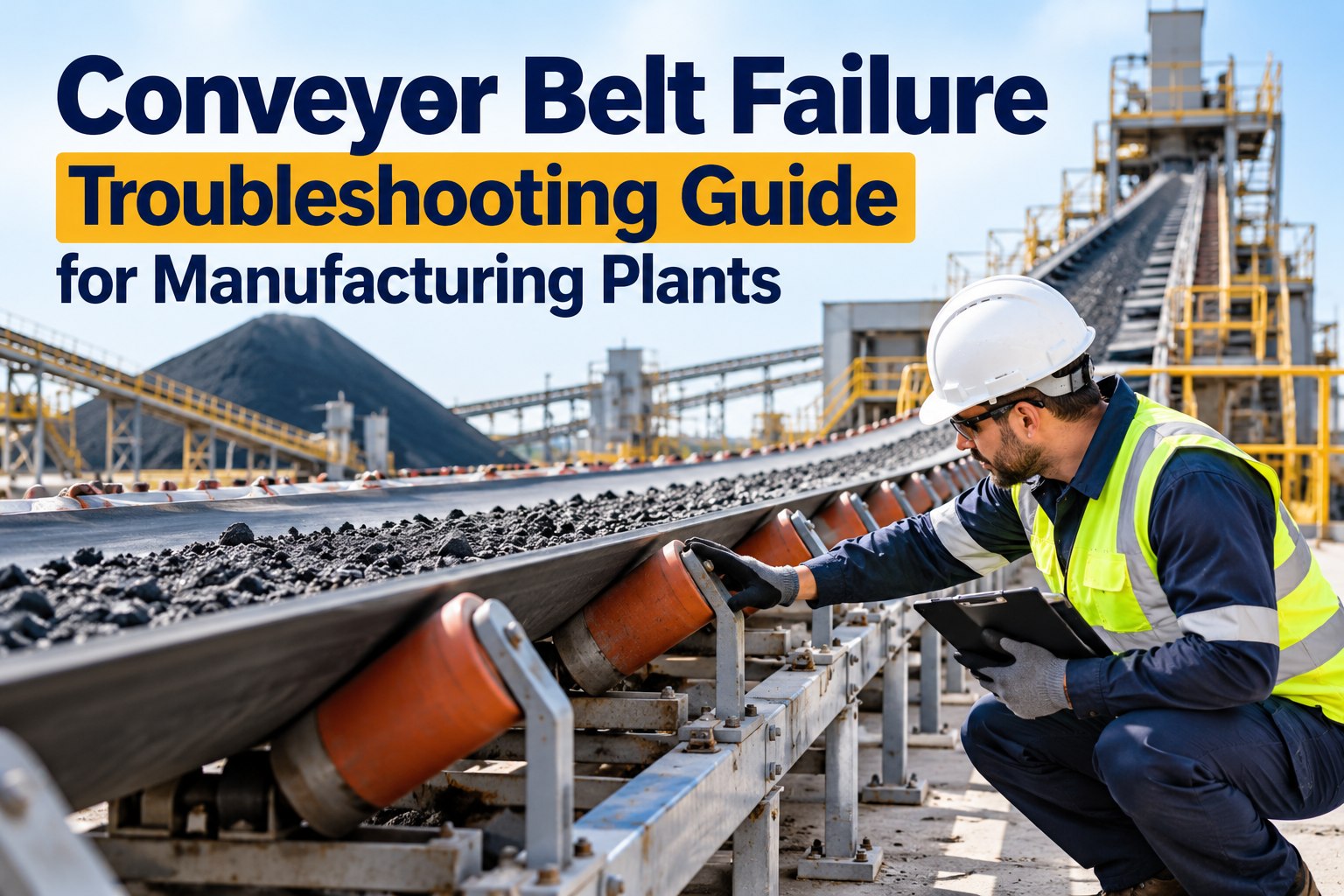
Conveyor Belt Failure Troubleshooting Guide for Manufacturing Plants
Find the symptom, check the likely cause, decide how urgent it is, and log the fix so it doesn't come back. OxMaint AI links the whole path in one platform: operator requests and inspections raise issues, issues become work orders, and the history feeds preventive and predictive maintenance.
Faster issue-to-work-order action for every conveyor in the plant.
Start Here: Match the Symptom
Each card gives the likely causes, what to check first, and how urgent it is. Always lock out the conveyor before putting hands near it. Start free and log each finding as an issue.
Check: loading point, roller condition, take-up tension, frame squareness.
Check: contact points, guards, rollers near the damage, splice condition.
Check: take-up, lagging wear, pulley surface, load against rating.
Check: idler rotation by hand, bearing temperature, lubrication.
Check: skirt seals, cleaner blade wear, transfer point alignment.
Check: current draw, oil level and condition, shaft alignment, roller drag.
Check: wear pattern, splice, impact beds, pulley condition.
Check: splice fasteners or bond, tension, pulley condition.
Walk the Line: A Five-Point Inspection Route
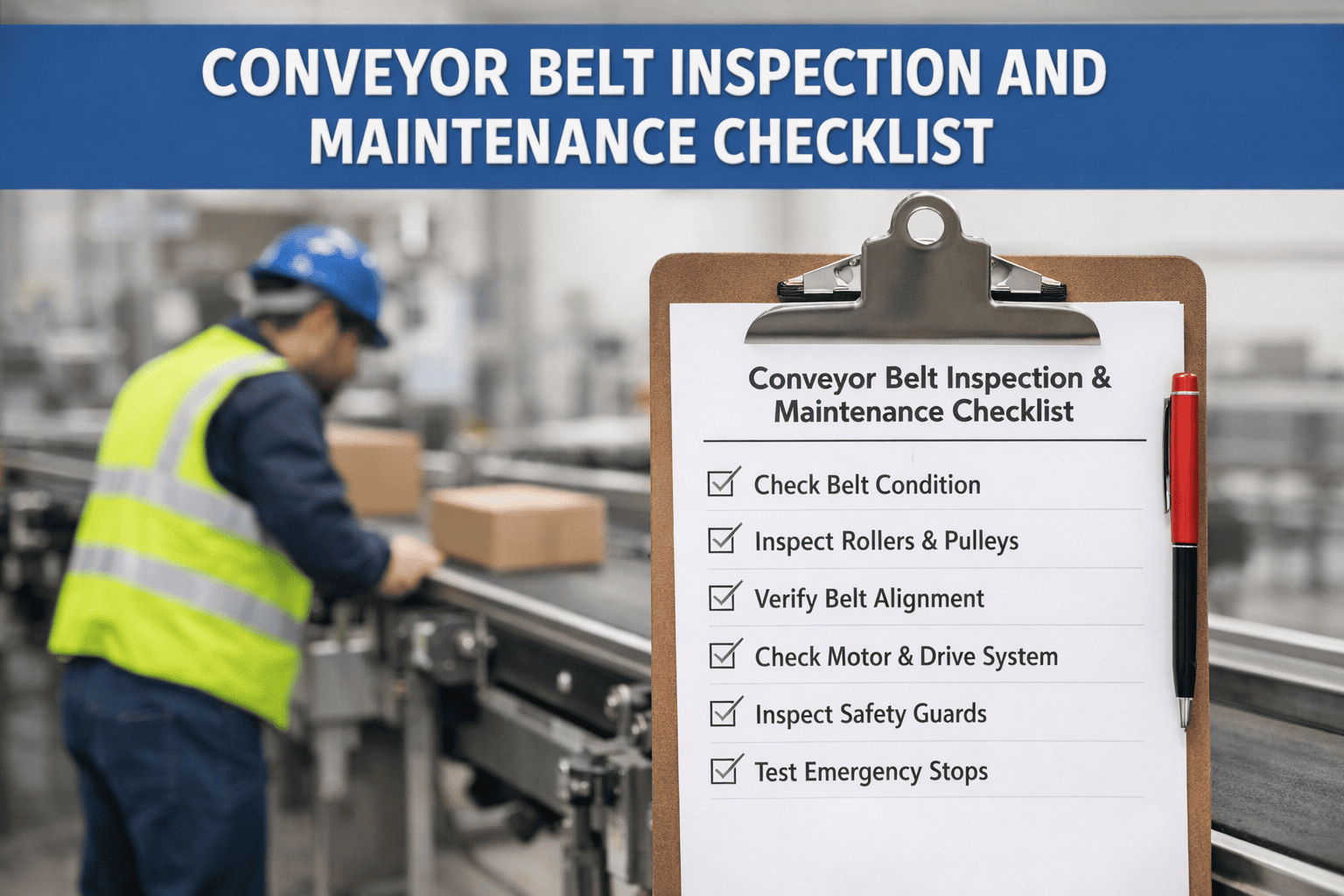
A consistent route catches what random glances miss. Put it on a mobile checklist so findings with photos go straight into the system. Book a demo to see mobile conveyor inspections.
The Squeal Was Heard. The Work Order Was Never Written.
Most conveyor failures leave early evidence. OxMaint AI lets an operator report it in seconds, assigns it, tracks it to closure and keeps the history on that conveyor.
Catch It Early: Condition Monitoring Signals
Preventive maintenance follows the calendar. Condition monitoring follows the equipment. The signals below are the practical ones for conveyors. Start free and trend them per asset.
| Signal | Where to measure | What a change suggests |
|---|---|---|
| Vibration | Drive motor, gearbox, pulley bearings | Bearing wear, misalignment, looseness |
| Temperature | Bearings, motor, gearbox housing | Lubrication loss, overload, seizing |
| Motor current | Drive | Rising load, roller drag, slip |
| Belt speed / slip | Tail or snub pulley vs drive | Loss of traction, low tension |
| Tracking / edge position | Along the run | Misalignment, uneven loading |
| Visual condition | Photos on rounds | Wear pattern, damage progression |
Preventive Maintenance by Interval
Set intervals from the manufacturer's guidance and your own failure history, and adjust by duty. Time-based and usage-based triggers both work. Book a demo to load your conveyor PMs.
- Walk the route
- Listen for noise
- Check tracking and spillage
- Confirm guards and pull cords
- Idler rotation check
- Scraper and skirt wear
- Take-up tension
- Lubricate per schedule
- Gearbox oil sampling
- Pulley and lagging inspection
- Splice and belt thickness check
- Alignment and structure
Close the Loop: From Failure to Fix
Frequently Asked Questions
Stop Repeating the Same Breakdown.
Every conveyor failure teaches something. Capture it as an issue, fix it with a work order, and let the history shape your next PM, all in one platform.