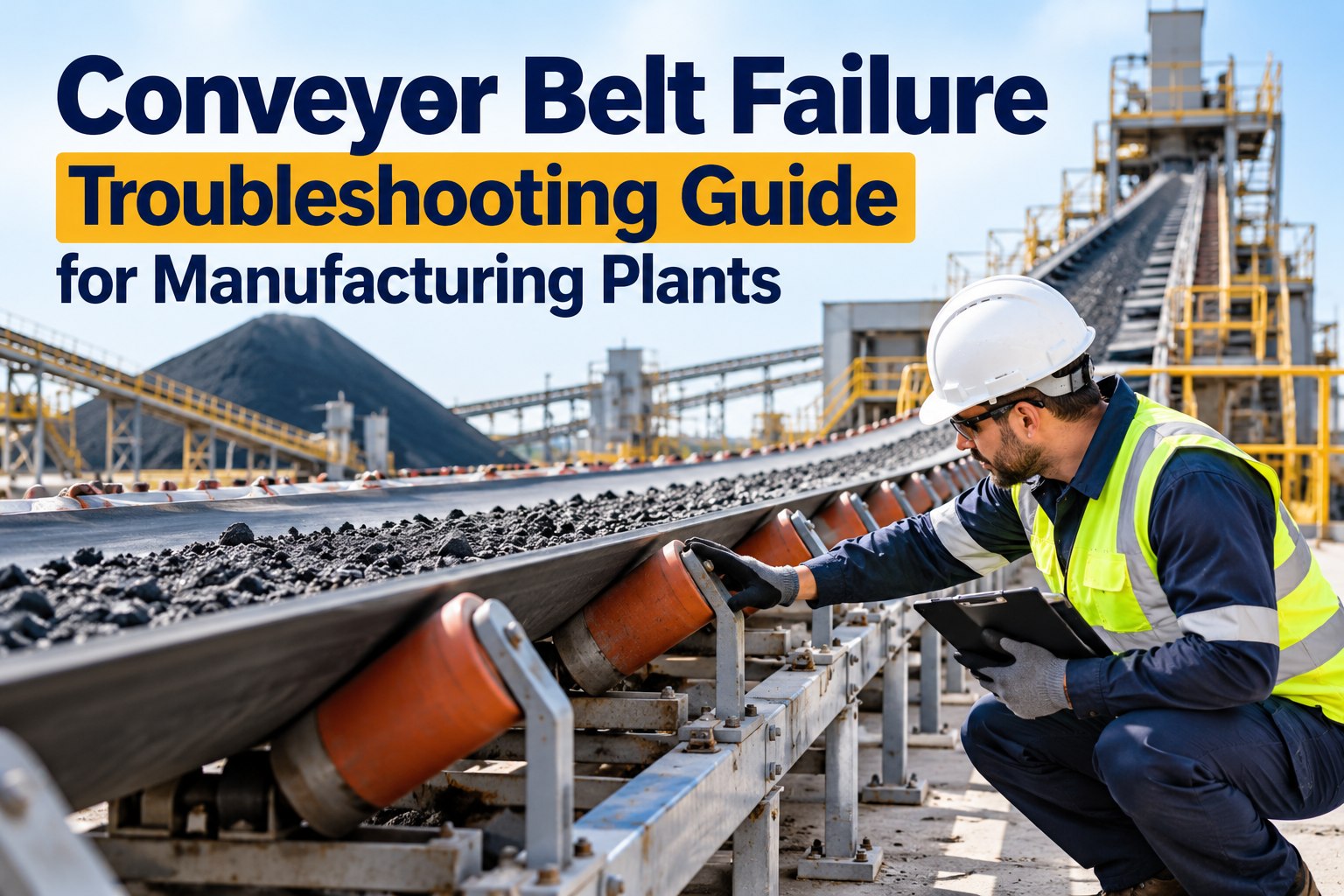
Conveyor idler failure is rarely sudden — it builds through bearing wear, belt misalignment, and friction heat for weeks before a stoppage or, in worse cases, a fire. Most plants only catch a failing idler after the belt is already mistracking or a hot-bearing smell reaches the control room, because manual inspection rounds cannot run continuously across hundreds of idlers spread across a conveyor network. Edge AI changes the detection window: vibration signatures, bearing temperature, and belt alignment data are analyzed in real time, on-site, so degrading idlers are flagged days or weeks before they stall a line. Reliability teams can Sign Up Free on Oxmaint to connect conveyor sensor data directly to asset records and condition alerts, or Book a Demo to see how edge-deployed failure prediction works on a live conveyor asset list.
Oxmaint pairs edge AI inference with vibration, temperature, and alignment sensors to flag failing conveyor idlers and auto-generate work orders before a stoppage spreads.
6 Failure Signatures Edge AI Should Track on Conveyor Idlers
Idler failure prediction depends on matching the right sensor signal to the right wear pattern, then running that analysis close to the asset instead of waiting on a cloud round trip. Teams can Sign Up Free on Oxmaint to map conveyor idlers into an asset hierarchy and let edge-deployed models score condition continuously rather than on a fixed inspection cycle.
A shift in vibration frequency at the idler bearing race is the earliest sign of mechanical wear. Edge AI compares live readings against a learned baseline per idler, catching drift long before audible noise or visible play appears.
A seized or partially seized idler stops rotating with the belt and generates friction heat at the contact point. Continuous temperature tracking detects this rise well before it becomes a smoking-belt or fire-risk event.
Worn or misaligned idlers push the belt off-center, increasing edge wear and skirting contact. Alignment sensors at key idler stations let edge AI separate a single bad idler from a structural conveyor frame issue.
A non-rotating idler under a moving belt is one of the highest-risk failure states on a conveyor. Speed sensors paired with edge inference flag stalled idlers immediately rather than waiting for a downstream temperature spike.
Conveyor corridors often run through areas with weak connectivity. Edge-deployed models process sensor data on-site, so failure alerts and prescriptive work orders still trigger even if the plant network connection drops.
Impact idlers at loading points, snub idlers near drive pulleys, and return idlers under heavy material spillage fail faster than standard carrying idlers. Coverage should weight these positions before less-stressed sections.
Idler Type, Sensor Signal, and Edge AI Detection Target
Different idler positions on a conveyor carry different failure risk and call for different sensor priorities. Use this reference to audit where edge AI coverage matters most, and Book a Demo to walk through a coverage gap review against your own conveyor asset list.
| Idler Type | Sensor Signal | Failure Mode Tracked | Edge AI Detection Target | Priority |
|---|---|---|---|---|
| Impact Idler | Vibration + temperature | Bearing wear from loading shock | Early race fatigue, seizure onset | Critical |
| Return Idler | Temperature + rotation speed | Material buildup, seized shell | Friction heat, stall events | Critical |
| Snub Idler | Vibration + alignment | Bend-point misalignment, wrap wear | Belt slip, tracking deviation | Important |
| Self-Aligning Idler | Alignment deviation | Pivot binding, frame drift | Belt mistracking trend | Important |
| Carrying Idler | Vibration | Standard bearing wear | Baseline degradation trend | Routine |
| Take-Up Idler | Temperature + load | Tension irregularity | Belt slack, slip risk | Routine |
Deploying Edge AI Idler Monitoring Without a Standalone Reliability Project
Predicting idler failure at scale requires connecting sensor signals to the actual asset record and turning every alert into a routed, prioritized work order. Plants can Sign Up Free on Oxmaint to map conveyor idlers into the asset hierarchy, or Book a Demo to see how prescriptive work orders attach the exact bearing, part number, and repair window to each alert.
- Idler-level sensor data linked to individual asset records in the conveyor hierarchy
- Edge-deployed inference flags vibration, temperature, and alignment anomalies on-site
- Failure alerts auto-generate work orders with priority, part, and technician assignment
- Condition scoring per idler supports replace-versus-repair decisions over time
- Mobile work orders give technicians full asset context and sensor history in the field
- Coverage audit highlights unmonitored high-friction idler zones across the conveyor network
- Long conveyor runs with weak connectivity? Edge inference keeps detecting without network dependency
- No dedicated reliability engineer? Pre-built failure signature templates accelerate setup
- Sensors already installed but underused? Asset mapping turns raw feeds into routed work orders
- Multiple conveyor lines or sites? Multi-site asset hierarchies with shared coverage dashboards
- Mixed sensor vendors? Protocol-agnostic data mapping supports varied hardware ecosystems
- Safety and audit requirements? Timestamped condition logs support incident and compliance review
What Edge AI Idler Prediction Delivers Across a Conveyor Network
Edge AI failure prediction pays back through fewer unplanned stoppages, lower fire and safety risk, and better-targeted labor. Facilities evaluating a rollout can Book a Demo to see how these outcomes translate to a specific conveyor asset count.
Vibration and temperature drift detected at the idler level convert emergency line stops into scheduled repairs, planned during the next available maintenance window.
Seized idlers generating sustained friction heat are a known belt-fire trigger. Early temperature and stall detection removes the gap between a frozen idler and visible smoke.
Misaligned or worn idlers accelerate belt edge wear and skirting damage. Catching alignment deviation early protects the much larger belt replacement cost.
Condition-triggered dispatch replaces blanket idler inspection rounds, sending technicians only to positions showing real degradation signals.
Diagnosing the specific bearing failure pattern, not just an asset-level alert, lets teams pre-stage the correct part instead of discovering it during teardown.
Timestamped sensor history and resolved work orders give safety and reliability audits a documented trail instead of reconstructed memory.
Oxmaint links conveyor idler sensors to asset records, runs edge AI failure detection on-site, and auto-generates prioritized work orders — no standalone reliability project required.
Conveyor Idler Failure Prediction — Common Questions
Edge AI analyzes vibration frequency, bearing temperature, and rotation data on-site to flag wear, seizure, or misalignment before the idler stalls the belt or overheats.
A seized idler under a moving belt generates sustained friction heat, a known trigger for conveyor belt fires. Early temperature and stall detection closes that gap.
Oxmaint maps sensor data to the specific idler asset and automatically generates a prioritized work order with the diagnosed failure mode, required part, and technician assignment.
Long conveyor corridors often have weak or inconsistent connectivity. On-site inference keeps failure detection running even when the network connection to the plant drops.
Impact idlers at loading points and return idlers under spillage typically fail fastest. Coverage audits help prioritize these positions ahead of standard carrying idlers.
Oxmaint gives conveyor and material handling teams edge AI failure detection, asset-mapped sensor data, and automated prescriptive work orders — built for plants without a dedicated reliability team.