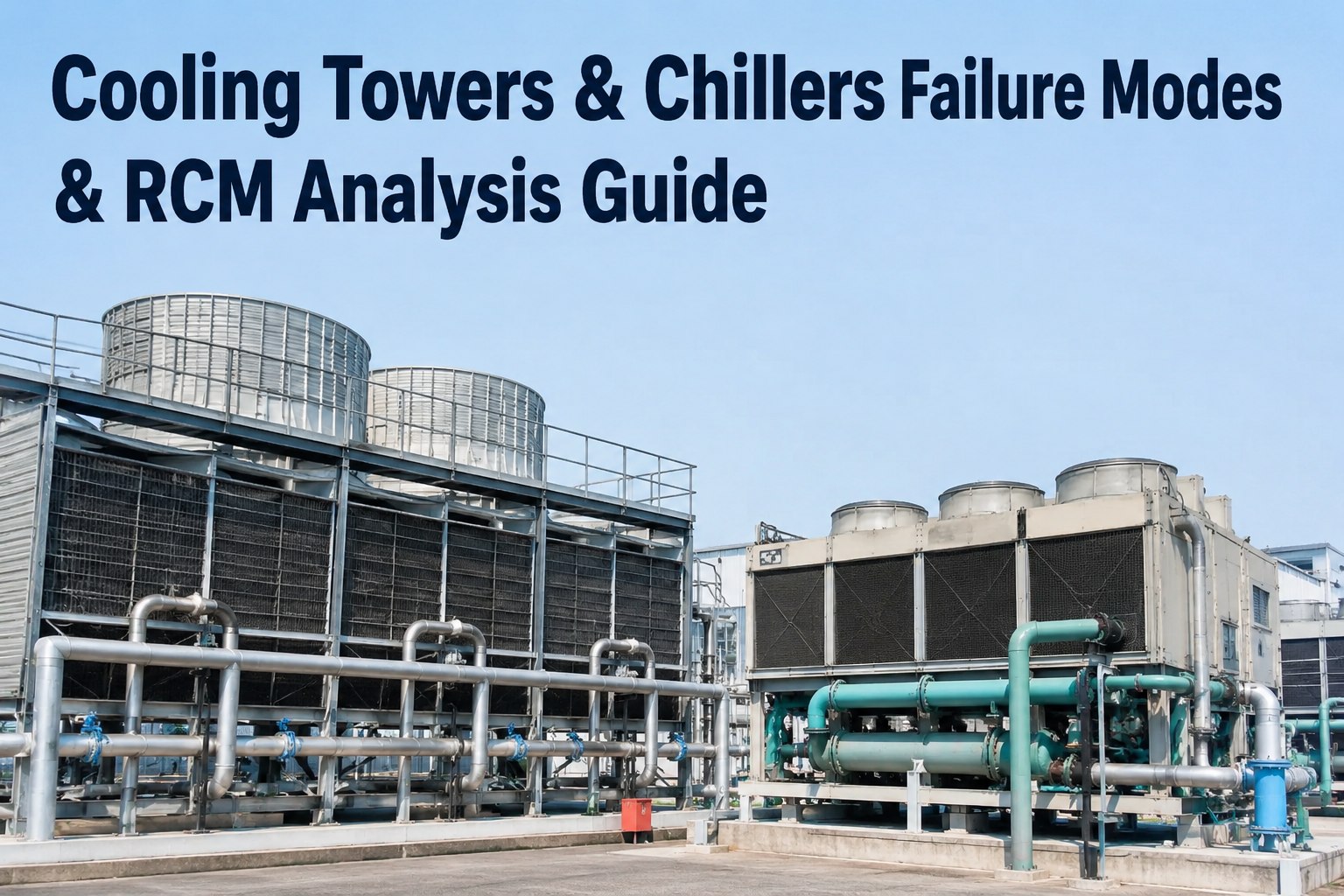
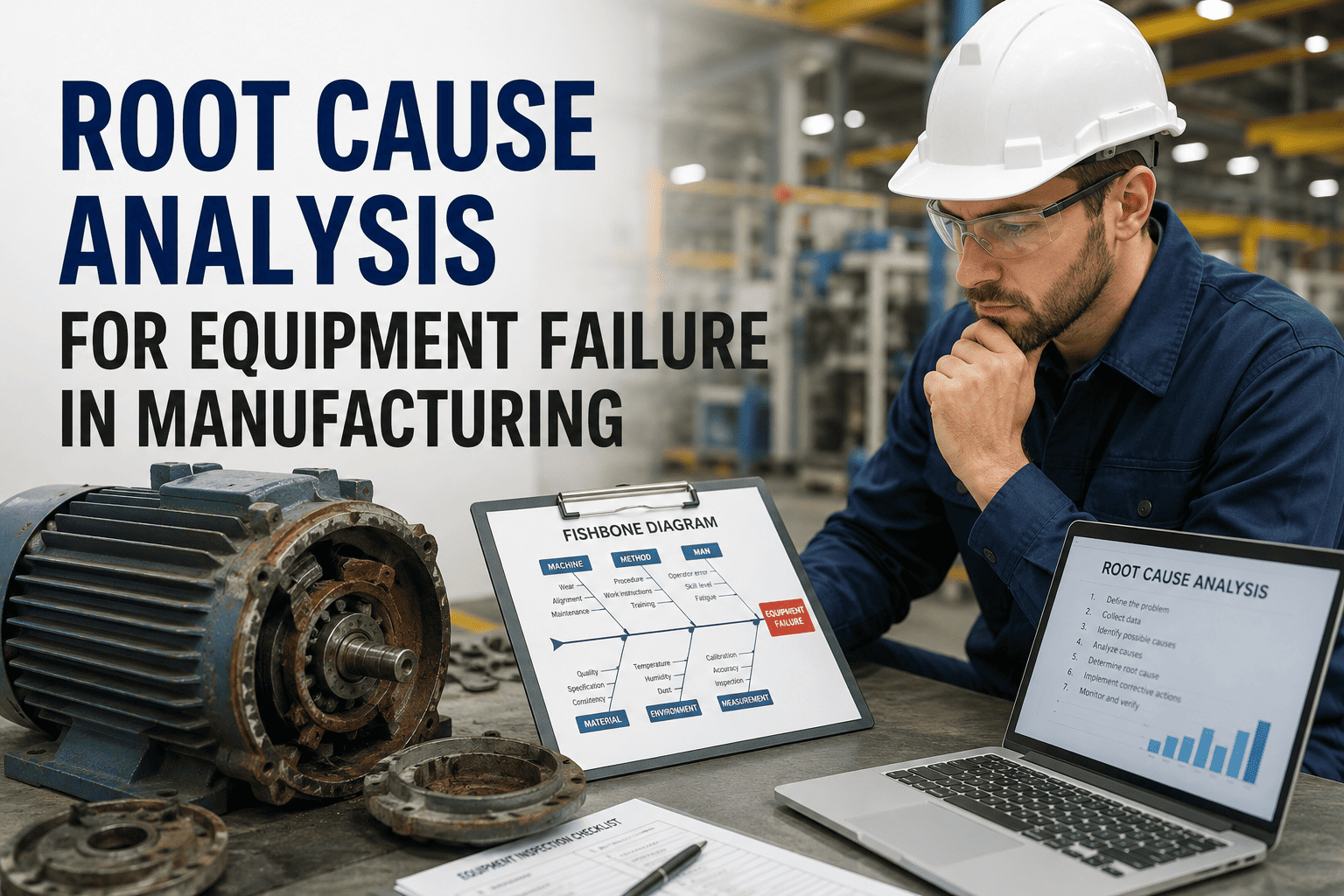
The cooling tower and the chiller are the two most expensive and consequential assets in most industrial and commercial HVAC systems, they operate as a coupled loop, and they fail in patterns that have been mapped in exhaustive detail across ASHRAE research, tribology literature, and half a century of field investigation — and yet the same failures keep surprising plants that treat each asset as a separate maintenance program. Tube fouling is the number-one cause of water-cooled chiller problems, and its root cause is almost always upstream in the cooling tower — biological growth, scale, and drift eliminator damage that let the condenser water arrive fouled. A 1-inch scale deposit on condenser tube walls increases condensing pressure by 10–15%, forcing the compressor to consume 15–25% more energy per ton delivered. A single condenser tube brushing on a 400-ton chiller has been documented to produce an immediate 18% energy reduction — around $60,000 in annual savings from four hours of work. The airports, factories, hospitals, and data centers that handle chiller reliability well in 2026 have integrated cooling tower and chiller FMEA into a single RCM program with the coupling recognized explicitly. This guide is the working FMEA + RCM reference for the coupled system: dominant failure modes per asset, the shared feedback loops that link them, RPN scoring, and the RCM tasks that pre-empt the ones that matter most. Book a free chiller-tower FMEA audit against your current program.
#1
Tube fouling — the number-one cause of water-cooled chiller problems in field data
15–25%
Extra energy per ton consumed when 1-inch scale deposit builds on condenser tube walls
18%
Documented single-cleaning energy reduction on 400-ton chiller · $60K annual savings
$15–50K
Commercial chiller compressor replacement cost range · emergency replacement premium adds 50–100%
The Coupled System · Why FMEA Must Be Integrated
The cooling tower rejects heat picked up by the chiller condenser. When the tower degrades, condenser water arrives warmer, dirtier, or biologically active — the chiller pays the energy penalty first and takes the mechanical damage second. Treating the two as separate FMEA programs misses the failure chains that account for most real-world outages.
TOWER
Cooling Tower
Rejects heat to ambient · condenses water to spec temperature · returns to chiller
Fill · drift eliminators · fan & motor · basin · distribution · make-up water · biocide dosing
Warm water in
↔
Cool water out
CHILLER
Chiller
Absorbs heat from chilled water loop · compresses refrigerant · rejects to condenser
Compressor · evaporator · condenser · economizer · motor · pumps · expansion device · refrigerant charge
The FMEA Table · Cooling Tower Dominant Failure Modes
Every cooling tower FMEA converges on the same seven dominant failure modes. Scoring below uses the standard 1–10 S×O×D rubric — RPN >100 gets a dedicated RCM task, RPN >150 adds condition monitoring on top.
Failure Mode
Root Cause
Effect
S
O
D
RPN
Fill fouling / degradation
Scale · biofilm · debris · fill aging over 3–5 years
Approach temp rise · chiller compensates 5–10%
7
7
3
147
Basin biofilm / Legionella risk
Biocide gap · sump not cleaned on schedule · low-flow zones
Public health event · regulatory shutdown · legal exposure
10
4
4
160
Drift eliminator damage
UV degradation · impact damage · missing sections
Water carryover · Legionella dispersion · water waste
9
5
3
135
Fan motor bearing failure
Bearing wear · misalignment · corrosion · lubrication failure
Fan stops · heat rejection lost · chiller high-pressure trip
8
4
3
96
Make-up valve failure
Valve wear · fouled seat · float mechanism drift
Water waste · low-level dry-run · pump damage
7
5
3
105
Distribution nozzle blockage
Debris · scale · biological growth
Uneven wetting · reduced effectiveness · localized fill damage
6
5
3
90
Structural corrosion
Chemistry imbalance · low pH · aging materials
Fill support failure · basin leak · eventual collapse risk
9
3
4
108
The FMEA Table · Chiller Dominant Failure Modes
Chiller FMEA converges on eight dominant modes, with condenser tube fouling almost universally scoring highest because upstream cooling tower degradation drives it. Note the direct linkage: three of the top four chiller modes trace to cooling tower conditions.
Failure Mode
Root Cause
Effect
S
O
D
RPN
Condenser tube fouling
Tower water scale · biofilm · debris · treatment gap
15–25% energy penalty · surge risk · eventual tube leak
8
7
3
168
Refrigerant leak / undercharge
Tube crack · fitting failure · gasket degradation
Capacity loss · EPA §608 violation · compressor damage
9
5
3
135
Compressor surge
Low load · high head pressure · fouling-driven lift increase
Impeller damage · bearing wear · potential catastrophic failure
10
4
4
160
Motor burnout
Phase imbalance · winding degradation · overheating · oil contamination
$15–50K replacement · extended outage · emergency premium
10
3
4
120
Tube leak — evap or condenser
Corrosion · erosion · advanced fouling · water-side pitting
Water in refrigerant · catastrophic damage · full rebuild
10
3
4
120
Non-condensables in refrigerant
Air ingress · improper service · seal failure
Reduced capacity · elevated head pressure · efficiency loss
7
4
3
84
Oil contamination / acid
Moisture ingress · thermal breakdown · filter drier saturation
Bearing wear · motor insulation attack · burnout precursor
8
4
3
96
Expansion device malfunction
Debris · sensor failure · orifice restriction
Starved or flooded evaporator · superheat swing · compressor stress
7
4
3
84
The Coupled Failure Chains · Where Tower Degradation Kills Chillers
The failure chains below are the ones that account for most real-world chiller outages — and every one of them originates in the cooling tower. Understanding the linkage is what makes integrated FMEA valuable.
Tower Origin
Biocide dosing gap · biofilm forms in low-flow zones
→
Chiller Impact
Condenser tube fouling accelerates · heat transfer degrades
→
Failure Outcome
Head pressure rise · surge risk · compressor damage · 15–25% energy penalty
Tower Origin
Fill fouling · approach temperature rises 3–5°F
→
Chiller Impact
Condenser water arrives warmer · compressor lift increases
→
Failure Outcome
Chiller works 5–10% harder continuously · energy cost compounds daily
Tower Origin
Chemistry imbalance · low pH · corrosion accelerates
→
Chiller Impact
Condenser tube water-side pitting · advanced fouling worsens
→
Failure Outcome
Tube leak · water enters refrigerant · catastrophic damage · full rebuild
Tower Origin
Fan motor fails · heat rejection stops
→
Chiller Impact
Condenser water temperature climbs rapidly · head pressure spikes
→
Failure Outcome
Chiller high-pressure trip · cooling load loss · downstream process disruption
Audit Your Coupled Chiller-Tower FMEA in 30 Minutes
Working session with our HVAC reliability team — bring your chiller and tower asset list. We'll run the coupled FMEA, calculate approach-temperature baselines, flag Legionella risk exposure, and show how OxMaint auto-generates predictive WOs on approach-drift thresholds.
The RCM Task Reference · What Pre-empts Each Failure Mode
Every RPN >100 failure mode above should generate a scheduled RCM task in the CMMS. The table below is the working reference — task type (Predictive / Condition-Based / Preventive), cadence, and specific action per mode. Deploy against your asset register and 70%+ of the failures become detectable weeks before functional failure.
Failure Mode
Task Type
Cadence
Specific Action
Condenser tube fouling
Predictive
Monthly
Approach-temperature trending · fire cleaning WO on 5°F baseline drift · annual tube brushing
Fill fouling / degradation
Condition-Based
Quarterly
Fill inspection · thermal performance test · 5% effectiveness drop triggers chemical clean or replace
Basin biofilm / Legionella
Predictive
Continuous
Biocide residual monitoring · pH · quarterly Legionella culture · sump clean per water management plan
Drift eliminator damage
Condition-Based
Quarterly
Visual inspection · replace at >30% blade damage · critical for Legionella compliance
Compressor surge
Predictive
Continuous
Vibration monitoring · head pressure alarm · load control tuning · surge count logging
Refrigerant leak
Predictive
Continuous
Charge trending · electronic leak survey per EPA §608 · repair at 10% annual charge loss threshold
Motor burnout
Predictive
Monthly
Motor current signature · phase balance ≤2% · winding megger annually · oil acid test
Tube leak
Condition-Based
Annual
Eddy current testing · water-side visual · pitting depth measurement · retube at threshold
Fan motor bearing
Predictive
Monthly
Vibration + IR thermal · bearing lubrication per OEM · VFD parameter check
Oil contamination
Condition-Based
Annual
Oil sample · TAN test · moisture content · filter drier ΔP · replace at threshold
Structural corrosion
Preventive
Semi-annual
Chemistry log review · pH balance · visible structural inspection · anti-corrosion coating renewal
The Compliance Surface · What Regulations Actually Require
Cooling tower and chiller operations sit at the intersection of EPA refrigerant rules, water quality regulations, and public-health Legionella management standards. Any RCM program worth running documents compliance evidence against each of these.
EPA
Section 608
Refrigerant Management
Leak repair required when annual charge loss exceeds 10% · technician certification · service records retention
ASHRAE
Standard 188
Legionellosis Risk Management
Water Management Plan for building water systems · risk assessment · monitoring · corrective action documentation
OSHA
Legionella Guidance
Workplace Water System Safety
Employer duty to control worker exposure · cooling tower cited as highest-risk source · biocide residual documentation
CDC
PreventLD Toolkit
Legionella Prevention Guidance
Water Management Program elements · monitoring · corrective actions · documentation practices
Expert Perspective · Why Cooling-Tower Reliability Is Chiller Reliability
The single most common failure pattern we see in HVAC reliability programs across every industry is treating the cooling tower and the chiller as separate maintenance workstreams. The tower has its own contractor, its own PM cadence, its own chemistry log. The chiller has its own service contract, its own OEM tech, its own runtime data. And every time the chiller fails, the investigation stops at the chiller — tube fouling gets brushed, refrigerant gets topped off, compressor gets repaired — without anyone asking the actual root-cause question, which is what happened upstream in the tower that let this happen. Approach temperature is the single most diagnostic number in the coupled system. When condenser approach starts drifting up above 5°F over baseline, the system is telling you the tower is failing before the chiller feels the impact on the utility bill. The plants that catch that signal early run reliable chiller programs. The plants that wait for the high-pressure alarm on the hottest day of the year pay $15,000–$50,000 for a compressor replacement plus emergency service premiums, and lose cooling capacity during peak load. Integrated FMEA is not sophisticated. It's four data points — condenser approach, evaporator approach, biocide residual, chiller kW/ton — trended weekly against baseline, with automatic corrective work orders when any of them drifts. That's the CMMS problem, and it's what turns two disconnected maintenance programs into one reliable coupled-system reliability discipline.
Approach Is the Signal
Condenser approach >5°F over baseline is the earliest warning the coupled system gives you · weeks before the utility bill or the trip alarm.
Tower Failures Kill Chillers
Three of the top four chiller failure modes originate in the tower · investigating the chiller in isolation misses the actual root cause every time.
Four Numbers, Trended Weekly
Condenser approach · evaporator approach · biocide residual · chiller kW/ton · trended and thresholded is the whole coupled RCM signal.
How OxMaint Delivers Coupled Chiller-Tower RCM
OxMaint runs the coupled cooling tower + chiller RCM program as one integrated workflow — pre-populated FMEA library for both assets, approach-temperature threshold monitoring, Legionella biocide log integration, EPA §608 refrigerant tracking, and predictive WO generation on any trigger drift.
FMEA
Coupled Failure Library
Pre-populated tower + chiller failure modes with linkage · RPN auto-scored · coupled chain visualization
Approach
Threshold Monitoring
Condenser + evaporator approach trended weekly · 5°F drift auto-fires cleaning WO · baseline recalibration seasonal
Legionella
ASHRAE 188 Compliance
Water Management Plan integration · biocide residual log · quarterly culture results · corrective action tracking
EPA
§608 Refrigerant Log
Charge tracking per unit · annual loss calculation · 10% threshold alert · technician certification on every service
Vibration
Rotating Equipment Ingest
Compressor + fan motor vibration via MQTT · surge event logging · bearing envelope demod · threshold WO auto-fire
Audit
Compliance Evidence Export
Complete PM history · biocide log · refrigerant charge trend · vibration data · exportable PDF for EPA, ASHRAE, OSHA audits
Turn Coupled Chiller-Tower FMEA Into Predictive Action
Stop letting the tower and chiller run as separate maintenance programs while the failure chains between them cost you compressors. See how OxMaint runs the coupled RCM cycle with approach monitoring, Legionella compliance, EPA §608, and vibration ingest. Free forever plan available.
Frequently Asked Questions
What is the most common failure mode in cooling towers and chillers?
Tube fouling is the number-one cause of water-cooled chiller problems in field data, and its root cause is almost always upstream in the cooling tower — biological growth, scale, and inadequate water treatment that let the condenser water arrive fouled. A 1-inch scale deposit on condenser tube walls increases condensing pressure by 10–15%, forcing the compressor to consume 15–25% more energy per ton delivered. On the cooling tower side, basin biofilm and Legionella risk score highest by RPN (severity 10 due to public health exposure), followed by fill fouling (RPN 147) and drift eliminator damage (RPN 135). The coupling matters: three of the top four chiller failure modes trace directly to cooling tower degradation, which is why integrated FMEA outperforms separate maintenance programs.
How is approach temperature used to detect fouling early?
Approach temperature is the single most diagnostic number in the coupled cooling tower + chiller system. Condenser approach (leaving water temp minus wet bulb) drifting above 5°F over baseline signals cooling tower degradation — fill fouling, scale, or biological growth degrading heat rejection — weeks before the utility bill shows the impact or the chiller trips on high pressure. Evaporator approach above 3°F over baseline indicates chiller-side tube fouling. Monthly trending against a seasonal baseline lets the CMMS auto-fire a cleaning work order at the 5% effectiveness drop trigger point — intervention at the optimal cost-benefit window, not after 15% performance loss forces emergency action. A single condenser tube brushing on a 400-ton chiller has been documented to produce an immediate 18% energy reduction.
Book a free demo to see live approach monitoring.
What regulations apply to cooling tower and chiller operations?
The core compliance stack: EPA Section 608 (refrigerant management, leak repair required when annual charge loss exceeds 10%, technician certification required for service, service records retained). ASHRAE Standard 188 (Legionellosis risk management, Water Management Plan required for building water systems including cooling towers, monitoring and corrective action documented). OSHA Legionella guidance (employer duty to control worker exposure, cooling tower cited as highest-risk source, biocide residual documentation). CDC PreventLD Toolkit (Water Management Program elements, monitoring practices, corrective actions). Studies have documented that 40–60% of cooling towers test positive for Legionella at some point, and the US sees 8,000–18,000 Legionnaires' disease infections annually — making the Legionella compliance stack non-optional for any facility running open cooling towers.
How often should chiller and cooling tower RCM tasks be performed?
Cadence follows the RCM task type. Continuous monitoring: compressor vibration, motor current signature, refrigerant charge trending, biocide residual, condenser and evaporator approach temperatures — all fed to CMMS with threshold alerts firing WOs on drift. Monthly: condenser approach trend, motor amperage phase balance check, fan motor vibration + IR thermal. Quarterly: fill inspection with thermal performance test, drift eliminator visual, Legionella culture, VFD parameter check. Semi-annual: chemistry log review, structural inspection. Annual: eddy current tube testing, motor winding megger, oil sample with TAN test, EPA §608 electronic leak survey, condenser tube brushing. High-criticality installations move quarterly items to monthly and monthly items to weekly.
Sign up free to build your coupled RCM cadence.
Does OxMaint provide a pre-built FMEA library for cooling towers and chillers?
Yes. OxMaint includes a pre-populated failure-mode library for the coupled cooling tower + chiller system — with default severity, occurrence, and detection scores calibrated from ASHRAE research, published FMEA studies, and OxMaint field deployments. When you add either asset to your register, the library attaches and the coupling chains between tower and chiller failure modes are visible. All RPN >100 modes convert to recurring RCM work orders. Approach temperature thresholds fire cleaning WOs on 5°F drift. Biocide residual log integration handles ASHRAE 188 evidence. EPA §608 refrigerant tracking flags at 10% annual charge loss. Vibration data from compressor and fan motors ingests via MQTT with automatic surge event logging. Complete compliance evidence exports as an audit-ready PDF for EPA, ASHRAE, and OSHA reviews. Free forever plan available.
Book a free demo to see the coupled RCM library.