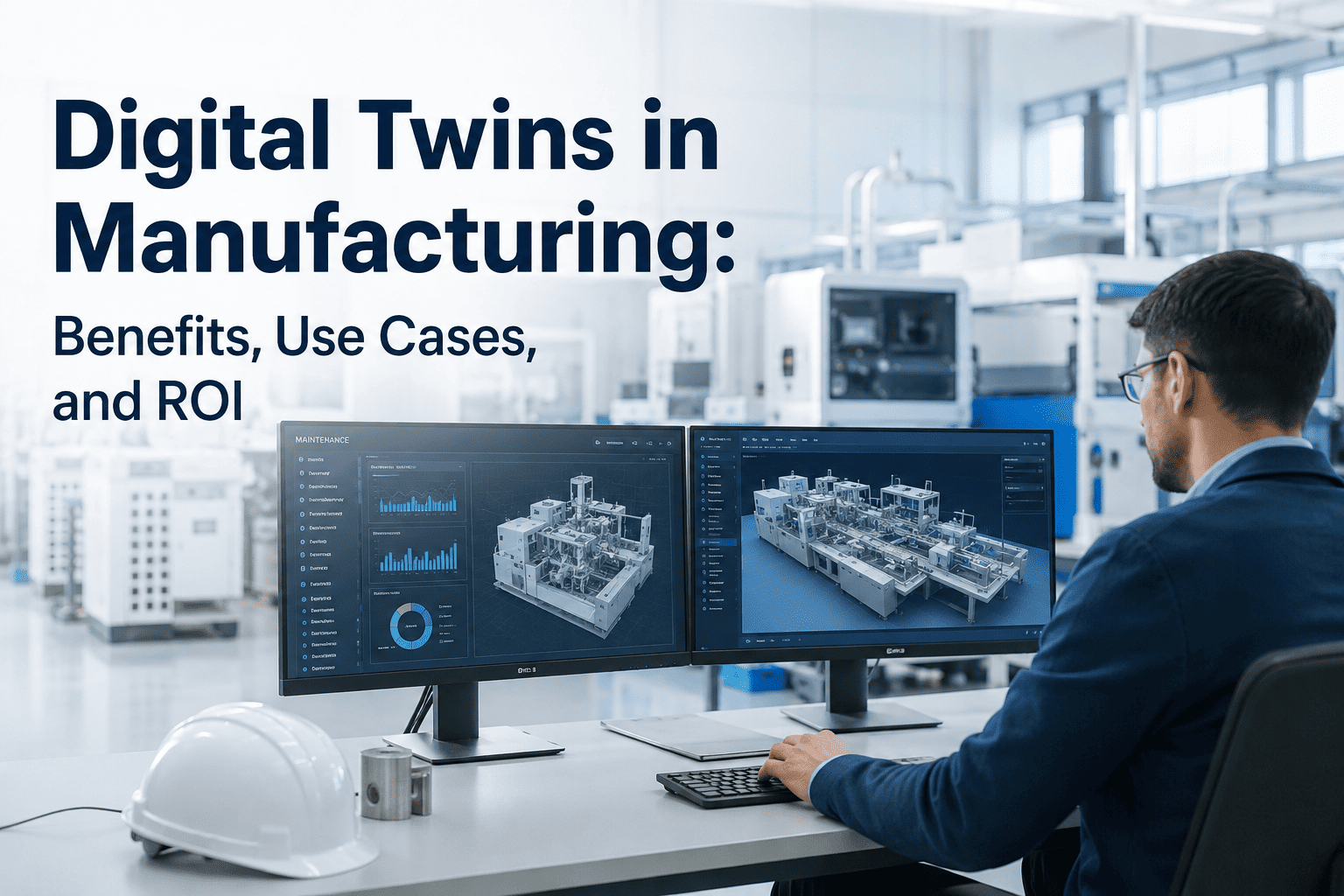
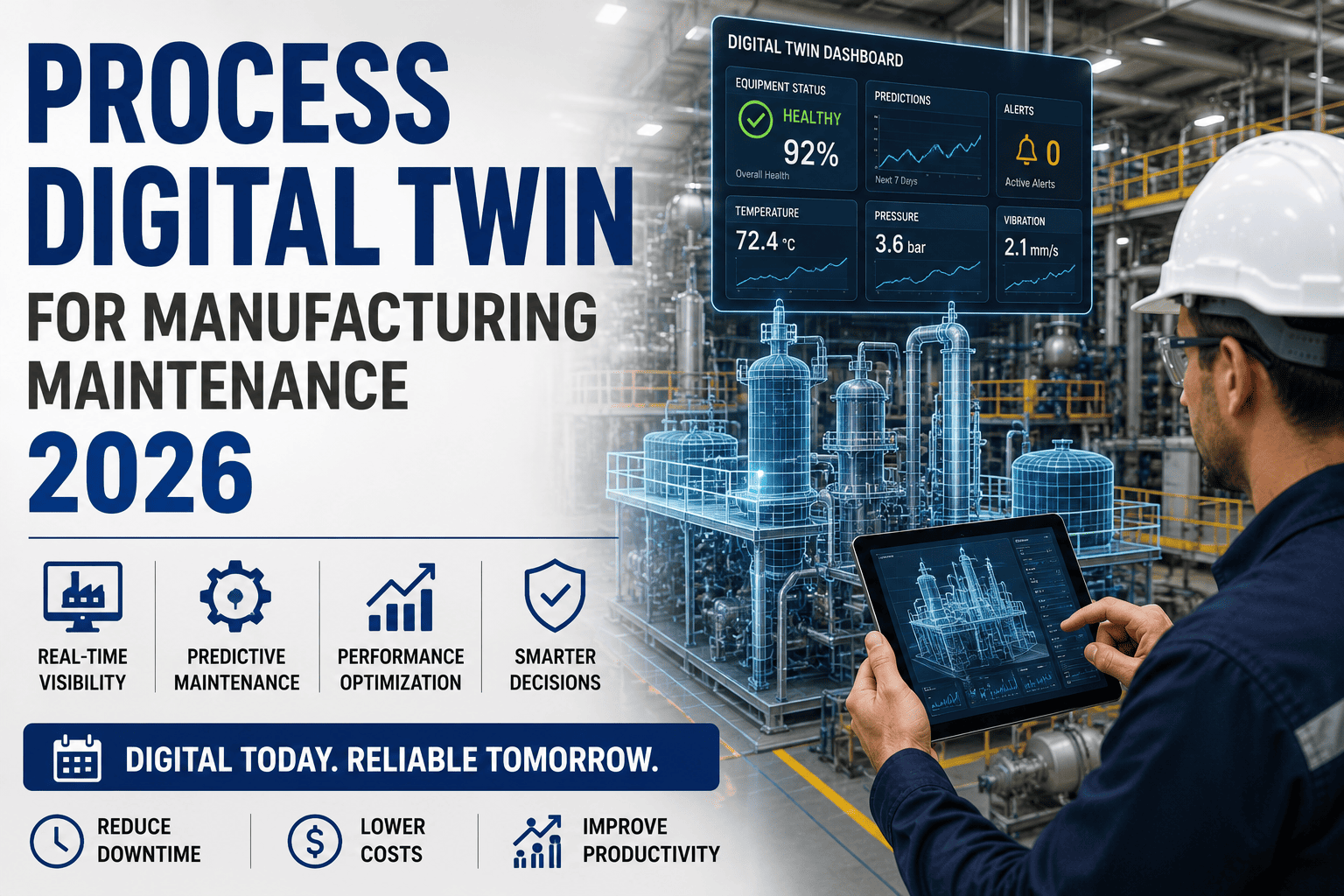
A virtual replica of a turbine running at a $2.1B automotive plant in Stuttgart predicted a bearing failure 19 days before it happened — averting an unplanned shutdown that would have cost $340,000 in lost production. The technology behind that intervention wasn't magic: it was a digital twin, fed by 640 IoT sensors, updating every 4 seconds. Digital twins have moved from aerospace labs to factory floors at speed, and the manufacturers who understand them now are the ones setting the margin benchmarks everyone else chases. If your maintenance and reliability strategy is still reactive, start a free trial of Oxmaint and see how connected asset management bridges the gap between your physical plant and its digital mirror.
Industry 4.0 Insight — 2026
Digital Twins Are Rewriting the Rules of Manufacturing Reliability
From predictive failure detection to virtual commissioning, the numbers behind this technology are hard to ignore.
$73.5B
Global digital twin market by 2027
36%
Reduction in maintenance costs reported by early adopters
25%
Improvement in asset uptime with twin-driven PdM
4.5×
Average ROI within 3 years of deployment
What Exactly Is a Digital Twin in Manufacturing?
Physical Asset
CNC Machine
Conveyor Belt
Hydraulic Press
Compressor
IoT Sensors + Data Streams
Real-time data
Control commands
Digital Twin
Virtual Model
Simulation Engine
Predictive AI
Maintenance Rules
A digital twin is a live, synchronized virtual model of a physical asset, process, or entire plant — continuously updated by sensor data, used for simulation, prediction, and optimization without touching the real machine.
The Three Tiers of Digital Twin Maturity
Tier 1
Descriptive Twin
Where most plants start
A static or near-real-time mirror of an asset's current state. Sensors feed dashboards. You can see what is happening, but the system doesn't yet tell you what will happen or why.
Example: SCADA dashboard showing live machine temperatures and vibration levels.
Tier 2
Predictive Twin
Where ROI accelerates
Historical + real-time data feeds ML models that forecast failures, estimate remaining useful life (RUL), and recommend maintenance actions before breakdown occurs. This tier is where most digital twin ROI is unlocked.
Example: Bearing wear model predicting failure window 2–4 weeks ahead, triggering a scheduled replacement.
Tier 3
Prescriptive Twin
The frontier
The twin not only predicts failure but autonomously evaluates response options — adjust parameters, shift load to another line, defer to a different maintenance window — and recommends or executes the optimal action.
Example: A twin that auto-adjusts press cycle speed when vibration trends toward a threshold, extending component life.
7 High-Impact Use Cases Driving Adoption
01
Predictive Maintenance at Scale
Digital twins process vibration, temperature, current draw, and acoustic signatures continuously. When any parameter drifts beyond a learned baseline, maintenance is triggered weeks before failure — not after. Plants using twin-driven PdM report 30–50% fewer unplanned stoppages.
02
Virtual Commissioning of New Lines
Before a single bolt is tightened on a new production line, its digital twin is tested for throughput, bottlenecks, and failure scenarios in simulation. Siemens reports that virtual commissioning reduces physical startup time by up to 75%.
03
Real-Time Quality Optimization
The twin monitors process parameters (temperature, pressure, speed, humidity) and correlates them with product quality data in real time. Deviations that cause defects are caught and corrected mid-batch, not at end-of-line inspection.
04
Energy Consumption Modeling
Twins model the energy consumption profile of each asset and the entire plant. Running simulations to find the optimal production schedule for energy cost savings is now a standard application at plants targeting Scope 2 emissions reduction.
05
Turnaround and Shutdown Planning
A digital twin of the entire plant can simulate proposed shutdown sequences, optimize the critical path, and identify resource conflicts before the shutdown begins — compressing turnaround duration by 20–30% in documented case studies.
06
Operator Training in Simulation
New operators learn on a virtual factory floor before touching real equipment. Simulated fault scenarios — overpressure events, motor trip sequences, process upsets — build competence safely. Training time drops; equipment misuse incidents fall.
07
Supply Chain and Production Planning
At the enterprise level, plant-level digital twins connect to supply chain models to simulate the effect of component shortages, demand surges, and logistics delays on production schedules — enabling proactive rather than reactive responses.
Connected Maintenance Platform
Bridge Your Physical Plant and Its Digital Future with Oxmaint
Oxmaint connects asset condition data, PM schedules, and work order history into a unified platform — the operational data layer every digital twin strategy depends on. Start with structured maintenance, scale to predictive intelligence.
Digital Twin ROI — What the Numbers Actually Show
Automotive
$1.2M
Annual savings per plant from predictive maintenance alone
Source: Deloitte Manufacturing Report 2024
Aerospace & Defense
25%
Reduction in MRO costs after twin-enabled RUL modeling
Boeing / GE Aviation internal benchmarks
Oil & Gas
40%
Fewer unplanned shutdowns in offshore platforms with twins
Shell Digital Operations Program
Process Industry
18%
Energy savings from continuous process optimization via twins
BASF Smart Manufacturing Initiative
Consumer Electronics
60%
Faster NPI cycle with virtual commissioning replacing physical trials
Foxconn Digital Factory Program
Food & Beverage
$480K
Waste reduction per year from real-time quality twin monitoring
Nestlé Smart Factory Initiative
What a Digital Twin Actually Needs to Function
Intelligence Layer
AI/ML models · Simulation engine · Prescriptive analytics
Integration Layer
CMMS · ERP · MES · Historian · SCADA
Data Foundation
IoT sensors · Edge gateways · Clean asset master data · Structured PM history
Most failed digital twin programs stall at the base: poor sensor coverage, no structured maintenance history, or asset data that lives in spreadsheets. A CMMS like Oxmaint is the integration layer that feeds a twin's predictive models with reliable, timestamped, asset-level data.
Frequently Asked Questions
What is the difference between a digital twin and a simulation?
A simulation is a one-time model run for a specific scenario. A digital twin is a continuously updated, live replica that syncs with real-world sensor data in near real-time. The twin evolves as the asset ages; the simulation does not. Learn how
Oxmaint feeds live asset data to your twin's models.
How long does it take to build a digital twin for a manufacturing plant?
A single-asset descriptive twin can be running in 4–8 weeks with good sensor coverage and clean maintenance data. A plant-wide predictive twin typically takes 6–18 months depending on integration complexity, data quality, and model training requirements.
Do we need a CMMS before implementing a digital twin?
Yes — structured PM history and asset condition records are the training data for predictive models. Without them, your twin's predictions are unreliable. A
connected CMMS like Oxmaint is the recommended starting point before twin deployment.
Which industries benefit most from digital twins?
Aerospace, automotive, oil and gas, and heavy process industries show the highest documented ROI. However, food and beverage, pharmaceuticals, and electronics manufacturing are adopting at the fastest rate as sensor costs drop and cloud platforms mature.
What's the biggest risk in a digital twin project?
Poor data quality and lack of organizational change management. The technology rarely fails — the implementation does, because sensor data is dirty, maintenance records are incomplete, or frontline teams don't trust the output. Clean data governance and operator buy-in are non-negotiable.
CMMS Built for Industry 4.0
Your Digital Twin Strategy Starts with Clean Asset Data
Oxmaint gives you the structured maintenance history, real-time asset condition records, and PM compliance data that every successful digital twin deployment depends on. Start building your data foundation today.
Zero
Spreadsheet dependency
1-click
Audit-ready export