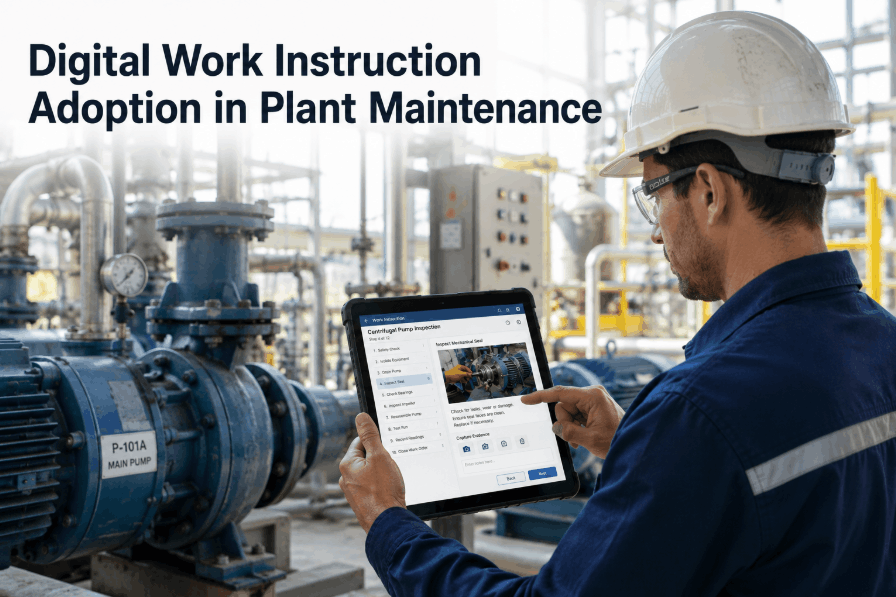
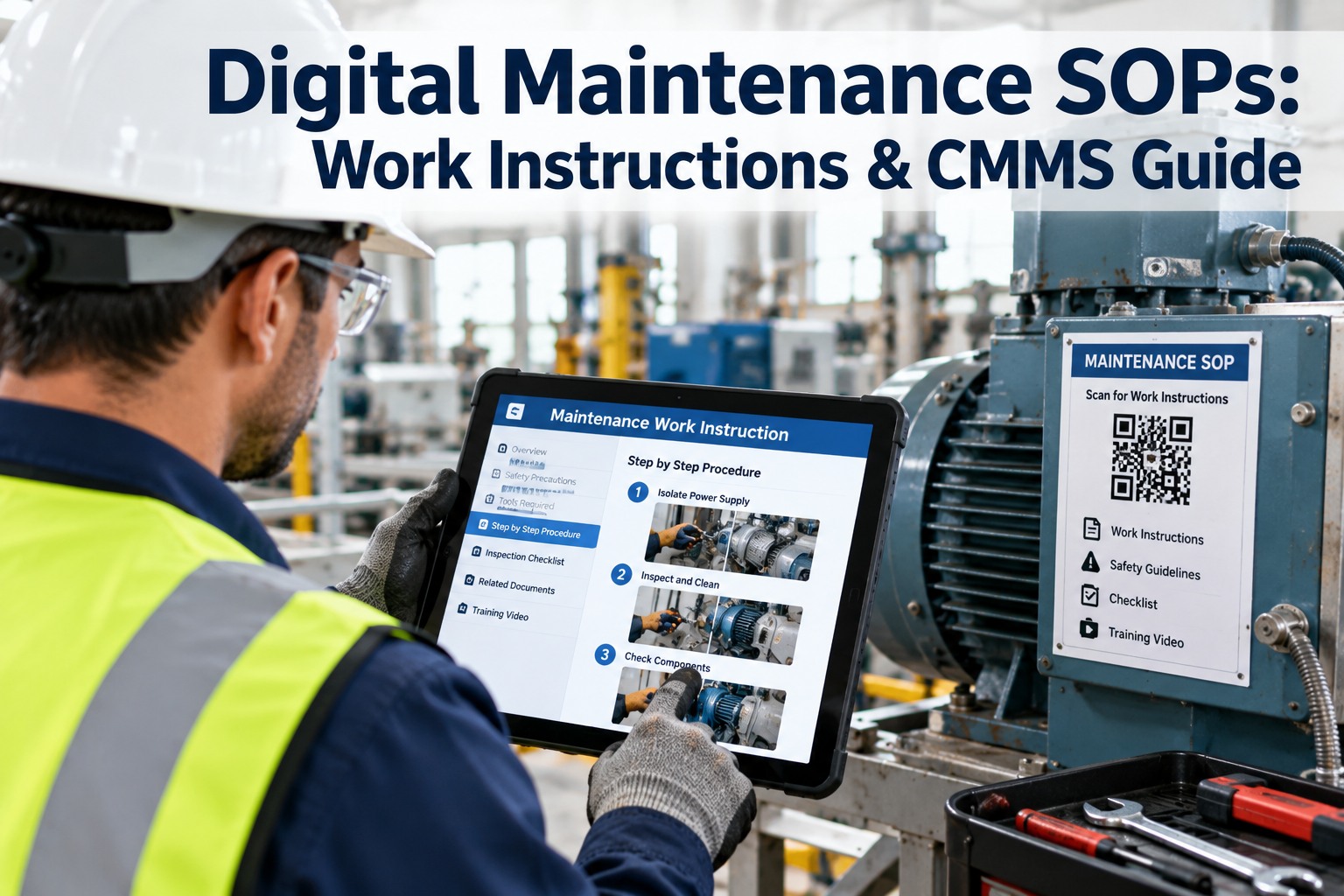
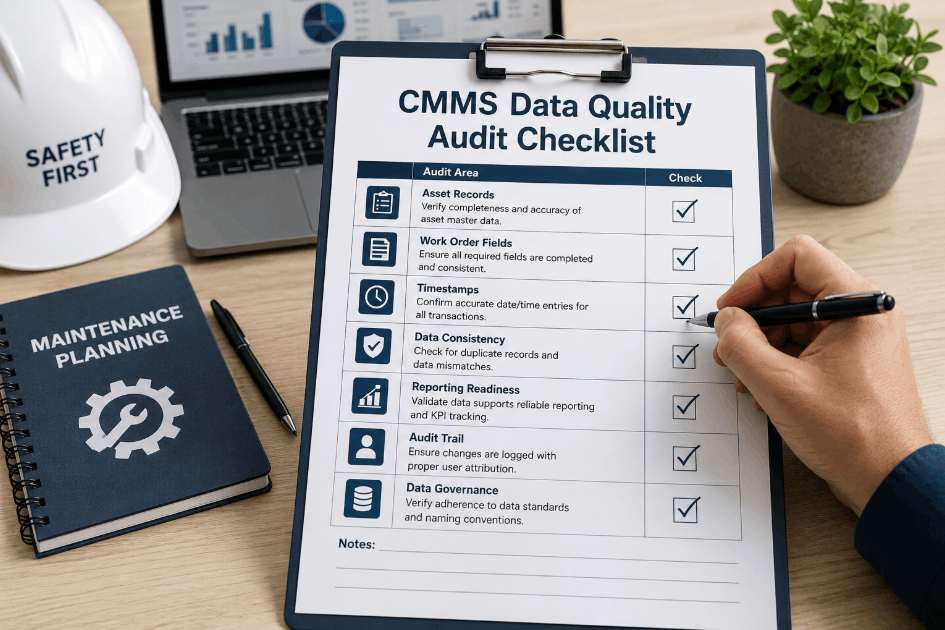
Digital work instruction adoption in plant maintenance is the operational shift that separates high-performing reliability teams from those still managing technician execution through paper forms and verbal handoffs. In 2026, manufacturers reducing variation, improving task quality, and building verifiable audit trails are doing so by embedding digital work instructions directly into CMMS-driven work orders — where every step is guided, every action timestamped, and every completion record is audit-ready. Sign Up Free to see how OxMaint gives maintenance teams the digital work instruction infrastructure they need to standardize execution across every asset class. Plants that roll out structured digital work instructions consistently report fewer repeat failures, lower rework rates, and significantly stronger inspection compliance — because guided execution eliminates the ambiguity that drives variation.
Standardize Technician Execution with OxMaint
Digital work instructions. Mobile capture. Audit-ready records. Real-time compliance tracking. Built for plant maintenance teams.
Why Digital Work Instruction Adoption Fails Without a Structured Framework
Most plants have attempted some form of digital instruction rollout — but adoption stalls when instructions are stored separately from work orders, when mobile access is poor, or when technicians have no incentive to follow structured steps. Book a Demo to see how OxMaint embeds digital work instructions natively into every work order so adoption happens through execution, not enforcement.
Instructions Disconnected from Work Orders
When digital instructions live in a separate system from the work order, technicians bypass them during execution — creating a compliance gap that no audit trail can close.
No Mobile Capture at the Asset
Instructions accessed only on desktop force technicians to memorize steps before going to the field — reintroducing the variation that digital adoption was meant to eliminate.
Inconsistent Step Completion Verification
Without mandatory step sign-off and timestamp capture, there is no way to verify whether instructions were followed or skipped — making audit trails unreliable for regulatory review.
No KPI Feedback Loop
Plants cannot improve instruction quality without tracking execution data — where steps take too long, where technicians deviate, and which instructions correlate with repeat failures.
Master Data Not Linked to Instructions
Work instructions not tied to asset master data become outdated as equipment is modified — sending technicians into the field with procedures that no longer reflect actual asset configuration.
Field Discipline Varies by Technician
Without embedded process standards, execution quality depends entirely on individual technician experience — creating dangerous inconsistency across shifts, teams, and sites.
Digital Work Instruction Adoption — 5 Execution Pillars
A successful digital work instruction rollout in plant maintenance is built on five execution pillars. Each one reduces friction in adoption and ensures that technician execution is guided, captured, and verifiable from the first work order to the thousandth. Sign Up Free to implement all five pillars using OxMaint's built-in work order and checklist platform.
| Adoption Pillar |
Core Activity |
OxMaint Feature |
Outcome |
| Instruction Embedding |
Attach step-by-step checklists directly inside work orders |
Smart Checklist Builder |
Instructions accessed at point of execution |
| Mobile Field Access |
Technicians complete steps on mobile device at the asset |
OxMaint Mobile App |
Zero paper, real-time capture |
| Step Sign-Off and Timestamp |
Each instruction step requires digital confirmation before proceeding |
Digital Sign-Off Module |
Verifiable audit trail per work order |
| Asset-Linked Instructions |
Instructions tied to asset master data — updated when asset changes |
Asset Management + WO Integration |
Accurate, version-controlled procedures |
| KPI Mapping |
Track step compliance rate, execution time, and deviation frequency |
Analytics and Reporting Module |
Continuous instruction quality improvement |
| Data Hygiene Enforcement |
Mandatory fields and structured data capture prevent incomplete records |
Work Order Governance Tools |
Clean, complete maintenance records |
How OxMaint Drives Digital Work Instruction Adoption Across Plant Teams
01
Smart Checklist Builder Inside Work Orders
OxMaint allows maintenance planners to build structured step-by-step checklists inside every work order template — covering inspection checkpoints, safety lockouts, torque specifications, and verification readings. Instructions travel with the work order, eliminating the search for separate documentation.
Book a Demo to configure your first digital work instruction template.
02
Mobile Capture at the Asset
Technicians access their work orders and embedded instructions on the OxMaint mobile app — completing steps, capturing readings, attaching photos, and signing off on each task directly at the equipment. Every action is timestamped and synced to the CMMS record in real time.
03
System Adoption Tracking and Compliance Reporting
OxMaint tracks digital instruction compliance per technician, per work order type, and per asset — giving supervisors the data to identify adoption gaps and coach field discipline before non-compliance becomes a systemic issue.
Sign Up Free to activate adoption tracking for your maintenance team.
04
Data Governance and Record Integrity
OxMaint enforces data hygiene through mandatory field completion, structured dropdown selections, and automatic timestamp capture — ensuring that every completed work order produces a clean, auditable maintenance record with no missing data, no ambiguous entries, and no post-execution reconstruction.
Digital Work Instruction Results Across Plant Types
The following examples reflect how different plant environments deploy digital work instructions through OxMaint to reduce variation, improve task quality, and close audit trail gaps.
Automotive Manufacturing
Eliminating Execution Variation Across Shifts
ChallengePM execution varied by technician — no standard procedure enforcement across shifts
AppliedOxMaint smart checklists embedded in all PM work orders; mobile sign-off required per step
Result48% reduction in repeat maintenance calls; step compliance rate reached 94%
Chemical Processing
Audit-Ready Safety Procedure Compliance
ChallengeRegulatory audits revealed gaps in safety lockout procedure documentation
AppliedMandatory LOTO steps embedded in every WO; digital sign-off with timestamp and technician ID
ResultPassed two consecutive regulatory audits with zero documentation findings
Food and Beverage
Process Standard Enforcement Across Lines
ChallengeDifferent technicians applying different sanitation procedures across production lines
AppliedStandardized digital sanitation work instructions; mobile capture with photo verification
ResultSanitation variance incidents dropped 62%; GMP audit score improved by 19 points
Pharmaceutical
Work Order Accuracy and Record Integrity
ChallengeIncomplete work order records creating GxP compliance exposure during FDA review
AppliedOxMaint mandatory field governance; structured data capture with system-enforced completion
Result100% complete work order records across all maintenance categories; zero FDA record deficiencies
Step-by-Step: Rolling Out Digital Work Instructions in OxMaint
Step 1
Map Your Asset Classes to Instruction Templates
Identify your highest-frequency work order types and build standardized instruction templates in OxMaint — covering each task category: PM routines, inspection protocols, corrective procedures, and safety checks. Templates are reusable and asset-class specific.
Book a Demo to see the template builder configured for your asset types.
↓
Step 2
Embed Instructions Inside Work Orders with Mandatory Sign-Off
Configure OxMaint to attach the relevant instruction checklist to each work order at creation — and set step sign-off as a mandatory field before work order closure. This structural enforcement drives adoption without relying on technician discretion.
↓
Step 3
Deploy Mobile Access for Field Execution
Roll out the OxMaint mobile app to your technician team so work orders and instructions are accessible at the asset — not at a desktop workstation. Mobile access eliminates the paper-to-digital transcription step that degrades data hygiene in most maintenance operations.
↓
Step 4
Track Adoption KPIs and Identify Compliance Gaps
Use OxMaint's analytics module to monitor step completion rates, average execution times, and deviation frequencies by technician, team, and asset. Review these metrics weekly during the first 90 days of rollout to identify coaching opportunities and instruction quality gaps.
Sign Up Free to activate KPI tracking for your digital work instruction program.
↓
Step 5
Close the Loop with Instruction Quality Reviews
Monthly, review execution data to identify which instructions are consistently skipped, which generate the most technician comments, and which correlate with post-PM failures. Update instruction templates based on this feedback — building a continuously improving procedure library tied directly to asset reliability outcomes.
Key KPIs for Digital Work Instruction Adoption
Adoption without measurement is assumption. These KPIs give plant reliability leaders the data needed to verify that digital work instructions are being followed and that execution quality is improving over time. Sign Up Free to track these KPIs automatically in OxMaint's analytics dashboard.
Step Compliance Rate
Percentage of work orders where all required instruction steps were signed off before closure. Target above 90%. Low compliance identifies where enforcement gaps exist.
Work Order Accuracy Rate
Percentage of closed work orders with complete, structurally valid data — no missing fields, no unstructured free-text in mandatory fields. Reflects data hygiene governance effectiveness.
Repeat Failure Rate
Percentage of assets requiring a second corrective work order within 30 days of a completed maintenance event. Declining repeat failure rate confirms instruction quality improvement.
Timestamp Integrity Score
Percentage of work order records with complete, sequential, system-generated timestamps — not manually entered after the fact. Critical for audit trail credibility in regulated environments.
Mobile Capture Rate
Percentage of work orders completed via mobile app versus desktop or paper transcription. Higher mobile capture rates correlate directly with data accuracy and audit trail completeness.
Instruction Version Currency
Percentage of active instruction templates reviewed and confirmed current within the last 12 months. Outdated instructions are a leading cause of execution deviation and post-PM failure.
Drive Digital Work Instruction Adoption with OxMaint
Smart checklists. Mobile field capture. Audit-ready records. KPI-mapped adoption tracking. All in one CMMS built for plant maintenance teams serious about execution quality.
Frequently Asked Questions
What are digital work instructions in plant maintenance?
Digital work instructions are structured, step-by-step task guides embedded inside CMMS work orders — accessible on mobile, requiring digital sign-off per step, and generating a timestamped audit trail automatically upon execution.
How does OxMaint embed digital work instructions into work orders?
OxMaint's smart checklist builder allows planners to attach step-by-step instruction templates to any work order type. Technicians complete steps via mobile with mandatory sign-off, and all data is captured in real time.
What KPIs measure digital work instruction adoption success?
Key metrics include step compliance rate, work order accuracy rate, mobile capture rate, timestamp integrity score, and repeat failure rate — all automatically tracked in OxMaint's analytics module.
How do digital work instructions improve audit trail quality?
By capturing technician sign-off, system-generated timestamps, and structured data at each step, OxMaint produces complete, tamper-evident maintenance records that satisfy regulatory and internal audit requirements.
Can OxMaint enforce data hygiene in work order completion?
Yes. OxMaint's governance tools require mandatory field completion and structured data entry before work order closure — preventing incomplete records and ensuring consistent data quality across all maintenance activity.
How long does digital work instruction rollout take with OxMaint?
Most plant teams complete template configuration and initial mobile deployment within 2–4 weeks.
Book a Demo to review the rollout process for your facility.
Give Your Maintenance Team the Execution Tools They Need
OxMaint delivers digital work instructions, mobile capture, step sign-off enforcement, and real-time adoption analytics — purpose-built for plant teams who are serious about task quality and record integrity.