The maintenance supervisor at a chemical processing facility stares at a clipboard stacked with 47 handwritten work orders—some dating back three weeks, half missing critical equipment data, and none providing visibility into technician location, task progress, or completion status. Production reports another unplanned shutdown on Reactor 3 due to a missed PM that "fell through the cracks" during shift handover, costing $85,000 in lost throughput. The operations director demands real-time maintenance visibility and predictive maintenance manufacturing & plants capabilities, yet the facility operates with paper-based systems generating zero actionable data while consuming 6-8 hours weekly per technician on administrative documentation.
This operational chaos repeats across process industries—chemical plants, pharmaceutical facilities, food processing operations, refineries, and pulp mills—where complex production equipment demands systematic maintenance yet 71% still rely on paper-based or basic spreadsheet systems. The average process facility manages 800-3,000 critical assets requiring coordinated preventive maintenance manufacturing & plants protocols, yet without digital work order automation achieves only 65-75% PM compliance while maintaining zero visibility into work backlog, technician productivity, or equipment failure patterns.
Process manufacturers implementing digital work orders with mobile inspections manufacturing & plants, asset tracking manufacturing & plants, and work order automation achieve 95-98% PM compliance while reducing administrative burden by 40-60%. This transformation requires understanding proven implementation strategies, avoiding common pitfalls, and learning from facilities that successfully navigated the digital transition. Organizations ready to eliminate paper chaos can explore how digital work orders transform maintenance operations.
What if your maintenance team could complete 40% more work orders monthly while reducing paperwork by 6+ hours per technician—would that change your operational capacity?
While other process facilities struggle with paper-based inefficiencies and compliance gaps, digitally transformed operations achieve 95%+ PM compliance with real-time visibility. Discover why 250+ process manufacturers trust Oxmaint to automate their maintenance workflows.
The Digital Work Order Problem in Process Industries
Process industries face unique maintenance challenges that paper-based work order systems simply cannot address. Unlike discrete manufacturing with standardized equipment, process facilities operate continuous production systems where a single pump failure cascades into facility-wide shutdowns, quality deviations trigger regulatory investigations, and missed inspections create compliance violations with six-figure penalties.
Handwritten work orders generate zero searchable data. When Reactor 3 fails, technicians cannot quickly review its maintenance history, identify recurring problems, or verify PM completion. Each shift change requires physical handover meetings consuming 45-60 minutes explaining work order status.
Without automated scheduling and mobile inspection reminders, preventive maintenance falls through scheduling gaps. Facilities average 65-75% PM completion despite maintaining paper schedules—simply because work orders get lost, forgotten, or deprioritized during reactive firefighting.
Management cannot answer basic questions: "What's our work order backlog?" "Which technician is working on what?" "Why did Pump 7 fail again?" Paper systems provide zero real-time visibility, no performance metrics, and no accountability tracking—just piles of completed work orders filed in cabinets.
Case Study: Midwest Chemical Processing Facility
This detailed case study examines a 340-employee chemical processing facility producing specialty polymers and industrial coatants that successfully transitioned from paper-based to digital work orders over 180 days. Names and specific products are altered for confidentiality, but all metrics represent actual implementation results.
Facility Profile
The Problem State (January 2024)
Work Order System: Completely paper-based. Maintenance supervisor manually wrote work orders on carbon-copy forms. Technicians picked up assignments from inbox at shift start, completed handwritten notes during work, returned completed forms to supervisor's inbox. Supervisor manually filed completed work orders in filing cabinets organized by month.
PM Program: Spreadsheet-based PM schedule printed monthly and posted on maintenance office wall. Supervisor manually checked off completed PMs. No systematic verification of completion quality or missed tasks. Equipment-specific PM checklists stored in binders.
Performance Metrics (Pre-Implementation):
- PM Completion Rate: 68% (estimated—no accurate tracking)
- Work Order Processing Time: 45 minutes average from creation to technician assignment
- Administrative Time: 7.2 hours per technician per week on paperwork
- Work Order Backlog: Unknown (no centralized tracking)
- Unplanned Downtime: 847 hours annually ($1.8M estimated impact)
- Audit Prep Time: 12-16 hours per quarterly audit
- Average Response Time: 4.2 hours from issue identification to work order assignment
Critical Incident (Catalyst for Change): EPA audit discovered 14 missing inspection records for pressure relief valves—a critical safety system. Facility received $85,000 penalty and warning letter. Management mandated digital transformation to prevent recurrence.
Implementation Approach (February - July 2024)
Selected Oxmaint CMMS, conducted equipment audit, deployed barcode/QR tags on all 1,847 assets. Imported equipment specifications, manuals, and existing PM schedules. Trained maintenance supervisor and lead technicians on system basics.
Converted all PM checklists to digital format with step-by-step procedures, photo requirements, and pass/fail criteria. Issued tablets to all technicians with mobile inspection app training. Ran parallel systems (paper + digital) for 30 days.
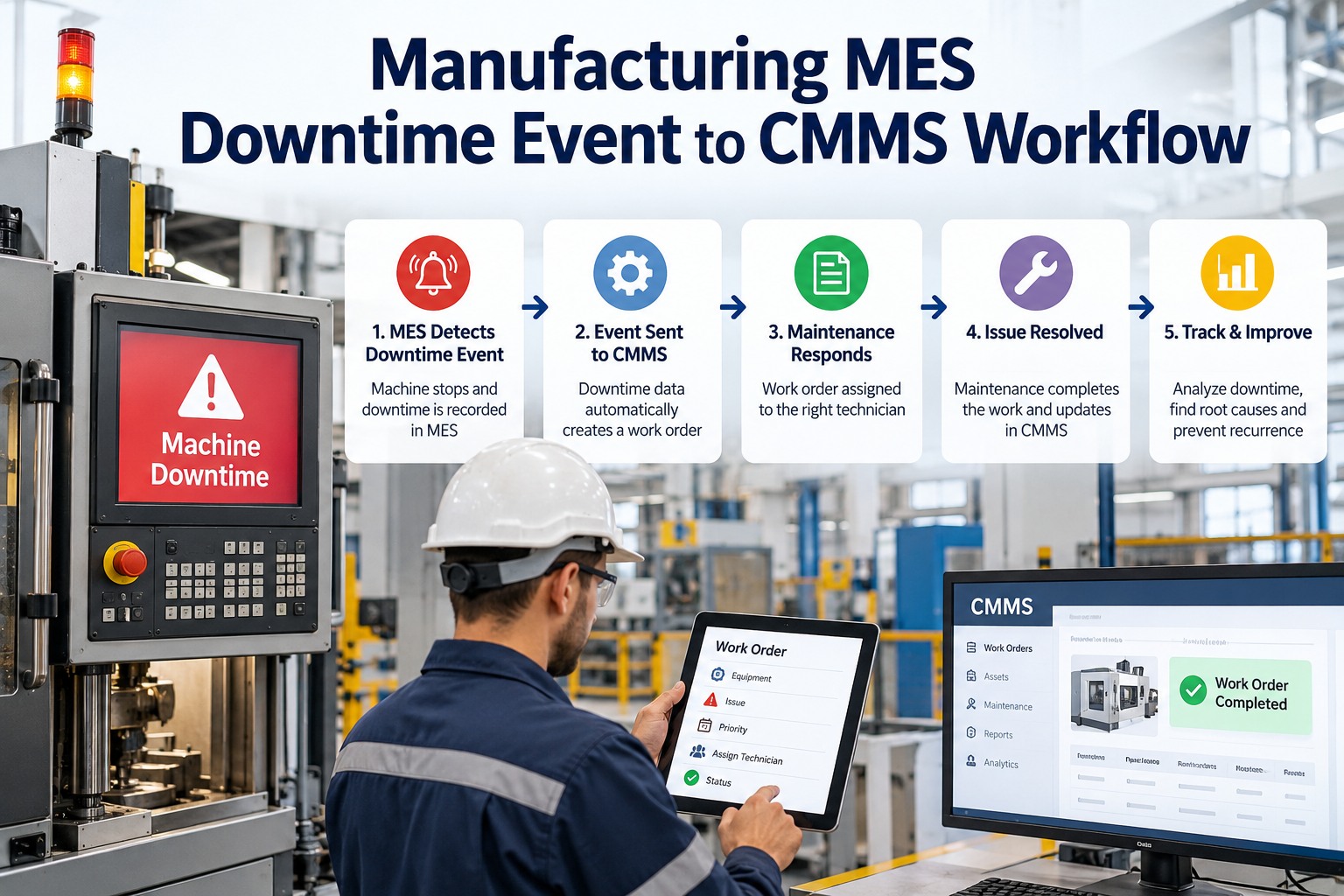
Eliminated paper work orders completely. All new work requests submitted via digital system. Technicians received automated work order assignments on mobile devices. Supervisors monitored work order status via dashboard in real-time.
Activated predictive maintenance manufacturing & plants algorithms analyzing work order history and equipment patterns. Enabled automated work order generation from production system alerts. Integrated inventory management for automatic parts reservation.
Results After 180 Days (August 2024)
Financial Impact Summary
"We spent years talking about going digital but always found excuses to delay. The EPA penalty forced our hand—and honestly, we should have done this years ago. The transformation wasn't as disruptive as we feared, and the benefits hit faster than projected. Our technicians are more productive, our PM compliance is bulletproof, and I can answer any maintenance question from my phone in 30 seconds instead of spending hours digging through files."
Transform Manufacturing & Plants Service Quality Through Predictive Maintenance
Understanding how digital work orders enable predictive maintenance manufacturing & plants requires recognizing the data foundation they create. Every completed work order captures equipment touch points, failure patterns, repair histories, and technician observations—generating the dataset predictive algorithms analyze to forecast failures 30-90 days before occurrence.
Mobile-First Work Orders
Technicians receive work order assignments directly on mobile devices with all required information: equipment location, detailed procedures, required tools, safety requirements, and photo documentation requirements. Barcode scanning verifies correct equipment, ensuring work order accuracy.
- Offline capability for areas with poor connectivity
- Photo and video documentation capture
- Digital signature for completion verification
- Real-time status updates visible to supervisors
Intelligent Work Order Automation
System automatically generates work orders from multiple triggers: scheduled PMs, sensor threshold alerts, production system alarms, and predictive maintenance manufacturing & plants algorithms. Intelligent routing assigns work orders based on technician skills, location, and workload—optimizing resource allocation.
- Automated PM scheduling based on runtime hours or calendar
- Dynamic prioritization using risk scoring algorithms
- Automatic escalation for overdue or high-priority tasks
- Parts reservation triggering procurement workflows
Real-Time Visibility & Analytics
Supervisors and managers access live dashboards showing work order status, technician location, backlog trends, and completion rates. Historical analytics identify recurring failure patterns, high-maintenance assets, and improvement opportunities—transforming reactive management into data-driven optimization.
- Live work order status tracking by equipment and technician
- PM compliance trending and forecasting
- Equipment failure pattern analysis
- Labor hour tracking and productivity measurement
From Reactive to Predictive — A Manufacturing & Plants Lifecycle with Checklists
Digital work orders transform maintenance operations by capturing structured data through standardized checklists that feed predictive algorithms. Understanding this progression from reactive firefighting to predictive excellence helps facilities plan realistic implementation timelines and set appropriate expectations.
Initial implementation focuses on digitizing reactive work orders—replacing paper with mobile devices. Technicians learn to create, assign, and complete work orders digitally. Immediate benefits include work order tracking, real-time status visibility, and elimination of lost paperwork.
Systematic PM program activation with automated scheduling, mobile inspection checklists, and completion tracking. Digital checklists ensure consistent execution quality while capturing structured data. PM compliance rapidly improves from 65-75% to 90-95% through automated reminders and escalation.
Integration of sensor data, vibration monitoring, and thermography results triggering condition-based work orders. System analyzes equipment health metrics and automatically generates inspection work orders when thresholds indicate developing problems—shifting from calendar-based to need-based maintenance.
AI algorithms analyze 6+ months of work order history, failure patterns, and equipment conditions to predict failures 30-90 days in advance. System automatically generates predictive work orders scheduling interventions during planned downtime—maximizing equipment availability while minimizing maintenance costs.
Implementation Roadmap: Avoiding Common Pitfalls
Successful digital work order implementation requires learning from facilities that navigated challenges. These common mistakes derail implementations—understand them to ensure smooth transformation.
What NOT to Do: Common Implementation Failures
The Mistake: Rushing asset tagging by only labeling "critical" equipment or using incomplete specifications. Teams think they'll "add details later" but never do.
The Consequence: Work orders lack equipment context, technicians can't find assets, and historical data is fragmented across duplicate equipment records. Requires painful cleanup months later.
The Solution: Invest time upfront tagging ALL equipment with complete specifications before launching work orders. One month of thorough equipment registry saves twelve months of data problems.
The Mistake: Creating detailed 50-step PM checklists trying to capture every possible inspection point. Technicians find them overwhelming and start skipping steps or rushing through inspections.
The Consequence: Low inspection quality, technician frustration, and resistance to digital system. Management loses confidence in data accuracy.
The Solution: Start with simple 5-10 item checklists focused on critical inspection points. Add detail gradually based on technician feedback. Shorter, focused checklists get completed thoroughly.
The Mistake: Single 2-hour training session expecting technicians to master mobile app, then immediately eliminating paper backup. Technicians feel abandoned when problems arise.
The Consequence: Frustrated technicians revert to informal paper notes, creating parallel shadow systems. Work order data becomes incomplete and unreliable.
The Solution: Provide hands-on training, designate "super users" for peer support, and run parallel systems for 30 days. Make support easily accessible during transition.
The Right Implementation Approach
Assess & Prepare (Weeks 1-2)
Audit equipment, evaluate current work order volume, identify pain points through technician interviews. Select Oxmaint CMMS and assemble implementation team including maintenance supervisor, lead technicians, and operations representative.
Equipment Registry (Weeks 3-4)
Deploy barcode/QR tags on ALL equipment. Import specifications, manuals, and existing PM schedules. Verify accuracy through technician review. Build equipment hierarchy matching facility organization.
PM Library & Training (Weeks 5-6)
Convert top 20-30 most critical PM procedures to digital checklists. Keep them simple and focused. Conduct hands-on technician training with real equipment. Issue mobile devices and practice completing sample work orders.
Parallel Operation (Weeks 7-10)
Run paper and digital systems simultaneously. Technicians complete both for 30 days, allowing comparison and confidence building. Gather feedback, adjust checklists, refine workflows. Provide immediate support for problems.
Full Digital Cutover (Week 11)
Eliminate paper work orders completely on predetermined date. Supervisors monitor closely for first week, providing immediate support. Celebrate completion milestones publicly to reinforce adoption.
Optimize & Expand (Weeks 12+)
Analyze work order data identifying improvement opportunities. Expand PM library to cover all equipment. Activate advanced features: predictive maintenance, automated routing, inventory integration. Conduct quarterly reviews measuring progress against baseline metrics.
Key Features That Deliver Results
Not all digital work order systems deliver equal value. Process industries require specific capabilities that generic work order software lacks. Prioritize these features when evaluating Oxmaint CMMS platforms.
Essential Features (Must-Have)
Advanced Features (High-Value)
Compliance Features (Regulatory)
ROI Calculator: Quantifying Digital Transformation
Understanding the financial impact requires calculating savings across multiple categories. Use this framework to build executive-ready ROI projections for your facility.
Digital Work Order ROI Framework
Compliance Benefits: Manufacturing & Plants Requirements
Process industries face stringent manufacturing & plants compliance requirements spanning FDA regulations (pharmaceutical/food), EPA standards (chemical), OSHA safety mandates, and industry-specific certifications. Digital work orders automate compliance documentation that paper systems struggle to maintain.
Instant Audit Readiness
Auditors request "all maintenance records for Equipment ID 472 from January 2023 to present"—a request requiring 8-12 hours with paper files. Digital systems generate comprehensive reports in 45 seconds, including work order history, PM completion records, photos, and technician signatures.
Tamper-Proof Records
Digital signatures, barcode verification, and timestamped completion records create audit trails that cannot be altered retroactively. Prevents "pencil-whipping" where technicians falsify inspection records—a compliance violation with severe penalties.
Photographic Evidence
Required photo documentation during critical inspections provides visual proof of completion. Particularly valuable for pressure vessel inspections, safety system verification, and quality-critical equipment where visual evidence supports compliance claims.
Automated Compliance Tracking
System tracks calibration due dates, certification expiration, and mandatory inspection intervals—automatically alerting supervisors 30 days before deadlines. Eliminates missed inspections that create compliance findings and regulatory penalties.
Conclusion
Digital work orders for process industries represent more than technological advancement—they fundamentally transform maintenance operations from administrative burden to strategic asset. The case study demonstrates that facilities achieving 97% PM compliance, 47% administrative time reduction, and 51% downtime reduction aren't outliers—these results reflect proven implementation approaches that any process manufacturer can replicate.
The transition from paper-based chaos to digital excellence requires systematic implementation following manufacturing & plants CMMS best practices: thorough equipment registry, focused PM checklists, comprehensive training, parallel operation periods, and continuous optimization. Organizations that invest time in proper implementation—avoiding shortcuts and common pitfalls—consistently achieve positive ROI within 60-90 days while building capabilities supporting predictive maintenance manufacturing & plants maturity.
The 2025 manufacturing environment rewards facilities demonstrating operational excellence through data-driven asset tracking manufacturing & plants, preventive maintenance manufacturing & plants discipline, and regulatory compliance automation. Success requires selecting the right Oxmaint CMMS platform, following proven implementation roadmaps, and maintaining focus on sustainable adoption rather than rushed deployment. The competitive advantage belongs to facilities that transform maintenance from reactive firefighting to predictive excellence—and that transformation begins with digital work orders.
Imagine presenting your next operations review showing 95%+ PM compliance, 50% fewer unplanned shutdowns, and audit-ready documentation available in seconds—what credibility would that build with executive leadership?
Every month without digital work orders is another month accumulating administrative waste and compliance risk. Join the 250+ process manufacturers that transformed maintenance operations from paper chaos to digital excellence with Oxmaint's proven CMMS platform—the same technology delivering results across chemical, pharmaceutical, food processing, and specialty manufacturing operations.