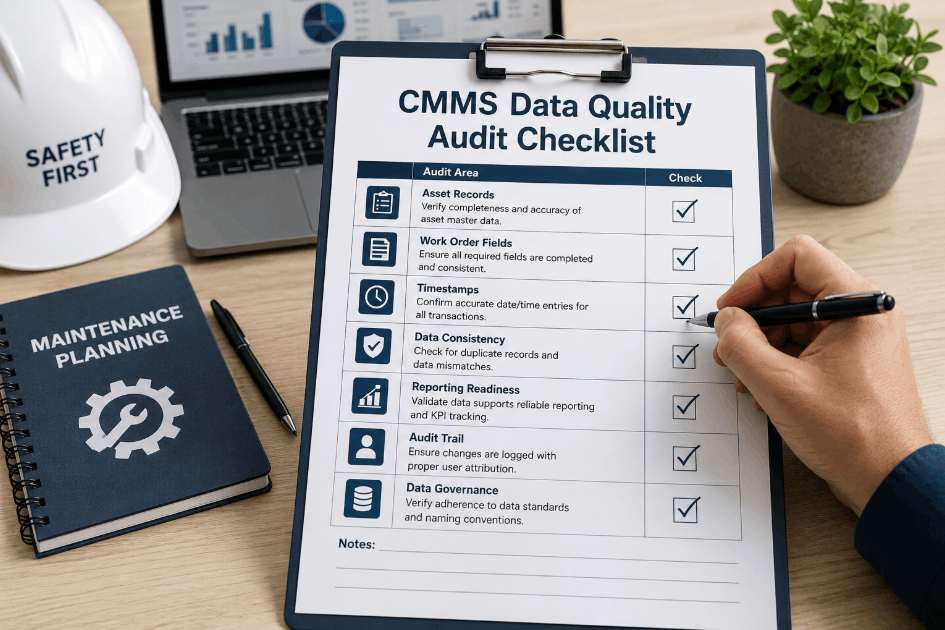
A digital twin used for simulation work before its underlying data has been audited produces outputs that look authoritative but reflect asset states that no longer exist. Sensor gaps leave entire subsystems unrepresented in the model, inconsistent tag naming breaks the link between physical equipment and its digital counterpart, and timestamp drift accumulates across data sources until the twin is running on a timeline that doesn't match the actual plant. The readiness gap follows a predictable pattern: organizations build the twin on top of unverified asset records, discover mid-project that model outputs conflict with floor observations, and trace the cause back to data quality issues that a structured audit would have caught before the first simulation run. Sign Up Free on Oxmaint to give your engineering and maintenance teams a single platform for managing the asset records, sensor mappings, and equipment hierarchies that a production-ready digital twin depends on. Book a Demo to see how Oxmaint connects verified asset data, maintenance history, and inspection records to the information layer your digital twin needs to simulate accurately rather than approximate. Use this checklist before your digital twin goes into simulation use or is connected to a live predictive maintenance workflow.
1. Sensor Coverage Verification
A digital twin with sensor gaps produces a model that represents some asset states accurately and others not at all. Confirm every asset in scope is covered by a live sensor feed before the twin is used to inform maintenance or operations decisions.
2. Tag Naming & Asset Hierarchy Consistency
Inconsistent tag naming breaks the link between the physical asset and its digital representation. Confirm tag conventions are applied uniformly before the twin ingests data from multiple source systems or site locations.
3. Timestamp Integrity & Data Synchronization
Timestamp drift across data sources makes it impossible to reconstruct an accurate asset state at any given moment. Confirm all data streams feeding the digital twin are time-synchronized before simulation outputs are trusted for operations or maintenance decisions.
4. Asset Mapping & Model Fidelity Validation
A digital twin is only as accurate as its mapping to physical reality. Confirm that asset attributes, specifications, and condition records in the model reflect the current state of equipment — not the state at original commissioning.
5. Simulation Readiness & Data Governance
Simulation readiness is determined by whether the data governance process can keep the twin current as the physical plant changes. Confirm update processes, access controls, and audit trails are in place before the twin enters operational use.