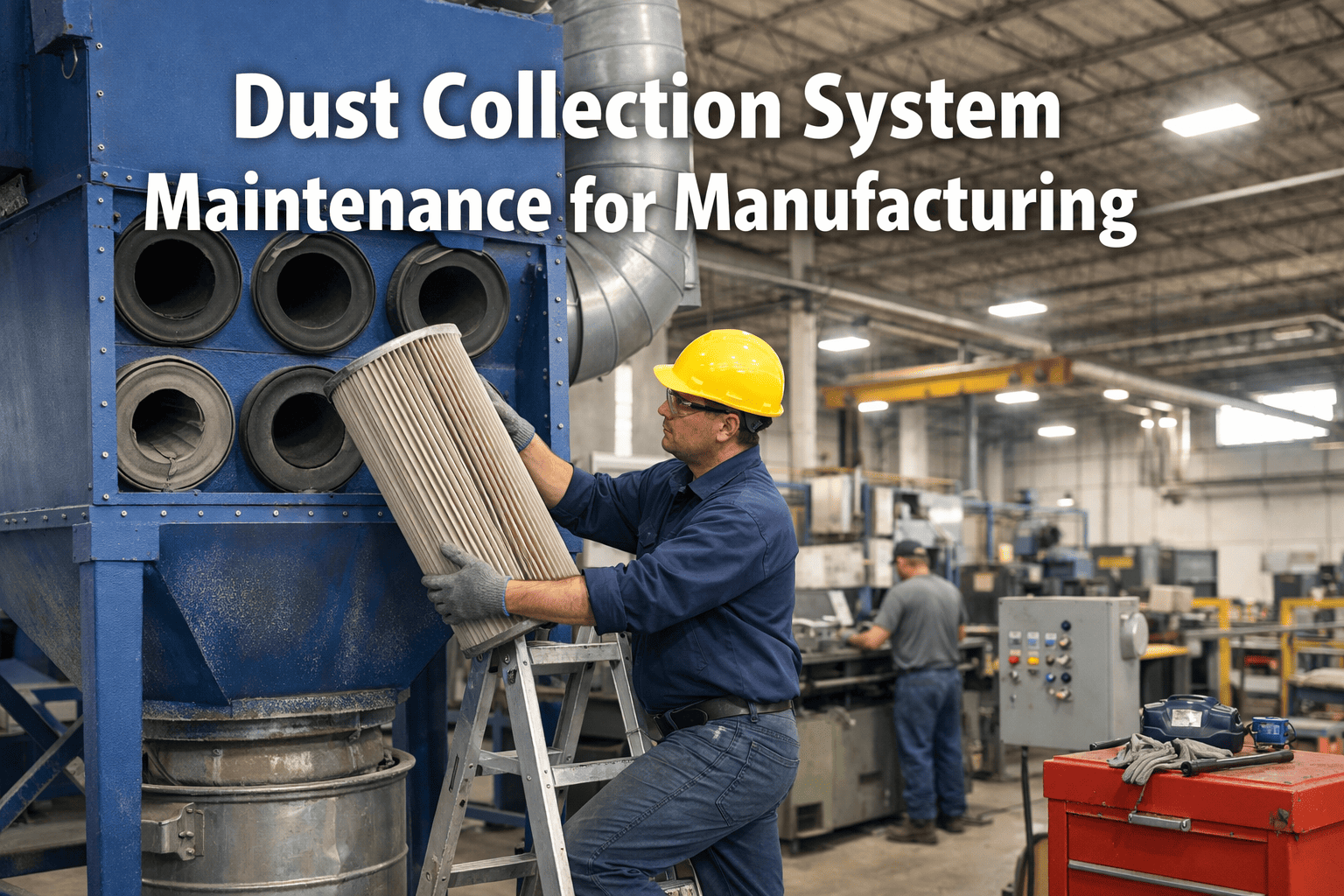
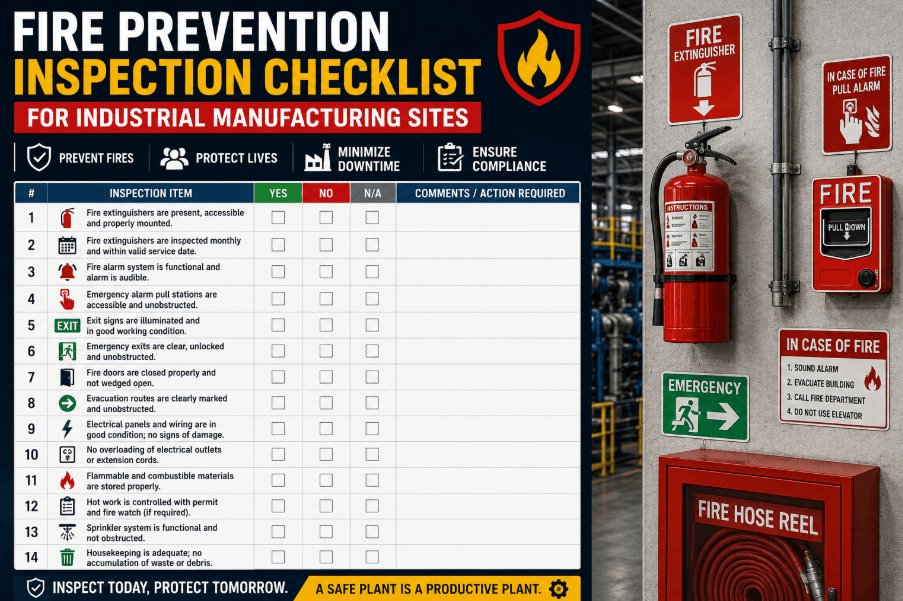
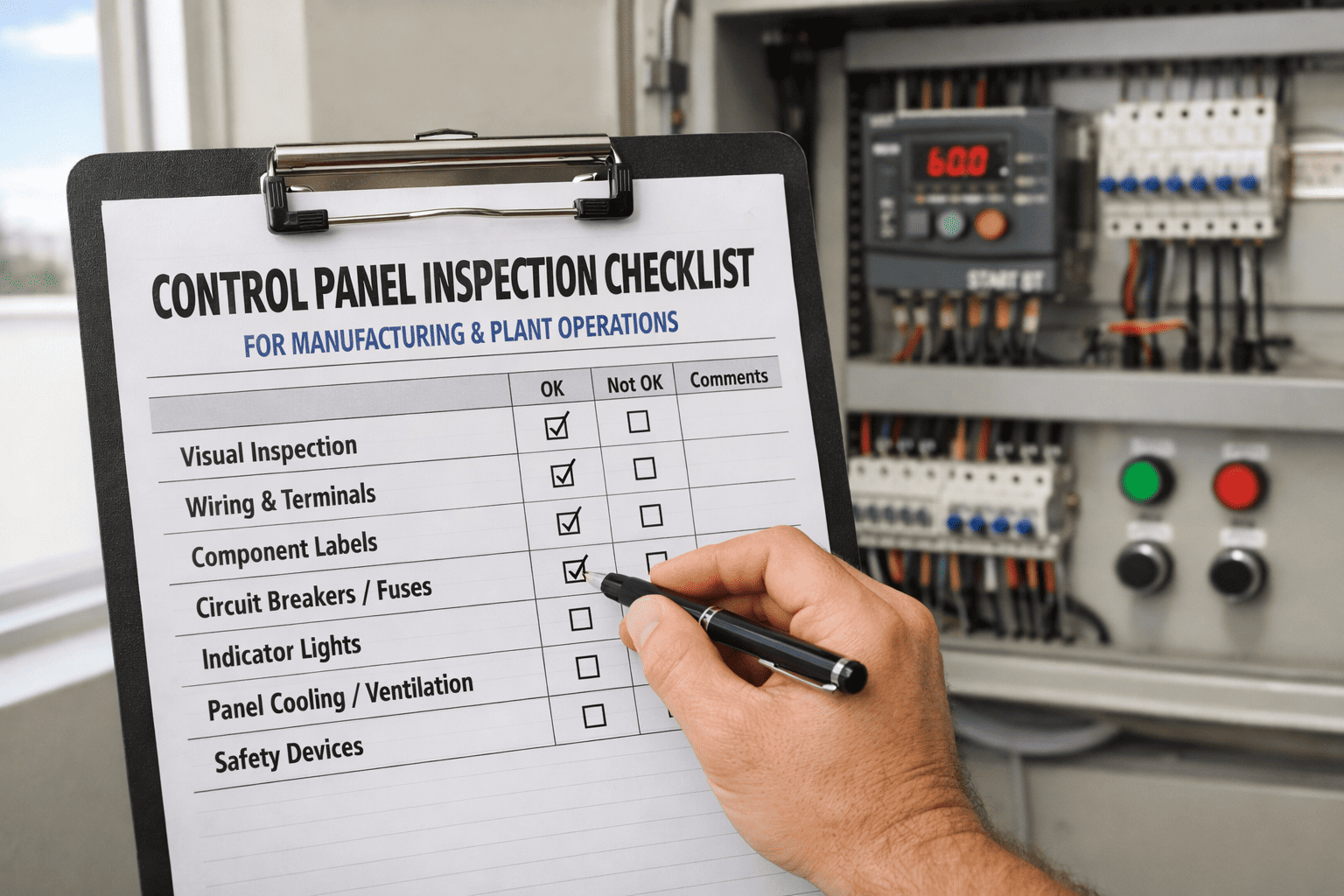
The January 2008 Imperial Sugar refinery explosion in Port Wentworth, Georgia killed 14 workers and injured 38 others — the ignition source was accumulated sugar dust on overhead surfaces that a functioning dust collection system should have prevented from ever settling there. Every manufacturing facility handling wood, metal, plastic, grain, pharmaceutical powders, or food ingredients sits somewhere on the same risk curve, and the gap between a safe plant and a catastrophic one usually comes down to how seriously the maintenance team takes differential pressure readings, filter replacement schedules, and NFPA 652 compliance paperwork. The numbers are unforgiving: a single OSHA combustible dust citation averages $15,625 per violation (willful violations climb to $156,259), a full baghouse filter set runs $8,000-$40,000 depending on system size, and one insurance-classified dust explosion event can drive premium increases of 40-80% across an entire corporate portfolio for five years. Beyond the catastrophic end of the spectrum, poorly maintained dust collectors quietly bleed money through energy-hungry fans pushing air through loaded filters, compressed air wasted on clogged pulse valves, and production losses from contaminated products — damage that rarely shows up on a single report but accumulates into six-figure annual waste. Pair your dust collection program with OxMaint's CMMS platform to log every differential pressure reading, filter change, and DHA review against the specific collector asset, or book a 15-minute walkthrough to see what compliance-ready maintenance documentation looks like.
DUST COLLECTION MAINTENANCE
Dust Collection System Maintenance for Manufacturing Plants
Filter replacement intervals, ductwork inspection, fan service, explosion prevention, and NFPA 652 compliance — structured around how the system actually fails, not how the manual is organized.
14
OSHA combustible dust industries with documented deflagration events
3-6 mo
Typical filter replacement interval before airflow collapse
5 yrs
Required NFPA 652 Dust Hazard Analysis review cycle
The Real Stakes
Why Dust Collection Maintenance Sits at the Intersection of Safety, Compliance, and Production
Dust collectors aren't production equipment — until they fail, and then they're the production equipment. A clogged baghouse shuts down a welding cell, reduces capture velocity at a sanding booth, or triggers a shutdown alarm on a pharmaceutical granulator. But the bigger exposure is what accumulates when the system underperforms quietly for weeks: combustible dust on overhead surfaces, ignition sources in the ductwork, fuel ready for the smallest spark.
The Dust Explosion Pentagon (NFPA 652 Framework)
Fuel
Combustible dust on floors, rafters, ducts, inside machines
Oxygen
Ambient air in normal concentration (almost always present)
Ignition
Static discharge, hot surfaces, sparks, friction, hot work
Dispersion
Pulse cleaning, compressed air, dislodged surface accumulations
Confinement
Ductwork, collector housing, process vessels, building interior
Know Your Machine
Five System Components That Drive 95% of Maintenance Work
Whether you run a pulse-jet baghouse, cartridge collector, cyclone, wet scrubber, or HEPA-tier system, the maintenance load concentrates in the same five zones. Know these, and you know where the budget goes.
01
Capture Hoods & Pickup Points
First point of contact with the dust stream. Undersized hoods, blocked registers, or operator-modified blast gates destroy capture velocity. Target 3,500-4,000 fpm for metal dust, 3,500 fpm for fine wood dust, 4,500+ fpm for heavy particulate.
Watch for: Dust escaping around the source, operator complaints about visibility, unauthorized damper adjustments
02
Ductwork & Conveyance
Carries dust from source to collector. Low velocity causes dropout and accumulation inside ducts; high velocity causes abrasion and wear on elbows. Design target 3,500-5,500 fpm transport velocity depending on material.
Watch for: Abrasion at elbows, visible dust streaks below horizontal runs, audible material impact sounds, sagging flex hose
03
Filter Media (Bags or Cartridges)
The heart of the system. Cartridge filters typically last 2-5 years, bags 3-7 years depending on dust characteristics and cleaning cycles. Differential pressure across the media is the single most important diagnostic number in the whole system.
Watch for: Rising baseline ΔP, visible emissions from stack, dust downstream of media, pinholes at the top of bags (ash bridging)
04
Cleaning System (Pulse Valves & Air)
Pulse-jet collectors depend on solenoid-controlled diaphragm valves firing 85-100 psi air bursts. Valve diaphragms typically last 1-3 million cycles; worn diaphragms waste 20-30% of compressed air while under-cleaning filters.
Watch for: Valves stuck open (continuous air leak), missed cleaning pulses, pressure decay at the header, cleaning cycles firing too frequently
05
Fan, Motor & Discharge
The prime mover. Fan wheel buildup is a chronic failure mode when sticky or moist particulate migrates past the filter. Bearings, belts, and motor amp draw are leading indicators for the entire downstream health story.
Watch for: Rising vibration, motor amp climb at constant damper setting, bearing temperature above 80°C, belt slippage, wheel imbalance
Asset-level tracking
Log Every Reading Against the Specific Collector
OxMaint lets you structure the collector, filters, pulse valves, fan, and motor as separate assets with their own inspection schedules and failure histories. When pulse valve diaphragms fail on collector #3 every 14 months, the trend is visible — and so is the root cause.
The Calendar
Maintenance Frequency: What to Check and When
Dust collection inspection intervals are driven by dust type, operating hours, and explosion risk classification. This is the baseline framework — fine, sticky, or abrasive dusts compress every interval by 30-50%.
Daily / Per Shift
Record differential pressure (ΔP) reading, empty dust hopper or bin, visual stack emission check, walk-around for audible changes, verify no stuck pulse valves
Owner: Operator / Shift supervisor
Weekly
Compressed air receiver drain, ΔP trend review, fan vibration spot-check, visual ductwork sweep for leaks or abrasion, magnehelic gauge zero verification
Owner: Maintenance technician
Monthly
Pulse valve firing sequence check, door seal and gasket inspection, hopper discharge valve test, abort gate function, fan belt tension, motor amp draw log
Owner: Maintenance technician
Quarterly
Internal collector inspection, filter pinhole check, fan wheel buildup, bearing lubrication, compressed air moisture trap service, blast gate operation test
Owner: Maintenance lead / contractor
Semi-Annual
Ductwork dust accumulation survey (critical for combustible dust), pulse valve diaphragm replacement program, explosion vent integrity, spark detection system test
Owner: Safety + maintenance teams
Annual / 5-Year
Full filter replacement (if not done by condition), airflow balance testing, DHA review and update (NFPA 652 mandates every 5 years), fan alignment survey, thermography audit
Owner: Engineering + compliance
The #1 Diagnostic Number
Differential Pressure: Your Collector's Vital Sign
If you track only one number on your dust collector, track differential pressure across the filter media. ΔP tells you about filter loading, cleaning system health, air leaks, and upcoming failures — often weeks before anything else signals trouble.
Differential Pressure Zones & What They Mean
< 1.0 in w.g.
Too Low
Red flag: filter tear, missing cartridge, bypass, or damaged seal. Find the leak before it contaminates downstream air.
1.0 – 3.0 in w.g.
Normal Operating
Healthy pulse-jet baghouse range. Record trend daily. Rising baseline over weeks signals approaching filter load.
3.0 – 4.5 in w.g.
Elevated
Filters loading beyond optimal. Check cleaning cycle performance, compressed air supply, and pulse valve function.
> 4.5 in w.g.
Action Required
Airflow collapsing, fan amp draw climbing, energy cost spiking. Replace filters or overhaul cleaning system.
Regulatory Backbone
NFPA 652 Compliance: The Five-Step Dust Hazard Analysis Journey
NFPA 652 is the foundational standard for combustible dust management in the United States. If your facility handles wood, metal, grain, sugar, flour, plastic, pharmaceutical, or chemical powders, a Dust Hazard Analysis (DHA) is mandatory — reviewed every five years, and required again after any meaningful process change.
Step 1
Identify Combustible Dust Presence
Laboratory testing per NFPA 652 Chapter 5 when material combustibility is uncertain. Common combustibles include sugar, flour, grain, wood, coal, metals (aluminum, magnesium, zinc), plastics (epoxy, melamine), and pharmaceuticals.
Step 2
Characterize Material Properties
Measure Kst (explosion severity), minimum ignition energy (MIE), minimum explosible concentration (MEC), and maximum safe storage temperature. These values drive all subsequent protection decisions.
Step 3
Conduct the Dust Hazard Analysis
Systematic walkthrough of every process, department, and compartment. Categorize each area as Not a Hazard, Might Be a Hazard, or Deflagration Hazard. Document existing safeguards and identify gaps.
Step 4
Implement Hazard Management
Explosion vents, chemical suppression, isolation valves, spark detection, grounding and bonding, housekeeping program, hot work permits, ignition source controls. Each tied to a specific DHA finding.
Step 5
Document, Train, Review Every 5 Years
Maintain written program including housekeeping, PPE, hot work, and training. DHA must be formally reviewed and updated every five years or after any significant process or material change.
Risk By Industry
Where Combustible Dust Lives in Your Plant
| Industry / Process |
Typical Combustible Dust |
Kst Range |
Priority Controls |
| Wood products / Furniture |
Sawdust, MDF dust, sanding residue |
St1 (100-200 bar·m/s) |
Spark detection, explosion vents, housekeeping |
| Food & Grain processing |
Flour, starch, sugar, grain dust, cocoa |
St1-St2 (up to 300) |
Isolation valves, chemical suppression, explosion vents, NFPA 61 |
| Metal fabrication / Welding |
Aluminum, magnesium, iron, titanium, steel |
St1-St3 (highly variable) |
Wet collection for reactive metals, grounding, NFPA 484 |
| Pharmaceutical / Chemical |
API powders, excipients, resins |
St1-St2 typical |
Inerting, containment, explosion venting, validated DHA |
| Plastics / Rubber |
Epoxy dust, melamine, polyethylene fines |
St1-St2 |
Static control, grounding, pulse-jet with spark detect |
| Coal / Power generation |
Pulverized coal, biomass dust |
St1-St2 |
Inerting, explosion isolation, NFPA 654 protocols |
| 3D printing / Additive manufacturing |
Metal powders, polymer fines |
St1-St3 (reactive metals) |
Inert atmosphere, wet collection, operator-segregated collection |
| Battery / Lithium-ion production |
Graphite, cathode/anode fines |
St1 |
Moisture control, explosion-proof collectors, continuous monitoring |
Kst classification: St0 = not explosible, St1 = weak (up to 200 bar·m/s), St2 = strong (201-300), St3 = very strong (>300). Actual values must be measured per NFPA 652 for your specific material.
Compliance documentation
Build DHA-Ready Maintenance Records Automatically
Inspectors ask for proof: ΔP logs, filter change records, explosion vent integrity checks, pulse valve service history, training completions. OxMaint generates every one of those records as a natural output of the maintenance you already do — ready for auditors, insurers, and your own DHA reviewer.
Symptom → Cause
Troubleshooting the Most Common Failures
Visible dust emission from stack
Torn filter, failed seal at tubesheet, broken filter cage, bypass around filter assembly, improper filter installation
Shut down, inspect tubesheet gaskets and individual filter elements, use dye penetrant or UV tracer to locate leak point
ΔP climbing despite cleaning cycles
Low compressed air pressure, stuck pulse valve diaphragms, hygroscopic dust glazing filter media, sticky particulate blinding cartridges
Verify 85-100 psi at header, test each pulse valve individually, check compressed air dewpoint, evaluate filter media chemistry vs dust type
Capture weakness at pickup points
Duct leaks, closed or partially open blast gates, fan wheel buildup, loaded filters reducing system flow, blocked pickup hood
Walk ductwork for leaks, verify all gates open to spec, measure velocity at each pickup, test fan curve against design point
Fan vibration rising over weeks
Wheel buildup (sticky/moist dust passed filter), bearing wear, impeller erosion, belt wear, coupling misalignment, loose mounting bolts
Vibration analysis with FFT, visual wheel inspection, bearing thermography, alignment check with dial indicator or laser
Compressed air consumption spiking
Pulse valve stuck partially open, diaphragm leak, solenoid failure holding valve open, air leaks in manifold or header
Listen at each valve during idle, ultrasonic leak detection, measure air use during non-cleaning periods
Hopper bridging or discharge failure
Moisture ingress, rotary airlock seized, level sensor failure, accumulated buildup in hopper corners, dust compaction
Verify rotary airlock operation, check hopper heating if installed, inspect level controls, install vibrators or air cannons if chronic
Frequently Asked
Common Questions From Plant Maintenance Teams
How often should dust collector filters be replaced?
Most facilities replace filters every 3-6 months, though fine or sticky particulate may require shorter intervals and clean industrial dust may extend it to 12-18 months. Track differential pressure rather than calendar — filter life is a condition-based decision.
Log ΔP trends in OxMaint to predict change-outs.
Is NFPA 652 compliance mandatory, and what happens if we ignore it?
NFPA 652 is enforceable through OSHA's General Duty Clause and adopted into IBC/IFC codes. Ignoring it exposes you to OSHA citations, insurance premium increases, and personal liability for facility owners. DHAs must be reviewed every 5 years.
What differential pressure is normal for a pulse-jet baghouse?
Typical healthy range is 1.0-3.0 inches water gauge across the filter media. Below 1.0 signals a leak or tear; above 4.5 signals filter loading or cleaning system failure. Consult your OEM for specific design targets.
How do I know if my plant has a combustible dust hazard?
If you handle any organic, metal, plastic, or chemical powder below 500 microns, assume it is combustible until lab testing per NFPA 652 proves otherwise. Common culprits include wood, grain, sugar, flour, aluminum, magnesium, and most plastic dusts.
Book a demo to see combustible dust tracking workflows.
What's the most commonly skipped maintenance task on dust collectors?
Ductwork interior inspection. Dust accumulates inside horizontal runs, elbows, and low-velocity sections, creating fuel loads that no one sees until an event. Semi-annual internal duct surveys are the highest-value combustible dust control many plants skip.
How long do pulse valve diaphragms last?
Typical service life is 1-3 million cycles, which translates to 1-3 years on most pulse-jet collectors. Worn diaphragms waste 20-30% of compressed air and deliver weak pulses — scheduled replacement programs are usually cheaper than reactive change-outs.
Can one dust collector handle multiple processes on different materials?
Not safely when combustible dusts are involved. Mixing reactive metals (aluminum, magnesium) with organic dusts (wood, grain) creates unknown reactivity. Segregate collection by material class, and consult a DHA before combining any streams.
Turn Maintenance Into Compliance
Every Inspection Logged. Every Reading Trended. Every DHA Audit-Ready.
OxMaint was built for manufacturers who treat dust collection maintenance as the safety-critical system it actually is. Map your collectors, hoppers, fans, pulse valves, and filters as individual assets with their own PM cadence. Capture ΔP readings, emission checks, and cleaning verification in seconds from a mobile device. Generate the compliance documentation auditors and insurers actually want — automatically.