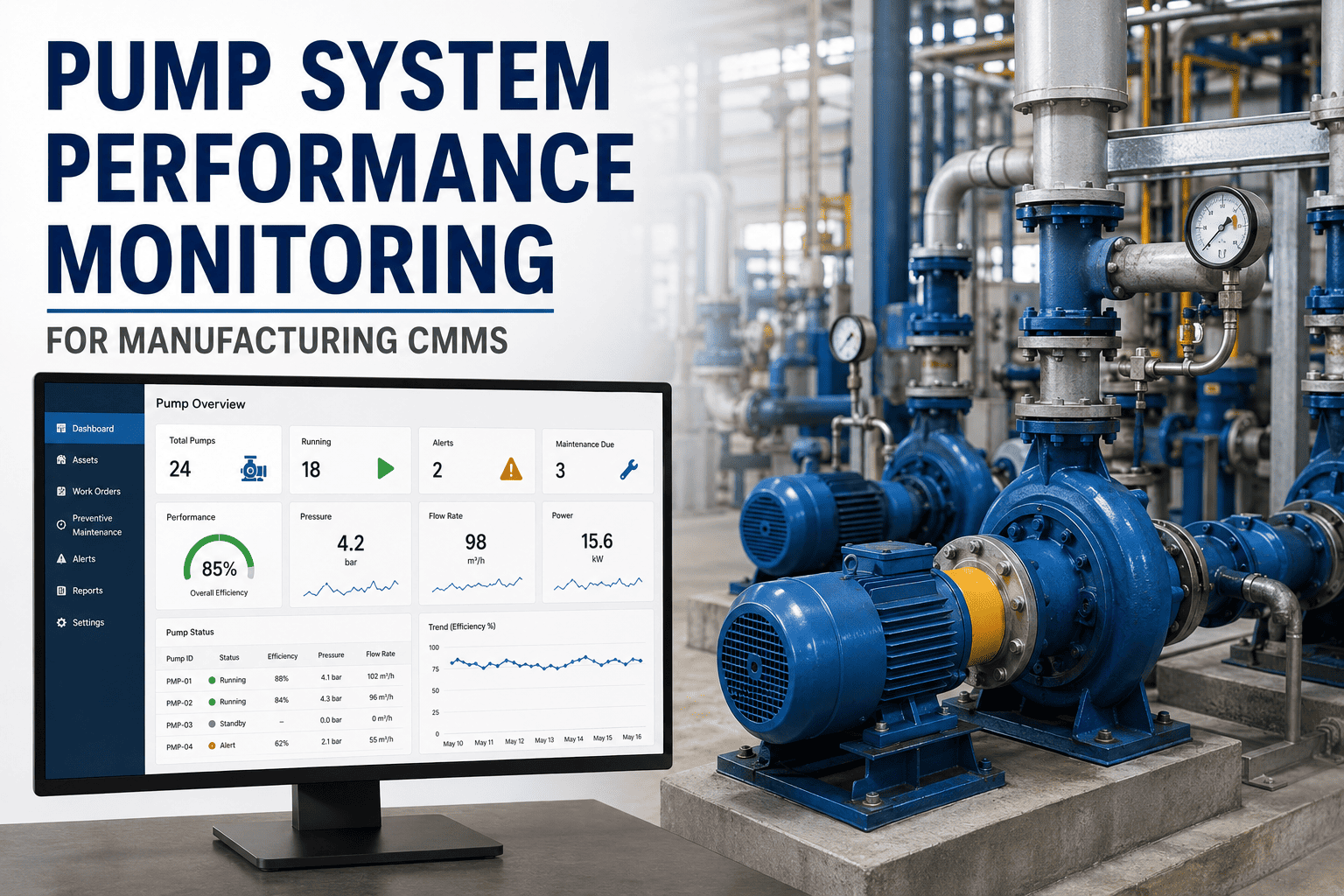
Hydraulic systems account for nearly 30% of all unplanned manufacturing downtime — yet most plants still wait for a leak, a pressure drop, or a seized cylinder before acting. Oxmaint's CMMS brings hydraulic asset tracking, pressure trend logging, and oil change compliance into one maintenance workflow — start your free trial and stop reacting to failures after they happen. With hydraulic equipment markets growing to $52.6 billion by 2033 and AI-driven predictive maintenance cutting infrastructure failures by up to 73%, the gap between reactive and predictive hydraulic maintenance has never been more expensive to ignore.
Predictive Maintenance · Industry 4.0 · Hydraulics
Hydraulic System Predictive Maintenance in Manufacturing
Pressure analytics, oil contamination monitoring, and temperature trending that catch pump wear, cylinder leaks, and valve failures weeks before they shut your line down.
73%
Reduction in hydraulic failures with AI predictive monitoring
30%
Of all unplanned manufacturing downtime traced to hydraulic faults
40%
Longer asset lifespan with condition-based maintenance programs
$52.6B
Global hydraulic equipment market projected by 2033
Why Hydraulics Fail
The Four Failure Modes That Shut Down Production Lines
Hydraulic systems fail in predictable patterns. The problem is that traditional maintenance schedules are not aligned with real degradation curves — they replace parts that still have useful life and miss faults that develop between scheduled visits.
01
Pump Wear and Cavitation
Internal wear on pump vanes, pistons, and gears generates metal particles that contaminate fluid and accelerate downstream component damage. Cavitation — fluid vaporizing under low suction pressure — causes pitting damage invisible until pump output drops critically. Pressure analytics detect the early signal: rising inlet vacuum and falling volumetric efficiency weeks before pump failure.
Signal: Pressure drop + noise + metal particles in oil
02
Cylinder Seal Degradation
Cylinder seals degrade from contaminated fluid, thermal cycling, and side-loading. Internal bypass causes the cylinder to drift under load without any external leak visible — a critical failure mode in presses, clamps, and lifts where position accuracy directly affects product quality. Temperature trending and pressure-hold tests identify bypassing seals before they cause dimensional rejects.
Signal: Position drift + temperature rise + pressure bleed-off
03
Oil Contamination
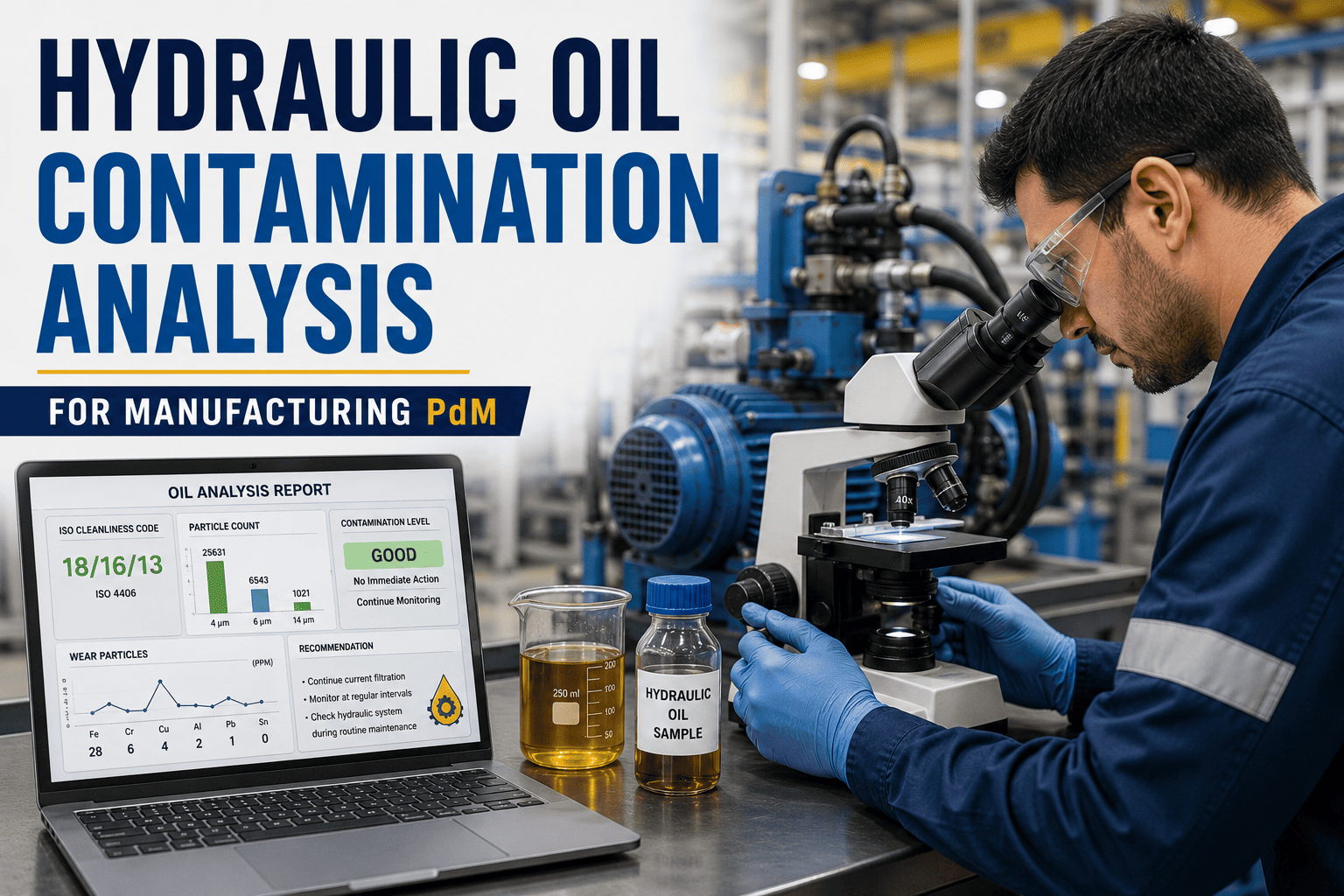
Particle contamination above ISO 4406 target cleanliness levels is the leading cause of hydraulic component failure — responsible for an estimated 75–80% of all hydraulic system faults. Water ingression, oxidation, and metal wear particles create a self-reinforcing degradation cycle. Continuous oil quality monitoring stops the cycle at the source rather than replacing components after the damage is done.
Signal: Particle count rise + viscosity change + water percentage
04
Valve Sticking and Spool Wear
Directional and proportional valves accumulate contamination in spool clearances, causing sluggish response, internal leakage, and eventual sticking. In servo-controlled systems, spool wear changes the valve gain curve — causing erratic machine behavior that looks like a controller problem until valve flow tests reveal the actual fault. Response time trending catches this before the machine starts producing scrap.
Signal: Cycle time increase + pressure overshoot + response lag
Condition Monitoring Parameters
What to Monitor — and What Each Signal Tells You
Effective hydraulic predictive maintenance tracks five key parameters simultaneously. A single parameter out of range is a warning. Two or more out of range simultaneously is a failure in progress.
System Pressure
Continuous pressure trending identifies pump output decline, relief valve drift, and internal bypass. Pressure signature analysis during cycle execution detects mechanical changes in cylinders and motors before they produce visible symptoms.
Transducers · Data logger · Trend analytics
Oil Temperature
Operating temperature above design limits accelerates seal degradation, reduces fluid viscosity, and promotes oxidation. Temperature rise in a system with no load change indicates increased internal leakage — a direct fault signal rather than an ambient condition.
RTDs · Thermocouples · Trend thresholds
Oil Cleanliness (ISO 4406)
Particle count per ISO 4406 cleanliness codes directly correlates with component life. Tracking particle count trends over time identifies filter bypass, external contamination ingress, and internal wear before oil becomes damaging to components.
Online particle counters · Lab sampling · Cleanliness trending
Flow Rate
Volumetric efficiency — actual flow versus theoretical flow — is the most direct indicator of pump internal wear. A pump at 85% volumetric efficiency wastes energy and overheats fluid. Trending flow efficiency over time gives an accurate prediction of remaining pump service life.
Flow meters · Efficiency calculation · Pump health index
Vibration and Acoustics
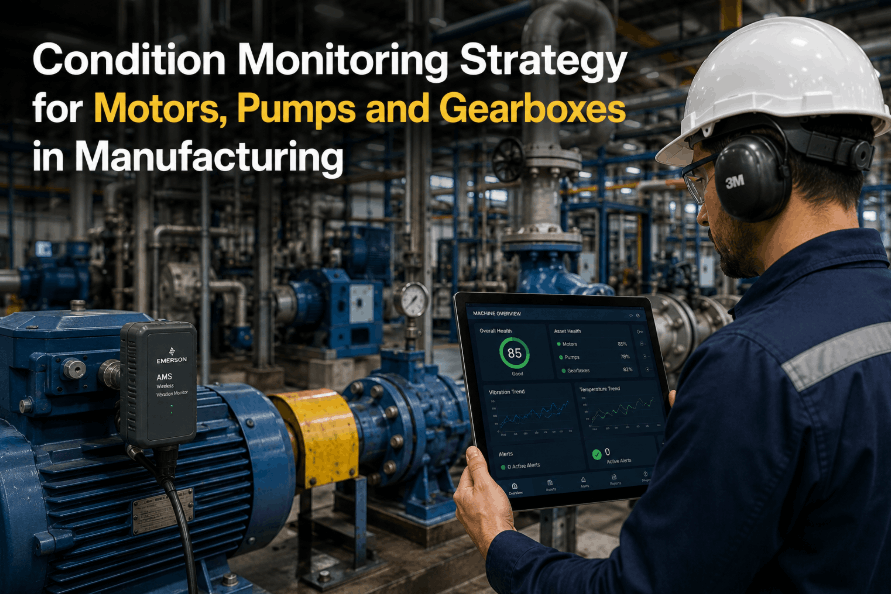
Pump and motor bearings generate characteristic vibration signatures as they wear. Acoustic emission monitoring detects cavitation and fluid-borne noise that predict impeller damage and valve seat wear before pressure or flow metrics show significant change.
Accelerometers · Acoustic sensors · FFT analysis
Alarm Threshold Guide
Pressure variation
Critical
Oil temp above 60°C
Critical
ISO cleanliness >18/16/13
High
Pump volumetric eff. <85%
High
Vibration spectral shift
High
Water in oil >0.1%
Medium
Cycle time drift >5%
Monitor
Track Every Hydraulic Asset in One Maintenance System
Oxmaint centralizes pressure logs, oil change history, and cylinder maintenance records for every hydraulic unit on your floor — giving your maintenance team the trending data they need to act before failures happen.
Implementation Roadmap
Building a Hydraulic Predictive Maintenance Program — Stage by Stage
A hydraulic PdM program does not have to be implemented all at once. A phased approach lets you demonstrate ROI at each stage and build organizational capability incrementally.
1
Asset Registry and Baseline
Document every hydraulic unit: pump type, cylinder bore and stroke, valve specifications, operating pressure, and design temperature. Record baseline performance data — normal operating pressure range, cycle times, fluid specification. This baseline is what every future reading is measured against. Without it, trending is impossible.
Output: Complete hydraulic asset register with performance baselines
2
Sensor Instrumentation
Install pressure transducers, temperature sensors, and flow meters on critical circuits. Prioritize by production impact — systems that would cause a line stoppage if they failed go first. Many existing PLCs already collect pressure and temperature data that is simply not being analyzed. Audit what you already have before purchasing new hardware.
Output: Live data streams from critical hydraulic circuits
3
Oil Sampling Program
Establish a regular oil sampling schedule — quarterly for standard circuits, monthly for high-duty or contamination-prone systems. Track ISO cleanliness code, viscosity, water content, and metal particle spectrum. Results trend into your CMMS so maintenance teams see the degradation curve rather than a snapshot that requires expert interpretation.
Output: Trending oil health data linked to each hydraulic asset
4
Alarm and Work Order Automation
Set threshold alarms on pressure, temperature, and oil cleanliness parameters. When a threshold is crossed, the system generates a condition-based work order automatically — describing the parameter, the reading, and the recommended investigation. The maintenance team acts on data, not on guesswork or a calendar date.
Output: Condition-triggered work orders replacing time-based PM schedules
5
AI-Driven Failure Prediction
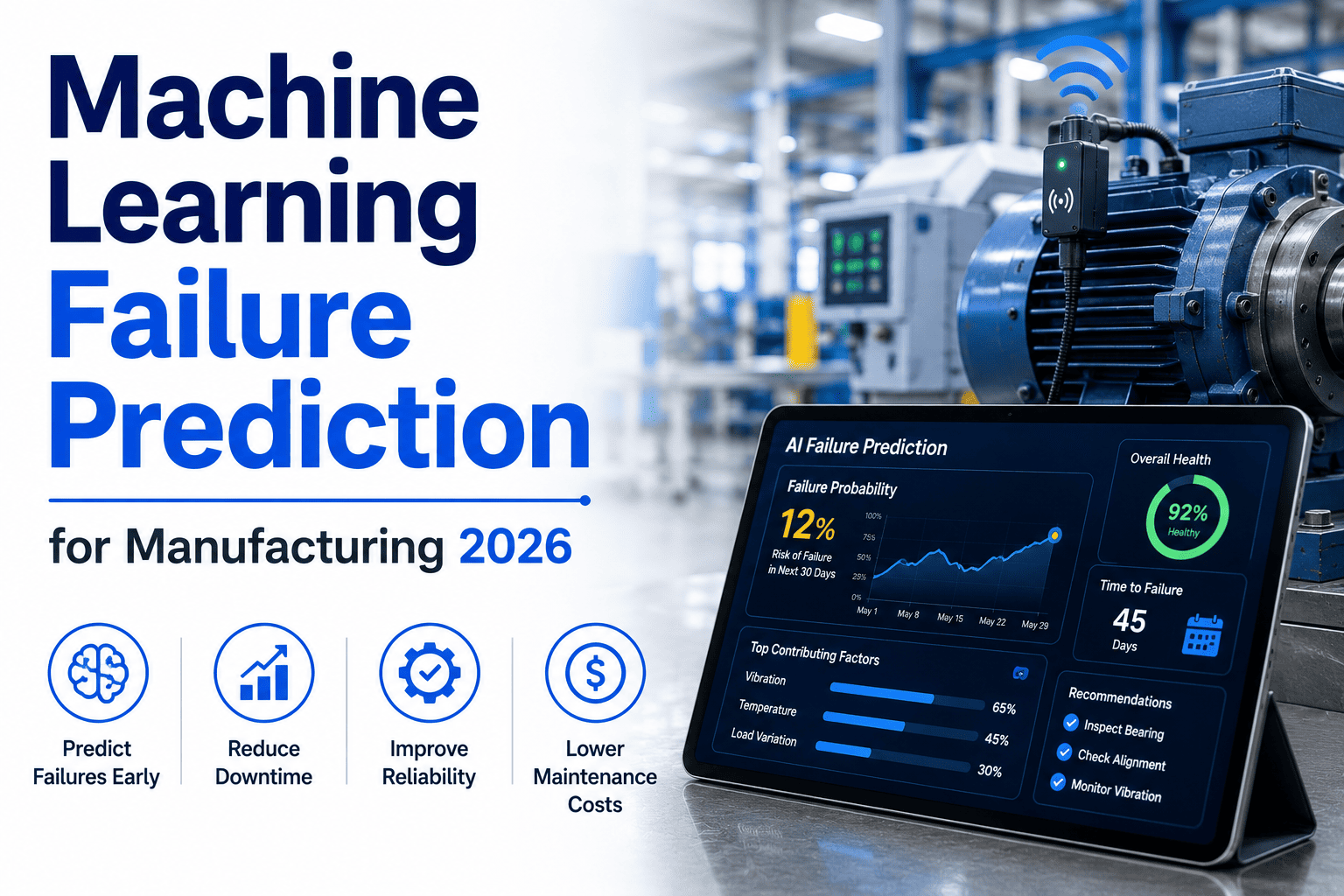
Once 6–12 months of operational data accumulates, machine learning models build failure prediction capability on your specific equipment fleet. The AI-in-OT maintenance market is growing from $2.7B to over $14B by 2033 precisely because rule-based thresholds miss subtle pattern combinations that ML detects. Prediction accuracy improves continuously as the model learns from confirmed failure events.
Output: Remaining useful life predictions per asset with confidence intervals
Maintenance Strategy Comparison
Reactive vs Preventive vs Predictive — What Each Costs You
| Maintenance Strategy |
Typical Trigger |
Hydraulic Cost Impact |
Risk Level |
Recommended For |
| Reactive (Run-to-Failure) |
Equipment stops working |
Emergency parts premium, secondary damage, production loss — 3–5x higher than planned repair cost |
Very High |
Non-critical, low-cost, easy-to-replace components only |
| Time-Based Preventive |
Calendar interval |
Replaces components with remaining life, misses failures between intervals — still 40–60% of reactive cost impact |
Medium |
Where condition monitoring is not yet feasible |
| Condition-Based (CBM) |
Parameter threshold crossing |
Targeted intervention on actual fault progression — 25–35% lower maintenance cost than time-based |
Low |
Pumps, cylinders, valves with measurable parameters |
| Predictive (AI-driven PdM) |
Multi-parameter ML model output |
Remaining useful life prediction enables optimal replacement timing — industry benchmarks show 10–25% total maintenance cost reduction |
Very Low |
High-criticality systems with sufficient data history |
Oxmaint + Hydraulic PdM
How a CMMS Ties Hydraulic Condition Data to Maintenance Action
Sensor data without a maintenance workflow is an alert nobody acts on. Oxmaint connects hydraulic condition monitoring outputs directly to work order creation, asset history, and compliance tracking — closing the gap between detection and action.
Asset History
Complete Hydraulic Service Records
Every oil change, seal replacement, pump overhaul, and pressure test recorded against each asset with date, technician, and readings. When a fault appears, the full service history is available in seconds — revealing patterns like repeated seal failures on the same cylinder that point to a root cause rather than a parts problem.
Oil Management
Fluid Change and Sampling Compliance
Scheduled oil changes, filter replacements, and sample submissions managed as PM work orders with automatic escalation when overdue. Oil analysis results linked directly to the asset record — so contamination trends are visible alongside the maintenance actions that addressed them, rather than sitting in a separate lab report nobody connects to the maintenance schedule.
Condition Triggers
Threshold-to-Work Order Automation
When pressure analytics, temperature monitoring, or oil sampling returns an out-of-tolerance result, Oxmaint generates a corrective work order automatically — describing the fault parameter, the deviation, and the asset affected. Maintenance teams stop relying on manual logging to catch abnormal readings before they become failures.
Spare Parts
Predictive Parts Inventory Alignment
Remaining useful life predictions from hydraulic monitoring feed into spare parts planning. When the system predicts a pump will need replacement within 60 days, the parts procurement trigger fires before the failure — eliminating the emergency order premium that makes reactive hydraulic failures so expensive in practice.
Common Questions
What Maintenance Engineers Ask About Hydraulic Predictive Maintenance
What is the most cost-effective first step in hydraulic predictive maintenance?
Start with an oil sampling program before investing in sensors. Lab analysis of hydraulic fluid reveals particle contamination, viscosity, water content, and metal wear particles that diagnose the majority of developing faults at minimal cost. Pair sampling results with your existing PLC pressure and temperature logs — most plants already have this data but are not trending it.
Oxmaint's asset records make it easy to track sampling history and link results to each hydraulic unit — try it free.
How much downtime reduction can we realistically expect from hydraulic PdM?
Industry benchmarks show 25–30% fewer breakdown events and 30–50% less unplanned downtime within the first year of a structured hydraulic CBM program. Full predictive maintenance benefits typically take 18–24 months to realize as data accumulates and models mature. Even basic threshold monitoring on pressure and temperature pays back within months in most manufacturing environments.
Book a demo to see how Oxmaint supports your baseline measurement and ROI tracking.
What causes hydraulic systems to fail so frequently in manufacturing?
Contamination is the root cause of 75–80% of all hydraulic failures. Particles generated by internal wear circulate through the system and damage every component they pass through. The failure is self-reinforcing — wear generates particles, particles cause more wear. Maintaining fluid cleanliness to ISO 4406 target codes, combined with pressure and temperature monitoring, breaks this cycle before it cascades.
Start tracking fluid cleanliness compliance in Oxmaint — free trial available.
Can we implement hydraulic predictive maintenance without replacing our existing equipment?
Yes. Most hydraulic PdM programs start with existing PLC data, add inexpensive pressure transducers and temperature sensors where gaps exist, and implement oil sampling as a low-cost condition monitoring layer. The CMMS is the integration point — connecting what sensors report to the maintenance workflow. Full sensor instrumentation and AI-layer modeling comes in later phases after baseline ROI is demonstrated.
Talk to our team about a phased implementation approach for your plant.
How does a CMMS help with hydraulic predictive maintenance specifically?
A CMMS bridges sensor data and maintenance action. Without it, alarm signals generate emails nobody acts on and oil analysis reports sit in inboxes while faults develop. Oxmaint creates condition-triggered work orders, maintains full asset service history, tracks oil change and sampling compliance, and links spare parts planning to predicted component end-of-life — turning monitoring data into coordinated maintenance execution.
See Oxmaint's hydraulic asset management in action — free trial, no setup required.
Every Hydraulic Failure You Prevent Is a Production Day You Keep
Pressure analytics, oil contamination trending, and condition-triggered work orders give your maintenance team the visibility to act before cylinders fail, pumps seize, and lines stop. Oxmaint connects hydraulic condition data to the maintenance workflow that turns detection into action.