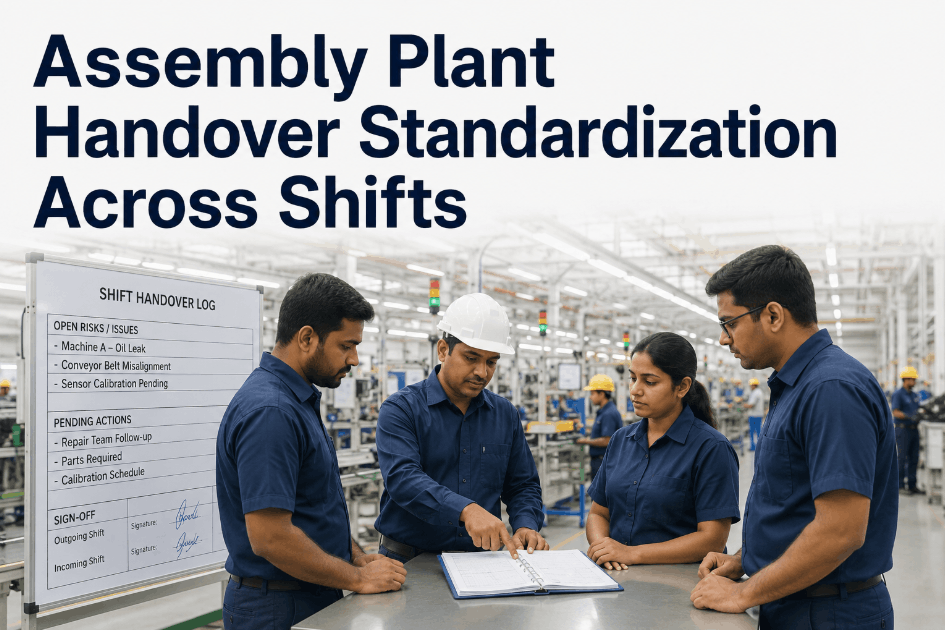
Continuous production environments run 24/7, and every shift transition is a high-risk window where incomplete information, unclear task ownership, and undocumented open items quietly erode reliability. When technicians hand off equipment status without structured notes, active repair logs, or confirmed task assignments, the incoming crew spends the first hour reconstructing context instead of executing work. Sign Up Free with Oxmaint to digitize shift handover workflows, track open items across transitions, and eliminate the information gaps that slow production teams down. Book a Demo to see how maintenance teams use Oxmaint to reduce handover friction and keep continuous lines running without knowledge loss between shifts. This guide gives plant managers and reliability engineers a practical framework to improve shift note quality, reduce open work aging, and make responsibility transfers traceable—so nothing critical falls through the cracks between crews.
Why Shift Handover Quality Directly Controls Throughput and Asset Reliability
In continuous production, the handover moment is not administrative—it is a reliability event. Equipment running across multiple shifts accumulates deferred faults, incomplete repairs, and undocumented condition changes that compound when crews lack shared visibility. When open items are communicated verbally or written in paper logs, context degrades by the second or third transition. Sign Up Free to build a centralized handover log that keeps every open item, repair backlog entry, and equipment note visible to every shift. Plants that standardize digital handover protocols reduce task aging by 30–50% and cut the time lost reconstructing prior-shift context from 45–90 minutes per transition to under 10 minutes.
Common Shift Handover Failure Modes in Continuous Production
Most handover failures are systemic, not individual. When teams lack structured tools for shift notes, open item tracking, and responsibility transfer, the same problems repeat across every transition. Book a Demo to see how Oxmaint closes these gaps with structured digital handover workflows.
Outgoing crews document only completed tasks and omit deferred faults, temporary fixes, or equipment behavior changes. Incoming crews discover issues through breakdowns rather than briefings, adding 30–60 minutes of reactive investigation per transition.
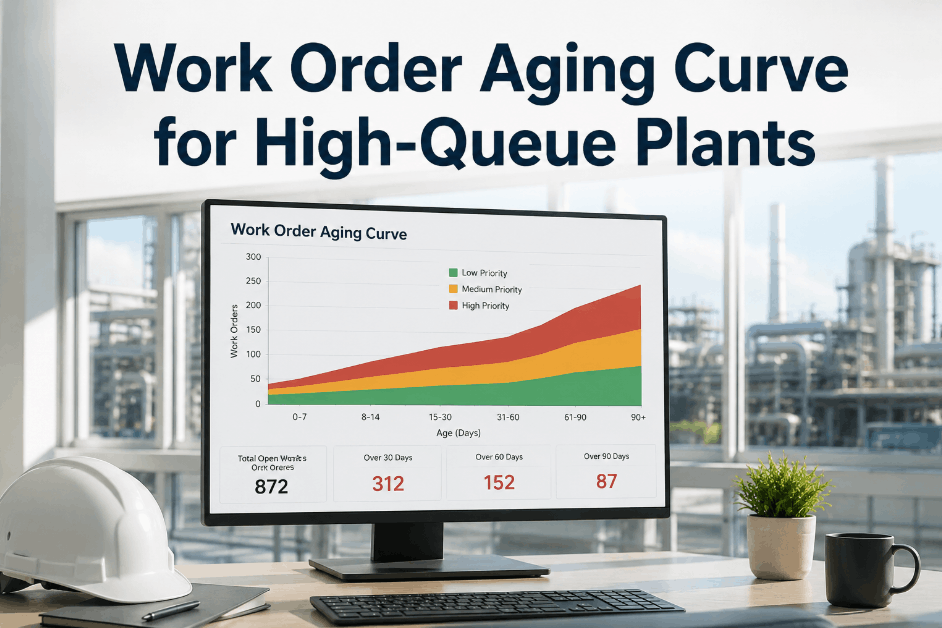
Tasks started but not finished during a shift lose ownership at handover. Without a structured open work queue with clear assignment lag tracking, these items age silently for 2–5 shifts before someone escalates them—by which point equipment condition has worsened.
Without priority rules embedded in the handover workflow, incoming crews self-sort tasks based on familiarity rather than criticality. High-priority deferred PMs go unexecuted while low-impact tasks consume shift hours.
Verbal task handoffs create accountability gaps. When a repair was "almost done" at shift end, neither crew confirms completion. Assignment lag grows while the equipment runs on a temporary fix that becomes permanent.
Preventive maintenance tasks deferred across multiple shifts stack into a repair backlog that exceeds the next crew's capacity. Without backlog burn-down visibility per shift, overdue PMs compound until a forced outage clears them—at 3–10x the cost of scheduled completion.
Outgoing shifts defer difficult or time-consuming tasks to incoming crews without documenting the context. Workload imbalance builds resentment, reduces compliance, and increases task aging—especially for multi-hour repairs requiring preparation from the prior shift.
Shift Handover Quality Tasks: Frequency, Ownership, and Production Impact
Structured handover programs define exactly what must be documented, verified, and transferred at every shift boundary—eliminating guesswork and ensuring incoming crews start with full operational context.
| Handover Element | Common Failure Mode | Structured Task | Frequency | Production Impact |
|---|---|---|---|---|
| Open Work Queue Review | Orphaned tasks, assignment lag | Digital open item review with confirmed ownership transfer and priority tags | Every Shift Boundary | 30–50% reduction in task aging, 3x faster assignment |
| Equipment Condition Notes | Incomplete or verbal-only status updates | Mandatory structured shift notes per asset covering deferred faults and temporary fixes | Per Shift | 60–75% reduction in repeat fault occurrence |
| Overdue PM Reconciliation | Compounding PM backlog across shifts | Backlog burn-down check with escalation trigger if PM aging exceeds threshold | Daily | Prevents forced outage from PM backlog; 3–10x cost avoidance |
| Priority Rule Enforcement | Self-sorted task execution ignoring criticality | Automated priority queue displayed at login; incoming crew acknowledges top 3 items | Every Shift | Ensures critical assets serviced first; reduces dispatch delay 40–60% |
| Repair Backlog Status | Deferred repairs invisible to incoming crews | Live repair backlog dashboard linked to shift log; incomplete repairs flagged for handover | Per Shift | Reduces unplanned stoppages from deferred repairs by 40–65% |
| Service Restoration Confirmation | Restored equipment not formally closed in CMMS | Work order closure with service restoration timestamp and technician sign-off | Per Event | Eliminates ghost-open work orders; improves MTTR accuracy by 25–35% |
| Workload Balance Review | Task dumping on incoming shifts | Shift workload summary visible to supervisors; flag if deferred task count exceeds threshold | Weekly | Improves compliance 20–30%; reduces incoming crew investigation time |
Building a High-Quality Shift Handover Program with Oxmaint CMMS
Manufacturing plants achieving consistent throughput and low task aging use centralized CMMS platforms to transform shift handover from a verbal ritual into a documented, traceable workflow. Book a Demo to see how Oxmaint standardizes shift notes, tracks open items across transitions, and gives incoming crews full context before their first task.
- Create mandatory fields for equipment condition, deferred faults, temporary fixes, and safety observations
- Link shift notes directly to work orders and asset records so context travels with the task
- Configure note completion as a gate before shift sign-off to enforce discipline
- Set up live open work queue visible to all shifts with assignment lag timestamps
- Automate escalation alerts when open items age beyond defined shift-count thresholds
- Enable one-tap ownership transfer at handover to eliminate responsibility ambiguity
- Assign criticality tiers to assets and auto-surface highest-priority open items at shift start
- Set overdue PM escalation rules that flag items crossing 1, 2, and 3 shift thresholds
- Track dispatch delay per crew to identify consistent workload imbalance patterns
- Track note completion rate, open item aging, and assignment lag per shift per week
- Monitor repair backlog burn-down rate to detect when deferred work is outpacing execution
- Review workload balance trends monthly to rebalance crew task allocation proactively
Shift Handover Best Practices: Common Patterns and Quick Wins
Shift Handover KPIs and Performance Metrics
Operations teams that track handover quality metrics connect maintenance discipline directly to throughput, task aging, and unplanned downtime. Sign Up Free to access Oxmaint's handover compliance and open work dashboards built for continuous production environments.
Percentage of shift sign-offs with structured digital notes completed. Below 80% predicts rising open item aging and increased incoming crew investigation time within 2–4 weeks.
Average number of shifts an open item remains unresolved. Above 3 shifts indicates ownership transfer failure. Automated escalation at 2-shift threshold keeps queues clear.
Percentage of scheduled PMs overdue at the start of any given shift. Above 10% signals backlog accumulation that will require a forced outage to clear within 30–60 days.
Time between task creation and confirmed technician assignment. High lag indicates priority rule failures or workload imbalance at handover. Target: assignment within the same shift tasks are created.
Time from shift start to first action on highest-priority open items. Measures effectiveness of priority rules embedded in handover workflow. Direct indicator of production protection discipline.
Frequency of the same fault type recurring on the same asset across multiple shifts. Improvement driven by root cause capture in shift notes and structured follow-up task creation at handover.