Industry 5.0 is not a distant concept — it is already reshaping how manufacturing plants operate, maintain assets, and deploy their workforce. While Industry 4.0 focused on automation and connectivity, Sign Up Free and see how the next wave goes further: centering human intelligence, sustainable production, and AI-augmented technicians working alongside collaborative robots. For maintenance leaders, this shift demands a fundamental rethink of how work orders are issued, how assets are monitored, and how technician knowledge is captured and deployed. Plants that prepare their maintenance operations for Industry 5.0 now will outperform peers on uptime, compliance, and total asset lifecycle value through 2027 and beyond.
Industry 5.0 · AI Maintenance · CMMS · Predictive Maintenance
Prepare Your Maintenance Operations for Industry 5.0 with Oxmaint
AI-powered work orders, predictive alerts, human-robot collaboration workflows, and real-time asset intelligence — built for the manufacturing future.
Strategic Context
Industry 5.0 vs Industry 4.0: What Changes for Manufacturing Maintenance?
Industry 4.0 gave plants sensors, connectivity, and automation. Industry 5.0 adds the human layer back — prioritizing technician augmentation over technician replacement, resilience over pure efficiency, and sustainable production over unchecked throughput. For maintenance teams, this means moving from machine-generated alerts to AI-assisted decisions, and from reactive dashboards to collaborative human-machine maintenance workflows. Book a Demo to see how Oxmaint's AI-native CMMS bridges Industry 4.0 data infrastructure with Industry 5.0 human-centric operations.
2027
Target year for broad Industry 5.0 adoption in discrete manufacturing
62%
Manufacturers planning human-robot collaboration in maintenance by 2026
3×
Faster fault diagnosis when AI augments technician decision-making
40%
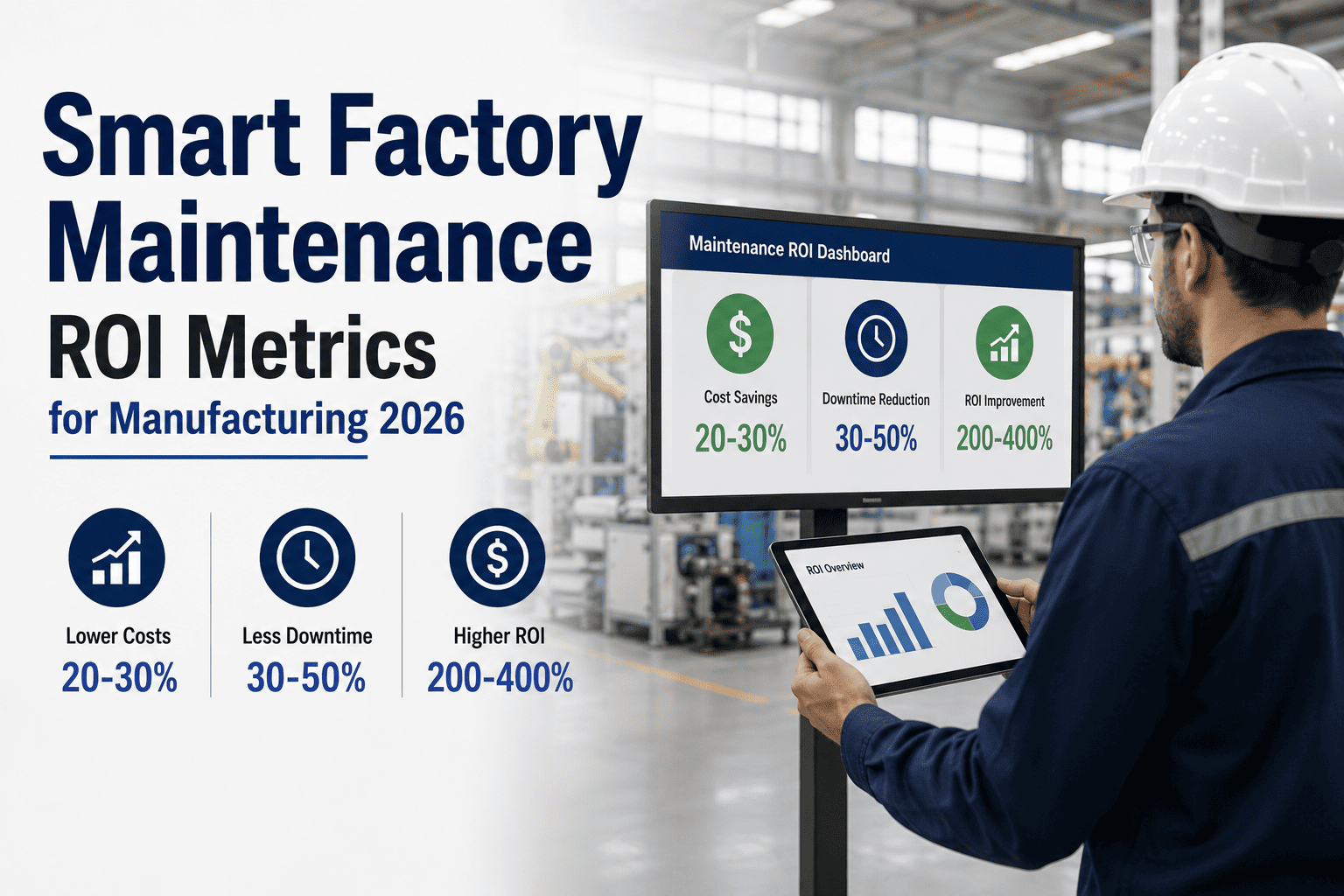
Reduction in unplanned downtime achievable through AI-predictive maintenance programs
Core Shifts
5 Ways Industry 5.0 Will Transform Plant Maintenance by 2027
The transition to Industry 5.0 is not a single technology upgrade — it is a structural change across how maintenance is planned, executed, and continuously improved. Each shift below has direct implications for maintenance strategy, workforce readiness, and the CMMS infrastructure that supports daily operations. Sign Up Free and explore how Oxmaint's platform is built to support each of these operational transitions at scale.
01
AI-Augmented Technicians Replace Pure Automation
Industry 5.0 positions AI as a tool in the technician's hands, not a replacement. Oxmaint's AI-powered work order generation, smart checklists, and predictive alerts give technicians real-time decision support — cutting diagnosis time without eliminating human judgment from critical maintenance decisions.
Oxmaint: AI Work Orders + Smart Checklists
02
Human-Robot Collaboration in Maintenance Workflows
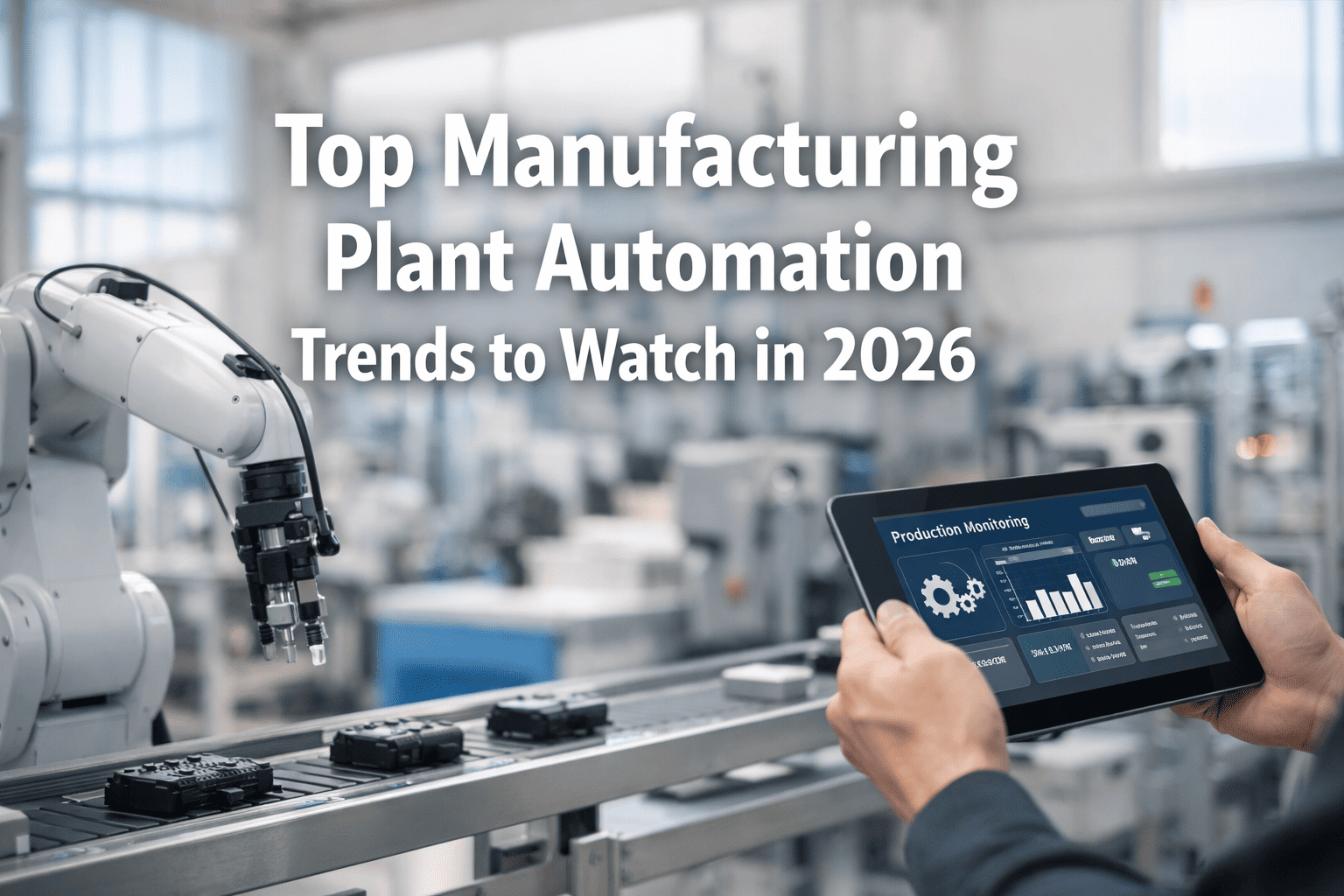
Collaborative robots handle repetitive inspection routines — lubrication checks, vibration readings, visual patrols — while technicians focus on diagnosis, repair, and root cause analysis. CMMS platforms must integrate cobot task data with human work orders for a unified maintenance record.
Oxmaint: Unified Work Order Management
03
AI Vision Replaces Manual Visual Inspections
Oxmaint's AI Vision Camera uses NVIDIA-powered image and thermal analysis to detect cracks, corrosion, abnormal heat, leaks, and PPE violations across facilities — 24 hours a day, without fatigue. This transforms inspection compliance from a scheduled event into a continuous, automated process.
Oxmaint: NVIDIA AI Vision Camera
04
Predictive Maintenance Becomes the Baseline Standard
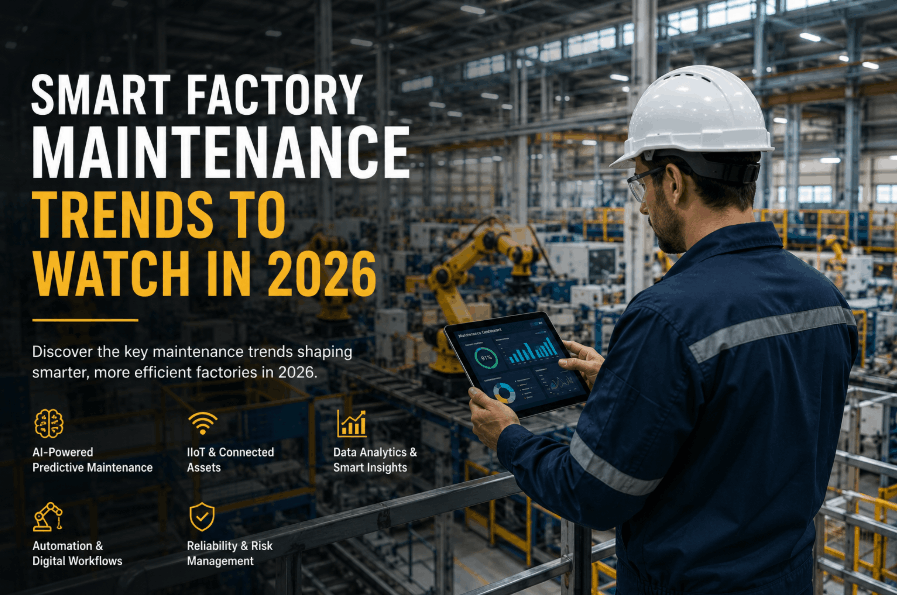
In Industry 5.0 plants, condition-based and predictive maintenance replace fixed-interval PM schedules. Oxmaint integrates PLC sensor data, OBD hardware, and OEM telematics to trigger work orders based on real asset condition — eliminating both premature maintenance and failure-based reactive repairs.
Oxmaint: PLC + Sensor Integration
05
Sustainability Metrics Enter the Maintenance KPI Set
Industry 5.0 mandates that maintenance operations account for energy consumption, waste generation, and environmental impact alongside traditional uptime and cost KPIs. OEE analytics, parts lifecycle tracking, and scrap inventory management in Oxmaint give maintenance teams the data to report on both performance and sustainability outcomes.
Oxmaint: OEE Analytics + EHS Management
06
Resilience Over Pure Efficiency in Asset Strategy
Industry 5.0 shifts the optimization target from lowest cost per unit to highest operational resilience — the ability to absorb disruptions without production loss. This means investing in critical spare holdings, redundant asset monitoring, and shutdown management protocols that prioritize continuity over marginal efficiency gains.
Oxmaint: Shutdown + Inventory Management
Technology Readiness
Industry 5.0 Maintenance Technology Stack: What Plants Need by 2027
Plants that wait until 2027 to begin their Industry 5.0 technology transition will face compressing timelines and higher implementation costs. The technology decisions made in 2025 and 2026 — particularly around CMMS platforms, sensor integration, and AI infrastructure — determine whether a plant enters the next industrial era as a leader or a follower. Book a Demo and map your current maintenance technology stack against Industry 5.0 readiness requirements.
| Technology Layer |
Industry 4.0 Standard |
Industry 5.0 Requirement |
Oxmaint Capability |
| Work Order Management |
Digital work orders, manual assignment |
AI-generated, priority-ranked, auto-assigned |
AI Work Order Automation |
| Inspection |
Scheduled checklists, paper or digital forms |
Continuous AI vision + human verification |
AI Vision Camera + Inspection Management |
| Predictive Maintenance |
Vibration/temperature sensors with threshold alerts |
ML-driven failure prediction with confidence scoring |
Predictive Maintenance + PLC Integration |
| Asset Data |
Asset register with maintenance history |
Full lifecycle visibility with performance analytics |
Enterprise Asset Management + APM |
| Sustainability Reporting |
Energy monitoring, manual reporting |
Integrated EHS metrics, automated compliance data |
EHS Management + OEE Analytics |
| Technician Support |
Digital manuals, remote expert video |
AI-guided repair sequences, context-aware recommendations |
Smart Document Management + AI Automation |
Industry Benchmarks
Industry 5.0 Maintenance KPI Targets by Sector for 2026–2027
Benchmarking your maintenance performance against Industry 5.0 targets across your sector reveals where your operation has readiness gaps — and where incremental investment will deliver the highest return on the path to 2027. Sign Up Free and connect your Oxmaint analytics dashboard to these benchmarks for a real-time gap analysis against Industry 5.0 performance standards.
Discrete Manufacturing
Predictive PM Share35%+ of PMs
AI Inspection Coverage60%+ of assets
OEE Target78%+
Reactive % CapUnder 15%
Process / Chemical
Predictive PM Share50%+ of PMs
AI Inspection Coverage80%+ of assets
OEE Target82%+
Reactive % CapUnder 10%
Food and Beverage
Predictive PM Share30%+ of PMs
AI Inspection Coverage55%+ of assets
OEE Target75%+
Reactive % CapUnder 20%
Utilities / Energy
Predictive PM Share60%+ of PMs
AI Inspection Coverage90%+ of assets
OEE Target88%+
Reactive % CapUnder 8%
ROI Framework
Building the Business Case for Industry 5.0 Maintenance Investment
Leadership approval for Industry 5.0 maintenance investment requires connecting technology spend to measurable production and financial outcomes. The frameworks below translate each core capability into CFO-ready ROI arguments that link AI, sensor integration, and human-robot collaboration to hard numbers — not aspirational claims. Book a Demo and see how Oxmaint's reporting module generates these figures automatically from your live work order and asset performance data.
AI Vision Inspection ROI
Defects Caught Early × Average Repair Cost Differential × Annual Inspection Frequency
AI Vision Camera running 24/7 across a mid-sized facility typically catches 3–5× more early-stage defects than scheduled manual inspections — each early catch reducing repair cost by 60–80% compared to failure-stage intervention.
Predictive Maintenance Failure Avoidance
Avoided Failures × Average Downtime Hours × Hourly Production Value
Oxmaint's PLC sensor integration and predictive alerts allow failure prediction weeks in advance. A plant avoiding 8 major failures annually at $180,000/hr production value recaptures $5.76M+ from a predictive maintenance investment that costs a fraction of that figure.
AI Work Order Efficiency Gain
Technician Hours Saved × Hourly Labor Rate × Annual Work Order Volume
Automated work order generation and AI-guided repair sequences reduce technician diagnostic time by 25–40% per job. Across a team completing 3,000 annual work orders, this recovers hundreds of wrench-time hours annually — convertible directly to additional PM capacity.
OEE Improvement Revenue Impact
OEE Gain % × Throughput Capacity × Contribution Margin per Unit
Industry 5.0 maintenance practices — predictive alerts, human-robot inspection, AI-optimized PM scheduling — typically drive OEE improvements of 4–8 percentage points. On a line generating $20,000/hr in margin-bearing output, a 5-point OEE gain produces $876,000 in additional annual value.
Implementation Roadmap
A Practical 4-Phase Industry 5.0 Maintenance Readiness Roadmap
Successful Industry 5.0 transitions do not happen through a single large-scale deployment. They follow a phased approach that builds capability incrementally, validates ROI at each stage, and scales investment based on demonstrated performance gains. Book a Demo to map your current operation against this roadmap and identify where Oxmaint can accelerate your readiness timeline.
Phase 01 · Now–Q2 2025
Digital Foundation: CMMS and Asset Data Baseline
Deploy a mobile-first CMMS across all maintenance teams. Digitize work orders, asset records, PM schedules, and inspection checklists. Establish clean data infrastructure — this is the non-negotiable prerequisite for AI-augmented maintenance at every subsequent phase.
Phase 02 · Q3 2025–Q1 2026
Sensor Integration: Connect Assets to Your CMMS
Integrate PLC sensors, OBD hardware, and OEM telematics into your CMMS platform. Begin condition-based maintenance triggers for high-criticality assets. This layer transforms your maintenance program from time-based to condition-based — the gateway to true predictive capability.
Phase 03 · Q2–Q4 2026
AI Augmentation: Predictive Alerts and AI Vision Deployment
Deploy AI Vision Camera systems for continuous inspection on highest-risk assets. Activate predictive maintenance ML models on sensor data. Introduce AI-generated work orders and smart checklist guidance for technicians. Track MTBF improvement, inspection compliance rate, and reactive work percentage monthly.
Phase 04 · 2027
Industry 5.0 Operations: Human-Robot Collaboration and Sustainability KPIs
Integrate cobot inspection routines with CMMS work order records. Activate EHS and OEE analytics for sustainability reporting alongside production KPIs. By this phase, your maintenance operation is fully aligned with Industry 5.0 principles: human-centered, AI-augmented, resilience-focused, and environmentally accountable.
Predictive Maintenance · AI Vision · OEE Analytics · EHS
Oxmaint Is Built for the Industry 5.0 Maintenance Era
AI work orders, NVIDIA-powered vision inspection, PLC sensor integration, predictive alerts, and sustainability analytics — one platform for the manufacturing future.
Common Questions
Industry 5.0 and Manufacturing Maintenance — Questions from Plant Leaders
What is Industry 5.0 and how does it differ from Industry 4.0 for maintenance teams?
Industry 4.0 automated data collection and connectivity. Industry 5.0 adds human-centric design — AI augments technicians instead of replacing them, and sustainability becomes a core operational KPI alongside uptime and cost.
How does a CMMS platform support Industry 5.0 maintenance operations?
A CMMS like Oxmaint serves as the integration layer — connecting sensor data, AI vision alerts, cobot task records, and human work orders into a single operational record that supports both AI-augmented decisions and sustainability reporting.
What is human-robot collaboration in manufacturing maintenance?
Collaborative robots handle repetitive inspection tasks — vibration readings, visual patrols, lubrication checks — while technicians focus on diagnosis, repair, and root cause analysis. The CMMS unifies both task streams into one maintenance record.
When will Industry 5.0 manufacturing practices become mainstream?
Leading manufacturers in discrete, process, and utility sectors are targeting 2026–2027 for broad Industry 5.0 adoption. Plants beginning digital and sensor foundation work now will reach full readiness well ahead of that window.
Does Oxmaint support predictive maintenance and AI vision inspection for Industry 5.0 plants?
Yes. Oxmaint's platform includes PLC sensor integration, predictive maintenance alerts, NVIDIA-powered AI Vision Camera inspection, and OEE analytics — covering the core technology requirements for Industry 5.0 maintenance readiness.
How does Industry 5.0 affect sustainability reporting for maintenance departments?
Industry 5.0 requires maintenance teams to track energy consumption, waste generation, and environmental compliance alongside traditional KPIs. Oxmaint's EHS Management and OEE Analytics modules provide the data infrastructure for integrated sustainability reporting.
Industry 5.0 · AI CMMS · Smart Manufacturing · Future-Ready Maintenance
Start Your Industry 5.0 Maintenance Readiness Journey Today
Oxmaint gives manufacturing plants the AI, sensor integration, and analytics infrastructure to lead — not follow — the Industry 5.0 transition by 2027.