Industrial IoT networks are growing fast, but so is the noise. Facilities running hundreds of connected sensors routinely deal with alert volumes that overwhelm maintenance teams—and research shows that more than half of those alerts turn out to be false positives caused by sensor drift, environmental interference, or transient spikes. The result is a costly cycle: technicians dispatched to investigate phantom problems, real failures buried under alarm fatigue, and maintenance budgets drained by wasted labor. Autonomous quadruped robots break this cycle. Dispatched automatically when an IoT sensor trips, these four-legged machines navigate stairs, grating, and hazardous zones to physically inspect the flagged asset—capturing thermal images, gas readings, acoustic data, and HD video. Only confirmed issues reach your CMMS as prioritized, evidence-backed work orders. Schedule a demo to see how robotic alert triage cuts false dispatches by 65%.
What Happens When Half Your IoT Alerts Are False Positives
Sensors are reliable at detecting threshold breaches—but they cannot tell you why a reading spiked. A temperature alert on a motor could mean bearing failure, or it could mean afternoon sun hitting the enclosure. A vibration spike could signal misalignment, or a forklift driving past the sensor mount. Without physical verification, maintenance teams face an impossible choice: respond to every alert and waste hours on false alarms, or start ignoring alerts and risk missing the one that matters.
of IoT alerts in industrial plants are false positives or nuisance alarms
average round-trip time for a technician to investigate a single alert
of maintenance teams report alert fatigue leading to ignored alarms
The downstream effects compound quickly. Technicians who spend their shifts chasing false alarms have less time for actual repairs, driving up mean time to repair across the board. Spare parts get pre-staged for problems that do not exist. Overtime budgets balloon. And when a genuine critical alert fires, it sits in the same queue as dozens of false positives—sometimes until a breakdown forces emergency action. Start filtering false alarms from real failures with Oxmaint — sign up free.
How Autonomous Quadruped Robots Validate Sensor Alerts On-Site
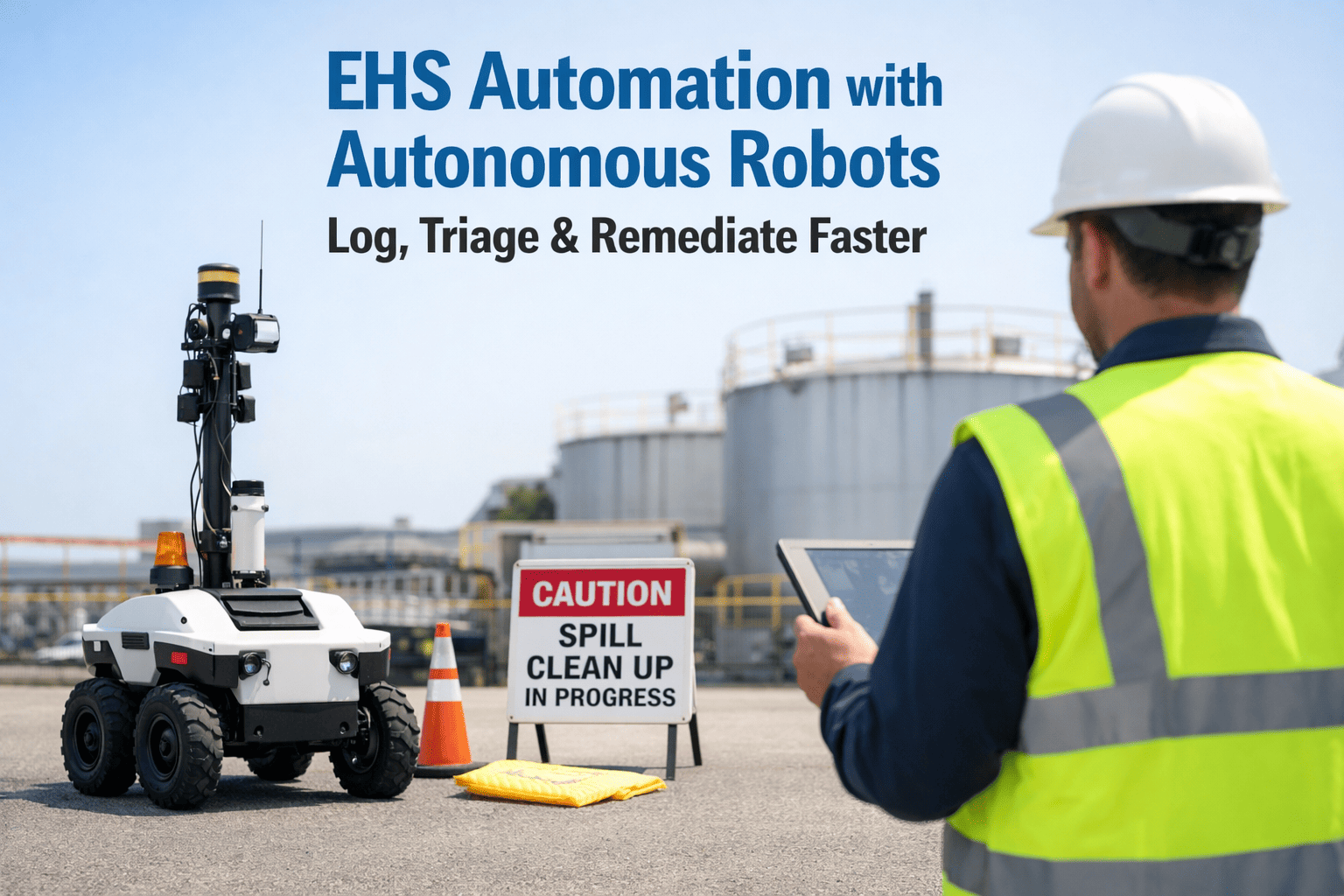
Quadruped robots—four-legged machines built for rough industrial terrain—serve as mobile verification platforms. When an IoT sensor triggers an alert, the robot is dispatched automatically to the asset location. It arrives in minutes, inspects the equipment using multiple onboard sensors, classifies the alert as confirmed, degraded, or false positive, and transmits the results with attached evidence directly to your maintenance management system.
A
Multi-Terrain Mobility
Unlike wheeled robots or fixed cameras, quadrupeds climb industrial stairs, traverse grated walkways, handle gravel and wet surfaces, and navigate narrow corridors. IP66+ protection allows operation in rain, snow, and extreme heat around the clock without shift changes or fatigue.
B
Multi-Sensor Payload
Each robot carries thermal cameras for hotspot detection, ultrasonic microphones for leak and bearing-wear identification, multi-gas analyzers for verifying gas-leak alerts, and high-resolution visual cameras for gauge reading, corrosion mapping, and physical damage documentation.
C
AI-Driven Classification
Onboard and edge AI correlates the robot's observations with the original sensor alert. The system produces a classification—confirmed hazard, degraded condition, false positive, or requires human follow-up—along with a confidence score, so planners know exactly how much weight to give each result.
D
Autonomous Operation
Pre-mapped patrol routes, dynamic waypoint navigation, and self-charging docking stations allow continuous availability. Remote teleoperation provides manual override when complex scenarios demand human judgment—without requiring a technician to enter a hazardous zone.
Stop dispatching technicians to verify every sensor alert. Oxmaint integrates robotic inspection data into your maintenance workflows—so your team only acts on confirmed, evidence-backed issues.
Sign Up Free
Inside the Sensor-to-Work-Order Pipeline
The real value of robotic alert validation is the closed-loop pipeline it creates. Rather than a sensor alert going to a dispatcher who calls a technician who drives to the asset, the entire triage and evidence-collection step is automated. The robot acts as a roving verification layer between your IoT network and your CMMS, ensuring that only validated alerts generate work orders—and those work orders arrive pre-loaded with diagnostic media.
From IoT Alert to Evidence-Backed Work Order
1
Sensor Threshold Breach
Vibration, thermal, gas, or pressure sensor crosses its configured limit. Alert is logged with asset ID, timestamp, sensor type, reading value, and severity tier.
2
Automated Robot Dispatch
Alert management platform identifies the nearest available quadruped and pushes GPS waypoints plus an alert-specific inspection checklist. Robot departs its charging dock within seconds.
3
On-Site Inspection and Media Capture
Robot reaches the asset (typically under 10 minutes), runs thermal scan, captures HD photos and video, records acoustic signature, and takes supplementary gas or vibration readings.
4
AI Alert Classification
Edge AI compares robot data against the original sensor alert. Output: confirmed critical, degraded condition, false positive, or escalate to human. Each classification carries a confidence score.
5
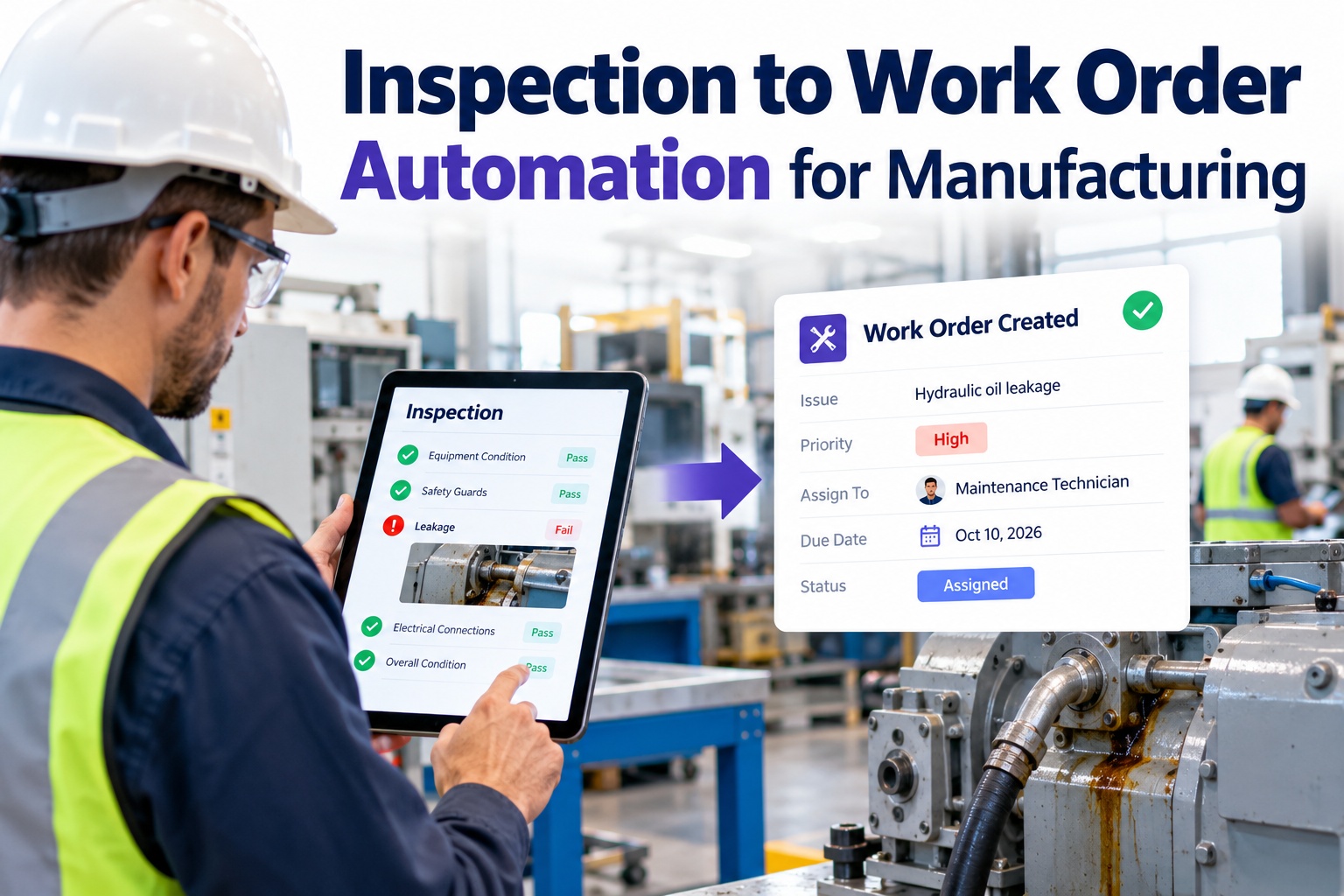
CMMS Work Order with Attached Evidence
Confirmed alerts auto-generate prioritized work orders in your CMMS—complete with thermal images, video clips, sensor data, GPS coordinates, and recommended actions. False positives are logged for sensor recalibration.
What Robot Inspectors Can See That Static Sensors Cannot
A fixed IoT sensor tells you that something changed at a single point. A quadruped robot tells you what changed, where exactly it is happening, how severe it looks, and provides visual proof. This contextual intelligence is the difference between a vague alert and an actionable diagnosis.
01
✕ Single-point measurement only
✓ Multi-sensor sweep of the entire asset area
02
✕ No visual context for the reading
✓ Thermal, visual, and acoustic evidence captured
03
✕ Cannot distinguish root cause from symptom
✓ AI correlates readings to identify root cause
04
✕ Blind to physical damage, leaks, or corrosion
✓ Detects physical damage, leaks, gauge anomalies
05
✕ Subject to drift and environmental interference
✓ Cross-validates the original sensor reading on site
Fixed IoT Sensor
Quadruped Robot Inspector
How Robot Data Maps to CMMS Work Orders
See how validated alerts become evidence-backed work orders. Book a demo and we will walk you through the full sensor-to-CMMS pipeline integrated with Oxmaint.
Book a Demo
Step-by-Step Deployment Readiness Checklist
Rolling out robotic alert validation requires coordination across your IoT infrastructure, robotic platform, network, and CMMS. This phased checklist keeps every workstream aligned—from initial assessment through full production deployment.
Phase 1
Assessment and Baseline
Audit current IoT sensor coverage, alert volumes, and false-alarm rates by zone
Identify high-value assets where false dispatches consume the most labor hours
Map facility terrain for robot accessibility—stairs, corridors, outdoor areas, confined spaces
Document current MTTR baselines and dispatch cost per alert category
Phase 2
Infrastructure and Connectivity
Install robot charging docks at strategic locations for maximum zone coverage
Validate Wi-Fi or 5G coverage along all planned robot patrol routes
Deploy edge computing nodes for onboard AI inference and low-latency processing
Define waypoint maps and inspection checklists for each alert type and zone
Phase 3
System Integration and Testing
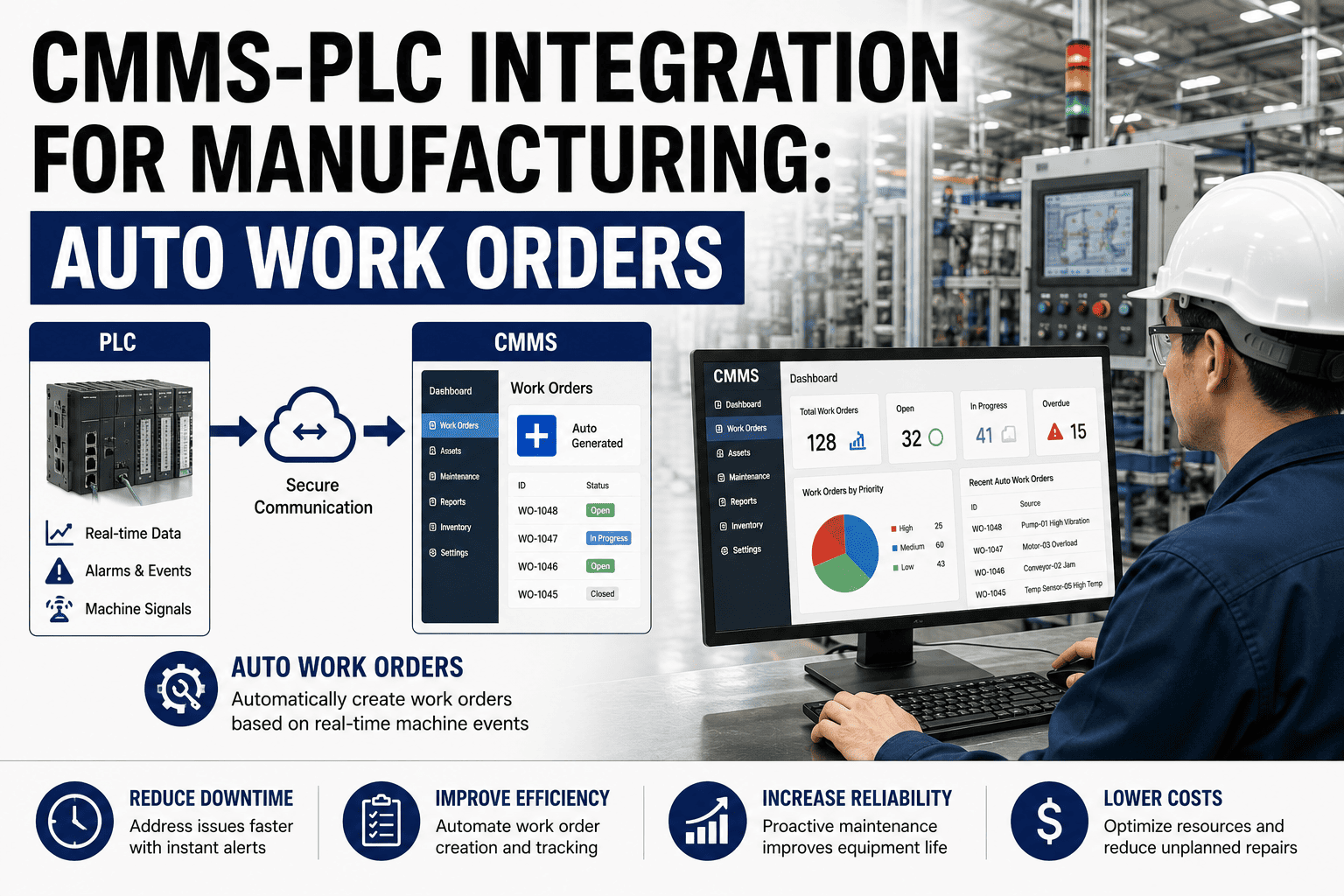
Connect IoT alert platform to robot dispatch API for automatic tasking
Configure CMMS to ingest validated alerts with media attachments and priority tags
Set up classification rules: confirmed critical, degraded, false positive, escalate to human
Run 30-day parallel operation (robot + manual) to measure accuracy and calibrate AI thresholds
Phase 4
Go-Live and Scale
Transition validated zones to robot-first alert response
Train maintenance teams on reviewing evidence-backed work orders and media
Expand robot coverage to additional zones, shifts, and alert categories
Feed false-positive logs back to IoT team for ongoing sensor threshold refinement
Measured Gains: Fewer Dispatches, Lower MTTR, Safer Facilities
When false alarms are filtered out before they reach a dispatcher, every downstream maintenance metric improves. Technicians focus on confirmed issues with pre-loaded context, mean time to repair drops because diagnostics happen before the wrench turns, and facilities become safer because robots handle hazardous-zone inspections that previously required human entry.
Operational Impact of Robotic Alert Validation
65%
Reduction in unnecessary technician dispatches—teams reclaim hundreds of labor hours annually
Up to 60%
Lower MTTR when work orders arrive with thermal scans, video, and pre-diagnosed root cause
90%
Fewer false-alarm-driven work orders clogging your CMMS backlog queue
24/7
Continuous alert validation without shift limitations, overtime, or hazardous human entry
When every alert comes with a thermal image, a video clip, and a confidence score, technicians stop second-guessing and start fixing. Robotic triage does not replace our team—it gives them the evidence they need to work faster and safer.
— Plant Maintenance Director, Energy Sector
Build Your Sensor-to-CMMS Validation Pipeline with Oxmaint
Your IoT sensors detect anomalies. Quadruped robots confirm them on site. Oxmaint turns every validated alert into a prioritized, evidence-backed work order—so your maintenance team fixes real problems instead of chasing phantom alarms. Start building a smarter maintenance workflow today.
Frequently Asked Questions
How fast can a quadruped robot reach an alert location after an IoT sensor triggers?
Most facilities see response times between 5 and 10 minutes depending on the distance from the nearest charging dock to the alert zone. With strategically placed docks, robots can cover multi-story buildings or sprawling outdoor sites efficiently. The robot begins capturing inspection data immediately on arrival, and validated results typically reach your CMMS within minutes of the initial sensor trigger.
Book a demo to map robot response times for your facility layout.
Which types of IoT alerts can quadruped robots physically validate?
Robots equipped with thermal cameras, gas analyzers, acoustic sensors, and HD visual cameras can validate virtually any common industrial alert type—including temperature anomalies, vibration spikes, gas leak detections, pressure deviations, visible equipment damage, and abnormal noise. The multi-modal sensor payload means the robot cross-checks the original alert with independent evidence, significantly reducing classification errors.
Does validated robot data integrate with existing CMMS platforms like Oxmaint?
Yes. Modern robotic inspection systems output data through standard APIs that connect to any CMMS supporting automated work order creation. Oxmaint accepts media attachments (thermal scans, video, photos), custom fields for AI confidence scores, and automated priority assignment—meaning validated inspection data flows directly into actionable work orders without manual entry.
Create your free Oxmaint account and explore robotic data integration.
Can these robots operate safely in hazardous or classified industrial environments?
Quadruped robots are purpose-built for environments that are dangerous or inaccessible for humans. With IP66+ ingress protection, explosion-proof sensor configurations, and the ability to navigate stairs, grating, mud, and uneven terrain, they are already deployed in refineries, chemical plants, power stations, and offshore platforms—operating continuously in conditions ranging from extreme heat to freezing temperatures and corrosive atmospheres.
What kind of return on investment should we expect from robotic alert validation?
Facilities typically see payback within 6 to 12 months through reduced false dispatch costs, lower MTTR, improved technician productivity, and elimination of overtime for after-hours alarm response. A mid-size plant running 500+ IoT sensors can save upwards of $180,000 per year in wasted dispatch labor alone—before accounting for the safety benefits of keeping workers out of hazardous zones.
Get a customized ROI estimate based on your alert volume — schedule a call.