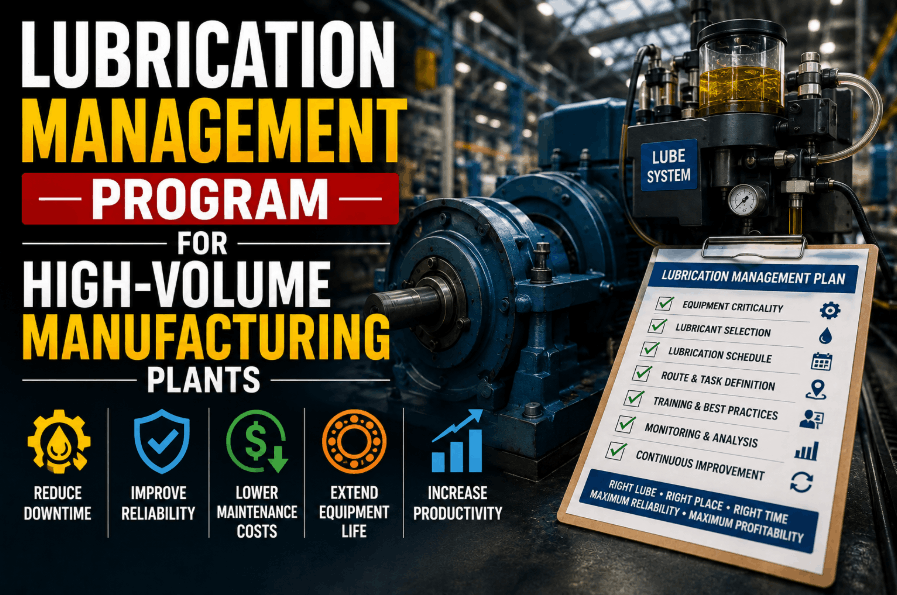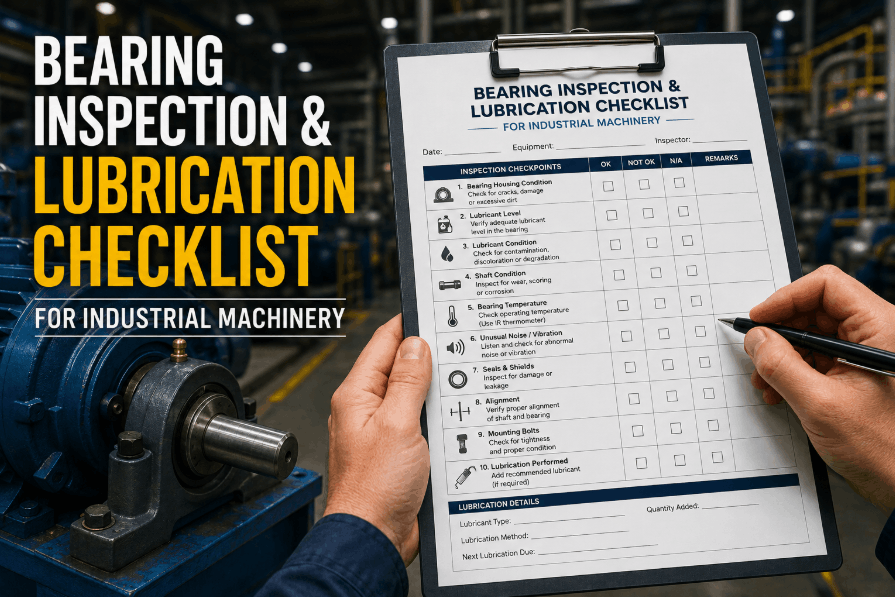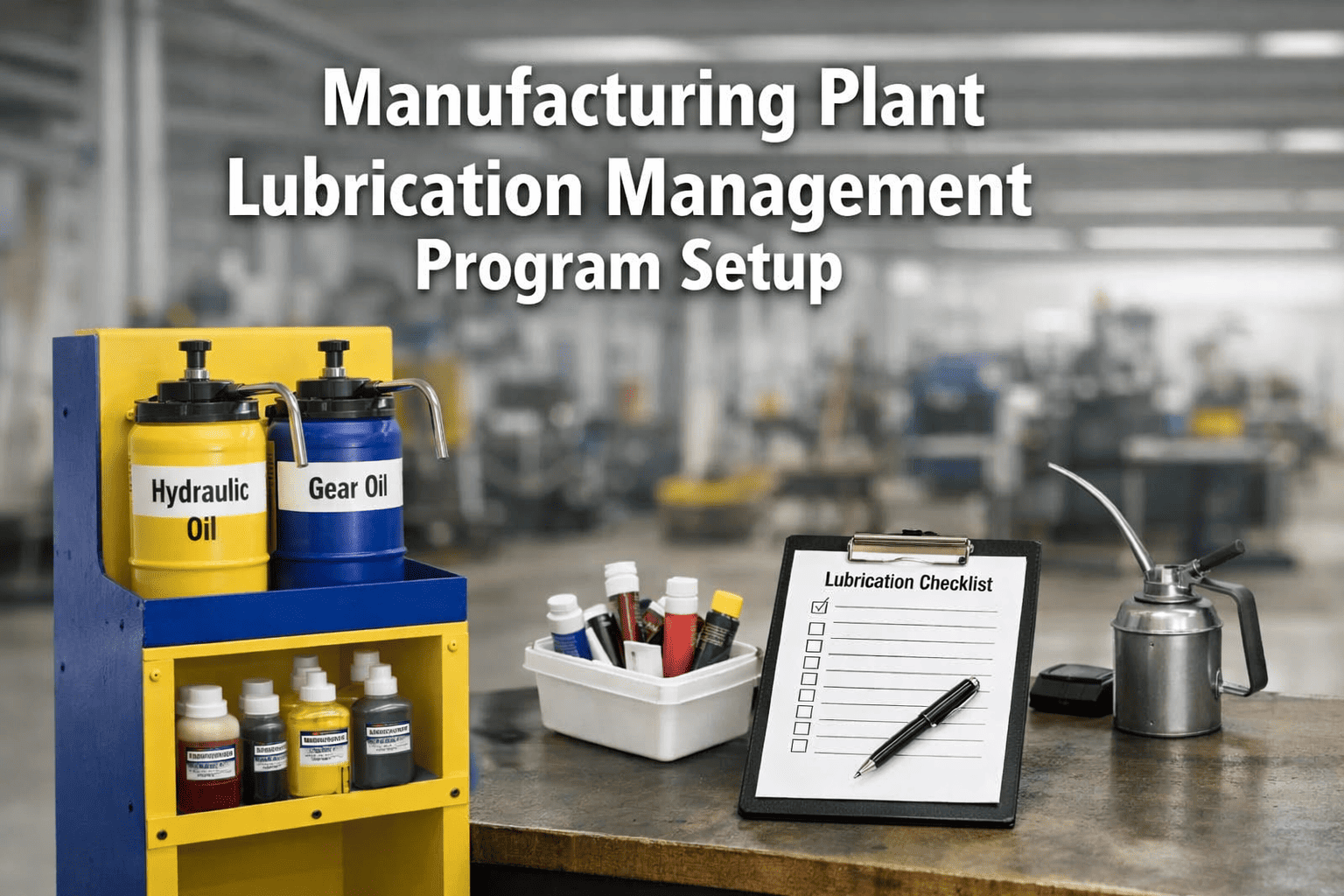
A world-class lubrication program can double bearing life, cut unplanned downtime by up to 40%, and eliminate the single most common cause of premature machine failure in manufacturing plants. Industrial lubrication is not just about applying oil or grease; it requires precision lubrication strategies that define the exact lubricant type, interval, volume, and contamination control measures for every asset. By shifting from reactive top-ups to a structured lubrication maintenance program, reliability teams stop bearing lubrication failures before they start and see measurable improvements in OEE. Ready to digitize your routes and intervals? You can Start Free Trial with OxMaint today.
Precision Lubrication Guide
Are lubrication failures silently draining 40% of your maintenance budget?
Up to 50% of bearing failures trace directly to lubrication. Build a structured, data-driven lubrication program that targets the right oil, interval, and contamination control — and stop replacing bearings before their time. See how OxMaint digitizes your routes and guarantees compliance.
Lubrication Best Practices
How to build a lubrication program for manufacturing
A structured lubrication strategy follows five sequential phases — from asset criticality mapping to continuous oil analysis — transforming greasing from a commodity chore into a precision maintenance discipline.
Map Critical Assets & Lubrication Points
Identify every bearing, gearbox, and hydraulic reservoir. Tag each point with target lubricant, volume, and frequency. A 180-asset plant typically identifies 600–900 distinct lube points — each requiring its own PM trigger.
Select the Correct Lubricant
Match viscosity, base oil, and additive package to OEM specs, load, speed, and operating temperature. Consolidating SKUs reduces inventory, but never at the cost of using a non-compliant lubricant on a critical bearing.
Establish Precision Intervals & Volumes
Replace calendar-based greasing with condition-based triggers. Ultrasonic-assisted greasing measures friction in real time, telling technicians exactly when to stop pumping — eliminating over-greasing that blows seals.
Enforce Contamination Control
Set target ISO 4406 cleanliness codes. Use desiccant breathers, dedicated transfer carts, and color-coded tags. Even 0.1% water in oil can reduce bearing life by 50% or more.
Implement Oil Analysis & Feedback Loops
Route oil samples to a lab on a fixed cadence. Feed wear-metal and viscosity trends back into the CMMS to automatically adjust the lubrication schedule and trigger corrective work orders before failure.
Lubrication Contamination Control
Contamination control checklist for machine lubrication
Dirt and water kill bearings faster than missed grease. Use this checklist to enforce lubrication contamination control across storage, handling, and application.
- Store drums indoors on their side, bungs at 3 and 9 o'clock
- Use desiccant breathers on all bulk tanks and drums
- Color-code and dedicate transfer pumps per lubricant family
- Filter new oil to target ISO code before it enters the machine
- Clean grease fitting with a lint-free wipe before attaching the gun
- Calibrate grease guns to deliver a known volume per stroke
- Use ultrasonic sensors to stop greasing when friction normalizes
- Purge relief valves after greasing to confirm old grease exited
- Sample oil every 30–90 days based on criticality
- Track ISO 4406 particle counts against target codes
- Monitor water content (Karl Fischer) below 200 ppm for most oils
- Log every lube event in the CMMS for full audit traceability
Lubrication Reliability
Cost of poor lubrication vs. precision lubrication
The gap between reactive greasing and a precision oil lubrication program is measured in hundreds of thousands of dollars per year for a mid-sized plant.
| Metric | Reactive / Unstructured | Precision Lubrication Program |
|---|---|---|
| Bearing L10 Life | 40–60% of design life | 100–200% of design life |
| Unplanned Bearing Failures | 12–20 per year (180 assets) | 2–4 per year |
| Lubricant Consumption | Over-greasing wastes 20–30% | Volume-controlled, zero waste |
| Downtime Cost / Year | $120K–$250K | $20K–$50K |
| Audit Readiness | Paper logs, gaps, no traceability | Full digital trail in CMMS |
A 180-asset food processing plant spending $42,000 annually on bearing replacements and reactive lubrication labor implemented a structured lubrication program. By enforcing color-coded lubricants, ultrasonic greasing, and CMMS-triggered routes, the plant cut bearing failures by 70% in year one — saving roughly $135,000 in parts, labor, and lost production, achieving full payback in under 4 months.
Turn lubrication routes into a precision reliability engine
See how OxMaint structures your lubrication schedule, triggers work orders automatically, and proves compliance — all from one AI-powered CMMS.
How OxMaint Helps
How OxMaint powers your lubrication management
OxMaint transforms your lubrication program from paper checklists into a fully digitized, predictive reliability system — mapping directly to measurable plant outcomes.
Automated Lubrication Routes
Generate CMMS-triggered lubrication work orders based on runtime hours, calendar intervals, or condition data. Technicians follow mobile-optimized routes with exact lube points, volumes, and lubricant SKUs — eliminating missed or duplicate greasing.
Spare-Parts & Lubricant Inventory
Track every lubricant SKU with min/max reorder points and lot tracking. OxMaint links each lubricant to the assets it serves, auto-deducts stock on work order completion, and flags cross-contamination risks before the wrong oil enters the reservoir.
Predictive Oil Analysis Integration
Feed lab oil-analysis results directly into OxMaint. AI-driven thresholds automatically generate corrective work orders when wear metals, water, or particle counts breach limits — shifting you from time-based to condition-based lubrication.
Compliance & Audit Dashboards
Every lubrication event — who, what, when, how much — is timestamped and stored permanently. Generate ISO 55000 and audit-ready reports in one click, proving your lubrication reliability program is executed exactly as designed.
Lubrication Program ROI
What does a lubrication program cost — and what does it save?
Use this framework to calculate the payback of moving from reactive greasing to a precision lubrication strategy supported by a CMMS.
Frequently Asked Questions
Lubrication program FAQs
What is a lubrication program in manufacturing?
A lubrication program is a structured maintenance strategy that defines the correct lubricant, volume, interval, and contamination control measures for every asset in a plant. It replaces ad-hoc greasing with precision lubrication routes managed in a CMMS, ensuring bearings and gearboxes operate at peak efficiency and full design life.
How often should I lubricate bearings in a plant?
Bearing lubrication intervals depend on speed, load, temperature, and environment — typically ranging from weekly to annually. Best practice is to shift from fixed calendar intervals to condition-based lubrication using ultrasonic monitoring and oil analysis, which tells you exactly when a bearing needs grease rather than guessing. You can Start Free Trial with OxMaint to automate these dynamic intervals.
What causes most bearing lubrication failures?
The three primary causes are over-greasing (which blows seals and generates heat), under-lubricating (which causes metal-on-metal wear), and contamination (dirt or water entering the bearing). Up to 50% of all bearing failures trace back to these lubrication issues, making a structured program the highest-ROI maintenance initiative available.
How do I structure lubrication routes in a CMMS?
Create a PM for each lube point or grouped route, specifying the lubricant SKU, target volume, and trigger (runtime hours or calendar date). Assign routes to technicians via mobile work orders so they follow a logical geographic path through the plant. To see this in action, Book a Demo and we will map it to your assets.
What is ultrasonic-assisted greasing?
Ultrasonic-assisted greasing uses a handheld sensor to measure friction-generated ultrasound at the bearing while grease is applied. The technician stops pumping the moment the ultrasound level drops to baseline, ensuring the exact volume of grease is delivered — preventing both over-greasing and under-greasing with high precision.
Build your world-class lubrication program with OxMaint
Digitize routes, automate triggers, track lubricant inventory, and predict failures — all in one AI-powered platform built for maintenance and reliability teams.
Free 14-day trial · No credit card