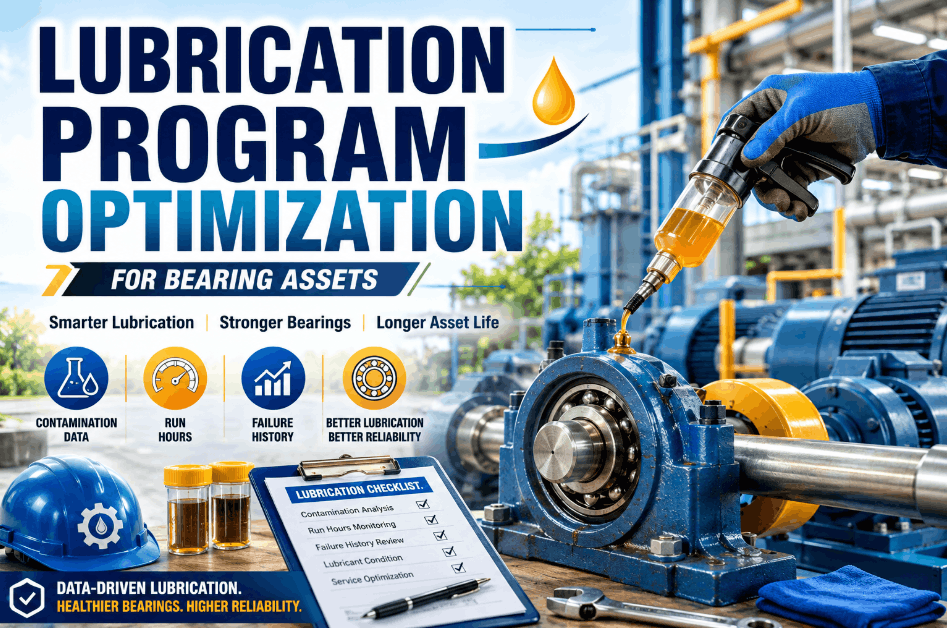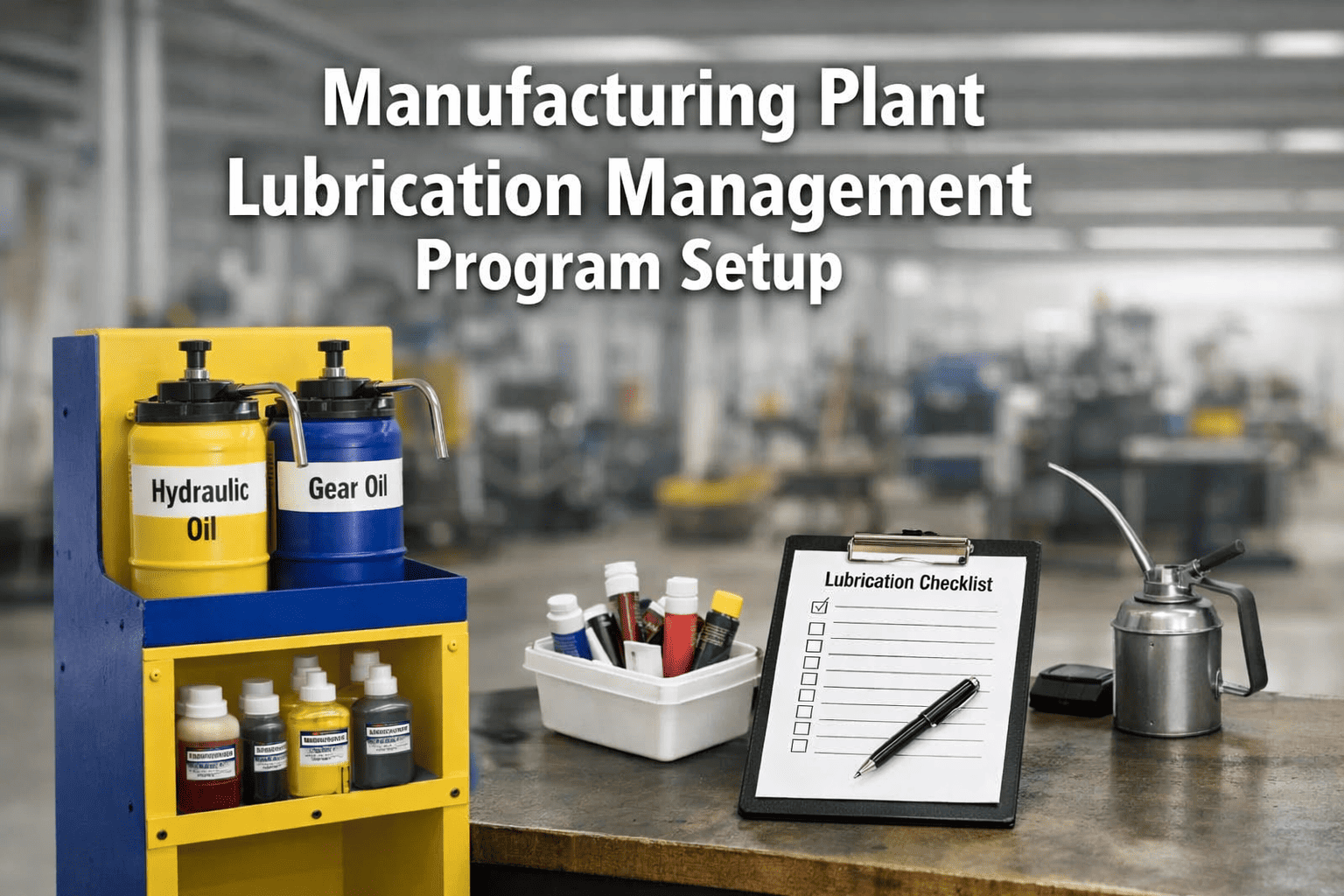
Manufacturing Plant Lubrication Management Program Setup

By oxmaint on February 23, 2026

manufacturing-plant-lubrication-management-program-setup

Manufacturing plants lose an estimated $1 trillion annually in the United States alone due to reactive maintenance, unplanned downtime, and lost productivity driven by equipment failure — and lubrication-related issues sit at the heart of this problem. Industry research consistently confirms that improper lubrication practices account for more than half of all premature bearing failures and up to 70% of mechanical breakdowns. Yet nearly 80% of facilities still operate without a professionally audited lubrication program, leaving massive reliability gains untapped. This guide walks through the complete process of setting up a structured lubrication management program inside your manufacturing plant — from the initial audit through lubricant selection, contamination controls, route scheduling, oil analysis, and technician development — so you can extend equipment life by 3 to 5 years and sign up for Oxmaint free to manage every lubrication point, route, and schedule digitally from day one.

What Makes Lubrication the Biggest Reliability Gap in Most Plants

Lubrication is often dismissed as the simplest task in maintenance — apply grease and move on. But when you consider that a mid-size plant may have 5,000 or more individual lubrication points, each requiring a specific lubricant type, precise volume, defined interval, and correct application method, the true complexity becomes clear. Without a formal program, inconsistencies accumulate silently across every shift until equipment fails and the real costs emerge.

70% of all equipment failures linked to lubrication problems

$148 saved per lube point each year with a structured program

79% of companies lack a professionally audited lube program

12% of lubrication personnel are actually certified for the task

The Financial Picture
A plant with 5,000 lubrication points implementing a structured program typically documents $740,000 in first-year savings from reduced bearing replacements, eliminated unplanned downtime, and optimized lubricant purchasing. At 10,000 points, that figure exceeds $1.4 million. These numbers compound annually as equipment runs longer between failures and maintenance shifts from reactive to proactive.

Step-by-Step Process to Build a Plant Lubrication Program

Building a lubrication program that delivers lasting results requires a structured approach — attempting to fix everything simultaneously overwhelms teams and produces short-lived improvements. The following framework breaks the process into actionable phases, each building on the one before it to create sustainable lubrication excellence.

1
Plant-Wide Lubrication Audit
Walk down every lubricated asset. Document each point with its current lubricant, quantity, frequency, method, and physical condition. Compare findings against OEM recommendations and industry best practices. This gap analysis becomes the foundation for prioritizing every improvement by cost impact and criticality.
2
Lubricant Selection and Product Consolidation
Match lubricant properties — viscosity, base oil type, additive package — to each asset's operating conditions. Most plants discover during an audit that they stock 40-60% more products than needed. Consolidating overlapping products reduces SKU count by 30-50%, cutting inventory costs and cross-contamination risk without sacrificing protection.
3
Storage, Handling, and Contamination Controls
Design a dedicated lube room with sealed storage, color-coded containers, desiccant breathers, and filtration stations for new oil. Research shows that improving fluid cleanliness by just one ISO code can double hydraulic component life. Even 1,000 ppm of water in oil can reduce bearing life by up to 75%.
4
Route Optimization and Digital Scheduling
Organize tasks into efficient routes by plant area, frequency, and criticality. Define standard procedures for every point — lubricant, volume, method, and safety notes. Digitizing routes in a CMMS ensures schedules are automated, completions are tracked, and no point gets missed during shift changes or staff turnover.
5
Oil Analysis and Condition Monitoring Integration
Set sampling schedules and cleanliness targets for critical oil-lubricated equipment. Track wear metals, particle counts, moisture, and lubricant degradation over time. When oil analysis results integrate directly into your CMMS, condition-based work orders trigger automatically before failures occur.
6
Technician Training, KPIs, and Continuous Improvement
Invest in training covering lubricant properties, precision application techniques, contamination prevention, and condition inspection. Define program KPIs — route completion rate, lubrication-related failures, oil analysis trends, and lubricant consumption. Review monthly and refine procedures using real performance data.
Sign up for Oxmaint to start mapping your plant's lubrication points today. You will get a centralized dashboard to assign every lube point to a route, set automated schedules by frequency, and give technicians mobile checklists — so nothing gets missed across any shift.
Sign Up Free

How to Select the Right Lubricant for Every Equipment Type

Using the wrong lubricant — or defaulting to a single product across diverse equipment — accelerates wear and defeats the purpose of having a program at all. Each asset class has specific requirements dictated by mechanical design, speed, load profile, temperature range, and environmental exposure. The selection process should be systematic, not based on habit or brand familiarity.

Equipment-Specific Lubricant Selection Guide
Equipment TypeKey Lube PointsRecommended LubricantCritical Selection Factor
Electric Motors Drive-end and non-drive-end bearings NLGI Grade 2 grease (polyurea or lithium complex) Over-greasing causes overheating — use calculated volume per bearing cavity size
Gearboxes Gear sets, internal bearings, seals EP gear oils (ISO VG 150 through 680) Viscosity must match operating temperature, gear load, and rotational speed
Hydraulic Systems Pump, valves, actuators, reservoir AW hydraulic oils (ISO VG 32 through 68) Fluid cleanliness is paramount — target ISO 16/14/11 or better
Conveyor Systems Bearings, chains, drive units, take-ups Bearing grease, chain oils, gear lubricants Environmental exposure requires contamination-resistant products
Air Compressors Bearings, cylinders, gear trains Compressor oils (synthetic for high-temperature duty) Oil carryover into compressed air affects downstream quality
Centrifugal Pumps Bearings, mechanical seals, coupling Mineral or synthetic oils, bearing greases Seal compatibility and process fluid contamination risk

Contamination Control: Preventing the Top Cause of Lubricant Failure

Particles, moisture, and cross-contaminated lubricants silently destroy equipment from the inside out. Contamination is responsible for the majority of hydraulic system failures and dramatically shortens the useful life of every lubricant in your plant. Yet most facilities still store drums outdoors, use dirty transfer equipment, and ignore breather maintenance entirely. Fixing contamination control alone often delivers the single biggest reliability improvement in any lubrication program.

What Goes Wrong Without Controls
New oil arrives contaminated above cleanliness targets — and goes directly into equipment unfiltered
Open or damaged storage drums exposed to humidity, dust, and temperature swings
Dirty funnels, shared hoses, and open-top containers used for transfers
Missing or failed breathers on gearboxes, hydraulic tanks, and reservoirs
Incompatible lubricants mixed due to unlabeled equipment and containers
Best Practice Contamination Controls
Filter all new oil through dedicated filtration carts before it enters any machine
Store lubricants in a dedicated, climate-controlled lube room with sealed containers
Use color-coded, sealed transfer containers dedicated to each lubricant type
Install desiccant breathers on every reservoir, bulk tank, and gearbox breather port
Implement lubricant identification tags and color-coding from storage to point-of-use
Book a demo to see how Oxmaint tracks contamination control across your entire plant. We will walk through your current storage and handling setup, identify the gaps driving premature wear, and show you how automated alerts flag contamination breaches before they damage equipment.
Book a Demo

Using Oil Analysis to Predict Failures Before They Happen

Oil analysis is the diagnostic engine of an advanced lubrication program. Sampling lubricant from critical equipment at regular intervals reveals developing problems — abnormal wear, contamination ingress, lubricant degradation — weeks or even months before they escalate into failure. When integrated into a CMMS, these results automatically trigger condition-based maintenance actions rather than relying on fixed calendar schedules that may be too early or too late.

Essential Oil Analysis Parameters and Action Triggers
Test ParameterWhat It RevealsWhen to Act
Wear Metals (Fe, Cu, Cr, Al) Active component wear rate and failure location Trending increase above baseline signals developing mechanical damage
Particle Count (ISO 4406) Fluid cleanliness level and contamination trend Exceeding target cleanliness code triggers filtration or oil change
Moisture Content (ppm) Water ingress from seals, breathers, or process leaks Above 200 ppm for most systems warrants immediate investigation
Viscosity (cSt at 40C) Lubricant integrity and fitness for continued service Deviation beyond 10% of baseline indicates degradation or contamination
Total Acid Number (TAN) Oxidation and chemical breakdown progression Rising TAN signals the lubricant is approaching end of useful life
Additive Elements (Zn, P, Ca) Remaining additive package effectiveness Depletion below threshold means protective chemistry is lost

When oil analysis data feeds directly into your maintenance management system, the transition from calendar-based to condition-based lubrication becomes seamless. Instead of changing oil every 3,000 hours regardless of condition, you change it when the analysis shows it actually needs changing — saving lubricant costs while catching real problems earlier. Sign up for Oxmaint free to connect oil analysis lab results with your asset records and automatically generate work orders when test parameters exceed your thresholds.

Measuring Lubrication Program ROI: What the Data Shows

Structured lubrication program investments deliver measurable returns across multiple value streams — from direct bearing replacement savings to energy reduction from lower friction, to deferred capital equipment purchases. Most plants document payback within six to nine months, with benefits compounding year over year as the program matures.

Documented Results from Structured Lubrication Programs
Bearing Failure Reduction

50%
Lubricant Spend Reduction

30%
Lubrication-Related Work Orders Cut

60%
Equipment Life Extension

3-5 yrs
Typical Program Payback Period

6-9 mo
Based on industry deployment data across manufacturing, mining, food processing, and heavy industry sectors.

If you invest millions of dollars in revenue-generating assets, you want to protect that investment. Proper lubrication is 100% proactive maintenance — it eliminates the primary cause of equipment failure at its source rather than waiting for predictive tools to detect damage that has already begun. With the right program structure and digital tools, lubrication management becomes the highest-ROI reliability initiative in any manufacturing plant.
— Industrial Reliability Engineering Principle

Lubrication Requirements by Manufacturing Sector

Different industries face distinct lubrication challenges shaped by operating environments, regulatory obligations, and equipment diversity. A well-designed program adapts its priorities and product selection to each sector rather than applying a one-size-fits-all approach that misses critical requirements.

Schedule a demo to calculate the ROI for your specific plant. We will assess your equipment count, current failure rates, and lubricant spend — then model the projected savings, payback timeline, and equipment life extension you can expect in year one with Oxmaint.
Book a Demo
Industry-Specific Lubrication Considerations
SectorPrimary ChallengeLubricant FocusCritical Program Priority
Food and Beverage FDA/USDA compliance, washdown environments H1 food-grade, NSF registered lubricants Cross-contamination prevention and audit-ready documentation
Automotive Manufacturing High-speed production, precision tolerances Synthetic oils, precision-grade greases Automated lubrication systems with high-frequency monitoring
Steel and Metals Extreme temperatures, heavy loads, dust High-temperature greases, EP gear oils Aggressive filtration and accelerated re-lubrication cycles
Pulp and Paper Moisture exposure, high speeds, 24/7 operation Water-resistant greases, synthetic gear oils Moisture ingress prevention and bearing seal integrity
Mining and Cement Abrasive dust, shock loads, remote sites Heavy-duty EP lubricants, open gear compounds Sealed mobile lube units and aggressive field filtration
Pharmaceutical Cleanroom compliance, GMP validation Pharmaceutical-grade, non-toxic lubricants Full documentation with batch traceability and validation

How Long It Takes to Implement a Full Lubrication Program

A practical deployment follows a phased roadmap that delivers measurable quick wins within the first month while building toward full optimization. Trying to execute everything simultaneously overwhelms maintenance teams and reduces long-term adoption. The timeline below reflects typical durations for mid-size manufacturing facilities.
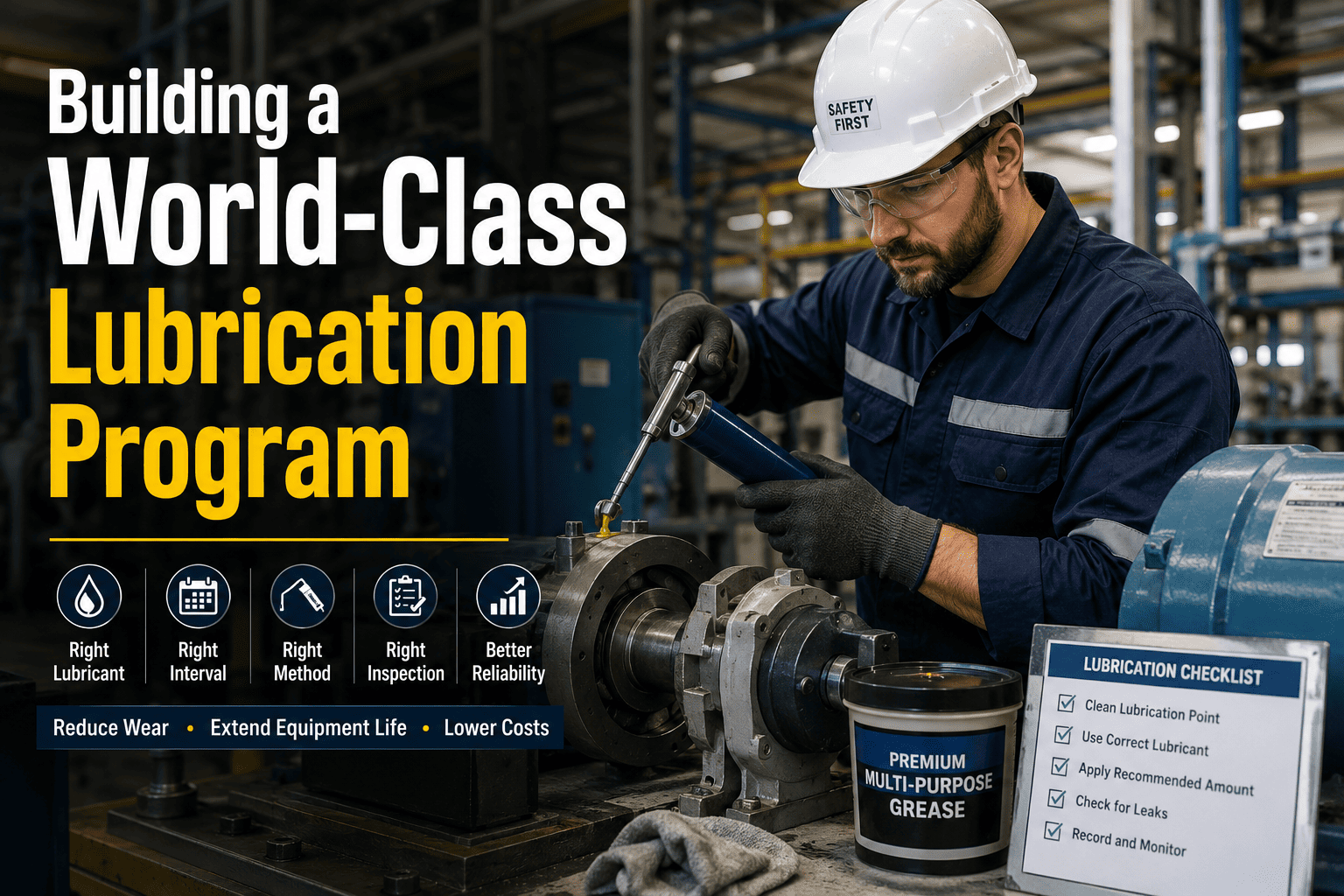
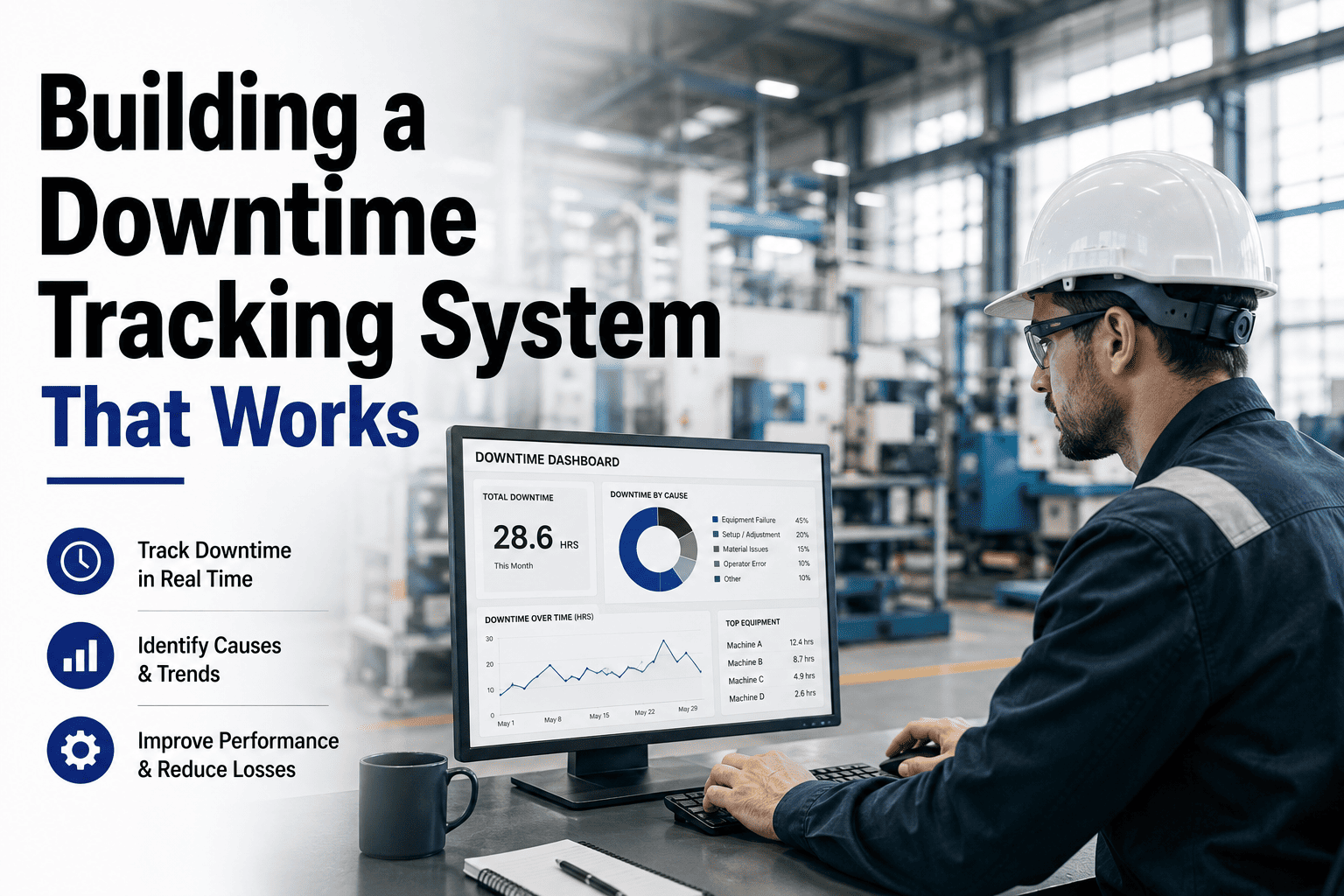
Program Deployment Roadmap

Week 1 through 4
Assessment and Baseline
Complete plant lubrication audit and document every lube point. Perform gap analysis against best practices. Quantify cost of current lubrication-related failures. Build business case for program investment.

Week 5 through 8
Design and Procurement
Finalize lubricant consolidation strategy. Source lube room equipment, filtration hardware, and identification systems. Build route structures and write standard operating procedures for every lubrication task.

Week 9 through 12
System Configuration and Training
Load lube point data into your CMMS and configure automated scheduling. Install contamination control hardware. Train and certify lubrication technicians on new procedures, tools, and safety protocols.

Week 13 and Beyond
Optimization and Expansion
Activate oil analysis program on critical assets. Begin tracking KPIs — route compliance, failure rates, oil analysis trends. Refine frequencies based on real data. Expand to additional plant areas and equipment.
Stop Losing Equipment Life to Preventable Lubrication Failures
Paper logs and tribal knowledge cannot protect assets worth millions. Oxmaint centralizes every lubrication point, automates task scheduling, integrates oil analysis results, and measures program performance in real time — turning lubrication from your biggest reliability gap into your strongest competitive advantage.

Frequently Asked Questions

How do I know if my plant needs a formal lubrication management program?
If your facility experiences recurring bearing failures, unplanned downtime from mechanical wear, or lubrication tasks completed inconsistently based on whoever is available rather than a defined schedule, a structured program will deliver immediate, measurable value. Most plants operating without a professional lubrication audit are leaving significant reliability gains and cost savings undiscovered. Schedule a free 30-minute consultation where our team will review your plant's failure history and pinpoint the highest-impact starting point for your lubrication program.
How many lubricant products does a manufacturing plant actually need?
Most plants carry 40 to 60 percent more lubricant products than necessary. A well-executed consolidation effort matches lubricant properties to actual operating requirements rather than defaulting to brand-specific OEM recommendations. Reducing product count by 30 to 50 percent simplifies inventory, lowers procurement costs, reduces training complexity, and significantly cuts the risk of applying the wrong lubricant to an asset.
What role does a CMMS play in managing a lubrication program?
A CMMS centralizes all lubrication program data — lube points, specifications, quantities, frequencies, routes, and oil analysis results — in one accessible platform. It automates scheduling so tasks are never missed, provides mobile access for technicians on the shop floor, tracks completion rates for accountability, and generates the reports needed to measure program effectiveness. Sign up for Oxmaint free to explore how automated lubrication scheduling, mobile work orders, and real-time compliance tracking work together for your maintenance team.
How quickly will a lubrication program start saving money?
Quick wins typically emerge within 30 to 90 days — from correcting over-greasing, eliminating wrong lubricant usage, and detecting contaminated systems. The full financial impact compounds over 12 to 18 months as equipment runs longer between failures and maintenance teams shift from reactive firefighting to proactive reliability work. Programs with consistent execution typically achieve complete payback within six to nine months.
Is oil analysis necessary for smaller plants with limited budgets?
Oil analysis delivers value at every plant size, but the scope should match your equipment criticality and budget. Even a basic program targeting your top 15 to 20 most critical oil-lubricated assets catches developing problems early and prevents failures whose single repair cost often exceeds an entire year of sampling fees. Start small, prove value, and expand as results justify the investment.

Share This Story, Choose Your Platform!