Manufacturing Plant Bearing Maintenance: Best Practices and Analysis
By oxmaint on February 22, 2026
Bearings are the backbone of every rotating machine in your manufacturing plant. From conveyor drives and pump shafts to CNC spindles and compressor motors, these small components carry enormous loads and directly determine whether your production line runs or stops. Yet bearing-related issues account for over 60% of all failures in rotating equipment, making them the single largest source of unplanned downtime in manufacturing. The good news: most bearing failures are preventable. Proper lubrication, correct installation, condition monitoring, and a structured maintenance program can dramatically extend bearing life and keep your plant running at peak output. Schedule a free bearing maintenance assessment to discover how Oxmaint helps manufacturing teams eliminate bearing-related downtime.
Why Bearing Maintenance Matters in Manufacturing
When a single bearing fails unexpectedly, the consequences cascade far beyond one machine. Production halts, delivery schedules slip, emergency repair costs spike, and in worst-case scenarios, catastrophic bearing failure damages shafts, housings, and adjacent components. Understanding the real cost of neglected bearing maintenance makes the case for a proactive approach.
60%+
Of rotating equipment failures are bearing-related, making bearings the top cause of unplanned downtime in manufacturing plants
80%
Of premature bearing failures are caused by inadequate or improper lubrication practices on the plant floor
$50B
Lost annually by industrial manufacturers due to unexpected equipment downtime, with bearings as a leading contributor
84%
Of all equipment defects are attributed to careless work habits during installation and maintenance procedures
Over 60% of equipment failures start with bearings — stop reacting and start preventing. Sign up for Oxmaint to automate lubrication schedules, track bearing health, and eliminate the unplanned downtime costing your plant thousands per hour.
Top Causes of Bearing Failure in Manufacturing Plants
Preventing bearing failures starts with understanding why they happen. Research consistently shows that the vast majority of premature bearing failures stem from just four root causes, and every one of them is preventable with proper procedures and monitoring.
Root Causes of Premature Bearing FailureNearly 75% of failures traced to lubrication, contamination, and mounting errors
52%
Lubrication & Contamination
Insufficient grease, wrong lubricant type, over-lubrication, moisture ingress, and particle contamination cause more than half of all bearing failures. Proper lubrication alone can prevent the majority of premature wear.
20%
Improper Mounting & Installation
Incorrect shaft fit, hammer installation, misaligned housings, and excessive force during mounting introduce stress that shortens bearing life from day one. Using induction heaters and proper tooling eliminates these risks.
16%
Misalignment & Overloading
Shaft misalignment, belt overtension, and operating beyond rated load cause uneven stress distribution across rolling elements. Laser alignment and regular load verification prevent these conditions.
12%
Fatigue & Aging
Natural wear after reaching designed service life is the only truly unavoidable failure mode. Condition monitoring detects fatigue progression, enabling planned replacement before unexpected failure occurs.
Bearing Maintenance Best Practices
A structured bearing maintenance program addresses every stage of the bearing lifecycle, from storage and installation through daily operation and eventual replacement. These best practices, when consistently followed, can extend bearing life by two to three times beyond what most plants currently achieve. Sign up for Oxmaint to digitize these bearing maintenance procedures and automate lubrication scheduling across your entire plant.
Essential Bearing Maintenance Procedures
01
Proper Storage & Handling
Store bearings in clean, dry, temperature-controlled areas away from vibration sources. Keep bearings in original packaging until installation. Never unwrap or wash bearings until you are ready to mount them, and always handle with clean, dry gloves to prevent moisture and contamination.
02
Correct Installation Techniques
Use induction heaters for interference-fit bearings, heating to approximately 100 degrees Fahrenheit above ambient temperature. Never use hammers or apply force through rolling elements. Verify shaft and housing fits against manufacturer tolerances before mounting, and ensure bearing is fully seated against the shaft shoulder.
03
Precision Lubrication Program
Follow manufacturer recommendations for lubricant type, quantity, and relubrication intervals. Use calibrated grease guns to deliver precise amounts. Over-lubrication is just as damaging as under-lubrication, generating excess heat and increasing energy consumption. Implement ultrasonic-assisted lubrication to listen for optimal grease fill levels.
04
Shaft Alignment Verification
Perform laser alignment on all coupled equipment after installation and during routine maintenance. Misalignment as small as 0.002 inches can cut bearing life in half. Document alignment readings in your CMMS to track trends and detect foundation settling or thermal growth issues over time.
05
Condition Monitoring Integration
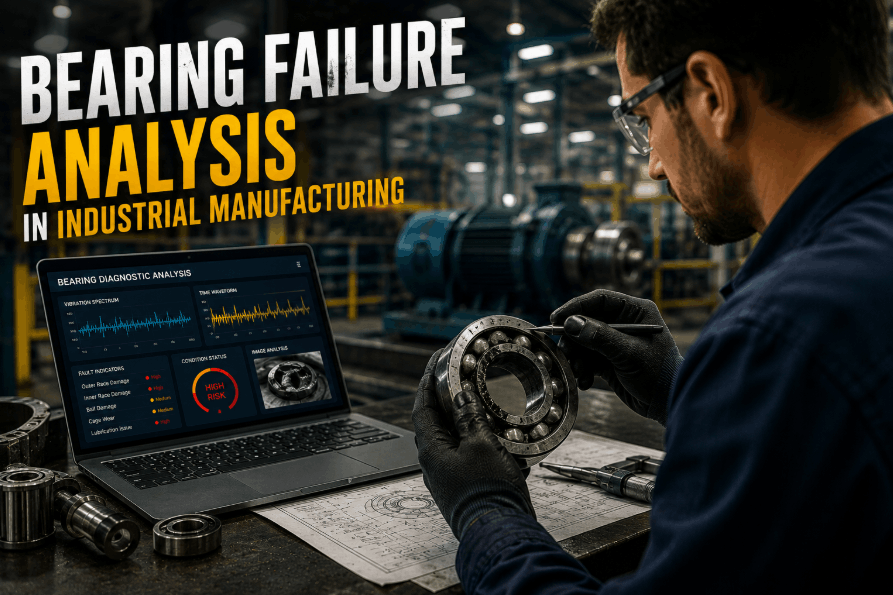
Deploy vibration analysis, ultrasonic monitoring, and thermal imaging on critical rotating assets. Vibration analysis detects inner and outer race defects, rolling element damage, and cage wear months before failure. Ultrasonic monitoring identifies lubrication issues in real-time, while thermal imaging spots abnormal heat patterns.
06
Root Cause Failure Analysis
Never discard a failed bearing without inspection. Examine failure patterns, including spalling, flaking, discoloration, and cage damage, to identify the root cause. Document findings in your maintenance system to prevent recurrence and refine your preventive maintenance intervals based on actual failure data.
Want to implement these 6 best practices across your entire plant floor? Schedule a demo to see how Oxmaint digitizes bearing installation checklists, automates lubrication routes, and logs every inspection — so your team never misses a step.
Consistent inspection intervals are essential for catching bearing degradation before it leads to failure. The frequency depends on equipment criticality, operating conditions, and bearing type. Below is a recommended schedule that serves as a baseline for most manufacturing environments.
Recommended Bearing Inspection Intervals
Inspection Type
Frequency
Key Checks
Tools Required
Operator Rounds
Daily / Every Shift
Unusual noise, vibration feel, temperature touch check, visual leak inspection
Senses, infrared thermometer
Lubrication Check
Weekly to Monthly
Grease condition, relubrication as scheduled, lubricant contamination, seal integrity
Calibrated grease gun, ultrasonic listener
Vibration Analysis
Monthly to Quarterly
Overall vibration level, frequency spectrum, bearing defect frequencies, trending
Vibration analyzer, route-based software
Thermal Imaging
Monthly to Quarterly
Hot spots, uneven temperature distribution, comparison to baseline, ambient correction
Bearing replacement, housing inspection, shaft measurement, seal replacement, full relubrication
Bearing pullers, induction heater, micrometers
Adjust frequencies based on equipment criticality, operating environment severity, and historical failure data. Critical assets may require continuous online monitoring.
Condition Monitoring Technologies for Bearings
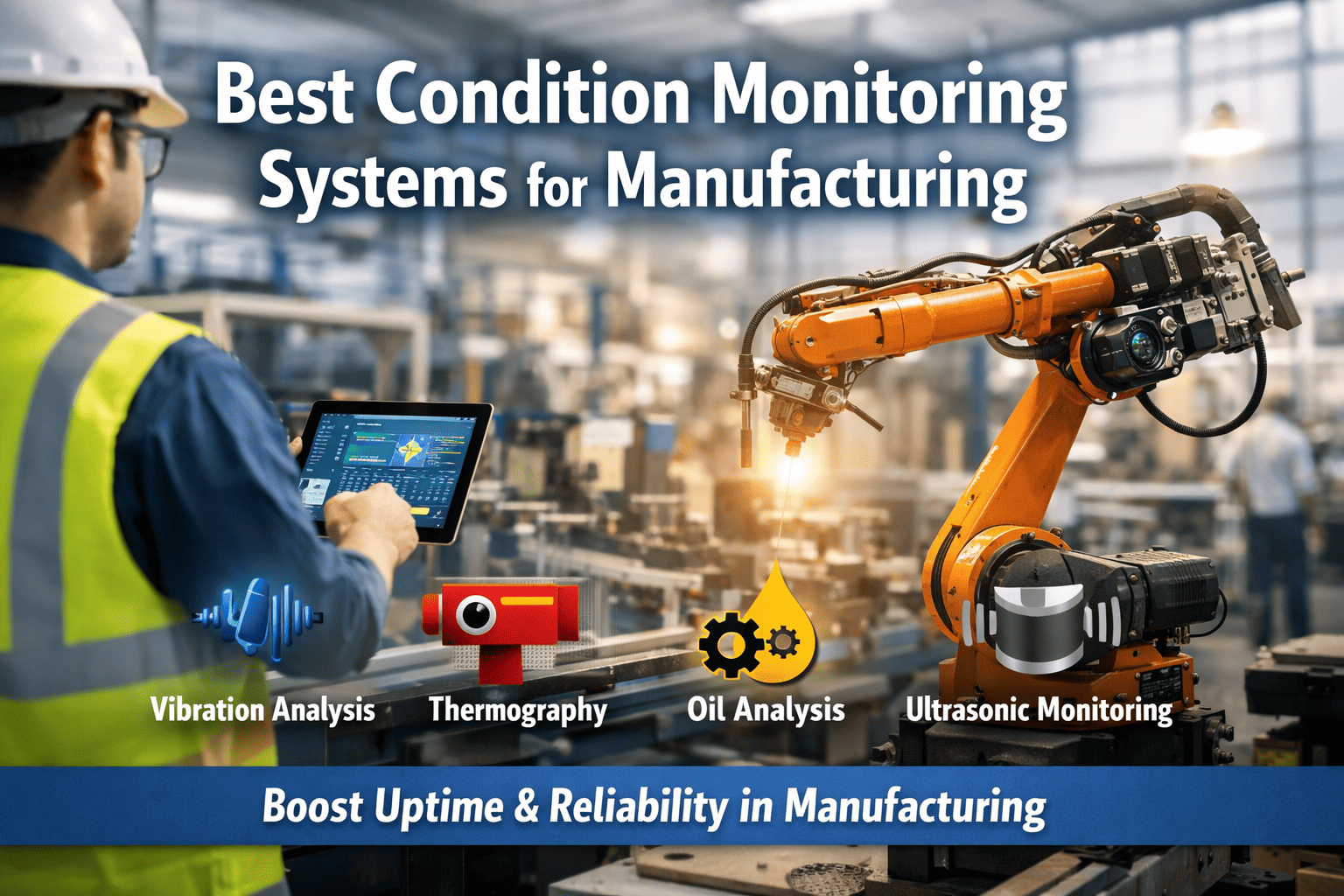
Modern condition monitoring transforms bearing maintenance from calendar-based guesswork into data-driven precision. Each monitoring technology detects different failure modes at different stages of degradation, and the most effective programs combine multiple techniques for comprehensive coverage.
Monitoring Methods & Detection Capabilities
Vibration Analysis
Detects inner/outer race defects, ball/roller damage, cage wear, and imbalance. Frequency spectrum analysis identifies the specific bearing component failing, enabling targeted replacement planning months in advance.
Ultrasonic Monitoring
Detects friction, lubrication deficiency, and early-stage wear through high-frequency sound. Particularly effective for slow-speed bearings where vibration analysis loses sensitivity, and for guiding precision lubrication delivery.
Thermal Imaging
Non-contact temperature measurement reveals overheating bearings, lubrication breakdown, and abnormal friction before physical damage occurs. Ideal for scanning large numbers of bearings quickly during routine plant walkthroughs.
Oil & Grease Analysis
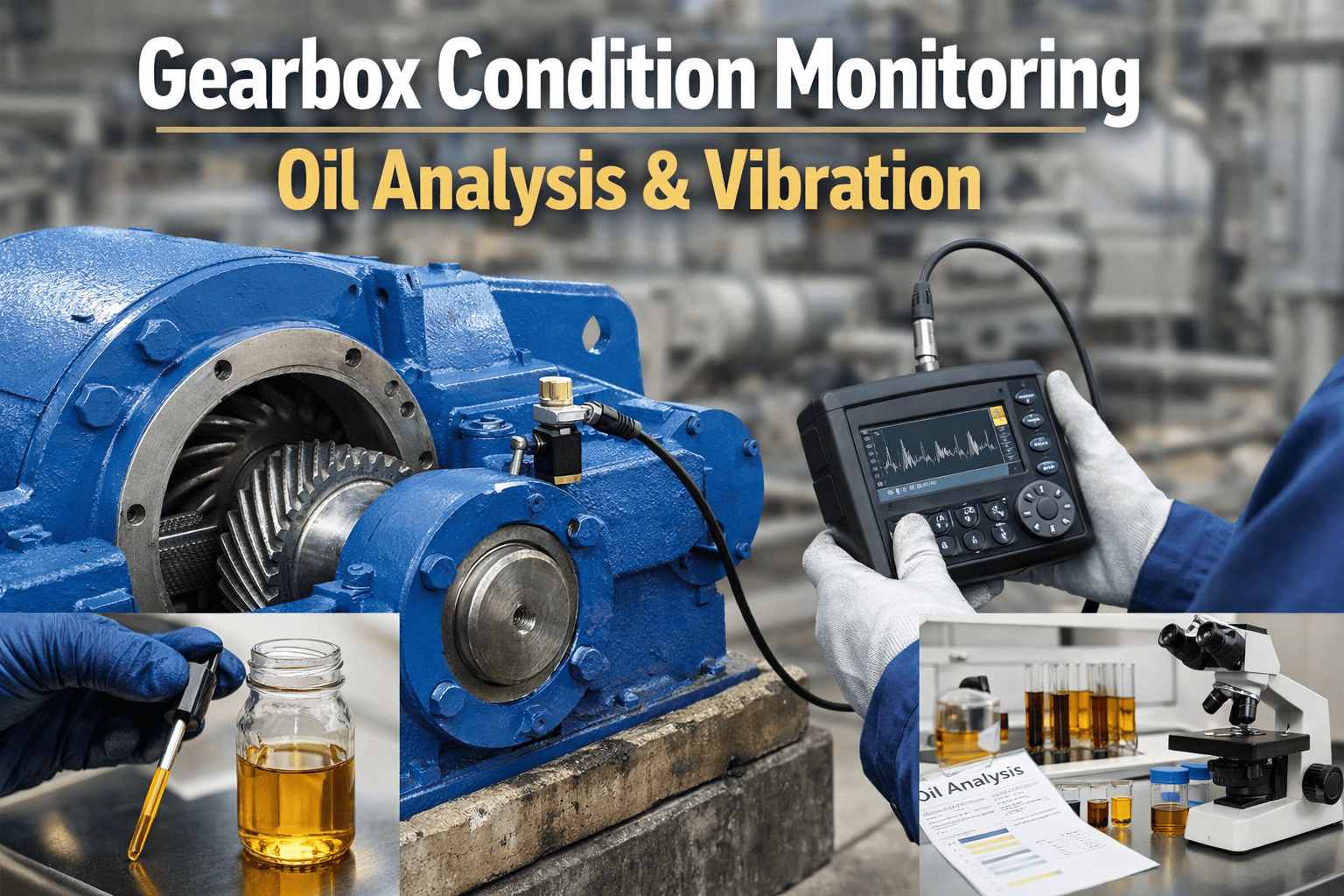
Laboratory analysis of lubricant samples identifies metal wear particles, contamination levels, viscosity breakdown, and chemical degradation. Trend analysis of particle counts and types reveals which bearing components are wearing and how quickly.
Already using vibration or ultrasonic monitoring? Schedule a demo to see how Oxmaint connects your monitoring data directly to automated work orders — so abnormal readings trigger bearing replacement before failure, not after.
The difference between reactive and proactive bearing maintenance is not just operational, it is financial. Plants that wait for bearings to fail spend dramatically more on emergency labor, collateral damage, and lost production than those that invest in prevention and monitoring. Sign up for Oxmaint to make the switch from reactive firefighting to condition-based bearing replacement across your plant.
Bearing Maintenance Approach Comparison
Reactive Approach
Run bearings until failure, then replace
Emergency shutdowns halt production lines
Collateral damage to shafts, seals, housings
No failure history or trend data captured
Higher spare parts inventory required
3-10xhigher total cost vs. planned replacement
Proactive with Oxmaint
Condition-based replacement before failure
Planned downtime during scheduled windows
No secondary damage to adjacent components
Full failure history and trend analysis in CMMS
Optimized spare parts based on predicted needs
2-3xlonger bearing life with proactive maintenance
Take Control of Bearing Maintenance Across Your Plant
Oxmaint gives your maintenance team the tools to track every bearing, automate lubrication schedules, capture vibration and inspection data, trigger condition-based work orders, and analyze failure patterns, all from one platform built for the plant floor.
Different manufacturing equipment presents unique bearing maintenance challenges. Motor bearings, pump bearings, gearbox bearings, and conveyor bearings each have distinct operating conditions, failure modes, and maintenance requirements that your program should address.
Imbalance, foundation movement, high-temperature exposure
Balance checks, foundation bolt torque, high-temp grease selection
Bearing types and maintenance requirements vary by manufacturer, load rating, and operating conditions. Always consult OEM specifications for your specific equipment.
How CMMS Transforms Bearing Maintenance
Managing bearing maintenance across hundreds or thousands of rotating assets with spreadsheets and paper records is a recipe for missed lubrication, lost failure data, and reactive firefighting. A Computerized Maintenance Management System centralizes every aspect of your bearing program into one accessible platform. Schedule a demo to see how Oxmaint automates bearing work orders, lubrication routes, and failure tracking for manufacturing plants.
Automated PM Scheduling
Set time-based or usage-based lubrication and inspection schedules for every bearing in your plant. Oxmaint sends automatic notifications to technicians so no relubrication interval is ever missed.
Condition-Based Work Orders
Trigger work orders automatically when vibration readings exceed thresholds, temperature rises above limits, or inspections flag bearing concerns. Move from calendar-based to condition-based replacement.
Failure History & Analytics
Capture every bearing replacement, failure mode, and root cause in a searchable database. Identify repeat offenders, optimize PM intervals, and make data-driven decisions about bearing selection and suppliers.
Mobile Technician Access
Technicians access digital lubrication routes, inspection checklists, and bearing specifications directly on mobile devices at the machine. Real-time data entry eliminates paperwork and ensures immediate visibility for supervisors.
Managing bearing maintenance with spreadsheets? There is a better way. Sign up for Oxmaint and get automated PM scheduling, mobile inspection checklists, and failure trend analytics for every rotating asset in your plant — set up takes minutes, not months.
How often should bearings be lubricated in a manufacturing plant?
Lubrication frequency depends on bearing type, speed, load, temperature, and operating environment. As a general rule, follow the OEM recommendations as a starting point, then refine intervals based on ultrasonic monitoring feedback and operating experience. High-speed or high-temperature applications may need weekly relubrication, while sealed bearings in clean environments may only need annual attention. Sign up for Oxmaint to set up automated lubrication reminders tailored to each bearing's speed, load, and environment.
What are the early warning signs of bearing failure?
The earliest detectable sign is usually a change in ultrasonic sound level, followed by increased vibration at bearing defect frequencies. As degradation progresses, you may notice elevated temperature, audible noise changes such as grinding or squealing, and visible grease leakage or discoloration. By the time a bearing is making audible noise, it is typically already in advanced failure stages, which is why instrument-based monitoring catches problems much earlier than human senses.
Can a CMMS really reduce bearing failures?
Yes. A CMMS ensures that no scheduled lubrication or inspection task is missed, which alone addresses the leading cause of bearing failure. Beyond scheduling, a CMMS captures failure history data that reveals patterns, such as a specific bearing position failing repeatedly, which you can then investigate and correct. Plants using CMMS platforms consistently report significant increases in on-time preventive maintenance completion. Book a demo to see how Oxmaint flags repeat bearing failures, automates PM compliance, and gives you full visibility across every rotating asset.
What is the most effective condition monitoring method for bearings?
Vibration analysis is considered the gold standard for bearing condition monitoring because it can identify the specific type and location of defect. However, the most effective programs combine vibration analysis with ultrasonic monitoring for lubrication management and thermal imaging for quick screening. For slow-speed bearings operating below 100 RPM, ultrasonic monitoring is often more effective than vibration analysis.
How does Oxmaint help with bearing maintenance specifically?
Oxmaint provides automated preventive maintenance scheduling for every bearing in your plant, mobile-accessible lubrication routes with digital checklists, condition-based work order triggering from inspection data, complete failure history tracking with root cause documentation, and real-time dashboards showing bearing health across all your assets. The platform is designed for manufacturing plant environments and can be set up in minutes.