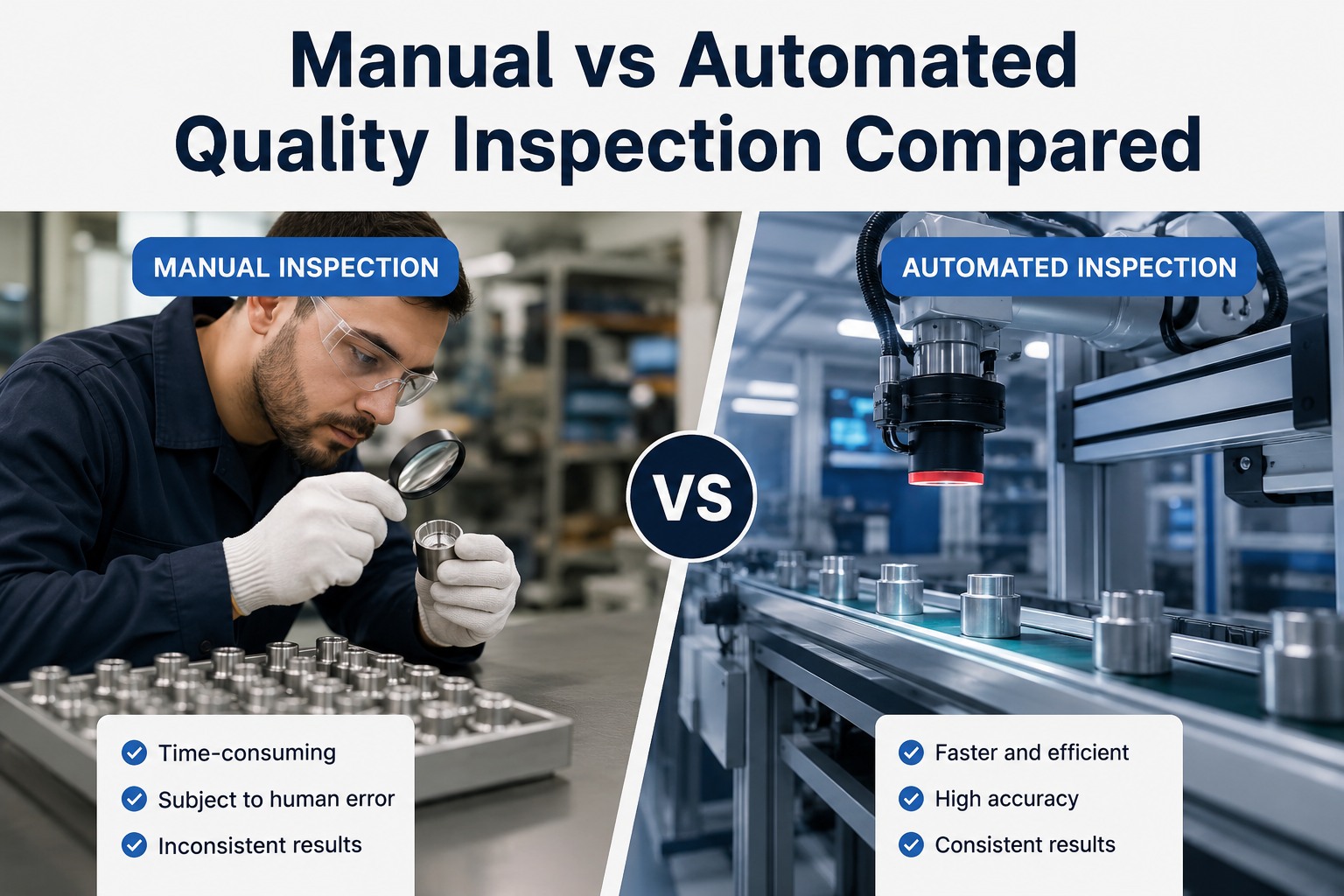
Manual vs automated quality inspection is one of the most consequential decisions a manufacturing plant makes — manual visual inspection typically catches only 60–80% of defects on a good day, while automated quality inspection with AI vision consistently detects 95% or more. The right inspection method depends on defect criticality, line speed, volume, and cost per escape, not on habit. This comparison breaks down defect escape rates, cost per inspection, ROI thresholds, and where each approach wins so you can build a quality control inspection strategy that actually holds up at production speed. And because even the best inspection data is wasted without a system acting on it, we'll show how Start Free Trial connects inspection findings directly to maintenance work orders.
The 60–80% Problem: Why Manual Inspection Alone Can't Protect Your Line
Human inspectors fatigue, lighting varies, and line speeds keep rising. Automated defect detection doesn't blink. Here's the honest comparison — and when each method earns its place.
Manual vs Automated Quality Inspection: The Numbers That Matter
Across eight core criteria, automated inspection manufacturing wins on consistency and speed, while manual inspection retains an edge in flexibility and judgment calls. The table below reflects typical benchmarks for discrete manufacturing and packaging lines.
| Criteria | Manual Quality Inspection | Automated Quality Inspection |
|---|---|---|
| Defect detection rate | 60–80% (declines after 2 hours on task) | 95–99.5%, stable across shifts |
| Inspection speed | 1–5 parts/minute per inspector | 100–1,000+ parts/minute per camera |
| Consistency | Varies by inspector, shift, fatigue, lighting | Identical criteria applied to every unit |
| Cost per inspection (at volume) | $0.10–$0.50+ per part (labor) | $0.001–$0.01 per part after setup |
| Data capture | Paper checklists, often incomplete | Every result logged, timestamped, traceable |
| New product changeover | Minutes — brief the inspector | Hours–days to retrain vision models |
| Subjective / aesthetic judgment | Strong — handles ambiguity well | Weak on undefined or novel defects |
| Upfront cost | Low (labor only) | $15K–$150K+ per station (hardware + integration) |
The pattern is clear: automation dominates on high-volume, repeatable defect inspection; humans win on low-volume, high-variability, judgment-heavy work.
What Defect Escapes Actually Cost Your Plant
A single escaped defect can cost 10–100x more to fix at the customer site than at the station. Industry research puts the cost of poor quality at 15–20% of revenue for average manufacturers — and manual inspection's 20–40% escape rate is a primary driver.
Worked example: A packaging plant shipping 2M units/year with a 0.5% defect rate and 70% manual detection lets roughly 3,000 defective units reach customers annually. At $25 average cost per escape (returns, replacements, credits, freight), that's $75,000/year in avoidable quality cost — before counting brand damage or lost contracts. An automated inspection cell at $60K with 96% detection cuts escapes to ~400 units, saving roughly $65K/year and paying back in under 12 months.
When to Use Manual Inspection vs Automated Inspection
The best quality inspection methods aren't either/or — most high-performing plants run a hybrid model. Use these thresholds to decide where each belongs.
Choose Manual Inspection When…
- Volume is under ~500 units/day or runs are short and change frequently
- Defects are subjective — finish, color match, "does it look right"
- Product mix changes weekly and vision retraining would lag behind
- You're prototyping or in NPI with undefined defect criteria
Choose Automated Inspection When…
- Volume exceeds ~5,000 units/day or line speed outpaces human eyes
- Defects are measurable — dimensions, presence/absence, surface flaws
- Escape cost is high: safety-critical parts, regulated industries, recalls
- You need 100% traceable inspection records for audits (ISO 9001, IATF 16949)
ROI threshold rule of thumb: if annual escape + labor cost exceeds 1.5x the automation system price, inspection automation pays back within 18 months — and usually faster.
How OxMaint Helps: Turn Inspection Findings Into Fixed Defects
Whether your inspection is manual, automated, or hybrid, the same failure kills quality programs: findings that never become action. OxMaint closes that loop — every defect, failed check, and out-of-tolerance reading becomes a tracked work order with an owner and a deadline.
Digital Inspection Checklists
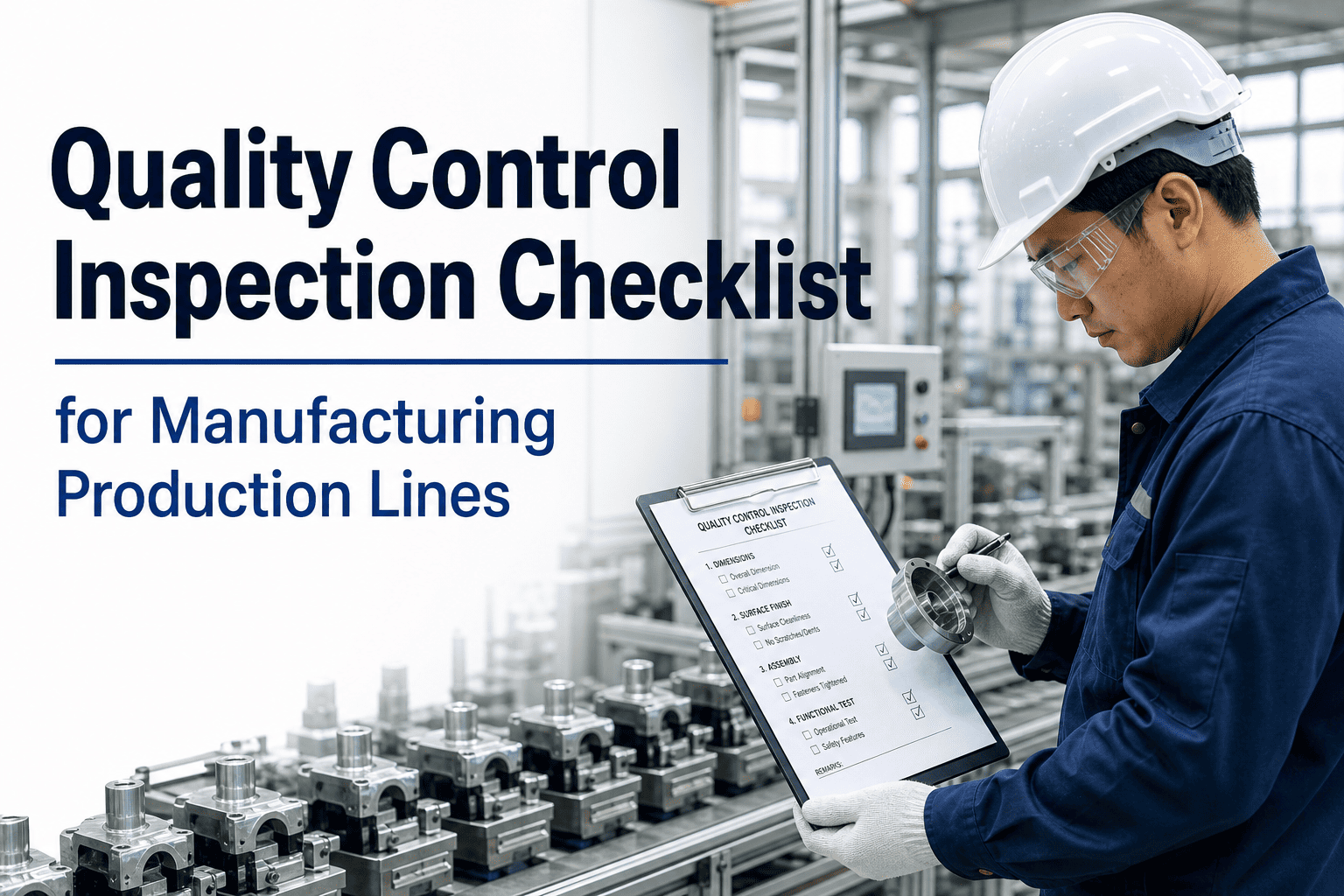
Replace paper quality control inspection forms with mobile checklists that force completion, capture photos, and timestamp every result — lifting manual detection consistency toward the 80% ceiling and creating audit-ready records automatically.
Auto-Generated Work Orders
Failed inspections trigger prioritized work orders instantly — no handoffs, no lost notes. Plants using automated failure-to-workorder flows cut defect response time from days to under 4 hours.
Defect Trend Analytics
See which assets, shifts, and suppliers drive the most defects. Maintenance analytics reveal repeat-failure patterns so you fix root causes — plants typically reduce recurring defects 25–40% in the first year.
Asset Health & Predictive Maintenance
Many "product defects" are really equipment degradation — worn dies, drifting sensors, loose fixtures. OxMaint's AI-powered predictive maintenance flags asset drift before it produces scrap, cutting unplanned downtime 30–50%.
See OxMaint Running on Your Inspection Workflows
Book a 30-minute demo and we'll map your quality inspection process — manual, automated, or hybrid — into a live OxMaint workspace with your assets and checklists.
Manual vs Automated Inspection: FAQs
Is automated inspection always better than manual inspection?
No. Automated inspection wins on high-volume, repeatable, measurable defects — where it delivers 95%+ detection at full line speed. Manual inspection remains better for low volumes, frequent changeovers, and subjective aesthetic judgments. Most plants get the best results from a hybrid model.
What is the typical ROI of automated quality inspection?
Most automated inspection systems pay back in 12–24 months when annual defect-escape plus inspection-labor costs exceed roughly 1.5x the system price. High-volume lines with expensive escapes (safety parts, regulated products) often see payback in under a year.
Why does manual visual inspection miss so many defects?
Human detection on repetitive visual tasks peaks at 60–80% and degrades after about two hours due to fatigue, expectation bias, and lighting variation. It's a physiological limit, not a training failure — which is why digitizing checklists and rotating inspectors helps, but can't close the gap to automation. Tools like OxMaint's digital inspection checklists at least ensure every check is completed, photographed, and traceable.
Can AI vision inspection handle new or undefined defects?
Not reliably. AI vision excels at defect classes it has been trained on; novel or ambiguous defects still need human judgment. The practical pattern: automate the known 90% of defect types, route anomalies and edge cases to skilled human inspectors.
How do I connect inspection results to maintenance action?
Use a CMMS that converts failed inspections into work orders automatically. In OxMaint, a failed checklist item or out-of-tolerance reading creates a prioritized, assigned work order in seconds — and trend analytics show which assets keep causing defects. Book a Demo to see the failure-to-workorder flow on your own data.
Stop Letting Defects Slip Through — Close the Loop With OxMaint
Digitize inspections, automate work orders, and catch the equipment drift behind your defects — in one AI-powered CMMS your team can start using today.
Free 14-day trial · No credit card · Set up in under an hour